“Well, basically, there was this little dot, right? And the dot went bang and the bang expanded. Energy formed into matter, matter cooled, matter lived, the amoeba to fish, to fish to fowl, to fowl to frog, to frog to mammal, the mammal to monkey, to monkey to man, amo amas amat, quid pro quo, memento mori, ad infinitum, sprinkle on a little bit of grated cheese and leave under the grill till Doomsday.”
– Johnny (David Thewliss) in Naked
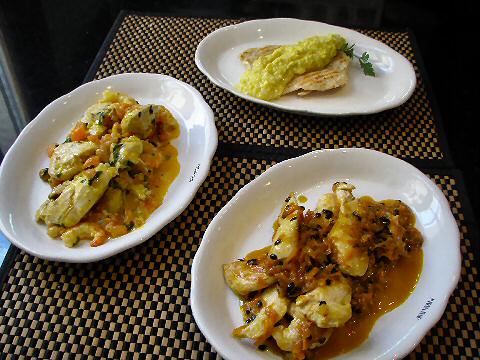
Buenos Aires – The week began with fowl – chicken in particular – the plan had been one chicken and one duck dish, but lack of good duck and one other key ingredient for the recipe that my Brazilian cooking professor wanted to teach me negated the latter. Instead, we talked about it and then prepared three different traditional styles of chicken – the originally planned xinxim de galinha, chicken stewed in cashew and tomato sauce; a pollo con molho de choclo, or grilled chicken breast in a creamed corn sauce; and pollo con maracujá, chicken in a passionfruit and carrot sauce. All delicious! I’m disappointed that this was the last of the four session course (I do recommend it for anyone local, and am happy to provide the info for contacting Eduardo – you’ll need to be fluent in either Spanish or Portuguese…).
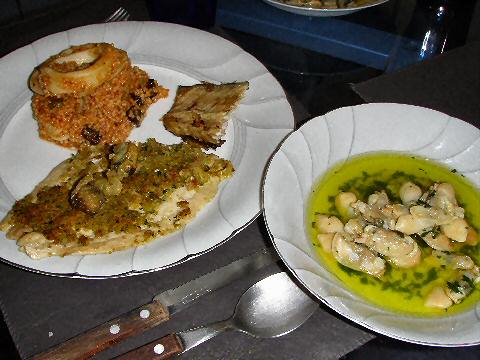
Here at Casa Saltshaker, group two worked their way through a quintet of contorni recipes – the braised endive, the peppers in bagna cauda, and the fried fennel from the previous week, plus a twist on eggplant parmesan using tiny little baby eggplant, and roasted porobello mushroom caps filled with pumpkin seeds and garlic. That was all yesterday. Today, group one launched their way into filleting fish and then making a trio of dishes – olive oil poached razor clams, Mario Batali’s “sicilian lifeguard” calamari, and my own breaded pomfret with a green olive, bacon, and chili topping. New photos, of course, on the flickr stream. Group three is waiting in the wings to start towards the end of the month after group one winds down, and meanwhile, I’m thinking through various ideas for the next series of classes… I’m happy to consider suggestions if you’re interested in a particular topic.
Copyright © 2026 SaltShaker. This feed contains copyrighted photos and text from SaltShaker. If you are not reading this material in a feed aggregator or by e-mail subscription, the site you are viewing may be guilty of copyright infringement. Please contact [email protected] so that I can take appropriate action.
Plugin by Taragana




 ]]>
]]>“Filipino cuisine could easily be the original fusion cuisine. After all, more than 400 years of Chinese, Hispanic, American and various other influences have blended together in perfect harmony for a very individual, very unique cuisine that is simply sarap (delicious).”
– Datin Hjh Zainah Bujang, General Manager of the Sheraton Utama Hotel.
Buenos Aires – In nearly three years of Casa SaltShaker dinners I don’t think I’ve had such a contentious response as to this last weekend’s dinners. Apparently, Filipino cuisine, or the idea of it, inspires quite a reaction amongst many diners. I received several e-mails from people who wanted a reservation at Casa S, but found the idea of our theme anything from “unpleasant” to “completely unacceptable.” More than one person informed me categorically that they “don’t like” or “hate” Filipino food. Really? All of it? What about the cuisine is it that you don’t like? One woman even responded to my query (more politely worded) that she’d never tried it, but was flat out certain that she wouldn’t be able to stomach it.
Now, having spent a good portion of my adult life in the East Village in NYC, home to several Filipino restaurants, one of which was where I spent Sunday brunch probably twice a month for many years, I don’t get it. I have no idea what it was these folk think the cuisine consists of. I’ve mentioned in these posts having lunch a couple of times at Grill 28 in New York – and sure, we had dinuguan, a pork liver and blood stew – but is that any further off the charts than, say, a morcilla sausage is here in BA? We also had vegetable springrolls, chicharrón (which is a common enough dish in Latin American cooking, or chitlins in the U.S., braised pork belly, and shrimp and green beans in coconut milk. There’s a whole lot of variety in the cuisine – and even for folk who might be worried that we’re going to serve something “weird”, let’s see – we’ve served pasta with intestines at sold out Italian meals, veal tongue at Romanian dinners, lamb’s tongue at our Doctor Who dinner, sweetbreads at more than one event, kidneys, heart, gizzards… from various animals – it’s worth remembering that we serve dishes “inspired” by various cuisines, not necessarily traditional dishes.
Still, it was a visceral reaction from potential customers that was surprising. On to the food, and what they missed….
From there, I’d looked at a “chorizo and bread soup” – but the recipes and descriptions I found seemed a little anemic… or just not quite what I wanted – simple beef broth with sliced onions, sliced chorizos, and croutons atop. Instead, I made a panade, a slow cooked bread and caramelized onion soup that I’ve made made many times before – with a twist – I pureed the soup without the onions, leaving them as a textural component, and then sauteed three kinds of chorizos – loganizas, cantimpalos, and candelarios, drained them, and added them to the soup. Cooked them all together for another half hour or so to meld the flavors.
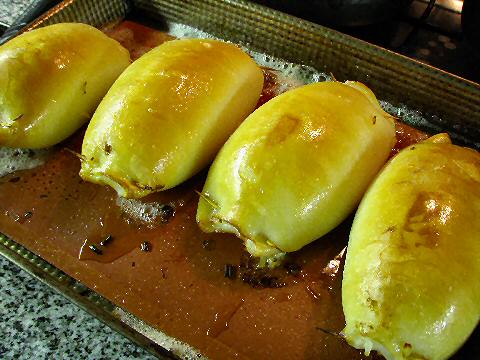
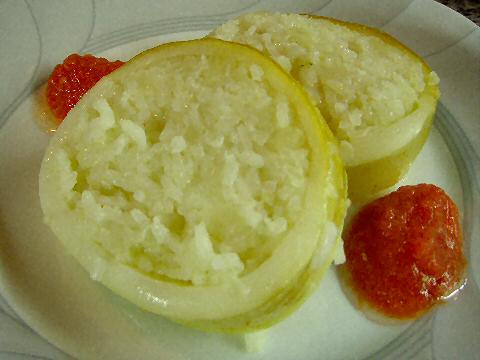
This was my favorite dish of the evening. It just turned out as I imagined it would. The original dish called for small squid to be stuffed with rice, garlic, onions, chilies, and tomato, and then charcoal grilled. I had this sort of white on white vision of the dish instead – I filled large squid (roughly 8-10″ long) with a mix of partially cooked jasmine rice, garlic, onion, and water chestnuts, then broiled them in the oven until they were a glistening, golden brown. I sliced them, and served them with little spoonfuls of hot sauce made from equal parts tomatoes and jalapeños with a splash of lime juice and salt for zip. Also on the table were cruets of garlic vinegar, a common accompaniment with Filipino food, and it really added a nice touch to the dish.
The main course, a simple, hearty braised bondiola, or pork shoulder, in a blend of soy sauce, garlic, bay leaves, onion, tomato, sugar and salt. I braised it for about 5-6 hours, until it was so tender it was falling apart, then sliced it and served it with potatoes that had first been boiled, then sliced and broiled with some olive oil. A little of the reduced cooking liquid from the pork over the top and we were all set.
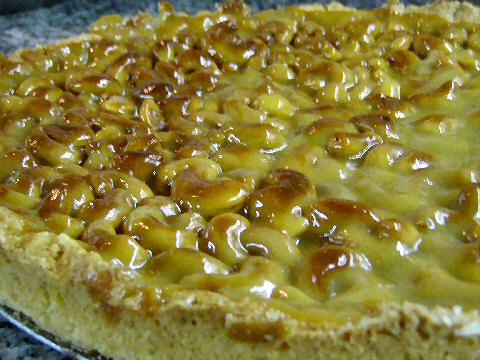
Need I say anything more about Filipino inspired cooking?
Copyright © 2026 SaltShaker. This feed contains copyrighted photos and text from SaltShaker. If you are not reading this material in a feed aggregator or by e-mail subscription, the site you are viewing may be guilty of copyright infringement. Please contact [email protected] so that I can take appropriate action.
Plugin by Taragana
]]>“If the human mind was simple enough to understand, we’d be too simple to understand it.”
– Emerson Pugh, physicist
Buenos Aires – Apparently part of what’s behind our recent popularity with the U.S. Embassy for private parties is, someone wrote about us in the embassy’s internal newsletter and suggested us as a place for such events. I got an e-mail from an embassy employee, someone who’d been here for dinner a couple of years ago, wanting to treat a couple of friends and visiting family to dinner here. Thanks to whomever wrote us up!
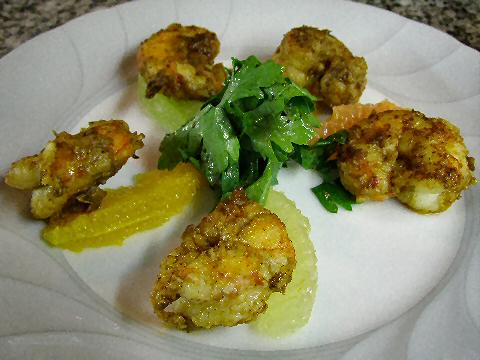
Simple instructions, a simple, yet delicious dinner. Lactose and gluten free. Latin theme. Four courses. Easy enough. We started off with a gazpacho (diced cucumber, green and red peppers, onion, in a puree of tomato, garlic, rocoto pepper, chives, olive oil, red wine vinegar), continued on with my take on the shrimp dish I mentioned at the Zuccardi winery – I wanted to try out my idea of five different citruses, plus, spicing the shrimp my way, then on to garlic marinated pork chops with spicy black beans, a dollop of mango atop for color and sweetness, and some fresh corn salsa, and finish off with a turrón de chocolate (substituting margarine for butter and gluten free pound cake for the soft cookies). The winner for me, and judging from the reaction of the guests, was the shrimp dish…
Copyright © 2026 SaltShaker. This feed contains copyrighted photos and text from SaltShaker. If you are not reading this material in a feed aggregator or by e-mail subscription, the site you are viewing may be guilty of copyright infringement. Please contact [email protected] so that I can take appropriate action.
Plugin by Taragana
]]>In his hearth and home, in his palace, upon his soft and comfortable bed, day and night, the flower-girls scatter flower petals; but without the Lord’s Name, the body is miserable. Horses, elephants, lances, marching bands, armies, standard bearers, royal attendants and ostentatious displays – without the Lord of the Universe, these undertakings are all useless.”
– Atharva Veda
Buenos Aires – Okay, admittedly one of my more oddball themes, barely edging into the category of a theme at all. You remember that French Republican Calendar? Used by the French government for a whole twelve years in the late 1700s and early 1800s… each day dedicated to a fruit, flower, animal, foodstuff…? It seemed the appropriate place to turn when no other themes grabbed me for this last weekend – between the two days, “horses” and “impatiens”. Oh my indeed…
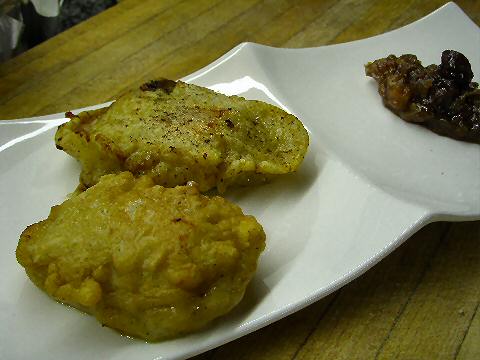
You might not see them at a cocktail party today, but going back a few years, there were two regularly served hors d’oeuvres at many such a do – devils on horseback and angels on horseback – basically, smoked bacon wrapped oysters and smoked bacon wrapped dates – all broiled up and sitting on a toothpick ready to eat. It wasn’t a far leap from there to come up with the idea of oyster and smoked salmon beignets with date chutney. Really, it didn’t take that much leaping at all. A freshly shucked oyster, wrapped in a strip of smoked salmon, dusted with flour and then dipped in a batter of 1 cup flour, 1 egg, 2 teaspoons salt, 1 teaspoon nutmeg, and enough milk to make a pancake batter consistency (for me, a little less than a cup, but it will depend on the flour you use). Then, into a deep skillet with about an inch of hot oil, fried on both sides until golden brown, drained, and kept hot in the oven until I had enough ready for everyone. The chutney, a mix of chopped dates, oranges (peel and pulp, no seeds) in roughly equal quantity, some raisins, brown sugar, vinegar and a splash of water, all cooked down until it was… chutney-like. These may not be servable as an hors d’oeuvre, but darn they’re good!
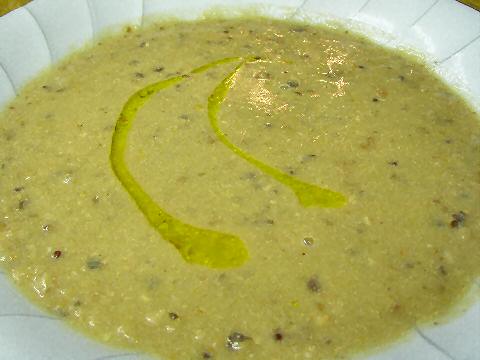
Okay, fudging a bit on the whole play on words thing – horse gram is a sort of bean or lentil that isn’t used much outside of Indian cooking. I doubt that the real thing is available here. I went with the closest thing I could find, which were those little white beans with the black dot… cowpeas I think we called them when I was growing up. Here they call them porotos tapes, which is more or less an insult, tape being more or less the equivalent of a “f*ing dirt poor Indian”. Interestingly, Henry tells me that in Perú they call them porotos castillos, or “castle beans”, which clearly reflects a different social perspective. I sauteed chopped onions, a couple of hot chilies, and mustard seed in a little oil until lightly browned, then added the beans (soaked overnight and then drained), and I used the whey from making the ricotta below, but water or stock would be fine, plus a little additional water to fill the pot. Brought to a simmer and cooked until the beans were done. Meanwhile I made a paste (in the blender) of onion, garlic, ginger, coriander and cumin seed with just enough water to make the paste. I semi-pureed the soup with the hand blender and added the paste to it, just cooking it for about 15 minutes longer to incorporate the flavors. Salt to taste and served with a drizzle of mustard-turmeric oil for color.
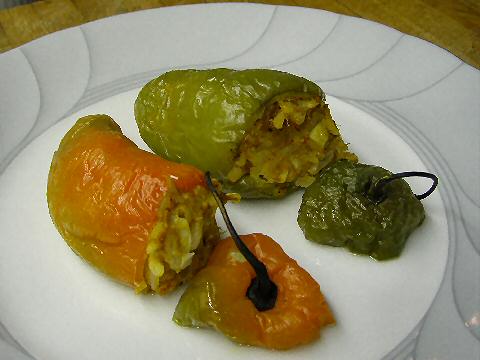
I needed to get in at least one play on words in Spanish, and luckily, it turned out to be one that works in both Spanish and English. Horse mackerel, normally in Spanish called jurel or surel, is here also called caballa, looking like the feminine of horse, or caballo. It was more or less out of the blue that I thought of stuffing rocoto peppers with some sort of mackerel mixture (cooked and flaked mackerel, rice, onion, tomato, green olives, hard boiled eggs, flavored with vinegar, sugar, salt, hot yellow pepper puree, cumin, salt and pepper). The peppers need to be seeded and de-veined and then blanched 2-3 times to soften them and temper the heat a little – a few of them were still a bit hot for some of the guests, but most ate them with gusto, as did we.
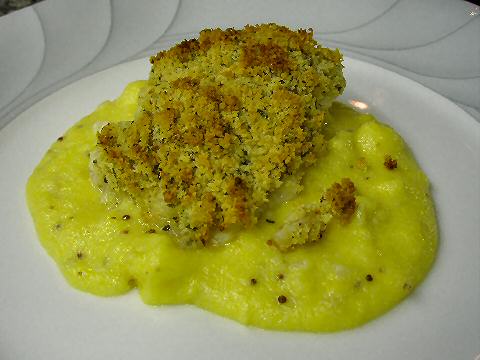
I’d been thinking along the lines of fish already, so kept going – grouper fillets crusted with horseradish (3 parts breadcrumbs, 1 part freshly grated horseradish, some dried basil, salt, pepper, and enough butter to make a crumbly paste), baked in the oven, and placed atop polenta flavored with sauteed shallots, mashed anchovies, a little dijon mustard, and finished with cream. The presentation needs work, but the flavor combination was great.
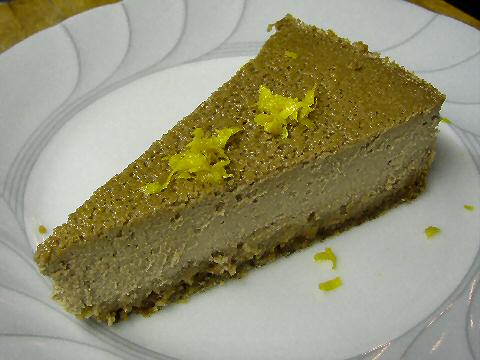
We had to get to the impatiens at some point – while the flowers are edible, they don’t really have any flavor to speak of, and they’re just coming into bloom, so not even all that interesting for some sort of presentation. I decided to just go with the flower idea, and made fresh ricotta cheesecake flavored with carob powder, orange juice, and orange blossom water. Not the finest cheesecake I’ve made, but quite good.
Copyright © 2026 SaltShaker. This feed contains copyrighted photos and text from SaltShaker. If you are not reading this material in a feed aggregator or by e-mail subscription, the site you are viewing may be guilty of copyright infringement. Please contact [email protected] so that I can take appropriate action.
Plugin by Taragana
]]>“I highly doubt that the rites themselves involved the literal sacrifice of virgins in a re-enactment or literalisation of the Persephone-Hades descent myth. The reason I say this is because a critical element in the myth itself involves the rebirth of Persephone herself from the lands of the dead. Remember, it was not Persephone who made the land fertile, but rather her mother, Demeter, who only caused the crops to grow on seeing her daughter’s arrival back in the land of the living. In this context, the way in which the Earth’s fertility would be restored would be for the virgins to die and then be reborn. Given this, I find it much more likely that initiates into the Mysteries underwent a symbolic death and resurrection to reaffirm, if you will, the act of Persephone’s own death and rebirth. The initiation rite itself probably involved the use of mind-altering substances to induce a state in which the initiate was perceived to be dead and in which the initiate received visions that would be interpreted in the context of the rites.”
– posting on AboveTopSecret.com
Buenos Aires – While we made no effort to induce visions via mind-altering substances, near death experiences, nor did we sacrifice a pig and bull all in the name of celebrating Pannychis, the last night feast of the Elusian Mysteries, I think I made an interesting stab at some unusual Greek cuisine this last weekend. We also got to present a couple of Greek wines with the aid of the folks at Bodegas Krontiras, a Greek owned Argentine winery. Unfortunately due to delivery complications, the wines didn’t make it here in time for Saturday’s dinner, but we were able to get two of the five wines from the tasting linked above for Sunday.
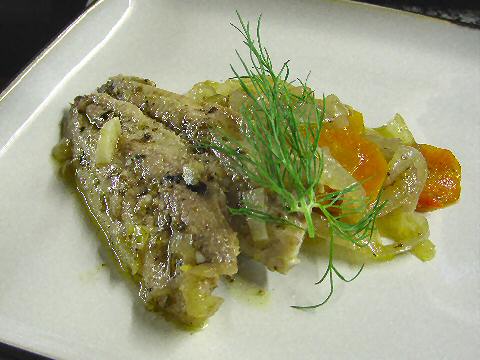
We began the evening with a simple sardine and onion salad. In some ways, I made it similar to an escabeche – I filleted, cleaned, and seasoned the sardines with black pepper, allspice, oregano, and salt, then poached them in medium hot olive oil until just set. Then I turned the heat up, added some more of the same spices, and sauteed a large quantity of onions, some sliced carrots for color, a little garlic, and a couple of chopped hot peppers, until soft and just starting to brown. I ladled the onion mixture over the top of the fillets, let it cool to room temperature and served it.
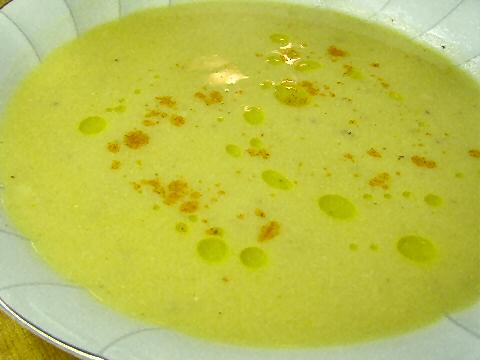
As always, soups are among our more interesting offerings, and I often look for unusual ones. Tahini Soup, as best I can tell, is specific to certain parts of Greece and is made specially as an Easter dish. It sounded simple but delicious, and in the end, it was. I simmered together a good amount of chickpeas, some potato (more for thickening the final soup than anything else and only a few recipes I found suggested it), a good dollop or two of tahini (sesame paste), lots of garlic, the peel of a lemon, some smoked Turkish pepper (sorry it wasn’t Greek…), and salt. When the potatoes and chickpeas were soft, I pureed the soup with a hand blender and then added in an equal amount of cooked chickpeas as I’d started with just to give it some texture. A little spicy arbequiña olive oil and some smoked paprika across the top and a perfectly delightful bowl of soup is born. Here, on the second night, we served up the Tselepos Mantinea described in the posting above – a great match with the soup.
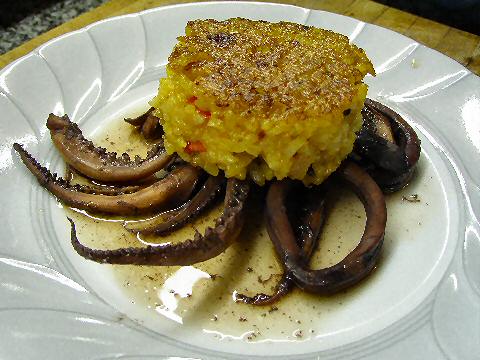
Riffing a bit on a few things – the risotto cake and mussel dish I’ve made a few times before, various dishes of braised squid or octopus, a saute of spicy aged chorizo sausage and peppers over rice, and combinations of sausage and seafood – and came up with a risotto cake made with a risotto that started off with sauteed aged chorizo, red bell peppers, onions, vinegar preserved mildly hot peppers, some tomato paste, and oregano – cooked, poured in a sheet pan, tamped down, chilled, cut in rounds, and fried up in a mix of olive oil and butter. On the squid side, a mix of tentacles and rings simmered for approximately two hours in red wine, olive oil, and black vinegar with a cinnamon stick, a couple of bay leaves, cloves, and a little salt. The combination worked beautifully. On Sunday, this dish was paired with the Sigalas Santorini, which worked quite well, though I wasn’t quite as pleased as with the match above, and I think, perhaps, the first night’s guests got a better pairing with Weinert’s “Montfleury” Gran Rosé, even if it wasn’t the chanced to try a Greek wine.
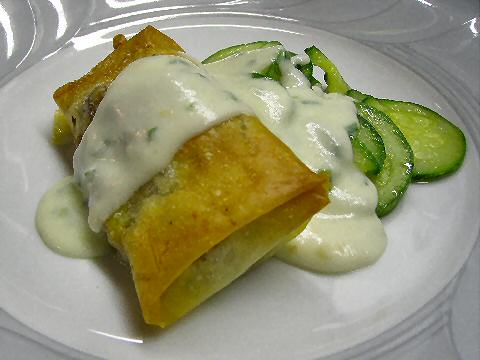
I have fun, on occasion, deconstructing and generally reconstructing classic dishes. It’s too easy to simply deconstruct – serving a dish as a lineup of its components, and too many… young… eager… inexperienced… (pick an adjective, it’s just an opinion) chefs only go that far, leaving the diner with the task of figuring out how to put it all together so it tastes good – often under the instruction of waiter, and generally just annoying everyone in the process. Better, in my view, to simply put it all back together in a new way. To that end, a lamb and zucchini moussaka, separated and recombined in a different manner that turned out to work brilliantly, if I do say so myself. A lamb shoulder and leg boned, trimmed, and cut into small cubes, sauteed with onions, garlic, salt, cinnamon, nutmeg and black pepper. Left to cool, then rolled up inside buttered sheets of phyllo dough, which I buttered on the outside and then baked in the oven until golden brown. The zucchini, sauteed in butter and olive oil with just a little salt and pepper. The sauce – melt some butter, whisk in some flour and cook for about a minute, then add milk and bring to a boil, turn the heat down and cook, whisking steadily, until thickened. Add in a good handful of chopped chives, some chopped up feta cheese, continue cooking until the feta is melted and incorporated into the sauce (it doesn’t melt easily, but if you continue over low heat, it will – don’t turn up the heat or the sauce will break and turn grainy), season with salt and white pepper, and serve all three components together. That works.
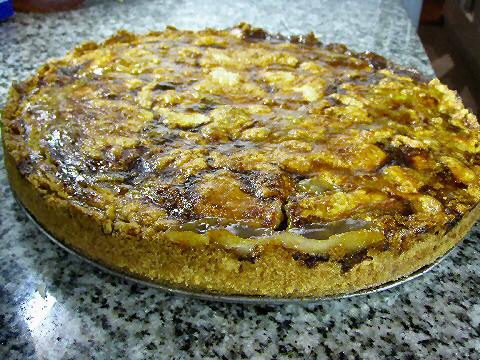
I started off with the idea of two different desserts, both of which sounded interesting. A classic baklava, and a modern thick yogurt and orange tart. It occurred to me that in our recent Swiss dinner, I’d made that delicious Engandiner Nusstorte – walnuts, honey… we’re on the track here. It involved cream – surely yogurt would substitute – and a little flavoring… Indeed, I basically stuck to the original recipe, with a couple of minor changes – I added the juice of an orange to the sugar at the beginning of the process and caramelized them together, I used yogurt instead of cream, and, at last minute, added in a tablespoon of orange blossom water, and finally, dusted the top with cinnamon and powdered sugar rather than just sugar. Other than that… I left well enough alone – I like this better than the original tart – the orange and orange blossoms give it a delightful flavor, and the sharpness of the yogurt lightens up the whole thing just a touch.
The nicest thing about this dinner is that I’d be delighted to make and serve any of these recipes again in future dinners – it’s not often that I’m happy with the way all five courses turn out!
Copyright © 2026 SaltShaker. This feed contains copyrighted photos and text from SaltShaker. If you are not reading this material in a feed aggregator or by e-mail subscription, the site you are viewing may be guilty of copyright infringement. Please contact [email protected] so that I can take appropriate action.
Plugin by Taragana
]]>“As Jupiter reached opposition earlier this week, it put on a spectacular show of cannibalism for anyone viewing with modest telescopes. Planetary specialists around the world have been watching with bated breath as a cataclysmic encounter between Jupiter’s Great Red Spot (GRS), Oval BA (Red, Jr.), and the newly discovered Little Red Spot (LRS) unfolded at the beginning of July. Though encounters such as this are relatively common on the gas giant, this event was greatly anticipated because the LRS was strong enough to dredge up material from deeper within Jupiter’s atmosphere, imbuing it with the same reddish color as the GRS and Oval BA.”
– Sean Walker, Sky and Telescope
Buenos Aires – It’s strange how different themes don’t necessarily interconnect in my mind sometimes. At least to me. Here I was, with the Epulum Jovis, the ancient Roman festival to the god Jupiter, on my mind, which led me to think about the infamous January Red Dinner (January 12, 1997) back in New York that, while not involving Jupiter directly, had simply used an image of that planet’s red spot as a background for the printed menu. So, I started thinking about a “red dinner” again, and it never occurred to me until around a day or so before the dinners that we’d just offered up a red dinner to celebrate the tenth anniversary of the Red Hat Society. Thankfully, there’s more than enough red food to go around. The menu, eleven and a half years ago, more or less, was:
1994 Domaines Ott Château de Selle Rosé
Tomato Water & Lobster Risotto with Red Currants & Pistachios
N.V. Champagne de Venoge Princesse Rosé
Red Cooked Red Snapper, Jicama, Bamboo Shoots & Oyster Mushrooms
1993 Domaine Vacheron Sancerre Rouge
Braised Oxtail, Grilled Radicchio and Pickled Red Grapes
1975 Mastroberardino Lacryma Christi del Vesuvio Rosso
St. Andre & Cheshire Cheeses
1961 Château Citran Haut-Médoc
Sweet Tomato & Black Walnut Tart
1976 Parcé & Fils Banyuls “Domaine du Mas Blanc”
Keeping in mind that this was a different era in my life, those dinners were shared with a select group of close friends, once a month (and I was earning a near six-figure salary), the original menu could, at best, serve as an inspiration for a Casa SaltShaker dinner (lobster here, after all, only available flown in frozen and at the mere price of 400 pesos a kilo, or $182 per pound… and the wines… well, as I said, it was a different era, not to mention country). So, on with the show…
Now, the guests at Casa SaltShaker had one clear advantage over those who attended the Epulum Jovis. They got to eat. In the ancient festival, it is said, the rest of the gods were formally invited to a banquet, where they lay about on soft pillows carefully placed near to the table, which was set with a sumptuous feast. However, being gods, they did not ingest food, so they had servants who sat down and ate on their behalf. While a nice little nap on comfy pillows sounds delightful… lucky servants, no?
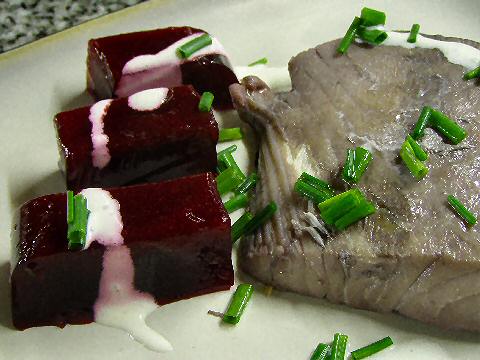
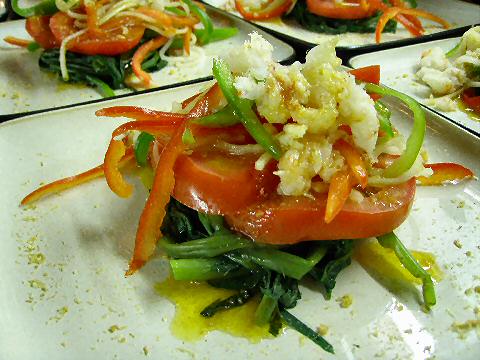
Red snapper, out of season. Red mullet, wasn’t looking so good in the fish stores. But hey, the fish is being poached in a red wine court bouillon regardless – I decided on palometa, one of my favorite local fish. Poached, chilled, and served up with a beet and wasabi gelee (now that I’m getting the hang of gelees, you might have noticed I’m having fun using them), which by itself would have made a delicious little starter – peeled and coarsely chopped beets simmered in water with a little salt, pepper, and wasabi powder, strained, gelatin added, poured into a sheet pan and chilled. A little semi-whipped cream with salt and pepper and some chopped chives completed the dish.
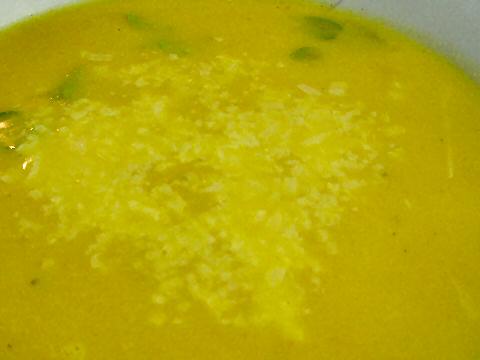
I decided to combine the prosciutto and red pepper into the soup rather than serve the former as a separate bread. A solid soup base of onions, celery, carrots, plenty of chopped prosciutto, and a mix of smoked, sweet, and hot paprikas, sauteed until lightly golden, then topped off with water and brought to a simmer. Meanwhile, I blackened a bunch of red bell peppers over a flame, peeled and seeded them, and then added them to the soup. I let it all simmer for awhile and then pureed it with the hand blender. To serve, I mixed in oregano leaves and topped the soup with a little grated reggianito cheese.
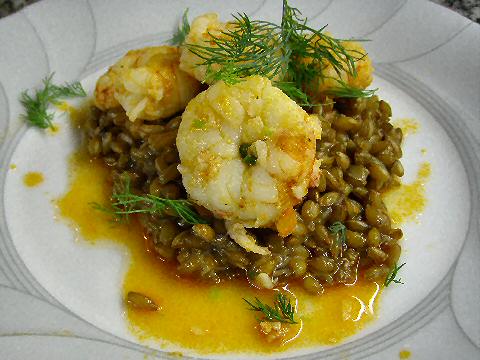
This was the most interesting dish for me, and, I think, for many of the guests. Starting from that lobster and tomato water risotto, I found myself thinking about a shrimp risotto. But then, not risotto, I wanted something… dark… like a brown rice risotto… no, wait, what about something like shrimp on rye toast… no, better, pumpernickel toast… but not toast, I was thinking about risotto… hey, what about “deconstructing” the pumpernickel…? I mean, my friends Aki and Alex having been playing with pumpernickel pastas… I think… This took a little experimenting to get right, I’ve never worked with rye grains before, I wasn’t even sure I could cook them up like a risotto (and, it turns out, you can’t really, unless you have hours to stand in front of the stove stirring – they need to soak overnight and then simmer in lots of water for a couple of hours to get plump and soft). So, soak them I did, in cold water, then into a pot I put lots of chopped shallots, just a pinch of salt, some pepper, plenty of caraway seeds, and a splash of oil and cooked until the shallots were soft and just starting to color. Then I added the drained rye grains, some cocoa powder and a dollop of molasses, topped it up with a good amount of water, brought it to a boil, and left it to simmer, covered, until the grains were getting soft, took the cover off, and continued cooking it until the water had evaporated. To serve, I reheated it and added in some whipped cream cheese with shrimp (one of those lovely flavored cream cheeses from the supermarket), and seasoned it with salt and freshly chopped dill. I sauteed up some prawns with chopped hot peppers, garlic, and dill seed, and, there you have it – shrimp on pumpernickel toast… deconstructed.
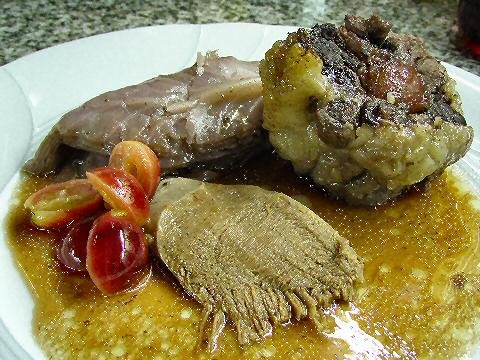
You might have noticed that I’ve been serving up a bit more of the offal, those cuts of meat that aren’t as popular, “variety meats” as I’ve seen them termed. I was thinking about that original oxtail dish with the radicchio, but the latter looked anemic in the market, so I picked red cabbage, but not grilled, I decided to braise them together… and hmm, we were so successful with the tongue a couple of weeks ago that why not add one in to the mix – in fact, I saw an interesting looking braised dish of oxtail and tongue in one or another of my cookbooks, though I went with my own recipe – layered into the stockpot – wedges of red cabbage, the tongue, and the oxtails. Dropped in a couple of bay leaves, some slices of ginger, a crushed head of garlic, a couple of onions, some peppercorns and juniper berries, and salt. Added a liter of red wine and then topped it up with water, brought it to a simmer and let it go for 5-6 hours. Then I removed the meats and cabbage and put them in a covered roasting pan to stay warm – brought back to hot in the oven when dinner rolled around. Meanwhile, strained and skimmed the braising liquid, and reduced it from its couple of liters down to a couple of cups to concentrate the flavors and make a nice “gravy”. Some pickled red grapes (same recipe as on the Red Hat dinner), and that’s dinner!
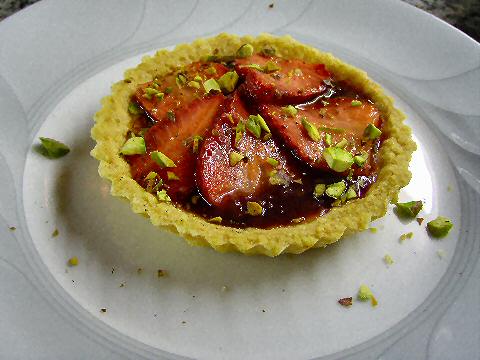
Tomatoes aren’t in season right now, at least not really sweet, ripe plum tomatoes like I’d used in the original dinner’s dessert. I thought about something like a cherry clafouti, as I’d been talking about one with a friend who’s now visiting for the week, but cherries, likewise, not in season. Strawberries have just come into the market – not overly sweet, but sliced and marinated in kirschwasser and sugar they come out brilliantly. The dough, a simple pate brisèe – 5 parts low gluten flour, 4 parts butter, 1 part sugar, pinch of salt, all mixed together to get a crumbly texture, and just enough water to get it to come together as a dough, lightly chilled, then molded into buttered tartlet forms, baked until golden, left to cool. Filled with mixed berry jam, topped with the sliced, marinated strawberries, and chopped, toasted pistachios. Done. All Hail Jupiter!
Copyright © 2026 SaltShaker. This feed contains copyrighted photos and text from SaltShaker. If you are not reading this material in a feed aggregator or by e-mail subscription, the site you are viewing may be guilty of copyright infringement. Please contact [email protected] so that I can take appropriate action.
Plugin by Taragana
]]>