“I highly doubt that the rites themselves involved the literal sacrifice of virgins in a re-enactment or literalisation of the Persephone-Hades descent myth. The reason I say this is because a critical element in the myth itself involves the rebirth of Persephone herself from the lands of the dead. Remember, it was not Persephone who made the land fertile, but rather her mother, Demeter, who only caused the crops to grow on seeing her daughter’s arrival back in the land of the living. In this context, the way in which the Earth’s fertility would be restored would be for the virgins to die and then be reborn. Given this, I find it much more likely that initiates into the Mysteries underwent a symbolic death and resurrection to reaffirm, if you will, the act of Persephone’s own death and rebirth. The initiation rite itself probably involved the use of mind-altering substances to induce a state in which the initiate was perceived to be dead and in which the initiate received visions that would be interpreted in the context of the rites.”
– posting on AboveTopSecret.com
Buenos Aires – While we made no effort to induce visions via mind-altering substances, near death experiences, nor did we sacrifice a pig and bull all in the name of celebrating Pannychis, the last night feast of the Elusian Mysteries, I think I made an interesting stab at some unusual Greek cuisine this last weekend. We also got to present a couple of Greek wines with the aid of the folks at Bodegas Krontiras, a Greek owned Argentine winery. Unfortunately due to delivery complications, the wines didn’t make it here in time for Saturday’s dinner, but we were able to get two of the five wines from the tasting linked above for Sunday.
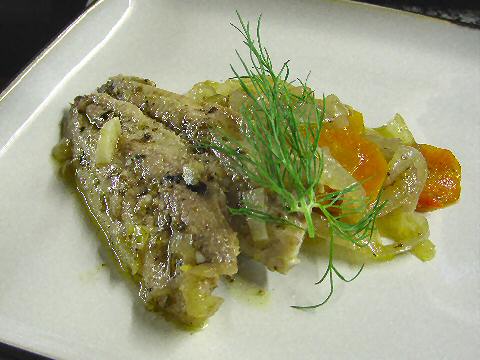
We began the evening with a simple sardine and onion salad. In some ways, I made it similar to an escabeche – I filleted, cleaned, and seasoned the sardines with black pepper, allspice, oregano, and salt, then poached them in medium hot olive oil until just set. Then I turned the heat up, added some more of the same spices, and sauteed a large quantity of onions, some sliced carrots for color, a little garlic, and a couple of chopped hot peppers, until soft and just starting to brown. I ladled the onion mixture over the top of the fillets, let it cool to room temperature and served it.
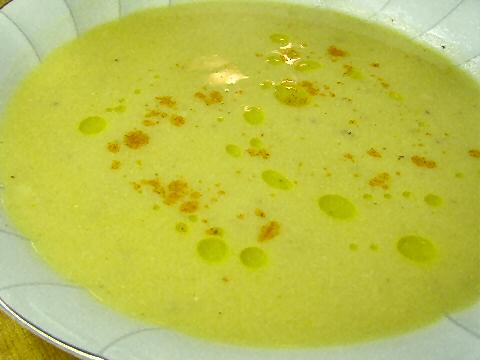
As always, soups are among our more interesting offerings, and I often look for unusual ones. Tahini Soup, as best I can tell, is specific to certain parts of Greece and is made specially as an Easter dish. It sounded simple but delicious, and in the end, it was. I simmered together a good amount of chickpeas, some potato (more for thickening the final soup than anything else and only a few recipes I found suggested it), a good dollop or two of tahini (sesame paste), lots of garlic, the peel of a lemon, some smoked Turkish pepper (sorry it wasn’t Greek…), and salt. When the potatoes and chickpeas were soft, I pureed the soup with a hand blender and then added in an equal amount of cooked chickpeas as I’d started with just to give it some texture. A little spicy arbequiña olive oil and some smoked paprika across the top and a perfectly delightful bowl of soup is born. Here, on the second night, we served up the Tselepos Mantinea described in the posting above – a great match with the soup.
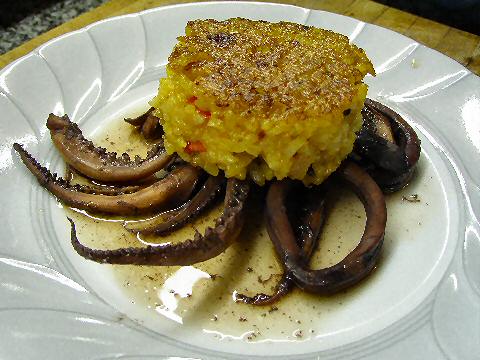
Riffing a bit on a few things – the risotto cake and mussel dish I’ve made a few times before, various dishes of braised squid or octopus, a saute of spicy aged chorizo sausage and peppers over rice, and combinations of sausage and seafood – and came up with a risotto cake made with a risotto that started off with sauteed aged chorizo, red bell peppers, onions, vinegar preserved mildly hot peppers, some tomato paste, and oregano – cooked, poured in a sheet pan, tamped down, chilled, cut in rounds, and fried up in a mix of olive oil and butter. On the squid side, a mix of tentacles and rings simmered for approximately two hours in red wine, olive oil, and black vinegar with a cinnamon stick, a couple of bay leaves, cloves, and a little salt. The combination worked beautifully. On Sunday, this dish was paired with the Sigalas Santorini, which worked quite well, though I wasn’t quite as pleased as with the match above, and I think, perhaps, the first night’s guests got a better pairing with Weinert’s “Montfleury” Gran Rosé, even if it wasn’t the chanced to try a Greek wine.
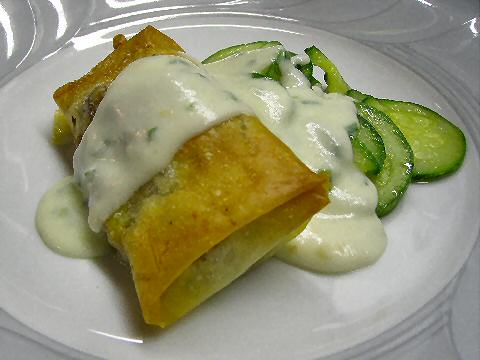
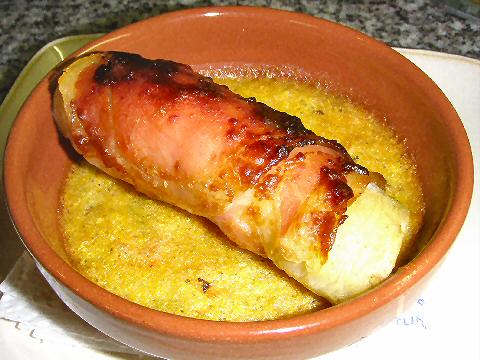
I have fun, on occasion, deconstructing and generally reconstructing classic dishes. It’s too easy to simply deconstruct – serving a dish as a lineup of its components, and too many… young… eager… inexperienced… (pick an adjective, it’s just an opinion) chefs only go that far, leaving the diner with the task of figuring out how to put it all together so it tastes good – often under the instruction of waiter, and generally just annoying everyone in the process. Better, in my view, to simply put it all back together in a new way. To that end, a lamb and zucchini moussaka, separated and recombined in a different manner that turned out to work brilliantly, if I do say so myself. A lamb shoulder and leg boned, trimmed, and cut into small cubes, sauteed with onions, garlic, salt, cinnamon, nutmeg and black pepper. Left to cool, then rolled up inside buttered sheets of phyllo dough, which I buttered on the outside and then baked in the oven until golden brown. The zucchini, sauteed in butter and olive oil with just a little salt and pepper. The sauce – melt some butter, whisk in some flour and cook for about a minute, then add milk and bring to a boil, turn the heat down and cook, whisking steadily, until thickened. Add in a good handful of chopped chives, some chopped up feta cheese, continue cooking until the feta is melted and incorporated into the sauce (it doesn’t melt easily, but if you continue over low heat, it will – don’t turn up the heat or the sauce will break and turn grainy), season with salt and white pepper, and serve all three components together. That works.
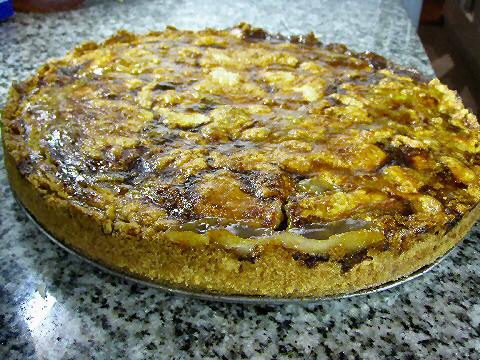
I started off with the idea of two different desserts, both of which sounded interesting. A classic baklava, and a modern thick yogurt and orange tart. It occurred to me that in our recent Swiss dinner, I’d made that delicious Engandiner Nusstorte – walnuts, honey… we’re on the track here. It involved cream – surely yogurt would substitute – and a little flavoring… Indeed, I basically stuck to the original recipe, with a couple of minor changes – I added the juice of an orange to the sugar at the beginning of the process and caramelized them together, I used yogurt instead of cream, and, at last minute, added in a tablespoon of orange blossom water, and finally, dusted the top with cinnamon and powdered sugar rather than just sugar. Other than that… I left well enough alone – I like this better than the original tart – the orange and orange blossoms give it a delightful flavor, and the sharpness of the yogurt lightens up the whole thing just a touch.
The nicest thing about this dinner is that I’d be delighted to make and serve any of these recipes again in future dinners – it’s not often that I’m happy with the way all five courses turn out!
Copyright © 2026 SaltShaker. This feed contains copyrighted photos and text from SaltShaker. If you are not reading this material in a feed aggregator or by e-mail subscription, the site you are viewing may be guilty of copyright infringement. Please contact [email protected] so that I can take appropriate action.
Plugin by Taragana




 ]]>
]]>“Savoriness or umami is the name for the taste sensation produced by the free glutamates commonly found in fermented and aged foods. The additive monosodium glutamate (MSG), which was developed as a food additive in 1907 by Kikunae Ikeda, produces a strong umami taste. Umami is also provided by the nucleotides that are naturally present in many protein-rich foods, including dried Bonito flakes and in high concentration in dried Shiitake mushrooms, used in much of Asian cooking…. Umami is considered basic in Japanese and Chinese cooking, but is not discussed as much in Western cuisine, where it is sometimes referred to as “savory” or “moreish.” The Japanese name for the taste sensation literally means “delicious flavour.”
– paraphrased from Wikipedia
Buenos Aires – How could we pass up the opportunity to celebrate the 100th anniversary of the discovery of glutamate? I mean, break out the party hats and noisemakers! Yes, indeed, July 25, 1907, a researcher at the University of Tokyo, clearly bored to tears with whatever task the department chair had given him, decided to analyze the ingredients in his daily noodle soup bowl, and figure out why grandma’s tasted better than mom’s. With great glee, given his obviously poor relationship with his maternal parent, he announced it was because nana used more konbu seaweed and bonito flakes, and he even declared the chemical he isolated from those two ingredients was the source of umami, or “delicious taste”. This founded an entire industry and also got him out of having to go home for Sunday lunch visits.
I started off figuring that I had to make some form of dashi – a quick trip to chinatown yielded up some konbu, the bonito flakes were already in the pantry. Instead of infusing them into water, I decided to infuse them in a cream and milk mixture (we don’t have half-and-half here), spice it up slightly with some shichimi, or “seven spice” powder, a touch of salt, and thicken it up in a double boiler with a couple of egg yolks. Now, what to put that on… Salmon, yes that’ll work. And a cream sauce, how about a pasta? So, fresh salmon, put through the coarse meat grinder, some fried onions, and the grated rind of some lemons, oranges, and limes, along with a splash of their juices and some salt – makes a great little salmon burger… oh, a basic egg pasta dough, filled giant raviolis with the salmon mixture, left to dry slightly, cooked off, topped with the cream sauce, sprinkled with chive batons, and yes, that’s got umami in spades.
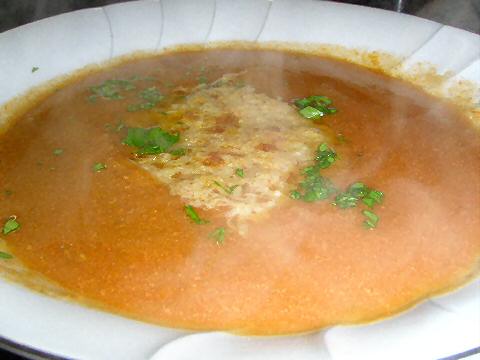
Dried, aged, tomatoes, cheese, cold and wet days – how about a steaming bowl of tomato soup. Remember those Campbell’s soup ads for a bowl of tomato soup on a cold wintery day? Soup and sandwich, soup and sandwich… soup this good just has to be Ca… mmm, mmm, good. Oh wait, where was I? Ahh yes, a big pot, a liter of milk, about two of water, a whole bunch of sun-dried tomatoes, a couple of onions, some garlic cloves, fresh parsley, cloves, black pepper, thyme, bay leaf, all simmered together for about half an hour, then pureed, strained through a coarse strainer, a little salt… and what atop? Why yes, a parmesan crisp… just a scoop of freshly grated parmesan cheese sprinkled with a little smoked paprika, melted and browned on a silpat, and left to cool and crisp up. Float that right on top of the soup.
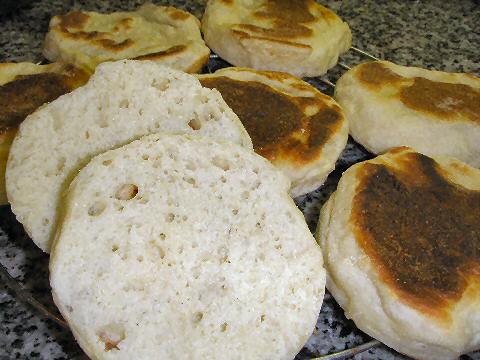
Found ’em. English muffins. The recipe that works. Since I’ve been on this baking kick recently I’ve started reading various baking sites. And who knows more about norteamericano baking than King Arthur’s Flour company? And, lo and behold, English Muffins, and the recipe turns out perfectly. Really. Look at them. Try it.
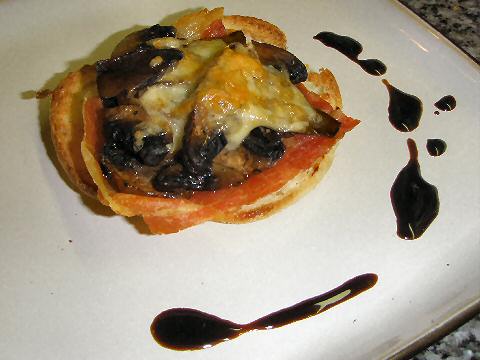
Great sources of umami… bacon or similar cured meats… meaty sorts of mushrooms like shiitake and portobellos… cheese…. How about a sort of McMuffin kind thing? Split those English Muffins we just made. Top with a slice of crispy prosciutto (okay, modern chef’s trick here… you’re gonna love this… get two plates of equal size… lay a square of kitchen towel paper on one… lay strips of prosciutto, pancetta, bacon, whatever you like on the paper, not touching each other… lay another square of towel paper on top… put the second plate atop to press it all together… stick in the microwave on high power for 50 seconds, no more, no less… you tell me), top with some thickly sliced portobellos that have been briefly sauteed in butter, grate some cheese over the top, something that will melt well, I used a cheese called fynbo that has a sort of nutty character to it. Broil. Drizzle a little glaze of reduced soy and balsamic vinegar around it. Eat.
One of the things that I get asked alot is a sort of “where did you get that idea?” usually referring to some sort of strange sounding combination. Much of the time I have no idea, these things just come to me. But this one I know, and I forgot to mention it when I posted about my blue cheese sauce back on the evening of our Sherry Dinner. It was from Tony Bourdain. Now, not anything the man cooked, because my past experience with his cooking is, well, less than favorable. But I do occasionally enjoy watching him traipse around the globe – not because I enjoy listening to him prattle on as if he actually has the “street cred” he thinks he does, but because he often ends up in front of someone who’s whipping up something really cool. In this case, it was a drink. A martini. I think it was a show on India, and he’d gone out to some floating bar in the middle of a lake, where the bartender prepared him what he declared was the best martini he’d ever had – it was garnished with an olive filled with blue cheese, onion, and mint. It got me thinking, and that’s how I ended up with a sauce made from gin-deglazed shallots, melted blue cheese, chopped black olives, stock (lamb for this evening), and finished with freshly chopped mint. You can follow the logical progression, no? The sauce this eve was ladled over seared and roasted lamb loin, which was atop brown butter miso sauteed chinese cabbage. An umami bomb, in the best sense of the word, basically.
Chocolate isn’t an umami sort of thing, but then, few dessert items are. Some beans are. Adzukis for example, so what about adzuki bean paste? And what about sandwiching it between that cocoa crust and chocolate ganache I’ve been playing around with over the last couple of months? It comes out like a dense, really interesting fudge kind of intense dessert. Maybe a little over the top. Maybe.
Copyright © 2026 SaltShaker. This feed contains copyrighted photos and text from SaltShaker. If you are not reading this material in a feed aggregator or by e-mail subscription, the site you are viewing may be guilty of copyright infringement. Please contact [email protected] so that I can take appropriate action.
Plugin by Taragana
]]>“THRONGS OF MONGOLS in resplendent robes of blue, red, and maroon swarm Ulaan Baatar’s Central Stadium. Archers snap bows, bands blow brass music, and the air is saturated with the pungent odor of mutton, the national dish (the older and tougher, the better). Yet all eyes are focused on the field, where scores of burly men dance in ill-fitting leather bikini briefs, flapping their arms and hooting wildly. Herders and horse riders from the farthest reaches of Mongolia migrate to the capital for the annual Naadam. That’s short for Eriin Gurvan Naadam, meaning the “Three Manly Games,” an ancient nomadic Olympics comprising archery, horse riding and wrestling.”
– Ron Gluckman, Mongolia’s Manly Sports: The World’s Second-Oldest Olympics
Buenos Aires – Trust me, none of us dressed up in ill-fitting leather bikini briefs, and there was no archery, nor horse-racing, nor wrestling. Come to think of it, none of us are all that burly. Still, we thought we ought to at least raise a fork and glass to the annual three-day sporting fest held at this time of year in Mongolia, with cuisine that was inspired by, if in no way traditional to, the country – and particularly not the festivities, which tend towards the local version of picnic fair – “bread, fruit, cold meat pancakes, tea, and fermented mare’s milk”.
A minor digression… a couple of weekends ago I participated in a day long cultural and educational event called Limud Keshet, an exploration of various aspects of Judaism. The fare on offer for the day ranged from cooking demonstrations to literature discussions, movies to philosophical talks, activism to talmudic debate, and pretty much anything that anyone had convinced them to offer. I attended a couple of cooking demos, a discussion of rabbinic interpretations of torah and talmudic law on gay relationships, a look at the place of orthodoxy in modern life, and an introduction to Argentine Jewish literature – quite the mixed bag. Of note in regard to today’s post, one of the cooking demonstrations, from a local catering company, included what seemed to me a fascinatingly simple approach to making gefilte fish, and it stuck in my mind to give it a try at home – I really liked how theirs turned out, and they literally made them in a matter of about half an hour standing at a small card table in front of us.
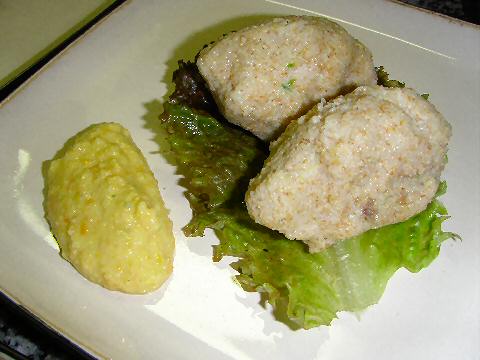
So, when I spotted a note somewhere that around Lake Khövsgöl in northwestern Mongolia, they make a sort of fishball from the local Taimen (king of the rivers), considered the largest freshwater fish in the world (averaging 4-5 feet in length) they came to mind. I couldn’t find any recipes for the fishballs in particular, but thought it’d be a great opportunity to try out the gefilte fish recipe, using, if I could find it, our own massive freshwater fish, the pacú, or river pig (not as poetic as the meaning of taimen). Unfortunately I couldn’t find any fresh pacú and decided instead on one of my favorite local freshwater fish, the tararira, or wolf-fish. The recipe is simple, a finely ground mix of half tararira and half merluza (hake – or another similar fish like pollack or cod), a kilo in total, and then in a blender I put half a kilo of well-fried onions, 4 eggs, a tablespoon of sugar, a teaspoon of white pepper, and about a teaspoon and a half of salt and for good measure threw in a couple of jalapeños – it just seems like they ought to be there. Blended those together and mixed with the fish, along with 200 grams of whole wheat flour. Meanwhile, I simmered the fish bones and heads in water with some onion and carrot to make a lightly flavored stock, strained it, brought it back to a simmer, and then formed the fish mixture into egg sized ovoids, which I carefully slipped into the liquid and let them cook for about 15-20 minutes. Then I drained them, cooled them, chilled them. The original dish description suggested serving them up with a spicy yellow bean sauce – I pureed some yellow beans (lupines) with several fresh chilies, some garlic, sugar, rice vinegar, and a splash of peanut oil to smooth it out. So there you have it – Mongolian Gefilte Fish – you read it here first.
Next up, a simple meat and pasta broth. Though most of the recipes I found specified either beef or mutton, a few suggested that the traditional meat used is often yak… I thought it might be interesting to do something with oxtail, which is easily available here, so I made a stock out of oxtail, onions, garlic, just a single chili for a faint kick, potatoes, and carrots. When the stock was ready I fished out the oxtails and picked the meat off them, shredded it and added it back to the soup. Just before serving, I added some fresh pasta squares – simply rolled out fresh basic pasta to about the thickness of a lasagna noodle and cut it in 1″ squares, then straight into the soup.
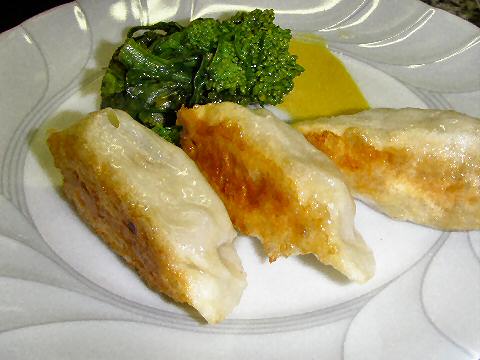
You know I love potstickers. They’re fun to make and even more fun to eat. I got a call about a week and a half ago, very conveniently, from a local “ranch” that raises game birds. Including, it turned out, Mongolian Ring Necked Pheasant – how’s that for coincidence? I decided to give them a try – first off I roasted up one big pheasant (it was 1.3 kilos, which yielded just over half a kilo of meat). Then I coarsely ground the pheasant and added green onions, ginger, roasted garlic, and sesame oil, packed it all into wonton wrappers, then cooked them proper potsticker style. I served them with sauteed mustard greens and a pool of that wonderful hot spicy Chinese mustard.
For a main course, Mongolian Lamb of some sort was a must. I trimmed and cubed lamb shoulder and then marinated it for a few hours in garlic, soy, rice wine, sesame oil, sugar, m.s.g., and cornstarch. For service I sauteed sliced carrots and leeks until just softening, then added the lamb and sauteed it all over very high heat until it was cooked through. We served it simply atop rice.
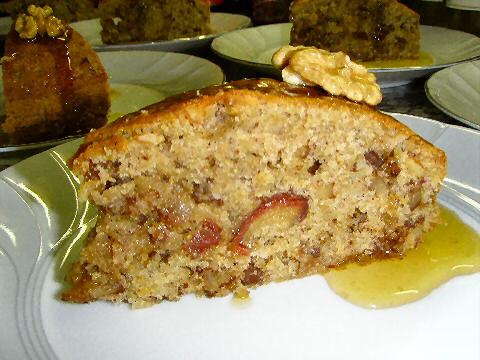
Mongolian desserts seem to be mostly of the yak cheese and fruit variety, but there were hints here and there about things with walnuts or dates. I thought I’d see about finding an interesting sort of walnut and date dessert and purely happened across this recipe for a fresh date, yam, and walnut cake – I doubled the recipe and made it as one big cake in a springform pan – I also don’t have fresh dates, but had some lovely Spanish dates left from the big sherry dinner a couple of weeks ago. The cake turns out great, and we garnished it with a toasted half walnut and warm organic honey.
Copyright © 2026 SaltShaker. This feed contains copyrighted photos and text from SaltShaker. If you are not reading this material in a feed aggregator or by e-mail subscription, the site you are viewing may be guilty of copyright infringement. Please contact [email protected] so that I can take appropriate action.
Plugin by Taragana
]]>“The government of Swaziland, one of Africa’s poorest and most Aids-ridden countries, has defended plans to spend nearly $2,5-million on celebrations to mark the 40th anniversary of independence. Opposition deputies have called for the celebrations, which will also mark King Mswati III’s 40th birthday, to be scrapped or scaled down given that most of the one million population lives on less than $1 a day. But government press secretary Percy Simelane said that the anniversary is an important milestone in the landlocked country’s history and will serve to unite the people. “Such celebrations are a unifying symbol to the Swazi nation because that gives the ordinary Swazi the chance of celebrating with royalty during such functions. The figure is not an issue,” Simelane said.”
– Mail & Guardian
Buenos Aires – Okay, so maybe picking King Mswati III’s 40th birthday as our week’s theme wasn’t the best choice. That’s in hindsight. I picked it a month or more ago, knowing little about Swaziland, his kingdom – vague scraps of memory from geography classes eons ago – and even less, if anything, about the King himself. At one time thought to be the shining hope for his country – with his traditional tribal roots fused with a “western” education – the king has apparently shown himself to be not much more than an egotistical, spendthrift playboy with a penchant for retribution against any public figures or media who criticize him, and the sobriquet of “Fire Eyes” for his quick temper. He has some truly… dumb… ideas as to how to handle problems that confront his reign – some 40% of his population have HIV or AIDS, and, similar to some other African leaders his first response was to deny that such a disease could exist within his country, later deciding to invoke a ban on girls having sex until they reached 21 years of age, then later a five year ban on all sex in the kingdom (other than for himself, of course), and only in recent years finally having woken up to the need to do something effective. He spends money like water – in one recent year buying a private jet that cost more than his nation’s entire health and education budget – using public funds, of course.
But, it was too late. I’d picked the theme, and done the research on the cuisine, and away we went, with apologies to anyone in or from Swaziland who would take offense to our little birthday party for the king.
The evening was ushered in with a cocktail based on Amarula, a South African liqueur – being the closest thing I was likely to find to a Swazi sort of drink – mixed with milk and coca cola (1:2:2) – sounds weird, but it actually works, and the cocktail is known as the Elephant’s Day Dream. On one night of the dinner we actually never got the cocktail served – there was a rush for spots at the table and everyone was suddenly seated, so we moved straight into the dinner.
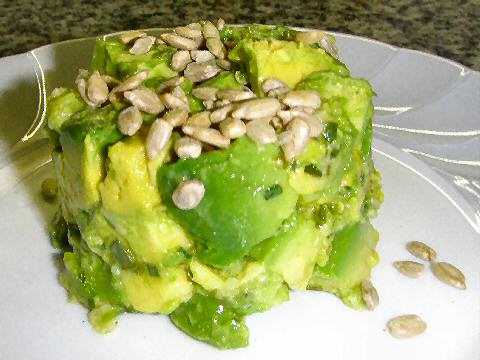
For the dessert, a simple cheesecake made with the amarula liqueur mentioned above, which is a cream liqueur made with the fruit of the marula tree, an indigenous one to the area, in place of the milk I normally add to the mix. It was topped, on the first night, with a quickly made hot caramel sauce, which I thought went well with the cheesecake, but not a perfect match… the second night I tried simply dusting it with a cinnamon and sugar mixture, with I thought worked better in terms of flavor, though, of course, a warm caramel sauce is a great thing – so maybe a cinnamon caramel sauce…?
And, that’s the name of that tune, as “they” say… we’ll leave this as a tribute to the official 40 years of Swazi independence, if not to the same 40 years of the king’s life…
Copyright © 2026 SaltShaker. This feed contains copyrighted photos and text from SaltShaker. If you are not reading this material in a feed aggregator or by e-mail subscription, the site you are viewing may be guilty of copyright infringement. Please contact [email protected] so that I can take appropriate action.
Plugin by Taragana
]]>“One of the greatest pains to human nature is the pain of a new idea. It is, as common people say, so ‘upsetting;’ it makes you think that, after all, your favourite notions may be wrong, your firmest beliefs ill-founded; it is certain that till now there was no place allotted in your mind to the new and startling inhabitant, and now that it has conquered an entrance you do not at once see which of your old ideas it will or will not turn out, with which of them it can he reconciled, and with which it is at essential enmity.”
– Walter Bagehot, political analyst, economist
Buenos Aires – Given that it only happens every four years, there was simply no question in my mind that a Casa SaltShaker dinner on the weekend of February 29th had to involve the leap year. It may be cliche, it may have been the easy way out in picking a theme, but so be it. I still had to come up with a menu. Leaping, Jumping, Gamboling, all those good synonyms seemed like a good place to start. Frogs, Kangaroo…? Hmmm… there weren’t any frogs’ legs available in Chinatown when I checked, and I don’t think anyone is yet importing marsupial meat…
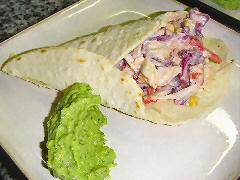 The famed Mexican jumping beans seemed like a general place to start, and when I saw several recipes out there for “jumping bean slaw“, I took the idea and ran with it. Since there were no jumping beans available (and the recipe didn’t use them anyway – I decided to start with white beans, and add fresh corn that had been blanched, diced tomato, slivered red peppers, shredded green and purple cabbage, and finely chopped green onion. For the “slaw” sauce, I whipped up some fresh sour cream and added lots of chopped garlic, cumin, coriander, guajillo chili powder, and a touch of salt. I decided to wrap them in homemade wheat tortillas, and accompany them with a simple guacamole – avocados, lime, cilantro, salt and pepper. I loved these, and given how fast they were consumed, it seemed our guests did too. And hmm, on the first night, I made what I thought was enough for two nights worth of slaw, but the three of us managed to finish off the bowlful, so I made more the next night!
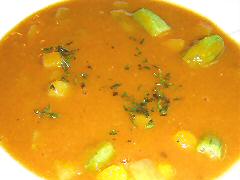 I ran across a Jamaican recipe for “Jump Up Soup”. I gather that the “jump up” is sort of way of stating “putting on airs” or “with attitude” – though I won’t guarantee that my interpretation is correct. Either way, the soup sounded great. The original recipe had the soup and then strips of jerked chicken added at the last minute, but since our next course had already been slated to be chicken, I decided to leave the soup sans bird. The broth is a mix of crushed tomatoes (I used a liter-sized jar of crushed Italian plum tomatoes – sometimes there’s nothing that can beat those, you know?), and mixed it with an equal volume of chicken stock (you could use vegetable stock if you want to make this vegetarian). Into that I put a chopped up sweet potato, half a good sized squash, a large onion, several garlic cloves, some leeks, a red bell pepper, and roughly a teaspoon each of allspice, cumin, turmeric, curry powder, and bay leaf. The leaves from a dozen stalks of thyme, a couple of hot chilies, a few slices of peeled ginger, and about ¼ cup of molasses. I cooked that all up until the vegetables were soft and then pureed it in the blender. Meanwhile, I cooked some diced sweet potato and squash until they were soft, and blanched some ½” segments of okra. The vegetables went into the bowls, the soup ladled atop, some fresh thyme leaves sprinkled around, and yum.
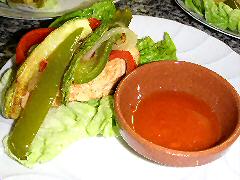 Who could resist the idea of “Leaping Lizard Lettuce Wraps” – a menu staple from a group of restaurants called the Rainforest Cafes. I’ve never had one, and the best I could find was a description that said it was a feast of lime-grilled chicken with roasted vegetables. That was enough to set me off on the trail of my own wraps. I cut chicken breasts into 1″ wide strips, and marinated them in a mix of fresh lime juice, salt, and ground chipotle peppers (smoked jalapeños) for several hours – almost like a chicken ceviche of some sort. Then I cooked those up in a hot cast iron pan until lightly browned. Meanwhile, I cooked strips of red and green bell peppers, onions, and zucchini in olive oil until they were nice and soft and just starting to caramelize. I laid a strip of chicken and a bunch of the vegetables atop lettuce leaves – they were “wrappable” if you wanted, though it was easier to eat them with knife and fork. Some hot sauce on the side – just fresh chilies in vinegar – for dipping, and we were good to go.
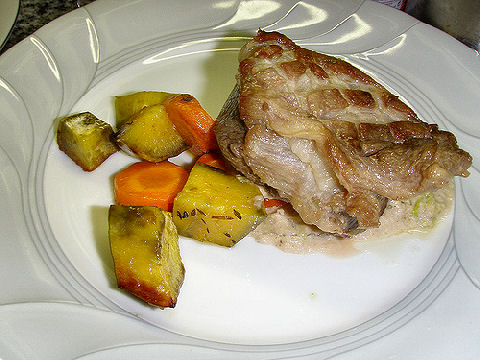
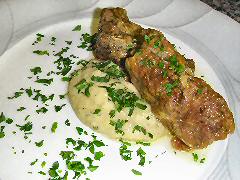 I loved this dish. I really did. I dry rubbed lamb with a mix of salt, dried mint and peperoncino all quickly milled together. I left it to sit for about eight hours, and then slow cooked the lamb – first browning it in a little olive oil and then adding white wine and yogurt to the pan, covering it, and letting it simmer for about three hours. Now, the first night, I used bondiola, or strips of lamb shoulder, as pictured here. The second night I couldn’t get anymore of that cut, and the only thing I could find in sufficient quantity was lomo, or loin of lamb. The former is a slight fatty, filled with connective tissue cut – and very simply, when braised, it comes out tender and delicious and just perfect, as the fat and connective elements sort of melt into the meat. The latter is a lean cut with a cap of fat on one side – it still tastes delicious, but the meat never gets that rich, meltingly tender character to it – it certainly gets soft, and the fat more or less melts off the side of it, but it’s just not quite the same. Still good, but I’ll stick with a braising cut of lamb in the future. Accompanying the lamb, a charred eggplant puree – whole small to medium eggplants charred over an open flame – literally until their skins are completely blackened and they’re almost falling apart soft. Let them cool, then cut them open, scoop out the insides – don’t worry about picking off every bit of charred skin, it adds to the flavor and color of the dish. Puree that up with some olive oil, a little ricotta or cream cheese (since I was only using a very small amount I didn’t make homemade this time – it was only about ½ cup for six eggplants), lots of garlic, salt and white pepper. You could also use a thick yogurt in the puree instead of the cheese. Garnished with chopped parsley. And, by the way, it makes great sandwiches the next day – the lamb shredded atop the puree on fresh bread…
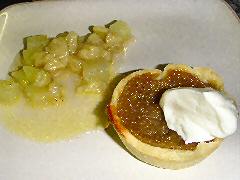 It started off with a very strange sounding cocktail, the Leaping Elephant – a blend of apples, bananas, and butter… who wants to drink that? But it did sound like an idea for a sauce – diced apple and banana cooked in a bit of gold rum and banana liqueur and butter… and what to go with it. Somehow, the idea of a butter tart popped into my mind. I don’t think I’ve ever had a butter tart, but I simply knew such a thing must exist. And, who knew, but apparently it’s practically a national dessert in Canada. Yes, Canada. Butter Tarts. National Dessert. It didn’t track, human nature and the pain of a new idea and all that as quoted above. Let’s just say those Canadians are on to something. I found a great sounding recipe on the Joy of Baking website and didn’t change a thing… (golden raisins instead of black, but for all I know, that’s what the author used)… although, I found the filling to be a little skimpy for a dozen tarts on the first night, so I upped it by 50% on all ingredients the second night and ended up with perfectly filled tarts. Really, now I have to find out if Canadian cuisine has more cool stuff to it like that…
So what did you guys do for leap year?
Copyright © 2026 SaltShaker. This feed contains copyrighted photos and text from SaltShaker. If you are not reading this material in a feed aggregator or by e-mail subscription, the site you are viewing may be guilty of copyright infringement. Please contact [email protected] so that I can take appropriate action.
Plugin by Taragana
]]>“You were born with wings. Why prefer to crawl through life?”
– Rumi, 13th century Persian poet and theologian
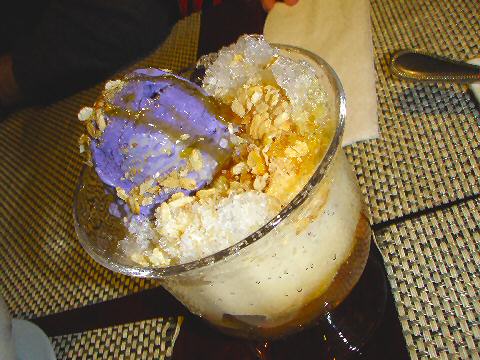
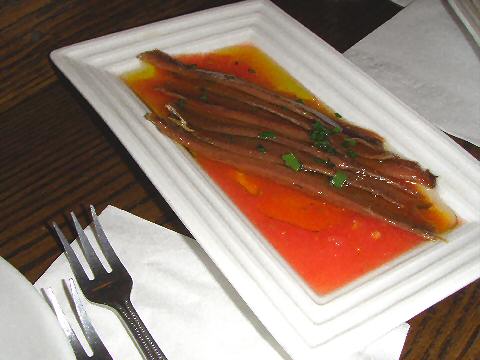
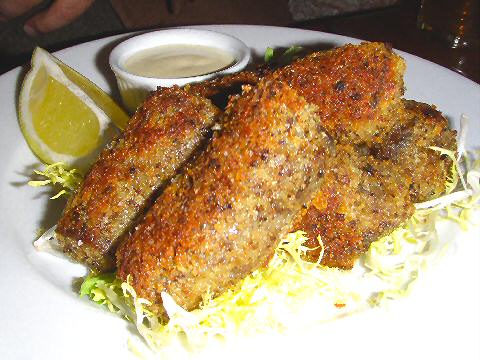
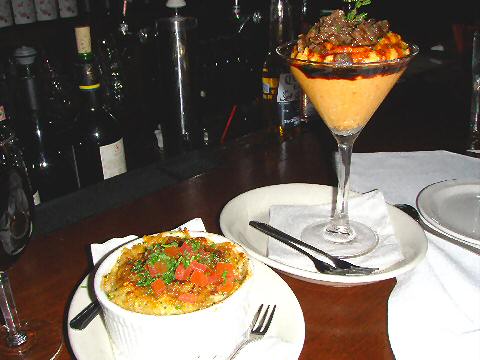
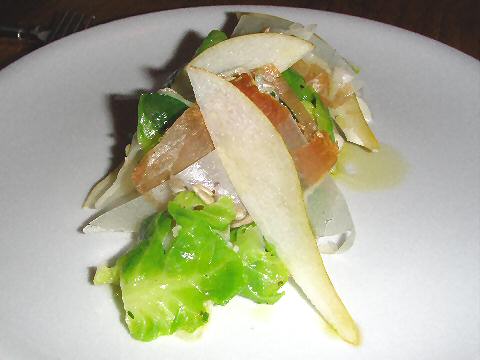
New York City – There is a reason to crawl through life… appetizers. Appetizer Crawls. Winging our way from one restaurant to the next would be kind of cool if we had literal wings, I suppose, but then there’d be all that ‘splainin’ to do when you landed at the hostess’ desk, and trying to fit on the closest banquette with wings unfurled, and all the rest. Crawling is simply more sensible when it comes to appetizers.
Copyright © 2026 SaltShaker. This feed contains copyrighted photos and text from SaltShaker. If you are not reading this material in a feed aggregator or by e-mail subscription, the site you are viewing may be guilty of copyright infringement. Please contact [email protected] so that I can take appropriate action.
Plugin by Taragana
]]>