“Filipino cuisine could easily be the original fusion cuisine. After all, more than 400 years of Chinese, Hispanic, American and various other influences have blended together in perfect harmony for a very individual, very unique cuisine that is simply sarap (delicious).”
– Datin Hjh Zainah Bujang, General Manager of the Sheraton Utama Hotel.
Buenos Aires – In nearly three years of Casa SaltShaker dinners I don’t think I’ve had such a contentious response as to this last weekend’s dinners. Apparently, Filipino cuisine, or the idea of it, inspires quite a reaction amongst many diners. I received several e-mails from people who wanted a reservation at Casa S, but found the idea of our theme anything from “unpleasant” to “completely unacceptable.” More than one person informed me categorically that they “don’t like” or “hate” Filipino food. Really? All of it? What about the cuisine is it that you don’t like? One woman even responded to my query (more politely worded) that she’d never tried it, but was flat out certain that she wouldn’t be able to stomach it.
Now, having spent a good portion of my adult life in the East Village in NYC, home to several Filipino restaurants, one of which was where I spent Sunday brunch probably twice a month for many years, I don’t get it. I have no idea what it was these folk think the cuisine consists of. I’ve mentioned in these posts having lunch a couple of times at Grill 28 in New York – and sure, we had dinuguan, a pork liver and blood stew – but is that any further off the charts than, say, a morcilla sausage is here in BA? We also had vegetable springrolls, chicharrón (which is a common enough dish in Latin American cooking, or chitlins in the U.S., braised pork belly, and shrimp and green beans in coconut milk. There’s a whole lot of variety in the cuisine – and even for folk who might be worried that we’re going to serve something “weird”, let’s see – we’ve served pasta with intestines at sold out Italian meals, veal tongue at Romanian dinners, lamb’s tongue at our Doctor Who dinner, sweetbreads at more than one event, kidneys, heart, gizzards… from various animals – it’s worth remembering that we serve dishes “inspired” by various cuisines, not necessarily traditional dishes.
Still, it was a visceral reaction from potential customers that was surprising. On to the food, and what they missed….
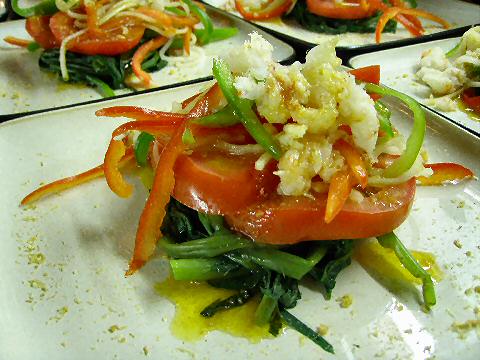
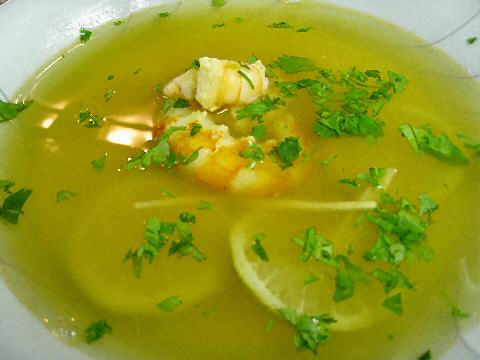
From there, I’d looked at a “chorizo and bread soup” – but the recipes and descriptions I found seemed a little anemic… or just not quite what I wanted – simple beef broth with sliced onions, sliced chorizos, and croutons atop. Instead, I made a panade, a slow cooked bread and caramelized onion soup that I’ve made made many times before – with a twist – I pureed the soup without the onions, leaving them as a textural component, and then sauteed three kinds of chorizos – loganizas, cantimpalos, and candelarios, drained them, and added them to the soup. Cooked them all together for another half hour or so to meld the flavors.
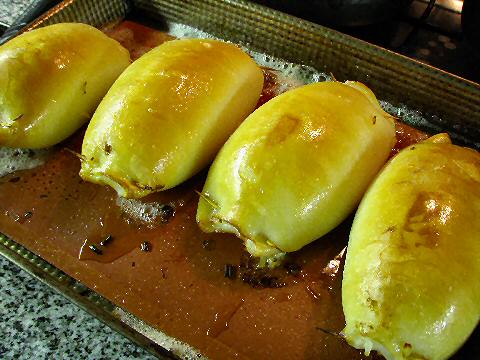
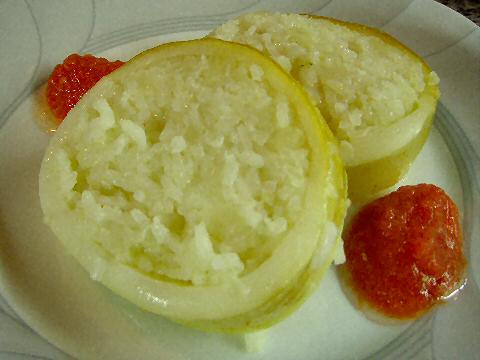
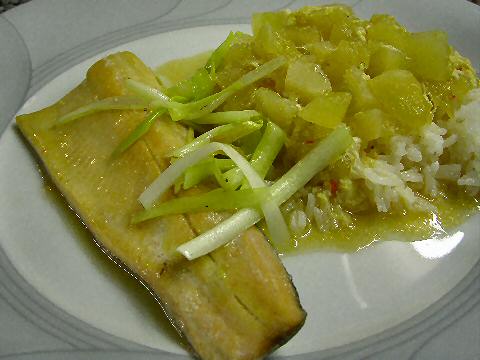
This was my favorite dish of the evening. It just turned out as I imagined it would. The original dish called for small squid to be stuffed with rice, garlic, onions, chilies, and tomato, and then charcoal grilled. I had this sort of white on white vision of the dish instead – I filled large squid (roughly 8-10″ long) with a mix of partially cooked jasmine rice, garlic, onion, and water chestnuts, then broiled them in the oven until they were a glistening, golden brown. I sliced them, and served them with little spoonfuls of hot sauce made from equal parts tomatoes and jalapeños with a splash of lime juice and salt for zip. Also on the table were cruets of garlic vinegar, a common accompaniment with Filipino food, and it really added a nice touch to the dish.
The main course, a simple, hearty braised bondiola, or pork shoulder, in a blend of soy sauce, garlic, bay leaves, onion, tomato, sugar and salt. I braised it for about 5-6 hours, until it was so tender it was falling apart, then sliced it and served it with potatoes that had first been boiled, then sliced and broiled with some olive oil. A little of the reduced cooking liquid from the pork over the top and we were all set.

Need I say anything more about Filipino inspired cooking?
Copyright © 2026 SaltShaker. This feed contains copyrighted photos and text from SaltShaker. If you are not reading this material in a feed aggregator or by e-mail subscription, the site you are viewing may be guilty of copyright infringement. Please contact [email protected] so that I can take appropriate action.
Plugin by Taragana




 ]]>
]]>“We shall reign with righteousness, for the benefits and happiness of the Siamese people.”
– Oath of Accession for the Thai king
Buenos Aires – Look, he wasn’t feeling well, wasn’t even able to deliver his annual birthday address to the nation the night before his birthday festivities, so we didn’t count on him to show up for dinner. He would have been welcome. Bhumibol Adulyadej, better known as King Rama IX of Thailand, turned 81 this weekend. When it comes down to it, he’s more or less the guy who is the sequel to the well known “The King and I” – taking over when Yul Brunner’s real-life counterpart departed this globe. I decided on a seafood and vegetable dish dinner – I’d had several requests from visiting pescetarians and hey, I like seafood and vegetables too.
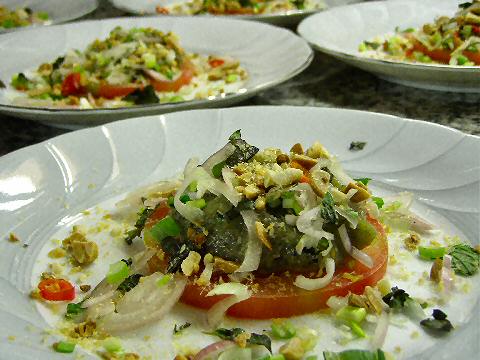
The next course, I played around with two dishes I’d done before for a previous Thai dinner – just two of the three middle dishes – the fried tofu sauteed up in oyster sauce and chili oil atop grilled pineapple – I stacked five squares of the tofu in a cute little tower, and then drizzled the tower with a reduced balsamic caramel. The squid dish I made with squid rings rather than tentacles, which was much better received – I also beefed up the spice a little with a mix of ground black and red peppers.
The dessert, from the same dinner as linked above, a butternut squash tart with a cashew caramel that worked out beautifully.
I have no idea what our distant friend Bhumibol was dining on, or if he was even up for a good dinner given his illness, but hopefully he would have appreciated ours had he joined us.
Copyright © 2026 SaltShaker. This feed contains copyrighted photos and text from SaltShaker. If you are not reading this material in a feed aggregator or by e-mail subscription, the site you are viewing may be guilty of copyright infringement. Please contact [email protected] so that I can take appropriate action.
Plugin by Taragana
]]>“When helicopters were snatching people from the grounds of the American embassy compound during the panic of the final Vietcong push into Saigon, I was sitting in front of the television set shouting, ‘Get the chefs! Get the chefs!”
– Calvin Trillin, writer
Buenos Aires – I don’t know if it’s the economy, or just some sort of culinary shake-out as this city moves forward in its gastronomic surge, but it seems like every time I look away for a few days, the restaurant scene has noticeably changed by the time I look back. The most recent thing to come to my notice was the opening of two Vietnamese restaurants, which triples the number that we had here until now. My first thought was to do a compare and contrast sort of writeup, but it’s not a fair approach in this case, as you’ll quickly see….
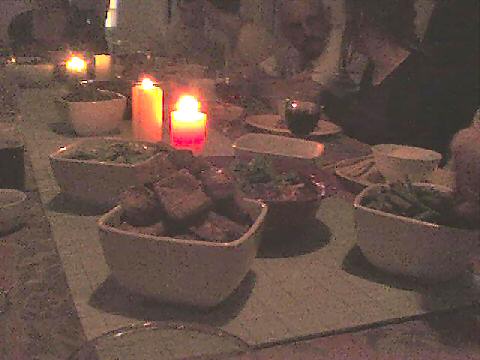
The atmosphere, like many closed door spots, is very casual – a long table, low to the floor, and small round cushions to sit upon. If you’re not used to dining at that physical level it’s a little straining on the back – or maybe it’s just my age showing, and indeed, other than my guest, the next closest person in age to me in the room was about 15 years younger, and probably the next after that, another 5-10…. Many of them seemed to already know each other, either from the yoga classes or one of the past meals (this was month three of dinner offerings). I didn’t bring the regular camera, so you just have the phone shot of the main course above.
The particular evening we were there, the cooking was focused on vegetarian dishes, though that’s not the case each month – December’s menu features pork, and January’s menu is a seafood one. I’d add one thing to the “family-style”, which is the way things are served – big bowls and plates in the middle of the table and everyone reaching with chopsticks for whatever suits their fancy, and “rural” – which is “home-cooking”. That’s not a bad thing, believe me, I love home-cooking – I consider most of what I do at Casa SaltShaker to be simply fancied-up home cooking. We started off with Bánh xèo, plates of Vietnamese scallion crepes, sans the usual pork or shrimp filling – the usual approach being to cook them on one side, then fold them over the ingredients – here, left open and soft and bubbly on top; and a bap cai of one or another sorts – I think the term basically means salad, and is usually prefaced by another word that specifies its key ingredient – perhaps in this case a nom bap cai, which I think refers to cabbage salad – hey, step in here and help me out…. Both quite good, and we gobbled them up quickly.
The main course was served with a bowl of rice placed at each person’s plate, and then a quintet of bowls in the center – a tomato based broth with vegetables to “wet the rice”, some fried tofu in caramel sauce, mildly spicy green beans, sauteed broccoli, and sauteed bok choy. I loved the broth, I thought it had a nice balance to it, the green beans were quite good, though I think the spice level could have been upped, given that out of fourteen guests only one was Argentine, and he was into spicy food, the tofu, a bit sweet for my tastes, though I’ve had the dish before and it usually is too sweet for me. The bok choy and the broccoli, a little plain – I think they could have used both some spicing, but also some differentiation – they seemed to be the same dish, with just different vegetable in the center – still, as noted, we’re talking home cooking – and I doubt my mom would have differentiated them any more than that. One nice touch, the owner/cook, Thuy, sat down with us for the main course – her work done in the kitchen (and she has an assistant in there) – something I wish we could do here at Casa S – hmmm… maybe the main course idea is a good one, we could join for that – though, we still have desserts to prepare, whereas at A Little Saigon, dessert, and I’ll be upfront, disappointingly, was filled cookies from Chinatown, not even Vietnamese.
Overall, a fun and enjoyable experience, and I look forward to more dinners there – it reminded me of dinner parties we had in college, with better food. The cost, 85 pesos, or discounted to 70 if you bring a bottle of wine to share with the group – that’s kind of hit and miss – most of what people brought was bottom end cheap, a way of saving money on the overall evening – and, no attempt made on anyone’s part to match it to the food being served.
In a completely different style and vein, the also new Bistro Vietnam, also in Palermo, at Gurruchaga 1776, 4833-2311, immediately got put on my radar. The place is owned by a very nice man, whom we met over lunch last week. We unfortunately picked a bad day, last Monday, to go – the two chefs, who are also co-owners with him, are the wives of two diplomats at the Vietnamese embassy, and the weekend apparently had been filled with some sort of major shindig that they were hosting over there – so no one had been in the restaurant preparing things – Monday’s lunch menu was limited as to what was available, plus it was clear that some of the things had been sitting around a couple of days. He assured us that it was a highly unusual circumstance and hoped we’d come back and give the place another shot. [This place has also closed as of early 2010.]
The place is a long, pretty back room behind a Vietnamese-style clothing store, plus a small garden area with tables. The tables are bit low, with benches alongside, kind of like sitting at a kid’s picnic table. To the owners of both places – hey, I appreciate the authenticity of experience, but at the same time, I think there’s a need to cater to your audience a bit…. The waitresses were relatively attentive, and, it turned out, they were the ones preparing the lunch meal with the chefs not there (due in at 3 p.m. we were informed). The cooking, oddly, is not really done in a kitchen – at the end of the room there’s an enclosed bar, with refrigerators where all the ingredients are stored – the “kitchen”, is a small passageway between the bar and the garden, lined with a couple of butane burners, a microwave, and a rice cooker – and it’s all kind of done there in the hallway. On the other hand, most of the dishes being served are of a type where the preparation work is almost more important than the final cooking (which might be why the menu was limited with only the waitresses there to “cook” – it was whatever they could handle).
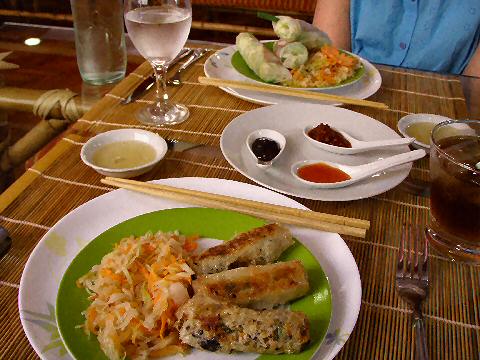
Off the bat, a disappointment, no ph? – that wonderful broth with noodles, meat and vegetables that’s pretty much the test of a Vietnamese cook’s mettle – not that it’s not on the menu, it just wasn’t available. We started off with nem ran, the North Vietnamese name for what I know as cha gio – pork filled springrolls – the filling, delightful, the outer “skin” a little soggy, this is where the “sitting around” was a slight problem – still, if these had been freshly made and nice and crisp, they’d have been dead-on. We also had a plate of nem cu?n, cold summer rolls, filled with pork and shrimp – these were fine as is, being kept in the refrigerator for an extra day for a summer roll works out. The two appetizers were served with a trio of dipping sauces – a simple garlicky vinegar, a tomato based hot sauce, and a smoky plum sauce. All quite good. They were also both accompanied by a cabbage salad, though, this one more of a pickled style, and had also been there for a couple of days. Oh, fresh-brewed iced tea – they win points in BsAs just for that!
For our main courses, with the ph? literally off the table, we settled on mi?n xáo, sauteed cellophane noodles with shrimp – nicely spiced, well made – actually given that it was prepared by a waitress using a wok on a butane burner, pretty impressive. Not to disparage waitresses, and I guess they’re trained to do this at Bistro Vietnam. The other plate was a ga xao xa ot – well, not exactly, as that’s a lemongrass chicken, this was a lemongrass pork – still, quite good. We finished off with a couple of Vietnamese style coffees – not quite made the traditional way with the espresso-ish coffee dripping into the condensed milk, but a nice double shot of espresso atop sweetened condensed milk, and shared a bowl of housemade bitter cocoa ice cream with walnuts – not exactly traditional, but delicious.
Overall, high points for authenticity, service, charm. Disappointing on the missing items from the menu, but worth going back to check out again. Pricing, quite reasonable, for all of this we spent about 65-70 pesos apiece, with tip.
Biggest contrasts between the two places, and this is part of why I don’t really want to do a compare and contrast – A Little Saigon focuses on South Vietnamese home-cooking, and Bistro Vietnam focuses on restaurant style North Vietnamese dishes. A very different experience too – sitting at one large communal table is part of the fun of the former, having your own little spot of tranquility that of the latter.
Copyright © 2026 SaltShaker. This feed contains copyrighted photos and text from SaltShaker. If you are not reading this material in a feed aggregator or by e-mail subscription, the site you are viewing may be guilty of copyright infringement. Please contact [email protected] so that I can take appropriate action.
Plugin by Taragana
]]>It’s spring fever…. You don’t quite know what it is you DO want, but it just fairly makes your heart ache, you want it so!”
– Mark Twain, author
Buenos Aires – No question, spring has sprung in these parts. And what better place to stop off for lunch on a beautiful spring day in Palermo than Spring, J.L. Borges 2284 Bulnes 2577 [new location], Guatemala 4452 [and moved again], a spot I’ve passed by many a times and noted the sign for comida vegetariana, and said to myself, “one of these days I have to get back here and check it out.” And, so I did. It’s a large space, very plain, and, upon entering, I realized it was a tenedor libre, an all you can eat buffet, with a Chinese, or at least Asian, bent. Of course, a buffet calls out to my deepest roots, right into the genetic material of my being, and given that I’m trying to shed a few pounds plus lower a bit of that cholesterol stuff, a vegetarian version seems the better option. [Closed]
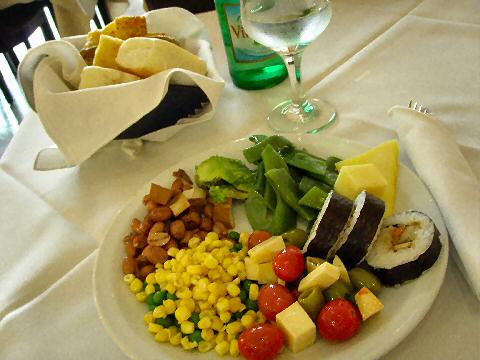
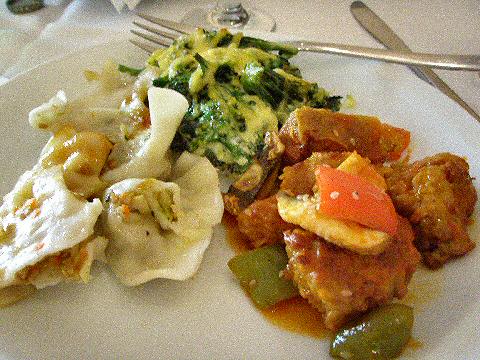
I think, other than perhaps the tempeh dish, I’d stick with the cold dishes, unless something in particular caught my eye one day – and I will be back, because for a mere 20 pesos at lunch, it’s a great deal in a city that’s starting to get expensive these days. And the dishes do change – or at least that’s the claim – 80 selections that change throughout the course of the day – and better quality than most of the Chinese all you can eat places I’ve checked out in town.
Copyright © 2026 SaltShaker. This feed contains copyrighted photos and text from SaltShaker. If you are not reading this material in a feed aggregator or by e-mail subscription, the site you are viewing may be guilty of copyright infringement. Please contact [email protected] so that I can take appropriate action.
Plugin by Taragana
]]>“Finally, when it had been erased from the map of the penninsular after some many centuries, the name ‘Langkasuka’ again appeared in our history when it was mooted by our founding fathers as a possible name for independent Malaya.”
– Sabri Zain, The Lost Kingdom of Langasuka
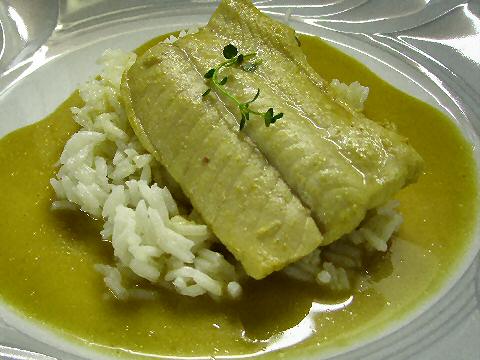
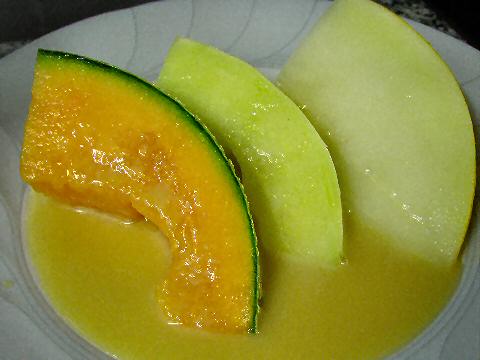
Buenos Aires – There was no reason in particular to go with a Malaysian theme at Casa S this past weekend. It was a whim – I like Malaysian food, it had been awhile since I’d cooked any, our southeast Asian dinners in general are popular – why not? Malaysia, being a conglomeration of what were once fourteen independent states, has a variety of influences on its cuisine – the majority Malay population, India, China, and various smaller tribal cultures. All of these lead to a cuisine that’s similar in many ways to its neighbors but with its own unique character. I have some favorite dishes, though, in the end chose not to prepare them, simply because they’re red-meat based and several guests on both nights had asked for non-red options… so be it – a seafood and vegetable dinner it was to be, and thankfully, much of Malaysia’s cuisine is based on both of those.
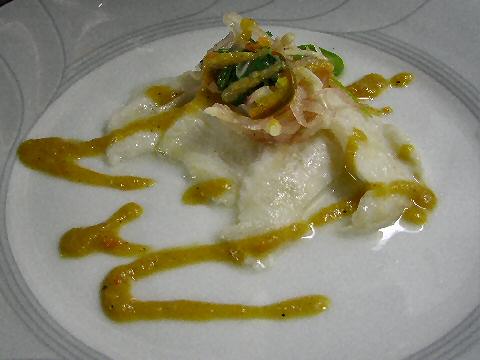
Next up a soup based on an Indian influenced dish, called rasam. In a large pot saute mustard seeds in oil until they’re popping. Add fenugreek seed, shallots, chilies, black onion seed, and a couple of bay leaves and saute for about two minutes. Add peppercorns, fennel, cumin, and coriander seeds, garlic cloves, turmeric and salt, and cook another two minutes. Add water and coarsely chopped tomatoes, and then I used the hand blender on the whole thing to puree it coarsely, then added a handful of tamarind pulp and seeds, and let the whole thing simmer for about an hour until it was nice and flavorful. I strained it into another pot – now, the recipes I have all more or less stop there (and the spices change from recipe to recipe), leaving it a simple clear broth. I wanted some substance to it, and though that some cauliflower and potatoes would do that well – I separated the former into little florets and the latter diced, and then roasted them in the oven with a little olive oil and salt until they were lightly browned. Then, right into the broth.
The least successful dish, in my view, was one based on an eggplant side dish called tiyung belacan. The traditional approach is a paste made of various ingredients including toasted dried shrimp, and then sauteeing the eggplant in wedges in the paste. I couldn’t leave well enough alone, you know? The paste itself was fine – a puree of a couple of onions, some garlic cloves, a knob of ginger, a good quantity of dried shrimp that I toasted in a dry skillet, a chili, and a few basil leaves. Stir-fry that for a few minutes until the extra water evaporates and it becomes paste-like. At that point, I made little tart shells, and layered slices of yam (sauteed in oil for five minutes first or they won’t cook all the way through in the tart), zucchini, and eggplant, each arranged in a pinwheel of slices (I tried using small dice one night, but didn’t like the way it looked). I topped that with a dollop of the sauce and baked in the oven. The flavors were fine, though I wasn’t thrilled with the presentation, and I think the sauteeing method blends the flavors better. Probably not one I’ll repeat down the line.
Copyright © 2026 SaltShaker. This feed contains copyrighted photos and text from SaltShaker. If you are not reading this material in a feed aggregator or by e-mail subscription, the site you are viewing may be guilty of copyright infringement. Please contact [email protected] so that I can take appropriate action.
Plugin by Taragana
]]>“Bring me olives and morsels and I’ll be happy.”
– Mariah Carey, singer
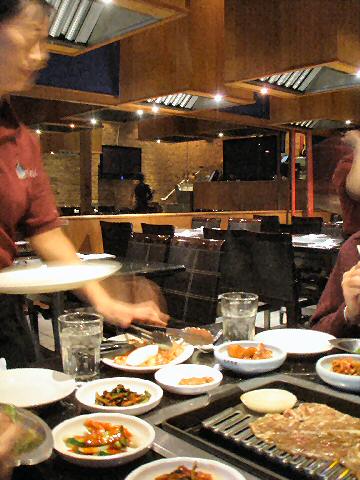
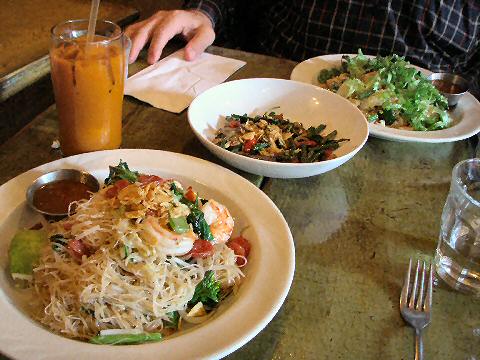
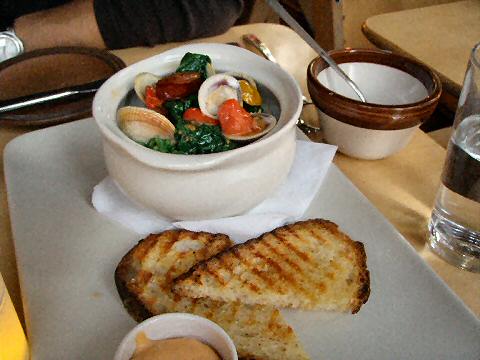
New York City – The other day, a friend of mine here said, “You really are verbose. I pull up your blog in the morning to look at it and there are a dozen photographs and four or five paragraphs. That’s just too much to deal with before I finish my coffee. Couldn’t you just edit, maybe down to half?” I understand, really I do. There are certain things that I just don’t want to face before coffee in the morning. Not words, I can play with them anytime. And, regular readers know I covered this recently…. Besides, further into the conversation he admitted he read all of it, he just didn’t quite get how I could come up with that much to say about these things. Hey, my reviews are shorter than most newspaper restaurant reviews and I know he reads those religiously! That all said, this, other than a rambling first paragraph, is going to just be three quick tidbits – not full reviews of the trio of restaurants visited, but a simple singling out of something in particular that I liked. In particular.
Copyright © 2026 SaltShaker. This feed contains copyrighted photos and text from SaltShaker. If you are not reading this material in a feed aggregator or by e-mail subscription, the site you are viewing may be guilty of copyright infringement. Please contact [email protected] so that I can take appropriate action.
Plugin by Taragana
]]>