“The Federal Republic of Central America, also known as the United Provinces of Central America, was a short-lived state in Central America, which consisted of the territories of the former Captaincy General of Guatemala. An experiment in republican democracy, it existed from July 1823 to 1840. It was intended to be a federal republic modeled after the United States of America…. The republic consisted of the states of Guatemala (which initially included a large part of what is now the Mexican state of Chiapas), El Salvador, Honduras, Nicaragua, and Costa Rica. (Panama was still part of Colombia at the time.)”
– Wikipedia
Buenos Aires – There was nothing in particular about the weekend that inspired a Central American themed dinner, simply whim. I’ve been exploring some of the cuisine from the various countries that make up “Central America” (now seven countries rather than the “original” five, Panama and Belize having been added in later on). The fact that the short-lived Federal Republic had five member states made it easy to fit into a five course tasting menu, you know?
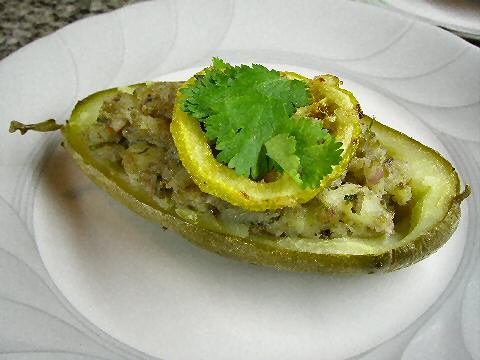
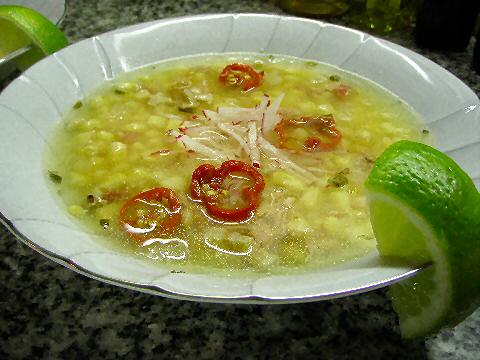
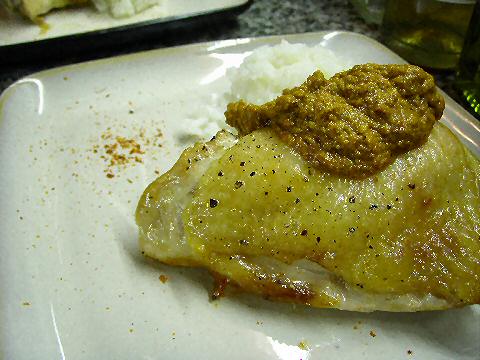
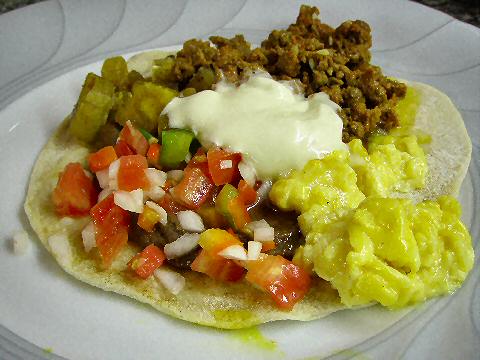

Overall, I’d say most folk were quite happy with dinner – I know we were.
Copyright © 2026 SaltShaker. This feed contains copyrighted photos and text from SaltShaker. If you are not reading this material in a feed aggregator or by e-mail subscription, the site you are viewing may be guilty of copyright infringement. Please contact [email protected] so that I can take appropriate action.
Plugin by Taragana




 ]]>
]]>Capt C. killed 2 bucks and 2 buffaloe, I also killed one buffaloe which proved to be the best meat, it was in tolerable order; we saved the best of the meat, and from the cow I killed we saved the necessary materials for making what our wrighthand cook Charbono calls the boudin blanc, and immediately set him about preparing them for supper; this white pudding we all esteem one of the greatest delacies of the forrest, it may not be amiss therefore to give it a place. … it is then baptised in the missouri with two dips and a flirt, and bobbed into the kettle; from whence after it be well boiled it is taken and fryed with bears oil untill it becomes brown, when it is ready to esswage the pangs of a keen appetite or such as travelers in the wilderness are seldom at a loss for.”
– The Journals of Lewis and Clark, 1804-1806
Buenos Aires – For whatever reason, it seems that my boudin blanc from last weekend’s dinner has generated much interest. I’ve received a dozen e-mails asking questions about it, ranging from simple “can you describe how it tasted?” to requests for clarification about the process of making it. There’s even a discussion about it going on amongst several folk on Facebook. Who knew that such a pale sausage could elicit such passion?
On the other hand, they were really, really good. And I had a small amount of sausage stuffing leftover – or sort of returned, since it was basically a couple of sausages that burst while I was tying them off and I simply put the filling into the refrigerator rather than going to the trouble of stuffing more casings. And next morning that led to one of the best breakfasts I think I’ve ever had. Really.
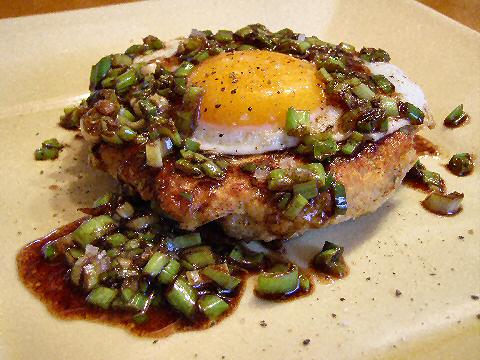
I took the remaining sausage meat and mixed in one extra egg to help it bind together – possibly not necessary but I didn’t want to take a chance that it would fall apart. I patted it into a couple of patties, and simply sauteed one in a mix of butter and neutral oil. When it was cooked, I set it aside on some paper towel to drain, and slipped an egg into the same pan, cooking it until the white had just set and the yolk merely quivered with anticipation. I trimmed the egg, slid it atop the boudin. I drained most of the oil out of the pan, leaving just whatever didn’t easily pour out, and into that I put a handful of chopped green onions, cooking them over very high heat until they’d just started to soften – only about 30-40 seconds. I deglazed the pan with a fruit vinegar, cooked it another 10 seconds or so, and spooned the sauce over the boudin and egg. I added a little fresh cracked black pepper and a sprinkle of coarse sea salt, and sat down to feast. Let’s put it this way, it was so good, that although I’d planned to do something else with the other patty at a later moment in the day, I went ahead and made another one and ate it.
Copyright © 2026 SaltShaker. This feed contains copyrighted photos and text from SaltShaker. If you are not reading this material in a feed aggregator or by e-mail subscription, the site you are viewing may be guilty of copyright infringement. Please contact [email protected] so that I can take appropriate action.
Plugin by Taragana
]]>“The absolute neutrality of Switzerland as a political principle is generally dated from the year 1674, when the Federal Diet declared that the Confederation, as a body, would regard itself as a neutral state and intervene on neither side in the war which had just broken out.
Edgar Bonjour, Swiss Neutrality, Its History and Meaning
Buenos Aires – Like the multi-function knife that the country is famous for, the cuisine of Switzerland is noted for it’s varied influences. Sandwiched in a mountainous region where it is bordered by Germany, Italy, France, Austria, the local cuisine picks up techniques, elements, and ingredients from all of those, making for a mix of interesting dishes. Now, did we offer up a fondue? No. Not even a raclette, though I gave it serious thought. Instead, I tried to pick a variety of dishes from the different regional styles of Swiss cookery. Interestingly, the dinner, held on the weekend of Switzerland’s independence day, attracted three visitors from the country (separately); so I had to apologize for any changes I might make to their grandmothers’ recipes in advance.
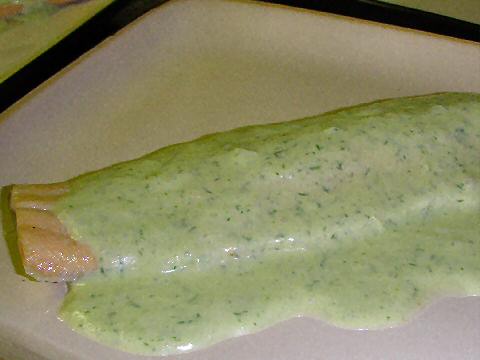
We started off with a truite au bleu, or chilled poached trout. I poached the fillets in a simple court bouillon – water, red wine vinegar, slices of lemon, carrot, celery, and onion, sea salt and black peppercorns. Then I chilled the fillets and topped with a simple fresh dill cream – sauteed shallots in butter until soft, deglazed with Torrontés (rather than Riesling), and then pureed that with cream and lots of fresh dill. Be careful at this point – the second night I ran the blender too long and the cream turned to butter – so we served the trout with a quenelle of dill butter atop.
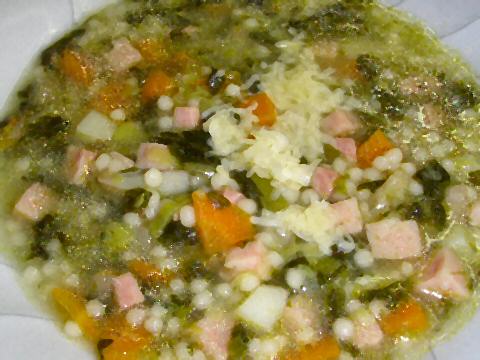
As usual, the soup was pretty much the hit of the evening (maybe we should just open a soup restaurant?). I found only a few references to a Chalet Soup, but what I found sounded delicious. The original recipes called for an herb and onion infused milk into which were later placed vegetables and ham. I decided to go for dairy-free, given that there was alot of cream and cheese in other parts of the meal. From there, it was roughly equal parts of diced ham, leeks, carrots, and onion all sauteed together until just starting to turn golden. I added diced red potatoes, skin on, and chopped spinach, topped it off with water, added freshly ground black pepper, and let it cook until the potatoes were done, then added just a small amount of small round pasta here called municiones, cooked until they just started to swell and let the whole thing sit off the heat for an hour or two to blend the flavors. Reheated for service, seasoned to taste, and a little grated gruyere on top of each serving.
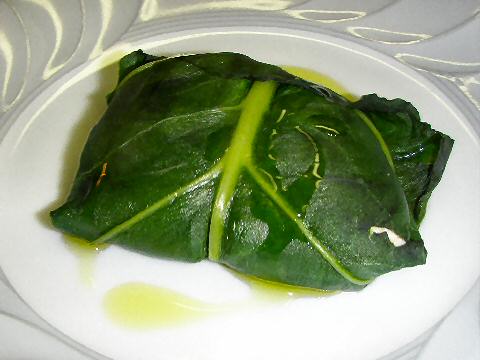
A simple dish, but really, really good… blanched and shocked swiss chard leaves, then wrapped them around a scoop of cream cheese (homemade of course) that I’d pureed with sauteed bacon and garlic. Then for service, baked the packets in the oven to turn the cream cheese molten, and drizzled the plate with green lemon oil.
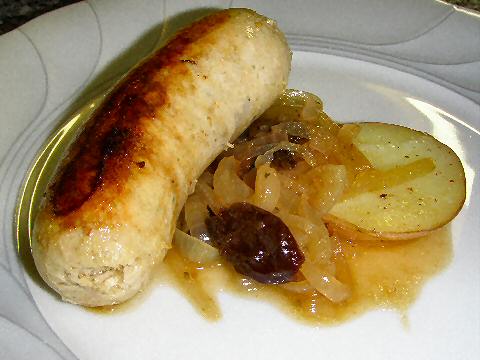
On to the main course, to which one of the Swiss visitors proclaimed “finally, a real Swiss dish” – he’s from the German influenced part of Switzerland. Boudin Blanc – a blend of chicken breasts and pork loin, in roughly equal proportions, medium grind, along with a pureed blend of cream that was heated and infused with white onions, orange peel, fresh thyme and parsley, powdered bay leaf, cardamom, salt and white pepper. Then I mixed in a bit of breadcrumbs to that and let them soak up some of the liquid. I mixed the whole mess together and added a couple of beaten eggs. Then I used the hand blender to really blend it together well (a food processor would work too, in batches, depending on how much you’re making). I stuffed the casings with the mixture, then poached them until just cooked through in salted water. Finally, for serving, browning them in a hot frying pan and then putting them in the oven to finish cooking through. I served them up with slices of roasted potato and an onion and prune compote – sliced onions cooked in butter and oil until lightly browned, then the prunes, black pepper, a splash of vinegar, and chicken stock added and let the whole thing cook until most of the liquid was evaporated.
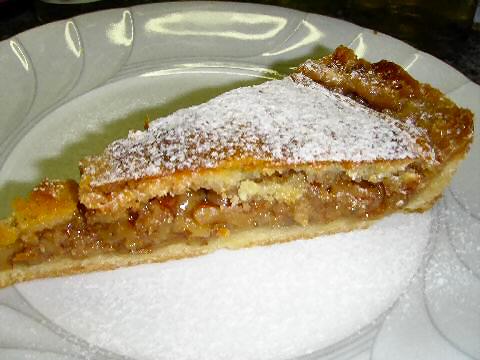
And, finally, I took a shot – not that I don’t often take shots, but in this case, I’ve actually never seen nor tasted this dessert – though certainly some similar ones. No credit for the recipe, I followed an online recipe for Engandiner Nusstorte to the letter and it turned out beautifully. My only touch was a little powdered sugar sifted over the top. Absolutely delicious, and I’m glad to add another dessert to my repertoire! Comments from the three Swiss folk – “this is exactly what engadiner nusstorte should be” and “I don’t usually like most engadiner nusstortes, but if they were all made like this I would – this might be the best one I’ve ever had.” Kudos to the recipe author!
Copyright © 2026 SaltShaker. This feed contains copyrighted photos and text from SaltShaker. If you are not reading this material in a feed aggregator or by e-mail subscription, the site you are viewing may be guilty of copyright infringement. Please contact [email protected] so that I can take appropriate action.
Plugin by Taragana
]]>We need to educate our children if we want our continent to prosper, but they can’t learn if they go to school hungry.”
– Cesária Évora, the “Barefoot Diva”, Cape Verdian singer
Buenos Aires – If I were to ask you to tell me a little about Cape Verde, I’m guessing you’d draw a blank. So would I. Beyond knowing that they were (actually I probably thought, “it was one island”) a group of ten islands off the western coast of Africa, I had nothing. I now know slightly more about them – they were uninhabited until the 15th century when Portuguese fleets discovered them and began using them as a transit point for African slave trade, whaling, coal, and resupply. They’ve only been independent since 1975, a mere 33 years, and spent the first 15 of those with a “one-party democracy”, a rather oxymoronic political system, the first multi-party elections were held in 1990. It is now considered the most stable democracy in Africa, though, with only 18 years of real practice, it may be too soon to really make that claim. More than 70% of the fewer than half-million people in the population are Creole, i.e., of mixed Portuguese and African descent, and the food of the islands echos that blend. July 5th is the nation’s Independence Day, and we celebrated with a little reimagination of traditional dishes – brought home all the more strongly by one of our guests who had actually spent time living on the islands at one point (during a fascinating six-year bicycle trip around the world!), who noted that while the flavors were reminiscent of the food there, “no one on Cape Verde eats this well.”
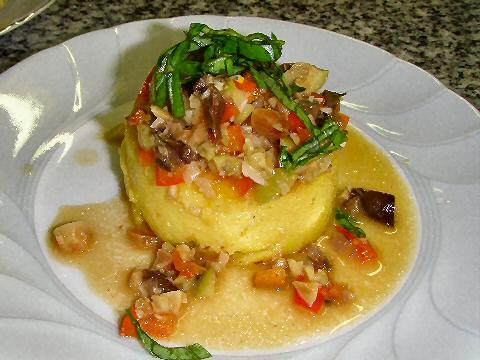
Anyone who knows what a b’stilla looks like knows that this looks nothing like it. It’s a layered savory pastry with a flaky, phyllo style dough, interleaved with meat, vegetables, etc. – often with a touch of sweetness. The Cape Verde version was described in a couple of spots that I could find as being filled with a mix of corn, almonds, honey, and sometimes olives. I decided to abandon form for flavor, and went with a spicy polenta – flavored with garlic, red pepper flakes, black pepper, butter, and grated cheese – after cooking it up to the point where it pulls away from the side of the pan and forms a nice amorphous blob, I poured it into a foil lined, oiled pan, smoothed it out, cooled it, chilled it, and cut it into rounds. For the dinner, I fried the rounds up in a mix of olive oil and butter to give each polenta cake a nicely browned top and bottom. The “salsa” atop is a mix of black and green olives, roasted almonds with mild paprika, onion, red bell peppers, and a splash of orange juice and rum, all topped with some freshly julienned basil.
Next up a delightful little fish soup, quite different from the coconut fish soup that is also a Portuguese influenced fusion dish from our Brazilian dinner a week earlier. This one a simple fish stock made from the fish heads and bones, onions, celery, and black pepper, strained after simmering for an hour. I sauteed up a mix of finely diced vegetables – potatoes, yams, green and red bell peppers, onions – until they were partially cooked, then added diced tomatoes, and lots of chopped green onions and parsley, topped the pot up with the fish stock, and let it all simmer away until the vegetables were fully cooked, then added the fish, a good amount of cubes of corvina, a local type of sea bass, let it cook for about ten minutes more and served.

For me, the most intriguing dish of the cuisine is one called Pastel com Diablo Dentro – the Cape Verdean version of an empanada, with a crust made from a mix of cornmeal and sweet potato, and filled with a spicy tuna mixture. I found only a couple of actual recipes, and some interesting descriptions, including several sources that asserted that this dish is served with a sweet and spicy mayonnaise – sometimes inside with the fish, sometimes as a dip – it was all conflicting enough that I decided to go my own way… surprise, surprise. I went with a simple empanada style crust and made open tartlets. In the bottom, each is filled part way with a puree of roasted yam, simply finished with butter, salt, and a little beaten egg. Atop that is a dice of fresh tuna, onion, tomato, hot peppers, garlic, and corn all sauteed together in a mix of olive and dende (palm) oil. On top, a dollop of freshly made mayonnaise with a mix of palm and corn oils, cayenne pepper, dry mustard, and, finely chopped pineapple along with its juice, and a good sprinkling of chopped chives. It sounds strangely odd, but it’s really quite delicious!
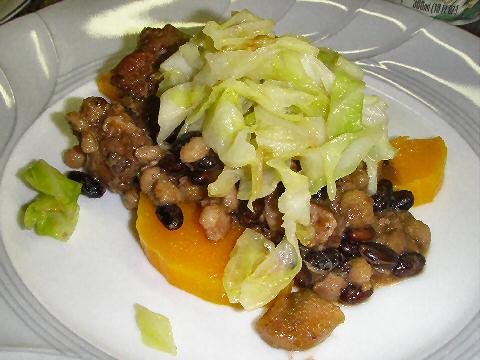
This is the dish that I left closest to its traditional style – perhaps lightly fancied up, but not too much. It’s called cachupa and is considered the national dish of the islands. A stew of hulled white corn, black beans, and lima beans cooked up with a mix of spicy chorizos, morcillas (blood sausage – in this case the slightly cured, firm kind), and some diced pork shoulder. When it’s almost completely cooked I mixed in a pureed of tomato, onion, garlic, and bay leaf, let it finish cooking, then left it to sit for a couple of hours to meld the flavors. I served it over roasted squash slices and topped it with sauteed cabbage (I gather the traditional is served with wedges of the two that have been cooked and then served more as a side to the stew). Hot sauce, of course, avaiable – I went with a simple blend of hot peppers, onions, garlic, and lemon juice.
I came away from my various readings on the country’s cuisine with the impression that dessert tends towards fresh fruit, sometimes with a simple local cheese. I turned it to a ricotta and coconut cheesecake (substituting coconut milk for the regular milk I usually blend in), and then topping it with a mix of diced tropical type fruits (papaya, mango, banana, pineapple) that were just lightly cooked in sugar syrup. And… that’s the name of that tune, as they say.
Copyright © 2026 SaltShaker. This feed contains copyrighted photos and text from SaltShaker. If you are not reading this material in a feed aggregator or by e-mail subscription, the site you are viewing may be guilty of copyright infringement. Please contact [email protected] so that I can take appropriate action.
Plugin by Taragana
]]>I speak: Portuguese, German, French, English, Spanish, Italian, Esperanto, some Russian; I read: Swedish, Dutch, Latin and Greek (but with the dictionary right next to me); I understand some German dialects; I studied the grammar of: Hungarian, Arabic, Sanskrit, Lithuanian, Polish, Tupi, Hebrew, Japanese, Czech, Finnish, Danish; I dabbled in others. But all at a very basic level. And I think that studying the spirit and the mechanism of other languages helps a great deal in the deeper understanding of the national language [of Brazil]. In general, however, I studied for pleasure, desire, distraction.”
– João Guimarães Rosa, Novelist
Buenos Aires – Okay, the man was literate. In more than one language. He is also considered, by many, if not most of those in a position to say such things to have been Brazil’s greatest 20th century novelist. How could we not celebrate his 100th birthday here at Casa SaltShaker? And, so we did – with a tribute to the cuisine of his home region of Minas Gerais, Brazil.
It turned out to be an odd, and strangely not well attended weekend. We’d planned a Thursday and Friday evening, having planned the Thursday around a visiting acquaintance from the States who had to leave on Friday, plus a private dinner planned for Saturday that later got changed to Monday. We had nine reservations for each night, not uncommon up until the last minute, we almost always get calls from locals or hotels the last day or so – Wednesday afternoon, two people cancelled for Thursday, and I awoke that morning to find another e-mail from a party of four cancelling as well, leaving us with only three people, my acquaintance and her two friends – leaving us to cancel on them. Friday, one person cancelled mid-day, but a young lady called in the afternoon and filled that spot. However, four locals, two women friends and a couple, separate reservations, simply never showed up for dinner after confirming (and never responded to phone messages or e-mail after the fact). So, five people sat down to dinner on Friday, and, I think, had a good time, even if it wasn’t quite the fiesta they expected. And, of course, on our end, it sucked financially, and after last weekend with two cancellations an hour before dinner and six no shows out of twenty-four reservations (virtually all porteños, and mostly women, interestingly – and something that several local friends told me was likely to start happening now that we’re getting more local press and seeing more local customers – okay, you told me so), let’s just say the piggy bank isn’t looking happy.
We started out with a simple Salada de Chuchu, or Chayote Salad, the vegetable (or is it a fruit?) peeled, sliced, simmered in salted water until just starting to soften and then chilled and dressed with a vinaigrette made with white wine vinegar, extra virgin olive oil, garlic, onion, parsley, salt and pepper. The spices really highlight the sweetness of the chayote and it was a very refreshing salad. From there, we moved on to a Caldo de Peixe, a fish soup in coconut broth – the broth made by simmering together coconut milk, celery, yucca root, ginger, oregano, mint and bay leaf for about 40 minutes, then pureeing it, straining it through a fine sieve, and then adding diced fennel and tomatoes, minced hot peppers, and some diced fish (I used boga, a very flavorful local river fish). Seasoned it at the end with salt and some chopped mint and oregano.
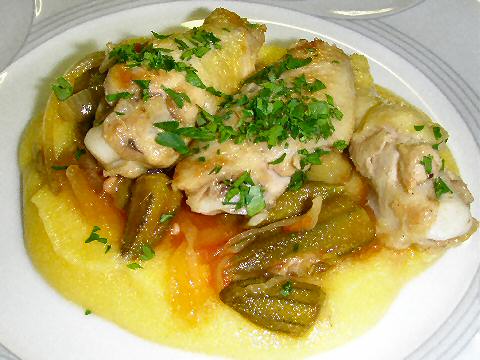
This was my favorite dish, Frango com Quiabo e Angu, generally translated as “Chicken with Okra and Mush”, the latter, however, being soft polenta. I saw a variety of versions, using everything from whole chicken breasts to thighs, to chicken feet. I decided to go with wing sections, which I marinated in lime juice, salt and black pepper for a couple of hours, then sauteed them over high heat in a mix of peanut oil and butter. The polenta was just simply prepared, and finished with butter and salt. The vegetables were a mix of okra (no fresh available at this time of year, but the Middle Eastern markets carry okra that’s preserved in brine, so I soaked them in fresh water for a little while, and was careful about how much salt I added at the end), along with crushed plum tomatoes, and thinly sliced onion all simmered together in a little bit of chicken stock, and a little parsley to garnish the dish.
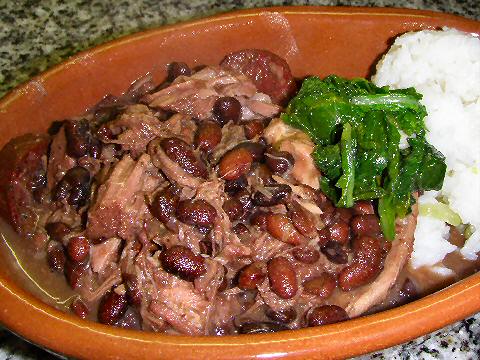
This dish generated a bit of both pre and post dinner controversy. I received, amazingly enough, half a dozen recipes from various readers of SaltShaker, all offering me their advice on how Feijoada, arguably Brazil’s national dish, should be properly made. Not one of them agreed with the other, and online and cookbook research merely extended the disagreement, as has my past experience eating the dish, not one version of which has been the same as another. In the end, I settled on a simple stew of mixed meats and black beans (despite admonitions to use either white or brown or red beans), the latter soaked in water overnight, then in a big stockpot I cooked up some diced bacon, beef rib roast, spare-ribs, and cured chorizos with onions and celery, until the meat was lightly browned. The I added the beans and a bouquet garni along with water to cover, brought it all to a boil and then turned the heat down low and let it simmer for about six hours – which generated the post-dinner controversy, well, really just from Henry, who insists that in his experience of feijoada, the meat should not be falling apart tender, and that also I should have had about 2:1 beans to meat rather than the other way around (on that, he’s probably right for the traditional dish, but then, he’s from a rice and beans kind of place where meat is the accent, I’m from the reverse). I served the stew up with white rice flavored with mild peppers, some sauteed turnip greens with garlic, and a side of hot sauce made with coarsely blended rocoto peppers, red onion, garlic, lemon juice and salt.
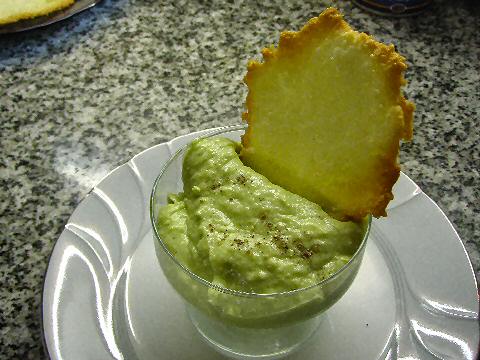
I was intrigued by this classic dessert, just because it’s so out of the ordinary. Crema de Abacate, or Avocado Cream – turns out its really, really good! I mashed together six ripe avocados, the juice of half a dozen limes, and a half cup each of confectioner’s sugar, shredded coconut, and cream. I decided it wasn’t smooth enough so I used the hand-blender on it to get it nice and smooth. I also decided it needed something to go with it, and a coconut tuile cookie sounded just about right – and, amazingly enough, the infamous Gordon Ramsey has a great recipe for coconut tuiles that fit just what I was looking for – 50 grams butter, 85 grams finely ground coconut, 85 grams confectioner’s sugar, 25 grams flour, and 2 egg whites, all mixed together, spread thin on a silpat and baked until golden brown on the edges. A later thought would have been to make them larger and turn them into a little cup to fill with the avocado cream. Oh, and just for a bit of “garnish” I dusted the top of each dish with a pinch of ground cardamom.
Copyright © 2026 SaltShaker. This feed contains copyrighted photos and text from SaltShaker. If you are not reading this material in a feed aggregator or by e-mail subscription, the site you are viewing may be guilty of copyright infringement. Please contact [email protected] so that I can take appropriate action.
Plugin by Taragana
]]>“I can’t change the direction of the wind, but I can adjust my sails to always reach my destination.”
– Jimmy Dean, country singer, actor, businessman
Buenos Aires – Those of us from the U.S. recognize the name Jimmy Dean from the sausage brand. What many people probably don’t know (I certainly didn’t) is that prior to founding his sausage company in 1969 (was it only then? I thought Jimmy Dean sausages were around when I was a kid… hmmm…), he was a star country singer, and a television and film actor (not to be confused with film actor James Dean). And that’s how he comes to be tangent of conversation in this post, as I was searching for some connection between sausages and James Bond after I came up with the post’s title, and turns out that he starred in one James Bond film – as business tycoon Willard Whyte in the 1971 film Diamonds are Forever. Internet serendipity is a wonderful thing.
You might have thought that I’d stopped making sausages and such after my first flurry of posts on fresh chorizos, cured chorizos, merguez and summer sausages. But no, I’ve continued to make some of those and do a little experimenting, and there will be more, however, one of the last things we learned to make in class was the genre of long-cured meats, a process that can be used with pork, beef, lamb well, meat. A very popular one here, and the one that Hector chose to be our home practice, is the cured bondiola. Now, bondiola is the cut of meat, that’s more or less a neck and high shoulder cut, on a pig what in the U.S. we call a Boston Butt. It’s a cut that lends itself well to long, slow cooking, and that’s common here, where braised bondiola appears on many a menu. It’s also served up thinly sliced and charred on the grill in bondipan sandwiches, usually squirted with a bit of lemon and sprinkled with salt. It’s also a very popular cured meat, and can be found on pretty much any fiambre (meat and cheese) platter.
We started with a roughly 1.5 kilo (3-3½ pound) bondiola, trimmed it up a bit, rolled it tightly and tied it, then put it in a curing net.
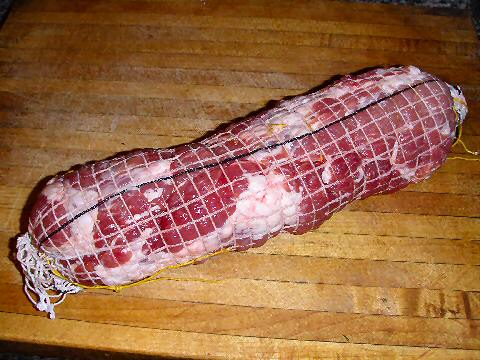
From there, it spent roughly a day and a half (24 hours per kilo) submerged, completely, in a simple salt brine at a cool temperature. After that, we rinsed it, then put it on a rack in a pan in the refrigerator for two days, turning it regular, to let it dry out a bit.
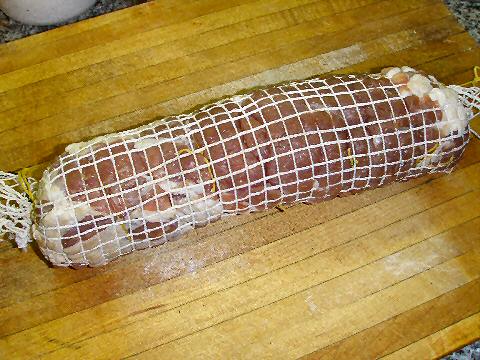
Now, traditionally, it would then be cold-smoked. We’re just simply not setup to do that, so instead, brushed it with a liquid smoke solution. Not the cheap stuff you see in the supermarket that’s made with various chemicals, but the pricey stuff that’s simply water that’s had smoke bubbled through it until it’s strongly flavored. Then, hung it up in the same place I’ve been curing sausages, on our small kitchen patio, where it could stay cool, and relatively humid (I still spritzed it lightly once a day with a mist of water).
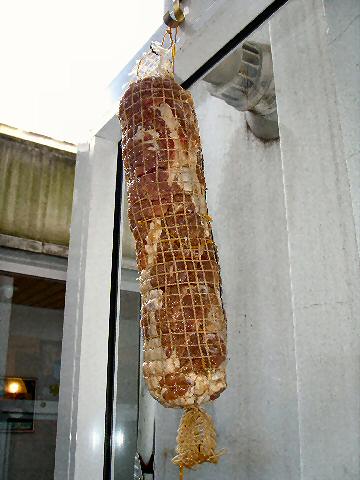
After 15 days, it had shrunk up a bit, darkened in color, and it was time for another coating of liquid smoke solution. Hmmm… I’ll have to ask, I wonder if you’ve actually gone to the effort of cold-smoking if you need to re-smoke it. My guess is no, but worth checking out.
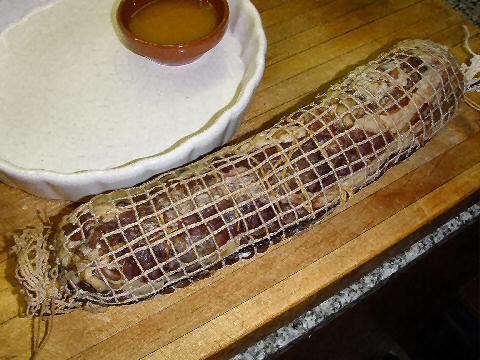
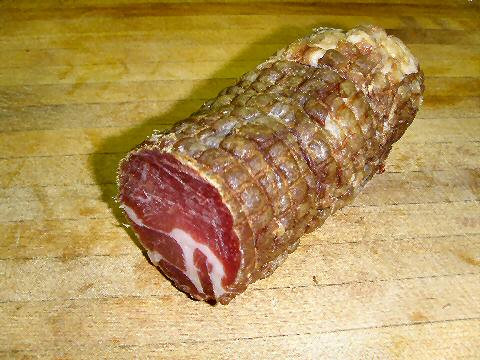
It was then left for another month hanging (I flipped it over and hung it from opposite ends about every 4-5 days, just to make sure than internal juices stayed properly distributed and that it hung more or less straight. I’m not sure that was necessary, but it made me feel like I was an active participant beyond misting. At the end of the month it’s even darker and more shrunken. But there, fascinating, cut open, and the meat inside, firmly cured, and still as bright red as it was at the start. For my tastes, this came out a bit too salty, but then, I usually find cured bondiola a little too salty, so perhaps it’s simply the style here. Another thing to check out I guess, by how much can I cut the brining time without risking bacterial problems.
Copyright © 2026 SaltShaker. This feed contains copyrighted photos and text from SaltShaker. If you are not reading this material in a feed aggregator or by e-mail subscription, the site you are viewing may be guilty of copyright infringement. Please contact [email protected] so that I can take appropriate action.
Plugin by Taragana
]]>