“You can’t make a silk purse of a sow’s ear.”
– Jonathan Swift, Author
New York City – Ever since Frank Bruni, the current restaurant critic for The New York Times had a pork belly epiphany, it’s become all the rage in one dining spot after another. But there had to be a starting point – not for the use of pork belly, which let’s face it, is simply uncured, unsmoked bacon, but for his epiphany. And the spot where, I gather, that occurred, was at Resto, 111 East 29th Street. In fact, this Belgian relative newcomer is, more or less, pig central. Indeed there are other things on the menu, but there’s no question that pork is king within these walls. And oh what walls – simple, unadorned by anything save a few interesting sconces, comfortable tables and chairs with no pretensions to be anything but, a nicely laid out bar specializing in more Belgian beers than you knew existed, and simple, hearty, delicious food. Let’s dive right into that, because there’s nothing else going on. [Closed]
We arrived on the dot for our 8:00 reservation to find a packed, raucous space and a clearly harried hostess who “hoped” that there might be a table for us in about 20 minutes… or so. We grabbed the last two spots at the end of the bar, ordered a round of cocktails, and took a glance at the menu. We figured we may as well get something in our stomachs – a pot of steamed mussels in garlic and orange zest accompanied by thick, slightly chewy frites in… a vase, more or less, with a good amount of mayo on the side. Other than perhaps a trifle shy on salt in the mussel broth, a delightful way to start the evening. A good half hour into the wait and it now being clear that no tables were to be forthcoming, we decided to stay at the bar.
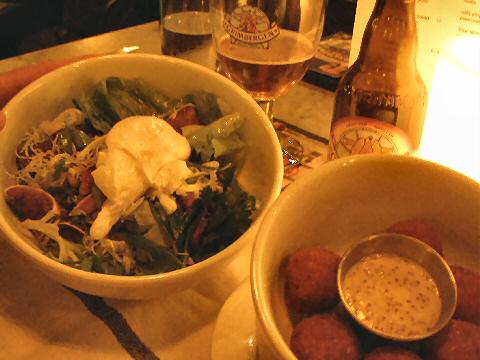
Round two and a tough act to follow. A bottle of Orval Trappist ale was split between us, nice and hearty, and a good foil to the two dishes now in front of us. First up, lamb ribs, spice rubbed and so tender as to fall off the bone, accompanied by a schmear of pickled tomato yogurt on the plate – all in all, nicely done. The one disappointment of the eve, the deviled eggs – served atop pillows of deep fried pork – think of those shrimp toasts that you get in, say, a Vietnamese restaurant, only make it out of pork and you have the general idea – but really, really salty – the deviled egg itself not so deviled, a simple sort of whip of the yolk that had little seasoning to it, all set back into the white. But no matter, one misstep and an easy one, no doubt, to correct.
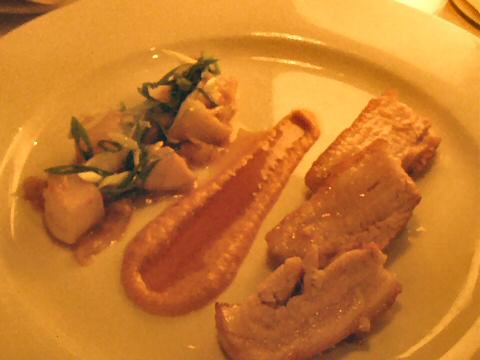
We finished off with the apple pie, a whole small pie served up – far bigger than any one person would care to tackle – simple, delicious filling, flaky pie crust, vanilla ice cream – what’s not to love? And easy on the wallet by comparison to my previous evenings’ ventures, with tax and tip coming in at a flat $100, keeping in mind the number of dishes we ordered was… excessive.
Copyright © 2026 SaltShaker. This feed contains copyrighted photos and text from SaltShaker. If you are not reading this material in a feed aggregator or by e-mail subscription, the site you are viewing may be guilty of copyright infringement. Please contact [email protected] so that I can take appropriate action.
Plugin by Taragana




 ]]>
]]>“The sun of my Cuba
Salutes me good morning
I take breakfast and come out
The whole world is already up
Hey chico turn the volume up
Coz I love this bolero
And this line to buy the bread, goes around the entire world anyway
Now picture La Habana
The old streets with colonel air
Problems can’t be hidden
But you’ll find sweetness at you pass by”
– from Guantanamo, by Outlandish
Buenos Aires – How to sum up the whole Guantanamo Bay Cuban – American relations in a few short sentences…. Spain invades and takes over Cuba from the Taino and Ciboney tribes shortly after Columbus’ discovery – roughly 1511. Nearly 400 years later, in the Spanish – American War, the U.S. helps Cuba (and numerous other Caribbean countires) gain independence from Spain, establishing a naval base in 1898. At the time, it seemed to the Cubans a good thing to keep a U.S. Naval presence, and a 99 year lease on Guantanamo Bay, and an island-wide military access, was granted to the U.S. in 1903 for the price of $2000 in gold coins by Cuba’s first president. Jump ahead to 1934 and in a new treaty, the U.S. agreed to give up the island-wide access and restrict their presence to Guantanamo, however extending the lease to “in perpetuity” unless a new treaty is bilaterally agreed upon, and giving the Cubans access to the bay that they hadn’t had since 1898. The lease amount is changed to just over $4000, but in a treasury check rather than gold coins. The check is cashed, annually, until the Castro revolution in 1959 – Fidel Castro does cash the 1959 check, but since 1960 has supposedly kept the checks stacked up in a desk drawer, claiming that both the 1903 and 1934 treaties were signed by the Cubans “under duress”. The U.S. claims that since he cashed the first check and kept the money in 1959, he acknowledged the validity of the last treaty. Guantanamo has continued as a naval base, and in 2002 a portion was converted to a “terrorist detention facility” – the subject of much news in the last six years. That’s the nutshell version. For our purposes at Casa SaltShaker, all that’s really important is the variety of dishes that make up traditional Cuban cuisine – from the heavily Spanish influenced eastern dishes, to the African influenced (via slaves) western, to the refined plates of Havana, to the “cubans in exile” Cuban-American fare.
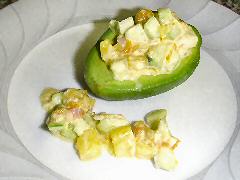 My first plan was to being with an unusual salad based on chayote, a type of squash that looks a bit like a light green pear or avocado. It’s actually a favorite vegetable, but they’re hard to find here, and a couple of weeks searching yielded a “coming soon to a market near you”, which didn’t help a lot for dinner this last weekend. Plan B, and what turned out to be a fun one, was to take some nice, ripe, fresh avocados and fill them with a refreshing salad of pineapple, cucumber, shallots, lime zest, cooked squash (I used a mini-melon baller and scooped out little spheres which I then cooked quickly in boiling salted water, then drained and chilled – I was going to go with little spheres for the pineapple and cucumber, but the former kept falling apart, and so I diced it, and then figured it didn’t make a difference with the cucumber…), and then mixed those together with a mayonnaise made with egg yolk, olive oil, fresh lime juice, mustard, and just a splash of worcestershire sauce. It was a nice way to get the evening rolling, though one problem with stuffed avocados is finding that sometimes, inside, the avocados are just not completely ripe and soft – you end up having to cut open extras just to get enough that are…
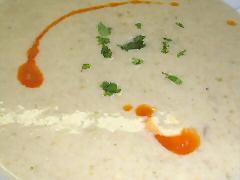 Most of you know that I love bananas… I’ve presented banana guacamole, banana bread and cake, banana springrolls, banana ice cream… and plantains are a close enough cousin that now that they’re in season I figured I’d make the most of them – we had that plantain salad just a couple of weeks ago, and so I was immediately intrigued when I saw some Cuban recipes for a cream of plantain soup. This took a little work – the first night I thought it was too thick and almost… hmmm… gloopy, is that a good word? It probably communicates. The next night I cut back on the amount of plantains in the soup, just by one (I’d use four whole ones the first night, three the second), and got a much creamier consistency, more like a thick soup than a porridge. Since I was making ricotta for our dessert, I had a nice pot of whey to use as a base, into which I put the peeled and broken up plantains, the peel of an orange, some onions and garlic that had been sauteed in butter until soft, and then topped it off with a little chicken stock (vegetable stock would be fine here too – and as a note, the soup needs some acidity, so if you’re not using whey and just using stock, add some fresh lemon juice or a bit of vinegar). When the plantains were softened, I added in about a cup of sweetened condensed milk and two cups of coconut milk. Then I pureed the whole thing with a handful or two of fresh cilantro, and seasoned with salt and white pepper. The soup comes out sort of medium sweet, and definitely needs balance – a drizzle of some kind of hot sauce is perfect for that, and, in fact, while we served it with just a drizzle, I liked it even better with more – the heat and sweet contrast each other perfectly.
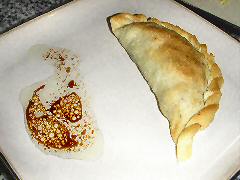 I found numerous recipes for Cuban empanadas, most of which seemed to involve cheese in one form or another. I sort of combined several and came up with one that sounded interesting. The filling is a mix of grated manchego cheese (a somewhat salty, sheep’s milk cheese), black and gold raisins, crushed hazelnuts, and then some finely chopped onions and spinach that have been sauteed and cooled. The dough recipes seemed quite different from Argentine versions, they come out almost cookie-like, with a touch of a zing to them from some vinegar added to the dough – 1 pound of flour, 1 teaspoon salt, ½ pound of cold butter, all mixed together until it forms a coarse crumb texture. Then add in one egg and 2 tablespoons of red wine vinegar and mix thoroughly. Add cold water until it comes together as a nice, smooth, soft dough. Interestingly, the original recipes all called for somewhere between ½-1 cup of water – I don’t know how that would be possible, with the quantity of butter, egg, and vinegar the dough was almost finished without any water – I used about 1-2 tablespoons – if I’d have put in half a cup it would have been paste, and a full cup would have been soup. Chill the dough well until it’s nicely firmed up – 1-2 hours minimum, overnight even better. Roll out, put the filling in, close them up, and bake until nicely golden brown. I thought these needed something to contrast the filling so I put a spoonful of lightly mixed hazelnut oil and tomato vinegar on the side.
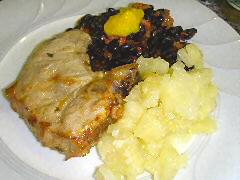 Let me just say upfront, I loved this main course – this is my kind of food – and probably would have been enough for dinner without the three appetizers! I started from a classic masitas de puerco recipe, which is small cubes of pork marinated in a sour orange mixtured for several hours, then either deep fried or cooked in a mix of water and oil until they’re lightly crispy outside, and then served with black beans and rice. I wanted a slightly more elegant preparation, so fresh cut pork loin chops – I marinated them in a mix of equal parts orange and lime juice, grated garlic and red onion, chopped oregano, cumin, and salt – for about 4-5 hours. I then pan roasted them in just a bare splash of olive oil. The two side dishes were based on some recipes that just sounded… yummy. The black beans were cooked until just soft, then drained. In another pot I sauteed together some crumbled fresh chorizo sausage, finely diced red bell pepper, onion, garlic, a couple of finely chopped hot chilies, and some dried oregano. When those were nearly cooked, I added the beans to the pot, a little bit of olive oil, and cooked them together, covered, for about 15-20 minutes, stirring occasionally. A little salt and pepper, topped with a spoonful of freshly mashed ripe mango, and these are some of the best black beans you’ll ever have. The other dish, I peeled and sliced yuca root into discs (a post will be coming up about yuca root and its preparation…), boiled them in salted water until just soft, and then drained. In another pot I sauteed together a large quantity of garlic and onions in olive oil, and then tossed the yuca root with that mixture. A little salt, and voila.
 You knew I had to get a Cuba Libre in somehow – especially given the events of this week – when I planned this dinner a month earlier, I had no idea that Fidel would announce his resignation on the day before these meals. So a Free Cuba seems, perhaps, a real possibility… Regardless, back to the drink – we don’t really serve cocktails, though I thought about a sort of mini-shot on the side of some sort of interesting cake, maybe a citrus spice cake, which could be kind of fun, but in the end, well, you know I like cheesecakes, and it seemed like a workable proposition to flavor a cheesecake with the drink – I used aged rum, coca cola, and fresh lime juice to flavor the cake – the filling was a bit more liquid than my usual cheesecake batter so I added an extra egg to help thicken it up, which did the trick. A little lightly sweetened whipped cream, and our celebration of Cuban American relations was complete!
Copyright © 2026 SaltShaker. This feed contains copyrighted photos and text from SaltShaker. If you are not reading this material in a feed aggregator or by e-mail subscription, the site you are viewing may be guilty of copyright infringement. Please contact [email protected] so that I can take appropriate action.
Plugin by Taragana
]]>“You were born with wings. Why prefer to crawl through life?”
– Rumi, 13th century Persian poet and theologian
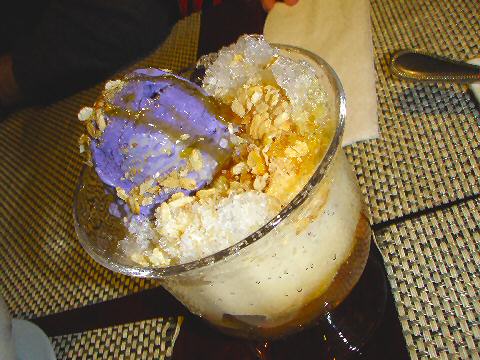
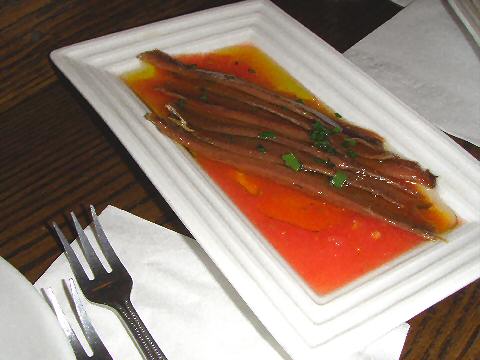
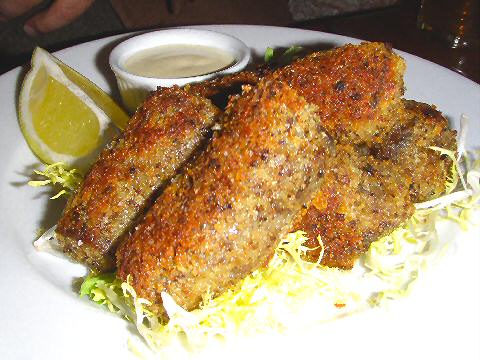
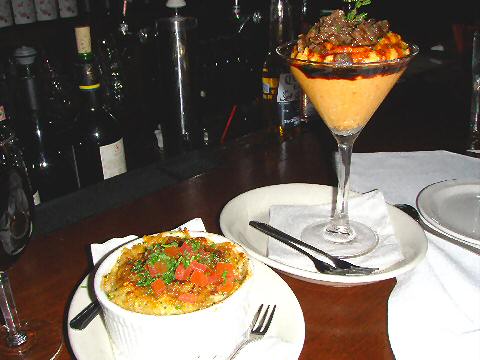
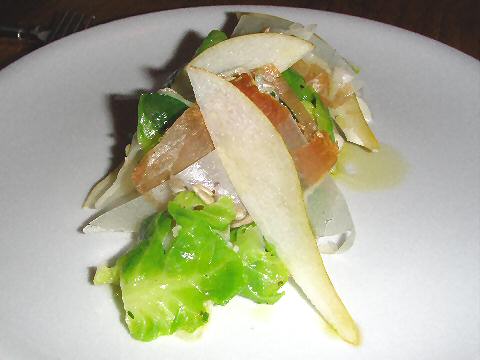
New York City – There is a reason to crawl through life… appetizers. Appetizer Crawls. Winging our way from one restaurant to the next would be kind of cool if we had literal wings, I suppose, but then there’d be all that ‘splainin’ to do when you landed at the hostess’ desk, and trying to fit on the closest banquette with wings unfurled, and all the rest. Crawling is simply more sensible when it comes to appetizers.
Copyright © 2026 SaltShaker. This feed contains copyrighted photos and text from SaltShaker. If you are not reading this material in a feed aggregator or by e-mail subscription, the site you are viewing may be guilty of copyright infringement. Please contact [email protected] so that I can take appropriate action.
Plugin by Taragana
]]>“I have to make dinner – I mean actually make it without magic. We are liable to die.”
– Barbara Eden as Jeannie, I Dream of Jeannie
Buenos Aires – ‘Twas the night before Larentalia, and all through the house… Not a creature was stirring, except the house elf. Well, not an elf exactly, but a Lare, a sort of djinn, or genie, or sprite, said to live in the corner, near to the chimney, and protect the home from harm. Except that one night a year, December 23rd, when the Lares were celebrated, appreciated, venerated. At least, of course, until the Catholic Church got into the act and decided to declare that the ancient Roman festival really honored Acca Larentia, the sainted nurse of Romulus and Remus, and since, of course, she was sainted, could be celebrated as a real holiday, not one of those pagan ones. Co-opting is such a fun activity. At Casa SaltShaker we took it upon ourselves to return the holiday to its roots… after a fashion.
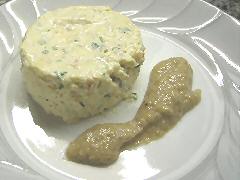 If they’re a celebrity, they probably have a recipe posted out there on the internet attributed to them. How could I not look to see if Barbara Eden had one? And sure enough, she has one – a very 1960s recipe for mushroom caps stuffed with crabmeat. I don’t know whether it’s really her recipe, one simply claimed to be hers, or perhaps it’s what she ended up making in the show noted above. Either way, it served as an inspiration for our first dish of the evening, a crab mousse with a shiitake sauce. The mousse, a mix of one pound of shredded crabmeat, ½ cup of mayonnaise with 1 tablespoon of tomato paste mixed in, handful of chopped chives, 1 small grated onion, 1 tablespoon of red vinegar, 1 teaspoon tabasco, ½ teaspoon smoked paprika, 1 teaspoon salt – all mixed together, add in 2 tablespoons of gelatin dissolved in ½ cup of water, and then fold in 1 cup of cream that’s been whipped until stiff. Ladle into molds and chill until firm – about 4-5 hours. The sauce, dried shiitakes that have been reconstituted in a mix of white wine, vinegar, shallots, salt and pepper, and then pureed. Unmold the mousse onto plates and serve.
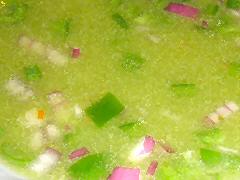 Next up, a play on words, I mean, who could resist “djinn & tonic”? Not me… A simple cucumber based gazpacho – puree half a dozen peeled cucumbers, 1 jalapeño pepper, 1 teaspoon cumin, 1 teaspoon coriander, a handful of cilantro in ½ cup each of gin and tonic water, season to taste with salt and white pepper, then chill – thin with water if needed. Dice some green bell peppers, red onions, and chop some scallions or green onions and a rocoto or other mild chili pepper, place about ¼ cup of the diced vegetables in a bowl and ladle the soup over it. Interestingly, and it just shows how tastes run differently – the first night, everyone loved the soup and I got two requests for the recipe via e-mail the next morning. The second night, only one person liked it, everyone else said it was too spicy. Tasted the same to us.
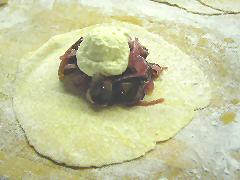
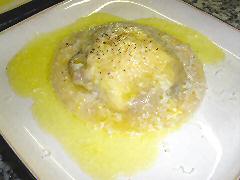
I had so much fun making the ravioli last week that I decided to try another version – these giant ravioli might become regular features here, I have fun, and people seem to enjoy them. This time, I went with a relatively classic Roman dish of radicchio ravioli – the filling a mix of red onions and radicchio thinly sliced, sauteed in olive oil until limp, then red wine added and cooked slowly until all the liquid was absorbed. Seasoned with salt and black pepper. When cool, topped with a small scoop of homemade cream cheese (mascarpone would be interesting as well, or ricotta), and this time I used a semolina pasta – 1 cup fine white flour, 3/4 cup of semolina flour, pinch of salt, and 3 beaten eggs, mixed together to make slightly sticky dough – let it sit for an hour before rolling it out to relax the gluten. The ravioli were topped with a simple grating of reggianito cheese, some freshly ground pepper, and a spoonful or two of hot melted butter.
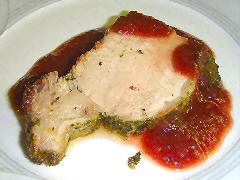 Another Roman style dish – roast pork, in this case a carre deshuesado, which is basically the long strip of meat inside the ribs, deboned. I marinated it for a couple of hours in a puree of olive oil, fresh sage, fresh thyme, salt, and black pepper, then without scraping off the marinade seared it in a hot cast iron pan on all sides and put it in the oven to cook until it hit about 140°F – which is really just shy of medium, but I turned the oven off at that point and let it sit for about 10 minutes more in the oven and then 10 minutes on the counter, it ended up just about dead-on at medium, just slightly pink. For the sauce, a fig jam – I cooked about two dozen fresh green figs down with a bottle of red wine, a cup of sugar, the juice of a couple of lemons. When it had turned more or less mushy, I used the handblender to coarsely puree it, then cooked it down slowly for about two hours to thicken it. Seasoned with salt and pepper and ladled around the sliced pork.
“I think I might have stayed there, I might have walked through the Carnival with a child’s hand in mine, eaten apples doused in cardamom wine and told her how once, when I was very young, I had seen the old Queen dancing in her lonely hall, her embers red as bleeding, and I thought she was so beautiful, then. I thought she must be so happy. I might have done those things.”
– A young Djinn Queen, in The Orphan’s Tales: In the Cities of Coin and Spice
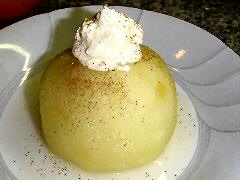 The idea of apples doused in cardamom wine sounded like a tasty ending to this semi-mystical feast. I decided to poach the apples after peeling them and coring them, in a mix of white wine and honey with the peels from the lemons I used above for the fig jam. They don’t take long to poach once the liquid starts to boil – the apples will float, so you either have to weight them down or keep turning them – but it’ll only be a few minutes. Let them cool in the cooking liquid. Serve with fresh mascarpone cheese that’s been sweetened (if needed) and flavored with cardamom and cinnamon – dust the plate with a little more of each.
Copyright © 2026 SaltShaker. This feed contains copyrighted photos and text from SaltShaker. If you are not reading this material in a feed aggregator or by e-mail subscription, the site you are viewing may be guilty of copyright infringement. Please contact [email protected] so that I can take appropriate action.
Plugin by Taragana
]]>“Whether Moldova or Transnistria are nations is a question for 100 or 400 years ago.”
– Ryan Lanham, Identity Unknown
Buenos Aires – I knew nothing, truly nothing, about the nation-state of Transnistria, as it is known in English, or the Pridnestrovian Moldavian Republic as others know it. It’s a conflict which I’ve probably seen flash by in a news article at some point in the past, but for whatever reason, it made no impact. A bit of online reading reveals some relevance to “my” history – perhaps not personal, but, for example, Transnistria was where the Romanian concentration camps were setup that hundreds of thousands of Jews were sent to during WWII. And, to some extent, the right of any group of people to exist (or not) as an independent state echoes what has been happening in many parts of the world, time and again. I have no solid opinion on this particular conflict – it’s been 17 years since Transnistria declared its independence from Moldova, the declaration not in disupte, simply the recognition of the declaration. This thin strip of land that separates Moldova from Romania operates as if it were an independent nation – with its own government, flag, coat of arms, constitution. The surrounding world just seems to regard this as a childish, albeit dangerous and historically costly, prank that will one day be resolved if they only wait for the Transnistrians to grow up. History, at least from my dim knowledge of the subject, suggests that that isn’t likely, and is probably a misguided viewpoint.
The only important question for us here at Casa SaltShaker, of course, in choosing to celebrate Transnistria’s declaration of independence at a distance, was “What do they eat for dinner?” The answer seems to be, pretty much whatever the Moldovans eat… and we set off to have ourselves a bit of an Eastern European supper.
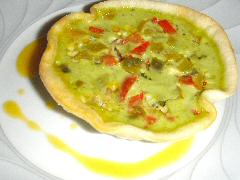 Showing just how far astray one can go… well no, I could have made gels and foams I suppose (notice I haven’t been doing that, I think, in general, it was an interesting exercise, but just not my style)… this dish started out as a roasted red pepper stuffed with a mixture of feta cheese, cream cheese, garlic, and walnuts. Which, I must admit, sounds good on its own. But somehow, when I saw an array of different colored peppers at the vegetable stand, it morphed quickly into a mixture of the various types… and then into a way of presenting them that was colorful – a tartlet. It’s a basic pastry dough, the same I’d use for making empanadas. The filling, I cut a red pepper, green pepper, yellow pepper, and several ají vinaigre into small dice (the last being pretty much the same thing as what we think of as an Italian frying pepper), and then realized I still had a bag of shishito peppers in the fridge – being too thin to dice, I simply chopped them coarsely. I sauteed all the peppers together in olive oil until they were softened, and then spooned them into the tart shells. For the base, I pureed a mix of cream cheese, herb marinated feta cheese, eggs, garlic, parsley, chives, and pistachios (on hand, and as common in the cuisine, it appears, as walnuts). A scoop of that mixture into each shell, bake until done, and then I just rewarmed them when it was time to serve. The sauce is really there just for color, I had some tamago-no-moto, the Japanese mayo-style sauce that I like to have around, made with orange juice and peel, and which I thought would also combine well with the flavors.
 A classic soup of the region, a white bean soup, and really not modified in any great way – a base of carrot, onion, and celery, cooked until soft, add in some oxtail (the classic uses ham hocks, but too hard to find here, and I like oxtail better anyway), some garlic, leeks, thyme, bay leaves, lots of white beans (cold soaked in advance of course), and simmer it all together until the beans are soft. The final season is some red wine vinegar, salt, and black pepper. The additions, for presentation – I used the celery leaves and pureed them with a little oil just to make a colorful drizzle of celery oil atop, and then a bit of sweet paprika sprinkled across it all. It was almost a shame that the weather suddenly turned so warm this weekend – I’d figured on this as one of our last winter soups.
 How can you not like a mushroom strudel? Unless you’re one of those people like I used to be, who thought mushrooms were slimy denizens of hell, creeping up to attack small children in their sleep. The filling – a mixture of portobello and white mushrooms, sliced, some reconstituted pine mushrooms, chopped, all sauteed down with a good handful of chopped shallots and a red onion. When all the liquid had evaporated, I added back in the liquid from rehydrating the pine mushrooms, plus a good dose of sweet vermouth, and then cooked that down until the mushrooms were a nice golden brown and all the liquid was absorbed. Seasoned with salt, black pepper, and nutmeg. After cooling the mixture, I mixed it with a bit of cornmeal and a couple of eggs for binding, and then filled buttered squares of strudel dough, making little blintzes, more or less. The sauce, some homemade sour cream. If only, if only, it were just like mom used to make… I’d have liked mushrooms growing up.
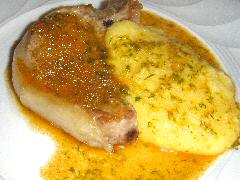 If Rachel Ray were here, she’d be squealling “yummo” or whatever the phrase is that she uses… I know it’s something starting with the Y-word. Pork chops – a little salt and pepper, simply pan roasted to medium. On the side, mamaliga, the Transnistrian or Moldovan version of polenta – I’m not entirely clear the difference, it may simply be a different type of cornmeal – and in fact, I rarely see cornmeal here, almost everything is polenta (a coarser grind of the corn), so it was with pleasure when I spotted a display of harina de maíz the other day, because the finer grind gives, to my mind anyway, a much more interesting texture. I brought 7 cups of salted water to a boil, and then slowly whisked in 2 cups of yellow cornmeal. Then I covered it and let it cook over low heat for 10 minutes, stirring occasionally to make sure it didn’t stick and burn on the bottom of the pan. To finish it, 10 tablespoons (yes, it seems like a lot) of butter, cut into cubes, and whipped in with a small wooden paddle until the mamaliga got all glossy and smooth and pulled away from the sides of the pan. A little more salt to taste, and dolloped aside the pork chops. The sauce, a traditional accompaniment for many dishes of the repertoire, apparently – and really good – I blended together a cup of concentrated beef stock (reduced by half from its original volume), half a dozen garlic cloves, a handful of parsley leaves and the same of dill fronds, and then, since I didn’t have any hot paprika on hand, a mixture of equal parts of sweet paprika, ají rojo, and cayenne pepper, which worked out as a nice substitute. Bring the mixture to a boil, reduce heat and simmer for five minutes, and then add salt to taste. Y-word again.
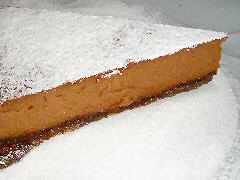 Finally, a chocolate cheesecake. It’s really pretty much one of those things that one doesn’t need to say much more about. Chocolate Cheesecake. Make that Bittersweet Chocolate Cheesecake. It was really just my standard, and still secret, cheesecake recipe with the addition of some melted bittersweet chocolate and a bit less sugar, and changing the crust to a chocolate crumb crust. Then, just for a bit of decoration, sifting confectioners sugar over the top of it and the plate.
I can only hope that the Transnistrians were enjoying their Independence Day dinners as much as we were…
Copyright © 2026 SaltShaker. This feed contains copyrighted photos and text from SaltShaker. If you are not reading this material in a feed aggregator or by e-mail subscription, the site you are viewing may be guilty of copyright infringement. Please contact [email protected] so that I can take appropriate action.
Plugin by Taragana
]]>