“In a country of more than 1 billion people, with 16 official languages and myriad ethnic influences, there is no singular “Indian” cuisine. Instead, hundreds of culinary styles co-exist, each shaped by a unique confluence of geography, history, climate and religion. Each of India’s 28 states and seven union territories has its own specialties. Many American diners are familiar with dishes like chicken tikka masala, lamb saag and tandoori shrimp–specialties that have become the lingua franca of Indian cooking in America. Those northern Indian foods dominate menus in the United States, leaving many customers uninformed about the rich regional variation in Indian cooking.”
– Erica Duecy, Western Indian Cuisine, Nation’s Restaurant News
Buenos Aires – There were so many possibilities for this past weekend’s dinner themes – Italian for Ferragosto, Chinese for the Olympics, Korean Liberation Day, VJ Day, Mother’s Day in Costa Rica, Indian Independence Day… it had been quite some time since we’d last offered up a “sub-continent” dinner, and I happen to like Indian food quite a bit, and besides, it was my friend Belli’s birthday, he’s Indian, and the owner of a local Indian restaurant. That was the one. But which Indian cuisine? We’d gone north before, with our Kashmiri dinner last October, and similar cuisine from neighboring Pakistan the previous March. I thought about splitting things up and offering one course from each of the five major regions of the country, but in the end, decided to focus on just one – but which? Leaving off the north, I randomly… more or less… picked the west, and from there decided on one dish each from five of the more interesting sounding cuisines of the area.
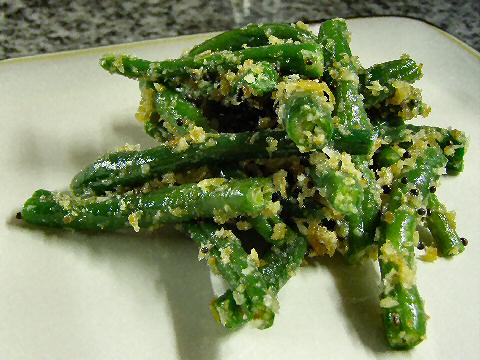
Next up, a dalitoy from the canon of Saraswati cooking. I was originally going to use yellow lentils, but couldn’t find anything but brown or red. I considered using yellow split peas, but then suddenly spotted packages of small yellow pulses labeled “green bean insides”. I assume these are the removed and dried seeds of green beans like those above, so I immediately had a bit of a sequential flow going, you know? Into the blender with several green and red chilies, some ginger, several cloves of garlic, a teaspoon of turmeric powder, enough oil to fry it all in, and just enough water to smooth the whole thing to a smooth paste – figuring it will evaporate right away, which it does. Into the soup pot with this paste, which within a minute or so begins to fry up beautifully, and turns a deep golden yellow color. I added a kilo of the bean seeds, topped the pot up with water, and cooked until they were done, stirring occasionally. Salt to taste, sprinkle with a good amount of chopped cilantro, and there you have a yummy green bean innards soup!
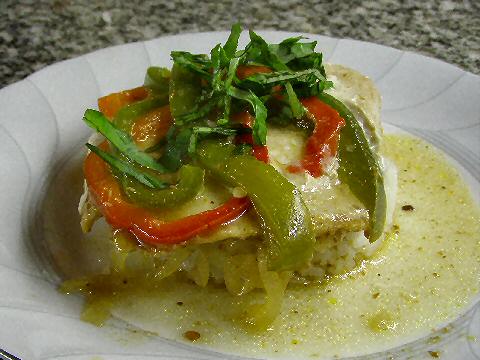
Many Indian desserts leave me asking “why?” It’s not that they’re not good, they’re just so different from my background that sometimes, especially texturally, they just don’t resonate. I’d decided on a coconut cardamom pudding, which I scooped into pre-baked phyllo tart shells and then topped with sliced bananas and pineapple, a drizzle of honey and a sprinkle of powdered sugar. I like the flavors, but the texture for me falls somewhere around that of a slightly softened gummi bear. Several people really liked it, others clearly weren’t as thrilled – I don’t think I’d make it again, though I might work on something that incorporated those flavors…
Copyright © 2026 SaltShaker. This feed contains copyrighted photos and text from SaltShaker. If you are not reading this material in a feed aggregator or by e-mail subscription, the site you are viewing may be guilty of copyright infringement. Please contact [email protected] so that I can take appropriate action.
Plugin by Taragana




 ]]>
]]>“My new pig out food is Indian food. I eat Indian food like three times a week. It’s so good.”
– Jennifer Love Hewitt, actress/singer
Buenos Aires – A few weeks back I’d been wandering around Las Cañitas looking at one thing or another, and I noticed a new restaurant done up with some sort of Taj Mahal-ish facade. I stopped for a glance and discovered it’s a new Indian vegetarian restaurant. On to the list it went for checking out soon, and this week I got back there for what turned out to be a completely delightful lunch. With our western Indian dinner coming up this weekend (and filled up, we may even open an extra day), it seemed a good moment for inspiration. Opened just four months ago, Namaskar, at Benjamin Matienzo 1616, 4772-0276, is turning out delicious north Indian vegetarian fare with a flare. Beyond just the comfortable, casual dining room, attended by the owner of the restaurant, I was won over completely when as I placed my order the first thing he asked was did I want the food spiced for local palates, medium, or Indian hot. I chose the latter, of course. [Unfortunately, this place didn’t even make it to its first birthday, a true shame as, for my tastes, it was the most authentic Indian spot in town.]
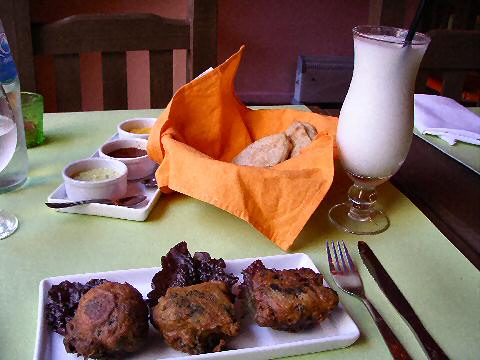
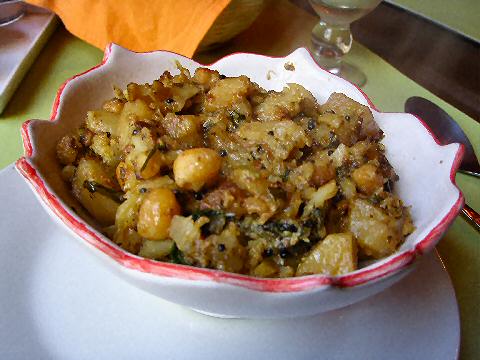
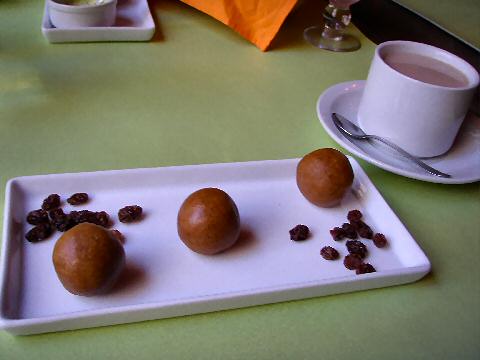
Namaskar isn’t cheap – this three course lunch, including a bottle of water and large glass of mildly sweet lassi, a favorite yogurt drink (and a perfect foil for spicy dishes), came out to 76 pesos. On the other hand, they serve up easily the best Indian vegetable dishes I’ve had since coming to Buenos Aires.
Copyright © 2026 SaltShaker. This feed contains copyrighted photos and text from SaltShaker. If you are not reading this material in a feed aggregator or by e-mail subscription, the site you are viewing may be guilty of copyright infringement. Please contact [email protected] so that I can take appropriate action.
Plugin by Taragana
]]>“On the night before his coronation, Sir Hari and his peers dined off the traditional gold plate, while their underlings supped from silver. Next day he rode out at the head of the state procession of elephants. His favorite pony, which trotted after, was decked with a jeweled harness, containing among other gems an emerald valued at $150,000.
– Excerpted from Time magazine, March 8, 1926
Buenos Aires – It is, of course, impossible to separate completely the culture of a region from its politics, and the history of how what is now the northwestern Indian state of Kashmir is a fascinating one. Full of intrigue, blackmail, and all sorts of other good thriller stuff, here’s the nutshell version. In 1947, the British helped setup, or impose, a two state region – India and Pakistan. There were, at the time, over 600 individual… principalities for lack of a better term, each ruled by its own local ruler, generally a maharaja, or king. Each was, more or less, given the option to join one state or the other – I imagine certain geographic conditions were imposed – perhaps only those along the proposed border actually had a say in which way they went. Much of this was accomplished in the mid-year and signed off on by early August. In the region then known as Kashmir & Jammu, the Maharaja Hari Singh held out until October, ostensibly wrestling with the decision, given that he and many of those close to him were Hindu and wanted to join India, while the vast majority of the population in his kingdom were Muslim, and wanted to go Pakistani. In the end, in late October, he decided to sign the Instrument of Accession, making the choice for India, and setting up the region for constant border conflict and legal challenges ever since. Luckily, we were able to view the whole situation from afar this weekend, with a trio of dinners celebrating some of the wonderful flavors of Kashmiri cuisine.
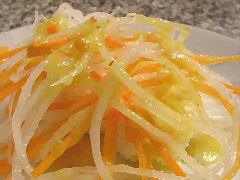 My original plan was to offer up some version of a dish known as Nadroo Yakhni, or lotus root that was simmered and served with paneer. The latter was the important part of the dish, from what I could see as I looked at various recipes and discussions – it’s a fresh cheese, made in a process very similar to the ricotta process I detailed not so long ago – the two differences seemed to be simply that the milk was heated to a slightly lower temperature, only 175°F, and then was held at that temperature for ten minutes before adding the vinegar (or lemon juice). Also, salt is added right after the draining process. The lotus root turned out to be problematic. I often see it available in markets in Barrio Chino, so, of course, it wasn’t in any of them this week – except one – where it looked rather grey, and there were only a few of them anyway. When I touched one, it crumbled. Not exactly the freshest root around. I decided to use some daikon radish and carrots, and finely julienne them. I also wanted to serve a cold course first, so rather than simmering them in a mix of spices, I served the julienne with the cheese (hidden underneath in the photo), with a dressing based on the flavors – some olive oil (no mustard oil available here), with powdered and dijon mustard, ginger, garlic, turmeric, a bit of smoked masala, and salt, and since no “kashmiri red chilies” were available, some finely chopped rocotos. It made for a nice refreshing salad to start the evening, and the paneer is really quite tasty.
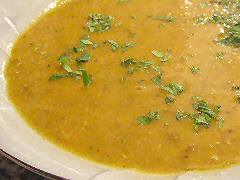 Next up, a dish based on Munga Dal, a traditional simmered dish of mung beans with all sorts of really tasty spices. I went with turning it into a soup rather than leaving it as a dish of the beans as might often be served, accompanied by basmati rice – so I added a bit of extra liquid, and also coarsely pureed it. The process was pretty simple – first off, I used the whey that I got from making the paneer, though just water or vegetable stock would be fine as well – and added about a cup and a half of mung beans to it, after rinsing them. Brought to a boil, and then reduced to a simmer. Meanwhile, I sauteed together: 2 chopped onions, 6 minced garlic cloves, 2 sliced jalapeño chliies, about 2 tablespoons of chopped ginger, 1 teaspoon turmeric, 1 teaspoon curry powder, 2 teaspoons cumin, and 2 teaspoons smoked masala in corn oil until the vegetables were all soft and starting to turn golden. Then I added 4 tomatoes cut in small wedges, and continued to saute until they were soft. By this point, the mung beans were simmering away, I simply put this entire mixture into the pot – note I used no salt up to this point, which would toughen the skins of the beans – stirred it all together, and let it continue to simmer away. When the beans were soft (add more water as needed), I added about 3/4 cup of coconut milk and the juice of two lemons, and then used the hand blender to coarsely puree it all – if you want to go more traditional, don’t puree the dal, and don’t add too much liquid, just simply add salt to taste, garnish with cilantro and mint (both of which I then did, though as a soup), and serve.
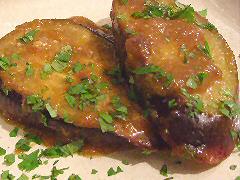 I don’t know what it is, but in the last couple of years I’ve become enamored of eggplant. Not that I didn’t like it before, but it was just one of those occasional things, probably more often in babaganoush than anything else. I’ve been having great fun finding interesting ways to prepare them, and this one is no exception, based on recipes for Chaoq Waagan (various spellings seem to exist). The eggplant is sliced in fairly thick slices – at least ½” thick, and then sauteed in a mix of light oil and clarified butter until lightly browned on both sides. Meanshile, simmer about half a cup of tamarind pulp in some water until soft, and then strain, pressing as much pulp through as possible, discarding the skins left behind. Then, in a blender, put 2 medium onions, 2 teaspoons each of salt, turmeric, smoked chili powder (I used chipotle powder), ginger (powdered), cumin, and, the reserved tamarind water and pulp. Blend until smooth – add more water if need be. Take the sauteed eggplant and put in a large pot (you could just continue in the same saute pan if you like, as one continuous process), and pour the blended mixture over the slices. Add more water if necessary to not quite cover them. Simmer away for about 20-25 minutes, until the slices are soft but not falling apart. Serve, with the cooking sauce, and garnished with cilantro.
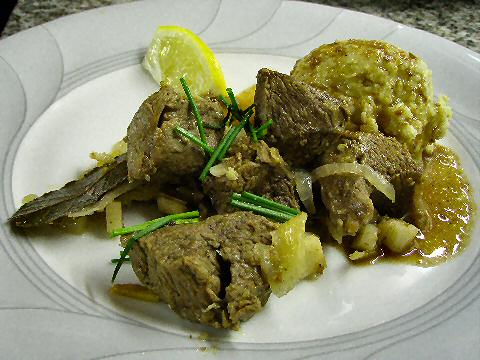
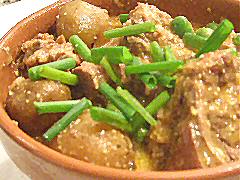 For the main course, I wanted to go with a traditional curry of lamb, Rogan Josh. Most of the versions I saw didn’t seem to be particularly spicy curries, and I had no reason to change that around – the preceding two dishes had provided some nice zip for the evening, so this was a nice… cooldown. In a bit pot, dry fry over medium heat: 1 teaspoon ground cloves, 2 teaspoons cumin, 1 teaspoon coriander, ½ teaspoon turmeric, 2 teaspoons sweet paprika, 1 teaspoon cayenne – until there’s this really wonderful smelling aromatic vapor coming off the spices. At that point, obviously before they start to burn, add 2 tablespoons of chopped ginger, 2 thinly sliced large red onions, 6 sliced garlic cloves, and a bit of salt. Cook until the onions start to soften, stirring regularly. Note – there’s been no oil or butter added at this point. Add cubed lamb – I added enough for a dozen or so servings – it was roughly 5-6 pounds of lamb breast cut in 2″ cubes, with a bit of fat left on. Continue to cook until the lamb is nicely browned and has rendered a bit of its fat. Though traditionally this dish would then have diced potatoes added, I used small Andean potatoes and left them whole with skins on, just a personal affectation I suppose. I continued to cook this mixture, stirring regularly, for about 5 more minutes. Then, I added water to just barely reach the top of the mixture, brought it to a boil, turned the heat down to the lowest flame, covered the pot, and let it simmer for 5-6 hours, until the lamb was literally spoon tender, stirring regularly so nothing burns on the bottom of the pot. During the last half hour before serving, I added a pureed mixture of 1 cup of roasted (unsalted) cashews, 1½ cups each of tomato puree and heavy cream (yogurt seems to be used as often as cream in this dish), and I also added about 2 cups of blanched and shocked peas (frozen will also work). Garnish with fresh herbs – I used chives. This should probably have been served with some basmati rice, but I was trying to not overdo it…
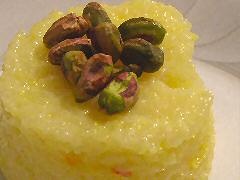 …especially since the upcoming dessert was a rice pudding – saffron rice pudding to be exact. I played around with this to get the consistency I wanted, in the end – about 1½ cups of jasmine rice, lightly stir fried in 3 tablespoons of butter for about 3-4 minutes. Then I added 2 cups of water, and about a dozen crushed threads of saffron, and cooked until the water was just about absorbed, then I added 2 cups of whole milk and continued until that was absorbed, at which time the rice was almost finished cooking. I added 2 cups of sugar and a large pinch of salt, which all immediately melts, and did the same, cooking until the liquid was almost gone. I finished this with a tablespoon of orange flower water (rose flower water is a good option too), and took it off the heat. I let it cool for about five minutes and then stirred in six beaten egg yolks. This yielded enough to fill a dozen buttered ramekins with about ½ cup of the mixture in each. Pack it in firmly, let it cool, and then refrigerate until it’s nice and solid. Remove from the ramekins (it’s a bit of a pain in the ass to do, but you’ll figure it out), and top with roasted pistachios.
Copyright © 2026 SaltShaker. This feed contains copyrighted photos and text from SaltShaker. If you are not reading this material in a feed aggregator or by e-mail subscription, the site you are viewing may be guilty of copyright infringement. Please contact [email protected] so that I can take appropriate action.
Plugin by Taragana
]]>“Tandoor: A kind of oven that seems to have originated in Central Asia; the word is also sometimes written tandur or tandir. Tandoor ovens were introduced to the Subcontinent with the Moghul invasion and are associated with Moghul cuisine and traditions. They are commonly found in Pakistan and northern India, as well as in restaurants all over India that cater to tourists or truck drivers. The ovens are usually made of coarse clay that is sunbaked and are barrel shaped, with an open top. A fire is built at the bottom of the oven (or the oven may be gas fired); when the walls are very hot, the fire is damped or lowered, and flattened pieces of bread dough, either leavened or unleavened, are slapped onto the inside oven walls, where they bake very quickly. Tandoors are also used for cooking meat, fish, and chicken; the meat is marinated or rubbed with flavorings, then threaded onto skewers and lowered into the oven.”
– Jeffrey Alford & Naomi Duguid, Mangoes & Curry Leaves: Culinary Travels Through the Great Subcontinent
Buenos Aires – I woke up this morning wishing that Craig Claiborne was still alive. He was on my mind because I’m reading through David Kamp’s dense, but fascinating The United States of Arugula, a retrospective the “American Food Revolution”. But in particular what brought him to mind was that he was a restaurant critic who, unlike many of today’s crop, didn’t make any effort to be anonymous – not that most of those who make the effort succeed, every restaurant of any note that I ever set foot in in New York had posted pictures in the kitchen and/or waitstaff areas of one or more of the major critics in town so that they could be recognized. More than that, however, was that he cultivated friendships with chefs and restaurateurs – unlike, say, the Anton Ego character of the film Ratatouille, who is not anonymous, and comes in to strike fear in the hearts of one and all – Claiborne clearly took a different path. What had the wish on my mind this morning, beyond just that, well, I’d like for the man to still be alive, is that I want to call him up and ask, “How do you give honest criticism of a restaurant where you’re friends with the owners?” There are two parts to that – one, is having to make sure that you’re not letting things slide just because you like them, and the other is, knowing that you’re delivering a public critique about someone’s work. I know, that somehow, he managed to pull it off without compartmentalizing his life into work and social.
Now, I know that it’s possible that the above might create a sense of the ominous, that I’m about to try to rip to shreds the restaurant of a friend, so first, let me assure you that I’m not. Sorry, I know you were hoping. It’s just a subject that’s been on my mind, it came up twice in my mini-reviews of restaurants from New York last week. It came up the week before in my review of Provence restaurant. And, as I settle into porteño culture, and make friends throughout the restaurant business here, I’m finding that it’s starting to come up more and more here.
So, on to our evening out at Tandoor, Laprida 1293, corner of Charcas, in Barrio Norte, 4821-3676. I gave this spot a teaser back in March, prior to its opening in April. Now, the question comes up, why haven’t I reviewed it during the last 3½ months? In fact, I admit that I hadn’t even been there until the other night – though there was no particular reason, I guess I just hadn’t gotten a hankering for Indian food, and the guys were so busy getting the place open and running it that we basically weren’t even in contact, and it simply slid off my radar. In terms of reviewing it, I actually considered not doing so yet… one of the things Craig told me many years ago was that he’d always felt that it was unfair to both a restaurant and the public to review a spot that hadn’t been open at least a year – for the former, it gave them a chance to truly get their act together and show their stuff, and for the latter, it meant that he was reviewing a spot that wasn’t likely to close two weeks later because they simply hadn’t gotten it together. A very different culture of reviewing in comparison to what has happened in major cities in the U.S. of late, where the reviewers practically batter the doors down on opening night, rushing to scoop each other and be the first to point out that the paint isn’t even dry on the walls. Having worked through several restaurant openings in my life, it used to feel ridiculous that we would get critiqued on how things went in our first week of being open – what other business gets judged like that?
Have I dragged this out enough yet? I didn’t plan it, I just started writing… On to Tandoor – I love the room. Cream colored walls below, with a high celiing and the upper part of the walls painted a deep red, nearly cinnabar color. Lots of big windows. The high ceilings are a plus, because the room is all hard surfaces, and were they to be normal height, the sound volume would be deafening. As it is you can pick up bits of conversation bounced off walls from various parts of the room, but the level is low, and it’s easy to have a conversation with the folks at your table. Service was swift and friendly, and it wasn’t just because we knew the owners, everyone was being greeted within mere moments of their arrival. The lighting is fairly bright, but all indirect, so comfy on the eyes, and, you can actually read the menus rather than squinting with the aid of a candle.
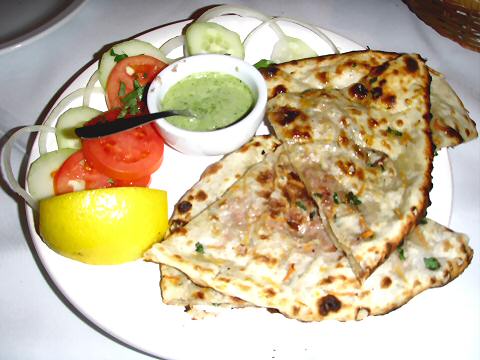
We started off with a couple of appetizers, the keema naan, which was the hands-down winning dish of the evening, perfectly cooked naan flatbread filled with a minced lamb mixture that was tangy and delicious, squirted with fresh lemon, and dipped into a tangy cilantro yogurt sauce… which, by the way, brought to mind sauces… now, I realize that this may be purely a norteamericano affectation, I don’t know, but it seems like every Indian restaurant 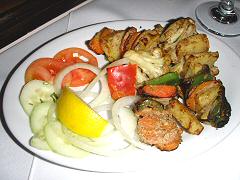 I’ve ever dined in there serves up a little trio of sauces – a tomato onion chutney, a tamarind sauce, and the cilantro yogurt sauce. I’ve noticed that the few Indian spots here, including Tandoor, don’t – I’ll have to ask about that. The other dish we tried was the vegetable tikka, a simple plate of vegetables that have been coated in a yogurt and spice mixture and then “grilled” in the tandoor oven. It was tasty, the flavors were all there, but it was missing something… a little rice, or maybe it was just that we’d already gone through our basket of flatbread that came on the side – we could have eaten the veggies wrapped in pieces of that. Maybe those three dipping sauces… no, really, I loved the flavors, and though interestingly, one of the owners pointed out that he wasn’t fond of the way the spices were just crusted on the outside of the vegetables, I actually liked that, it gave the dish a little textural crust.
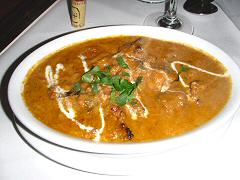
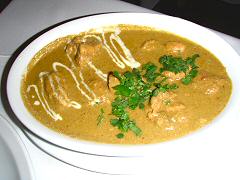
We moved on to the main courses… and here’s my one and only thing that I think needs to be changed on the service, though perhaps I should be used to it in restaurants here, it’s the same in the other Indian spots, and in Chinese restaurants as well… I’d have liked it if the waiter had asked us when we were ordering if we’d like rice with our dishes. It’s not served automatically here, you have to order it, and so, when our entrees arrived, we realized we needed a plate, which required flagging someone down, ordering it, and waiting for it, which didn’t take long, but was noticeable – I’d love to see them either just simply bring a small dish of rice as part of ordering main courses, or at least ask in advance. The chicken tikka masala, on the left, was mildly spicy, rich, full of great flavors – one note, the restaurant offers the option of making the dishes more spicy, with two levels above “as is”… but I had an interesting conversation with one of the owners one night – he pointed out that unlike some cuisines where chilies or other spices may be sauteed into a pan while making an sauce to order, or topped with extra spices that are raw, Indian sauces are cooked slowly over low heat, which give the spices time to meld and mellow – so while they can throw in extra chilies, it tends to destroy the balance of the sauce, and it just tastes spicy. That’s good enough for me to not ask the chef to change the way he makes the dishes, we left them “as is”. The dish on the right is a chicken sha jahan, a sauce of nuts and “exotic spices” – I’ll let you know if I find out what’s in it – delicious! Mildly sweet, and really quite good.
One last comment on the rice… basmati rice is typically known for being a delicately fragrant rice, and also because of the structure of the grains, tends to stay firm and separate rather than sticky when cooked. I don’t know if it’s that they’re using a different type of rice, or if it’s something about the way it’s being cooked or held to temperature, but the rice came out sticky and clumped together, and we thought lacking in that usual fragrance. It was fine with the main courses ladled over it, but on its own wasn’t as good as what I normally think of as basmati.
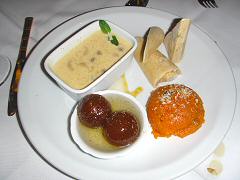 This is just plain smart. Tandoor offers up four different desserts, but also offers up a tasting plate of all four, for sharing. A rice pudding-ish sort of thing in the rectangular dish – the flavors spot-on, though perhaps a little too soupy – we’d have liked more rice less milk… The other three, real winners – the kulfi, which is sort of like a semi-freddo, flavored with rosewater and nuts; the gajar halva, which was my personal favorite – like a carrot cake without the cake… carrot pudding perhaps? And, the gulab jamun, a sort of gooey, milk-based, fried ball soaked in sugar syrup… I can’t think of a way to describe it that sounds appetizing, but it is, it really is.
Overall, high marks for service. The food, quite good, though I’d say that there’s room for improvement – one note, we took a little tour of the kitchen after dinner, and I noted that because a large percentage of the food is being cooked in the tandoor, and the chef himself is doing all the tandoor cooking, the rest of the kitchen staff are doing little more than standing around and then adding sauces, garnishes, and plating things. At some point (and that’s one of the reasons for not reviewing a restaurant early on), he’s going to have to teach his staff how to work the tandoor, so that he can spend more time on the fine points. The wine list needs some serious work – it currently consists of a couple of inexpensive, lower quality wines, and then a few much more expensive wines… but they’re all “usual suspects”. Though I might typically go for a nice cold beer with Indian food, I think it’s quite possible to offer a really nice selection of good wines in all price ranges that will go well with it. Leaning towards the pricey side, though given the quality and service, it’s not out of line, with wine and tip, figure on close to AR$100 a person for a three course meal.
Copyright © 2026 SaltShaker. This feed contains copyrighted photos and text from SaltShaker. If you are not reading this material in a feed aggregator or by e-mail subscription, the site you are viewing may be guilty of copyright infringement. Please contact [email protected] so that I can take appropriate action.
Plugin by Taragana
]]>“Tulasi is most beloved of Lord Krishna and thus her leaves and flowers are also most dear to Him.”
– Srila Bhaktisiddhanta Sarasvati Thakura
 Buenos Aires – One is taking a big chancewith the powers that be when naming their restaurant after one of the most holy icons of Hinduism. The Ocimum tenuiflorum, better known as holy basil, or, in this case, Tulasi, Av. Marcelo T. de Alvear 628 Local 28, in the Gallería del Este, Retiro, 4313-4026. Of course, if you hide yourself away, at the level of difficulty that this place was to find, perhaps your risk is minimized. We actually stopped in at the “food court” in the same galleria and inquired, and no one had ever heard of the place. It turned out to be on the floor above the food court, in virtually the same spot. The galeria itself can be entered off of the little plaza at the foot of the Calle Florida pedestrian mall, or from the side on Maípu. It’s a small spot, looking more like a takeout counter with a few tables… well, actually, that’s what it is. They also offer delivery and catering. [Closed in 2009.]
 And, what do they offer in the name of the holy basil plant? Indian vegetarian food, prepared by Ariel Blanco, who has spent the last twenty years studying the art and putting together this restaurant which is clearly a labor of love. Not only vegetarian, but organic as well, open for lunch Monday through Saturday, and on into the early evening on weekdays. The menu offers a nice range of dishes, with just over a dozen Indian specialties, and half a dozen more generic vegetarian dishes – seitan sandwiches, vegetable tarts, salads. Of course, I was there to check out his Indian offerings…
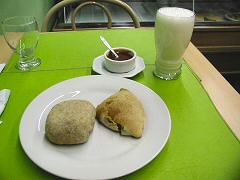
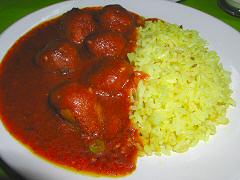
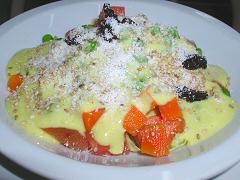 I started off with a duo of a delicious vegetable stuffed samosa along with a bean and lentil filled katchouri spiked with ginger. A nice glass of freshly made lassi, a yogurt drink laced with a touch of rosewater, made a good pairing to the tasty little snacks. A dish of a sweet and sour sauce for dipping accompanied – a bit more on the sweet side than I tend to like, but not bad. Followed that up with a plate of koftas, deep fried vegetable balls in a tomato curry sauce with turmeric rice that was really quite good, and a salad of raita, that wasn’t what I was thinking it would be – I guess I’m used to more of the side dish of cucumbers in yogurt and mint – apparently there’s a more general use of the term that essentially means salad… or so it was explained to me. Either way, this was a delicious salad of shredded cabbage and other fresh vegetables in a sesame yogurt dressing – and it’s big enough to be a main course on its own, and one which I’d be inclined to recommend exactly for that on a day when you’re in the mood for a lighter meal.
Overall, high points for good food, passion for cooking, truly inexpensive prices, a bit of eye candy behind the counter… well, we’ll leave that for another story.
Copyright © 2026 SaltShaker. This feed contains copyrighted photos and text from SaltShaker. If you are not reading this material in a feed aggregator or by e-mail subscription, the site you are viewing may be guilty of copyright infringement. Please contact [email protected] so that I can take appropriate action.
Plugin by Taragana
]]>