“Well, basically, there was this little dot, right? And the dot went bang and the bang expanded. Energy formed into matter, matter cooled, matter lived, the amoeba to fish, to fish to fowl, to fowl to frog, to frog to mammal, the mammal to monkey, to monkey to man, amo amas amat, quid pro quo, memento mori, ad infinitum, sprinkle on a little bit of grated cheese and leave under the grill till Doomsday.”
– Johnny (David Thewliss) in Naked
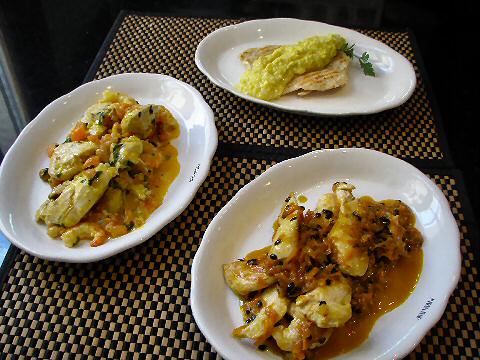
Buenos Aires – The week began with fowl – chicken in particular – the plan had been one chicken and one duck dish, but lack of good duck and one other key ingredient for the recipe that my Brazilian cooking professor wanted to teach me negated the latter. Instead, we talked about it and then prepared three different traditional styles of chicken – the originally planned xinxim de galinha, chicken stewed in cashew and tomato sauce; a pollo con molho de choclo, or grilled chicken breast in a creamed corn sauce; and pollo con maracujá, chicken in a passionfruit and carrot sauce. All delicious! I’m disappointed that this was the last of the four session course (I do recommend it for anyone local, and am happy to provide the info for contacting Eduardo – you’ll need to be fluent in either Spanish or Portuguese…).
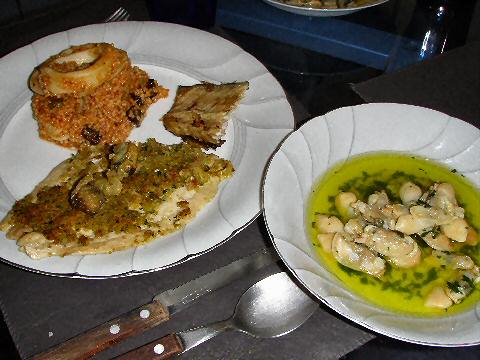
Here at Casa Saltshaker, group two worked their way through a quintet of contorni recipes – the braised endive, the peppers in bagna cauda, and the fried fennel from the previous week, plus a twist on eggplant parmesan using tiny little baby eggplant, and roasted porobello mushroom caps filled with pumpkin seeds and garlic. That was all yesterday. Today, group one launched their way into filleting fish and then making a trio of dishes – olive oil poached razor clams, Mario Batali’s “sicilian lifeguard” calamari, and my own breaded pomfret with a green olive, bacon, and chili topping. New photos, of course, on the flickr stream. Group three is waiting in the wings to start towards the end of the month after group one winds down, and meanwhile, I’m thinking through various ideas for the next series of classes… I’m happy to consider suggestions if you’re interested in a particular topic.
Copyright © 2026 SaltShaker. This feed contains copyrighted photos and text from SaltShaker. If you are not reading this material in a feed aggregator or by e-mail subscription, the site you are viewing may be guilty of copyright infringement. Please contact [email protected] so that I can take appropriate action.
Plugin by Taragana




 ]]>
]]>“Rice is a beautiful food. It is beautiful when it grows, precision rows of sparkling green stalks shooting up to reach the hot summer sun. It is beautiful when harvested, autumn gold sheaves piled on diked, patchwork paddies. It is beautiful when, once threshed, it enters granary bins like a (flood) of tiny seed-pearls. It is beautiful when cooked by a practiced hand, pure white and sweetly fragrant.”
– Shizuo Tsuji, Chef and cookbook author
Buenos Aires – Moving swiftly along with our class schedule, this week our first group simmered their way through a trio of grains – we looked at the different types of risotto, polenta, and farro, and had our way with a Saffron-Asparagus Risotto flavored with Gremolatta, a slow cooked Polenta with Cremini mushrooms and homemade Italian sausage, and a bubbling pot of Wheatberries with a Quartet of Spring Vegetables. Thus ends our carbo loading – next week on to vegetable side dishes.
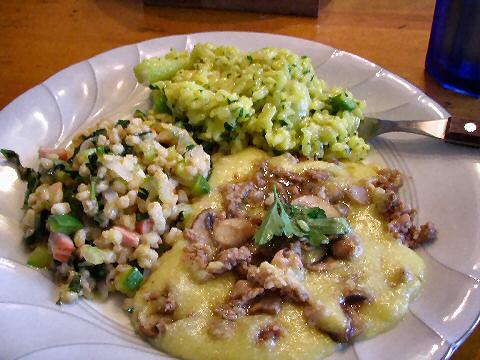
More detailed pictures on our Flickr page.
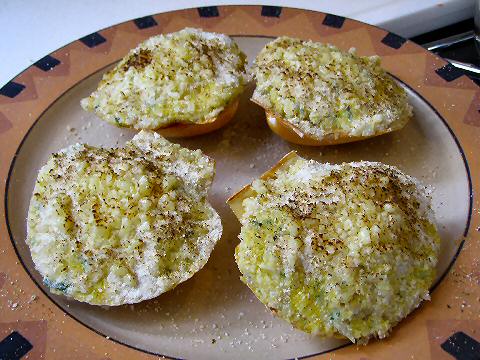
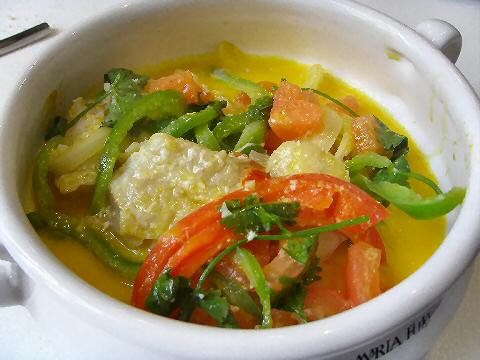
On my side, I swam my way through a duo of Brazilian classic fish dishes – casquinha de siri and moqueca de peixe, both delicious – Henry insisted on more moqueca after sampling, so I whipped up a version using calamari that evening, simply because I had some….
Copyright © 2026 SaltShaker. This feed contains copyrighted photos and text from SaltShaker. If you are not reading this material in a feed aggregator or by e-mail subscription, the site you are viewing may be guilty of copyright infringement. Please contact [email protected] so that I can take appropriate action.
Plugin by Taragana
]]>“We shall reign with righteousness, for the benefits and happiness of the Siamese people.”
– Oath of Accession for the Thai king
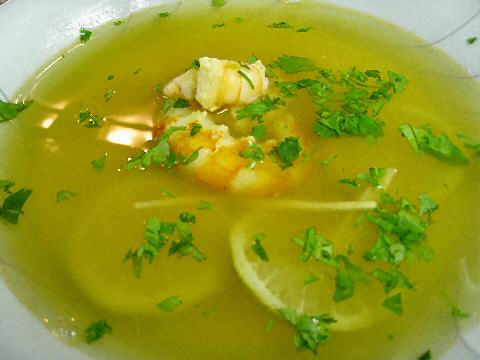
Buenos Aires – Look, he wasn’t feeling well, wasn’t even able to deliver his annual birthday address to the nation the night before his birthday festivities, so we didn’t count on him to show up for dinner. He would have been welcome. Bhumibol Adulyadej, better known as King Rama IX of Thailand, turned 81 this weekend. When it comes down to it, he’s more or less the guy who is the sequel to the well known “The King and I” – taking over when Yul Brunner’s real-life counterpart departed this globe. I decided on a seafood and vegetable dish dinner – I’d had several requests from visiting pescetarians and hey, I like seafood and vegetables too.
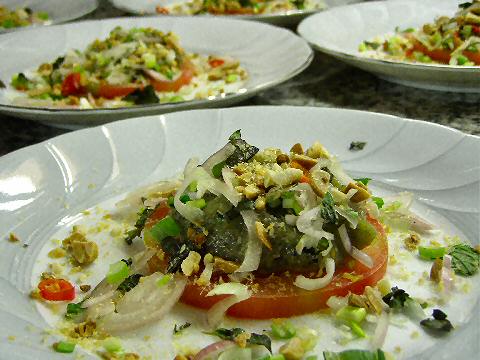
The next course, I played around with two dishes I’d done before for a previous Thai dinner – just two of the three middle dishes – the fried tofu sauteed up in oyster sauce and chili oil atop grilled pineapple – I stacked five squares of the tofu in a cute little tower, and then drizzled the tower with a reduced balsamic caramel. The squid dish I made with squid rings rather than tentacles, which was much better received – I also beefed up the spice a little with a mix of ground black and red peppers.
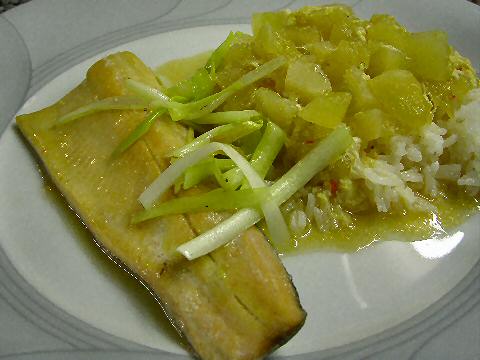
The dessert, from the same dinner as linked above, a butternut squash tart with a cashew caramel that worked out beautifully.
I have no idea what our distant friend Bhumibol was dining on, or if he was even up for a good dinner given his illness, but hopefully he would have appreciated ours had he joined us.
Copyright © 2026 SaltShaker. This feed contains copyrighted photos and text from SaltShaker. If you are not reading this material in a feed aggregator or by e-mail subscription, the site you are viewing may be guilty of copyright infringement. Please contact [email protected] so that I can take appropriate action.
Plugin by Taragana
]]>“French speaking countries in Africa have always enjoyed a special relationship with their former colonial master. French influence in those countries remained strong even after independence, with currencies tied by a fixed exchange rate to the French franc, military agreements allowing the stationing of French intervention forces in Africa, and a strong presence of French companies in Francophone territories.”
– Emmanuel Wongibe, editor, Radio Deutshe Weller International
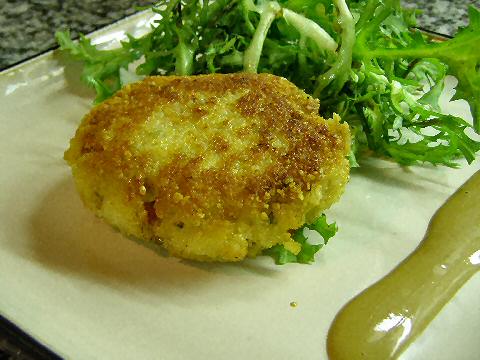
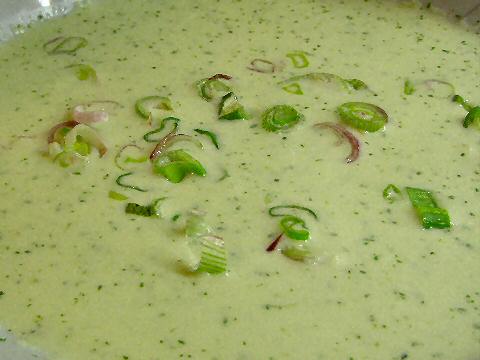
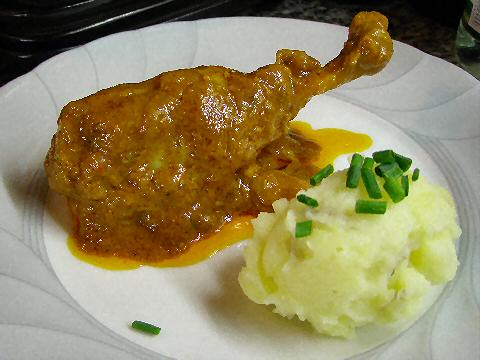
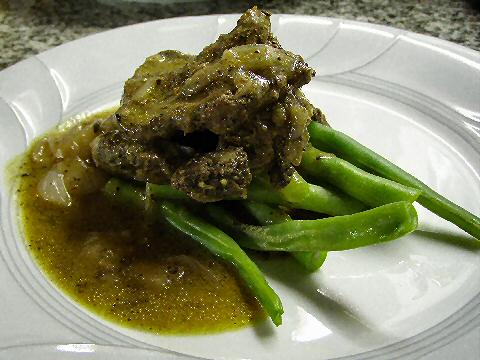
Buenos Aires – Fifty years have passed since the fall of French Equatorial Africa, splitting apart into separate states, tossing off the yoke of French colonial masters. Likewise in the neighboring Congo, and not far away in western Africa, in Mauritania. It seemed as good a moment as any to explore the flavors that spring from the combination of African tradition with French colonial cuisine.
Copyright © 2026 SaltShaker. This feed contains copyrighted photos and text from SaltShaker. If you are not reading this material in a feed aggregator or by e-mail subscription, the site you are viewing may be guilty of copyright infringement. Please contact [email protected] so that I can take appropriate action.
Plugin by Taragana
]]>“We still think of ourselves as Basques”, says Mme Pitchoauajue. “Until I went to school at the age of seven, I couldn’t speak a word of French.”
– Graham Simmons, The Basque Way
Buenos Aires – Although it was suggested, I did not wear a proper French Basque Beret to celebrate “National Day” in the northern Basque country, i.e., the French side of the Pyrenees. We hear a lot about the Spanish Basque side of things, and all the high falutin’ restaurants along the coast and up into the mountains there, but we rarely hear about what’s happening in the southwest of France. So, how could I pass up the opportunity to play with some classic flavor combinations from the countryside? Even if I wasn’t wearing a beret.
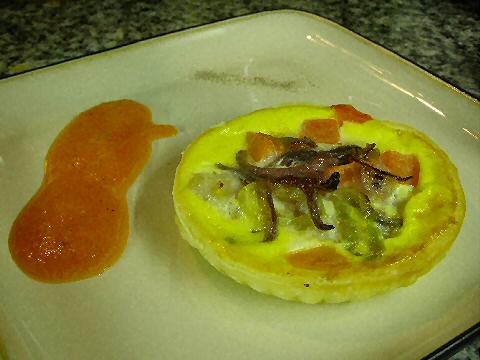
Although it would have been more traditional to use bacalao, or salt cod, in this dish, I was feeling inspired by an array of fresh fish at the local pescadería, including a trio of beautiful fresh, whole cod, just ready to be filleted. My first idea was to fill some fresh piquillo peppers with some sort of cod preparation, but none were to be had this last week. A bit of thinking, and I decided on small tartlets filled with cubes of fresh cod, diced tomato, and thin strips of lemon zest. Added to that, some frying peppers and red onion, sauteed in a little olive oil, and then the whole thing topped with a scoop of beaten egg and milk, then baked until lightly browned. On the side, a puree of red bell pepper, orange juice, a small chili pepper, cumin, and salt.
If you’ve been reading SaltShaker for awhile, you’ve seen several iterations of panade, a slow cooked onion and bread soup. There was a very interesting looking Basque recipe for a garlic soup, and somehow, I sort of put them together – following the exact same procedure as for the onion panade, but using about 3 full heads of garlic, the cloves thinly sliced. What a great garlic soup!!!
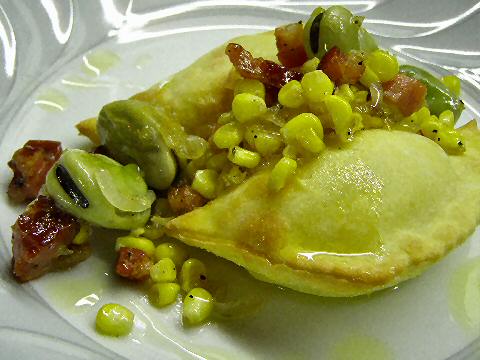
This was a fortuitous accident. It started out with the idea of a fava bean filled ravioli, well, really, a half ravioli, an agnolotti, with a sort of trout cream sauce. But I got to doodling, and decided to put the trout inside the agnolotti – it’s a simple mix of homemade cream cheese, smoked and fresh trout, a little salt and pepper. The agnolotti dough was a basic egg yolk pasta. I decided to make a saute of fresh fava beans and corn with shallots, bacon and chives tossed in – lots of olive oil. Now here’s the accident. I laid the agnolotti out very carefully on silpats, those lovely non-stick sheets. They stuck. I couldn’t remove them without tearing them to shreds, so boiling them up instantly became out of the question. Now, it happens that I like baked pastas of various sorts, and I figured – they’re already on the baking sheets, and at least once they’re cooked, even if they’re still somewhat stuck to the silpats, I can slip them off with a spatula. Turns out they puff up almost instantly, brown, unstick, the filling solidifies a bit, almost like a ricotta type filling. Delicious, really delicious. This one goes in the cookbook!
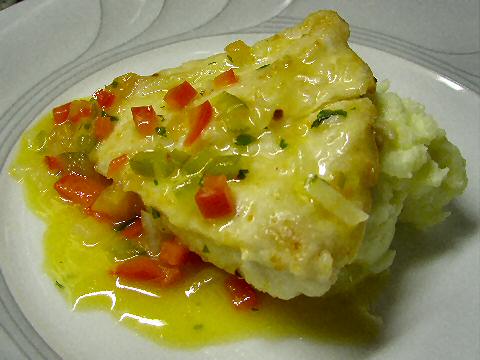
This is more or less a deconstruction of a traditional poulet a la vasca, or Basque-style chicken. Normally it’s a slow cooked braise of pieces of chicken with potatoes, peppers, onions, tomatoes, in a white wine and olive oil combination, thickened with a little flour. I separated the components – mashed potatoes instead of whole, finished with lots of cream and butter. Atop those, sort of a chicken milanesa – pounded thin breast of chicken dipped a couple of times in a mix of flour, salt, and cayenne. The sauce, slow cooked onions, green and red peppers, all diced up fine, in olive oil, then tomatoes added towards the end of the cooking, a good couple of splashes of white wine, and then thickened with a paste of butter and cornstarch, cooked just until the sauce was the consistency I wanted.
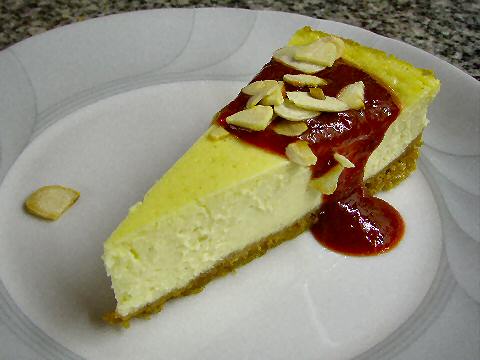
Finally, a fairly straightforward cheesecake using our homemade cream cheese, but substituting roughly half of the volume with a fresh goat’s milk cheese. Atop, a warm kumquat and cinnamon marmalade.
See, I didn’t need a beret….
Copyright © 2026 SaltShaker. This feed contains copyrighted photos and text from SaltShaker. If you are not reading this material in a feed aggregator or by e-mail subscription, the site you are viewing may be guilty of copyright infringement. Please contact [email protected] so that I can take appropriate action.
Plugin by Taragana
]]>“The Federal Republic of Central America, also known as the United Provinces of Central America, was a short-lived state in Central America, which consisted of the territories of the former Captaincy General of Guatemala. An experiment in republican democracy, it existed from July 1823 to 1840. It was intended to be a federal republic modeled after the United States of America…. The republic consisted of the states of Guatemala (which initially included a large part of what is now the Mexican state of Chiapas), El Salvador, Honduras, Nicaragua, and Costa Rica. (Panama was still part of Colombia at the time.)”
– Wikipedia
Buenos Aires – There was nothing in particular about the weekend that inspired a Central American themed dinner, simply whim. I’ve been exploring some of the cuisine from the various countries that make up “Central America” (now seven countries rather than the “original” five, Panama and Belize having been added in later on). The fact that the short-lived Federal Republic had five member states made it easy to fit into a five course tasting menu, you know?
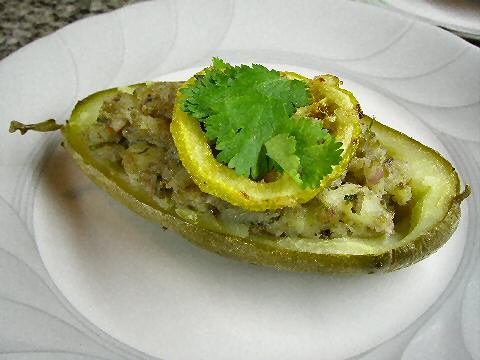
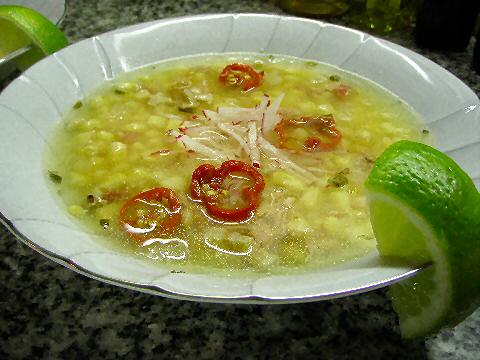
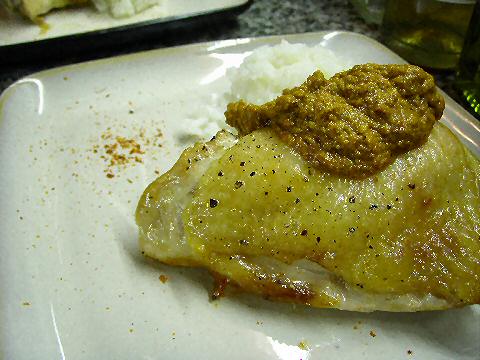
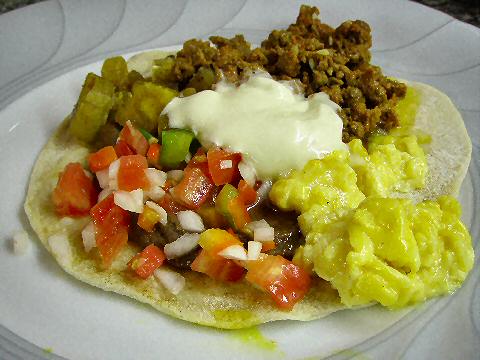
Overall, I’d say most folk were quite happy with dinner – I know we were.
Copyright © 2026 SaltShaker. This feed contains copyrighted photos and text from SaltShaker. If you are not reading this material in a feed aggregator or by e-mail subscription, the site you are viewing may be guilty of copyright infringement. Please contact [email protected] so that I can take appropriate action.
Plugin by Taragana
]]>