He who has no bread has no authority.
– Turkish proverb
Buenos Aires – More recent bread experiments…
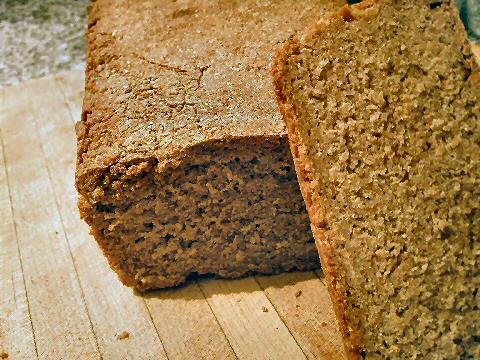
Light rye bread direct from the NY Times Bread and Soup Cookbook – flavor great, a little denser than described or expected
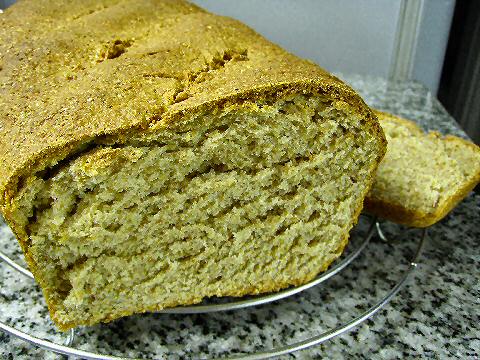
My own mix of wheatgerm, wheat bran, whole wheat and bread flour – came out beautifully
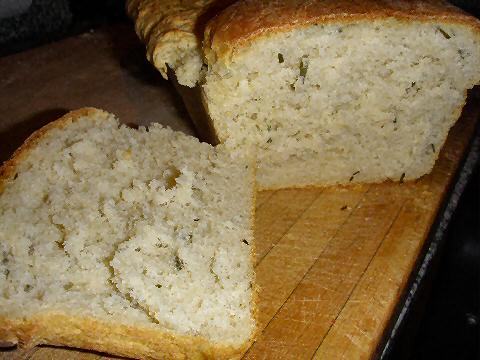
Mashed Potato Chive Bread – a little too wet, despite baking for half an hour longer than the recipe called for
Copyright © 2026 SaltShaker. This feed contains copyrighted photos and text from SaltShaker. If you are not reading this material in a feed aggregator or by e-mail subscription, the site you are viewing may be guilty of copyright infringement. Please contact [email protected] so that I can take appropriate action.
Plugin by Taragana




 ]]>
]]>“Savoriness or umami is the name for the taste sensation produced by the free glutamates commonly found in fermented and aged foods. The additive monosodium glutamate (MSG), which was developed as a food additive in 1907 by Kikunae Ikeda, produces a strong umami taste. Umami is also provided by the nucleotides that are naturally present in many protein-rich foods, including dried Bonito flakes and in high concentration in dried Shiitake mushrooms, used in much of Asian cooking…. Umami is considered basic in Japanese and Chinese cooking, but is not discussed as much in Western cuisine, where it is sometimes referred to as “savory” or “moreish.” The Japanese name for the taste sensation literally means “delicious flavour.”
– paraphrased from Wikipedia
Buenos Aires – How could we pass up the opportunity to celebrate the 100th anniversary of the discovery of glutamate? I mean, break out the party hats and noisemakers! Yes, indeed, July 25, 1907, a researcher at the University of Tokyo, clearly bored to tears with whatever task the department chair had given him, decided to analyze the ingredients in his daily noodle soup bowl, and figure out why grandma’s tasted better than mom’s. With great glee, given his obviously poor relationship with his maternal parent, he announced it was because nana used more konbu seaweed and bonito flakes, and he even declared the chemical he isolated from those two ingredients was the source of umami, or “delicious taste”. This founded an entire industry and also got him out of having to go home for Sunday lunch visits.
I started off figuring that I had to make some form of dashi – a quick trip to chinatown yielded up some konbu, the bonito flakes were already in the pantry. Instead of infusing them into water, I decided to infuse them in a cream and milk mixture (we don’t have half-and-half here), spice it up slightly with some shichimi, or “seven spice” powder, a touch of salt, and thicken it up in a double boiler with a couple of egg yolks. Now, what to put that on… Salmon, yes that’ll work. And a cream sauce, how about a pasta? So, fresh salmon, put through the coarse meat grinder, some fried onions, and the grated rind of some lemons, oranges, and limes, along with a splash of their juices and some salt – makes a great little salmon burger… oh, a basic egg pasta dough, filled giant raviolis with the salmon mixture, left to dry slightly, cooked off, topped with the cream sauce, sprinkled with chive batons, and yes, that’s got umami in spades.
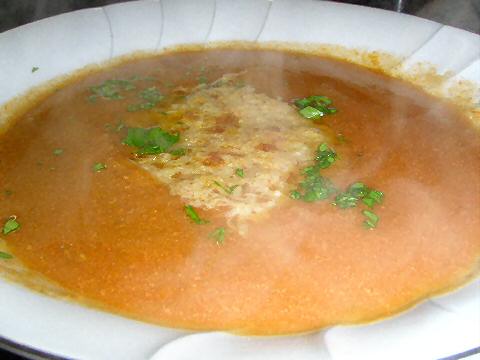
Dried, aged, tomatoes, cheese, cold and wet days – how about a steaming bowl of tomato soup. Remember those Campbell’s soup ads for a bowl of tomato soup on a cold wintery day? Soup and sandwich, soup and sandwich… soup this good just has to be Ca… mmm, mmm, good. Oh wait, where was I? Ahh yes, a big pot, a liter of milk, about two of water, a whole bunch of sun-dried tomatoes, a couple of onions, some garlic cloves, fresh parsley, cloves, black pepper, thyme, bay leaf, all simmered together for about half an hour, then pureed, strained through a coarse strainer, a little salt… and what atop? Why yes, a parmesan crisp… just a scoop of freshly grated parmesan cheese sprinkled with a little smoked paprika, melted and browned on a silpat, and left to cool and crisp up. Float that right on top of the soup.
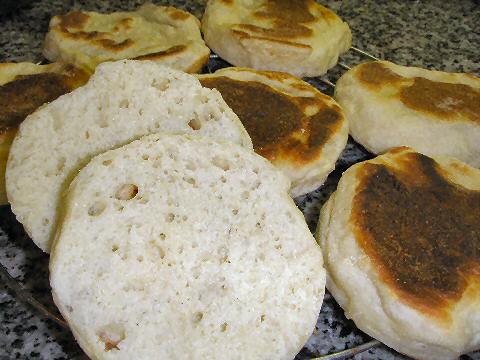
Found ’em. English muffins. The recipe that works. Since I’ve been on this baking kick recently I’ve started reading various baking sites. And who knows more about norteamericano baking than King Arthur’s Flour company? And, lo and behold, English Muffins, and the recipe turns out perfectly. Really. Look at them. Try it.
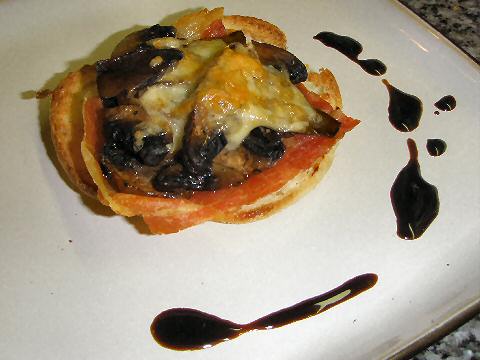
Great sources of umami… bacon or similar cured meats… meaty sorts of mushrooms like shiitake and portobellos… cheese…. How about a sort of McMuffin kind thing? Split those English Muffins we just made. Top with a slice of crispy prosciutto (okay, modern chef’s trick here… you’re gonna love this… get two plates of equal size… lay a square of kitchen towel paper on one… lay strips of prosciutto, pancetta, bacon, whatever you like on the paper, not touching each other… lay another square of towel paper on top… put the second plate atop to press it all together… stick in the microwave on high power for 50 seconds, no more, no less… you tell me), top with some thickly sliced portobellos that have been briefly sauteed in butter, grate some cheese over the top, something that will melt well, I used a cheese called fynbo that has a sort of nutty character to it. Broil. Drizzle a little glaze of reduced soy and balsamic vinegar around it. Eat.
One of the things that I get asked alot is a sort of “where did you get that idea?” usually referring to some sort of strange sounding combination. Much of the time I have no idea, these things just come to me. But this one I know, and I forgot to mention it when I posted about my blue cheese sauce back on the evening of our Sherry Dinner. It was from Tony Bourdain. Now, not anything the man cooked, because my past experience with his cooking is, well, less than favorable. But I do occasionally enjoy watching him traipse around the globe – not because I enjoy listening to him prattle on as if he actually has the “street cred” he thinks he does, but because he often ends up in front of someone who’s whipping up something really cool. In this case, it was a drink. A martini. I think it was a show on India, and he’d gone out to some floating bar in the middle of a lake, where the bartender prepared him what he declared was the best martini he’d ever had – it was garnished with an olive filled with blue cheese, onion, and mint. It got me thinking, and that’s how I ended up with a sauce made from gin-deglazed shallots, melted blue cheese, chopped black olives, stock (lamb for this evening), and finished with freshly chopped mint. You can follow the logical progression, no? The sauce this eve was ladled over seared and roasted lamb loin, which was atop brown butter miso sauteed chinese cabbage. An umami bomb, in the best sense of the word, basically.
Chocolate isn’t an umami sort of thing, but then, few dessert items are. Some beans are. Adzukis for example, so what about adzuki bean paste? And what about sandwiching it between that cocoa crust and chocolate ganache I’ve been playing around with over the last couple of months? It comes out like a dense, really interesting fudge kind of intense dessert. Maybe a little over the top. Maybe.
Copyright © 2026 SaltShaker. This feed contains copyrighted photos and text from SaltShaker. If you are not reading this material in a feed aggregator or by e-mail subscription, the site you are viewing may be guilty of copyright infringement. Please contact [email protected] so that I can take appropriate action.
Plugin by Taragana
]]>“It is important to understand the basic differences between the wild yeast of sourdough and the commercial baker’s yeast in most other breads. First sourdough yeast grow best in acidic doughs, while baker’s yeast does better in neutral or slightly alkaline doughs. Baker’s yeast is a single species, with hundreds of strains and varieties, while sourdoughs are usually leavened by one or more species in the same dough, none of which is baker’s yeast. Baker’s yeast is a highly uniform product that produces an equally uniform texture in bread dough. The wild yeast are anything but uniform, and they vary from country to country. But the most impressive difference between the two yeast types is that a single package of instant dried yeast produces just one batch of bread, while the same amount of wild sourdough culture produces loaf after loaf for the lifetimes of many bakers.”
– Ed Wood, Classic Sourdoughs
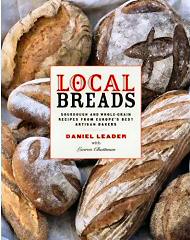 Buenos Aires – Though it was published last year, I just got around to reading through Daniel Leader’s Local Breads. I was particularly interested in this bread baking book because it focuses on sourdough breads from a number of traditional European cultures, and it’s a topic, good sourdough bread, that is, that comes up regularly in expat conversation here. A friend of mine recently went back to the U.S. to visit family and agreed to bring back a couple of different books that I’d wanted, so here was my opportunity. Daniel Leader is well-known for his award winning book Bread Alone that came out in the mid-90s – a solid introduction to the world of bread baking. This new book has gotten rave reviews, with only minimal criticism for at times being a bit technical and dense. I have to admit, I didn’t find it that way, but then, I’m kind of used to reading books of that sort.
I am, however, going to point out the emperor’s nudity… just a bit. Overall, I liked the book immensely. It was a completely enjoyable read, and his stories about different regions and his travels are engaging. His recipes are a little repetitive, giving overly detailed step by step instructions, over and over again – but then, most people probably are not sitting down to read the book cover to cover – they’re picking out one or two recipes and trying those out – so they don’t really want to be flipping back and forth to previously referenced techniques. I can’t really fault him there. I did find his writing to be a bit… hypocritically humble – hmm… maybe that’s not quite the phrase. He constantly bows and scrapes to the various bakers he talks about, as if each, in turn, is some sort of godlike figure in the world of baking – producing the ultimate loaf of bread of their style. He then turns around, one by one, and discusses how he took their product and “perfected it”. Beyond the presumption that he can take on the recipes of the gods (maybe he just writes about them as if they were on pedestals…), his regular assertion of his ability to turn these humble (yet deity-produced) loaves into his version of perfection, is a bit off-putting. Sort of like listening to that guy at a cocktail party who stands there while you’re talking, tapping his foot and waiting for his turn to tell you you have an interesting idea, but he has a better one.
My biggest problem with the book is his math. Initially, it didn’t catch my eye, until I hit the phrase in his section on German breads – “He told me that the average German eats a kilo of bread a week – about 10 ounces of bread a day.” and then goes on to talk about how this seems to be alot in comparison to Americans. Mmmm… no, a kilo a week would be 5 ounces a day, pretty much the same as the amount he talks about for Americans. Either he meant 2 kilos a week, or he simply got his math wrong. I would have just discounted it as a simple mistake, only when I started out to try his recipes, I found similar problems with the numbers.
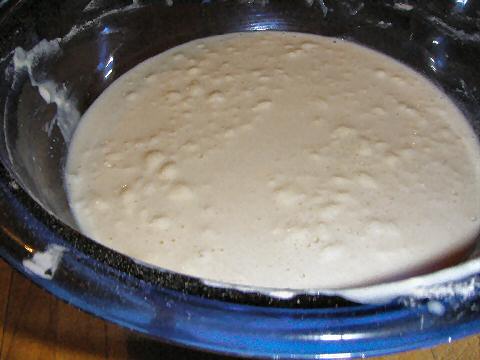
I decided to start off with his section on liquid levain – a watery sort of sourdough starter that is all the rage amongst a certain group of French bakers these days. The levain itself turned out to be quite easy to make, a simple mix of 2/3 cup of water and 6 tablespoons of flour… hmmm… that is quite a bit of water, no? Left to sit with various stirrings and daily additions of 1/3 cup each of flour and water. Over the course of four days it turned into a bubbling, fermenting container of delightful smelling levain the consistency of light cream.
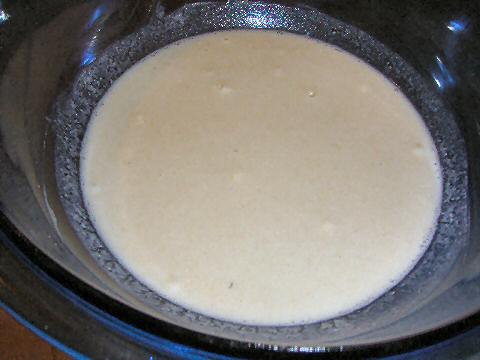
In the beginning – just mixed
After 48 hours, with two additions of water and flour
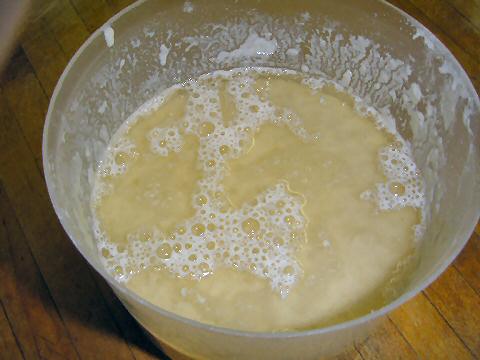
After four days and four additions, bubbling and ready to use.
That was all well and good and I was excited and ready to go. My first inkling that something was amiss was as I mixed the ingredients for his Baguette à l’ancienne, an old world style baguette. He talks regularly in the book about doughs that are hydrated more than what we’re used to working with. But this was like thin pancake batter. He didn’t give a detailed description of consistency, merely that it would be far softer than what one would normally think of, and he does say it will be a challenge. At the same time, though he opts for machine kneading, he asserts that it’s possible to hand knead this dough, with care. that wouldn’t have been possible with this – it would have simply poured onto the counter and dripped off onto the floor. I looked back at the numbers in his recipe, and sure enough, his proportion of water to flour comes out pretty close to 1:1 – I mean, even a “wet dough” is generally only about 2/3 the amount of liquid to flour, and most people work with bread doughs that are more like 1:2. Top that with past experience here that the flours here need extra water in comparison to what I’m used to in the U.S., and something was clearly wrong. Still, I gave the mixer a try – he asserted that after 8-9 minutes of high speed mixing the dough would take on the consistency of a marshmallow. Maybe if it’s been melted over high heat…

So, I added in flour – high gluten bread flour in fact to help it develop some structure, almost 50% more than his recipe called for before I got something that was remotely marshmallow-like. At that point I wasn’t going to even try to shape this mess into baguettes and simply poured it into greased mini-loaf pans, let it proof for a couple of hours (it did rise… though slowly), and then baked out these little loaves. The taste was great – the lightly tangy sourdough flavor – and with the extra flour the consistency was okay – though not really baguette-like.
And, I moved on… more cautiously now. I’d already decided I wanted to also try his recipe for Pain de campagne, more commonly referred to as boules. I decided to approach this carefully, as looking at the recipe I could already see that the liquid to flour was at 85% and I wasn’t looking forward to a liquid mess. So I added only about half the water upfront, figuring on adding in more as needed. In the end, I needed very little more, a matter of a couple of tablespoons, and bringing the liquid ratio down to about 65%. From that, I got a nice, soft, pillowy dough, that fit his description perfectly. I continued with the rest of the process, and, voila! Boules.
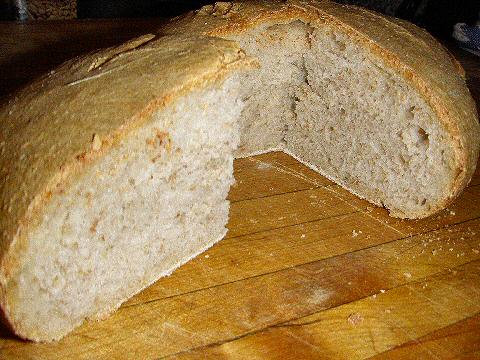
Now, to this point, I’ve only tried those two recipes, in the section of liquid levain. I have yet to delve into the making of others, though I’m going to continue trying out various ones over the coming weeks and months. My sourdough starter is bubbling away, and I’m feeding it and chatting with it on a daily basis. I’ve read a few blog entries by various other folks who’ve tried different recipes (the most common choice seems to be his basic yeast baguette recipe, different from the one I tried above), that seem to have had good results.
So the question I’m left with is… is his math just off or is there something so very different about the flour here? If anything, I’d have expected based on past experience that if it was the latter that I’d have needed more water, not less, so it leads me to think his math is off, or the book wasn’t carefully proofread. More tests and trials to come….
Other last notes on the book – which may add credence to the proofreading hypothesis – there are numerous typos in the book when it comes to foreign words, a simple example, he refers to an Italian tomato bread as al pomodori – mixing the singular article with the plural noun – I realize that’s not something that everyone will notice, but it’s something he should have (it should be either al pomodoro or ai pomodori). And back to that sort of conceit mentioned above – he subtitles the book Sourdough and Whole-Grain Recipe from Europe’s Best Artisan Bakers, yet, his travels (at least as detailed within the book), and recipes, only cover parts of France, Italy, Germany, and a very brief look at Czechoslavakia in search of one particular bread. Europe’s a whole lot more than that, and there are wonderful artesanal breads from many other countries and cultures – perhaps, who knows, perhaps better than the ones he terms Best.
Copyright © 2026 SaltShaker. This feed contains copyrighted photos and text from SaltShaker. If you are not reading this material in a feed aggregator or by e-mail subscription, the site you are viewing may be guilty of copyright infringement. Please contact [email protected] so that I can take appropriate action.
Plugin by Taragana
]]>“Everyone is kneaded out of the same dough but not baked in the same oven.”
– Yiddish proverb
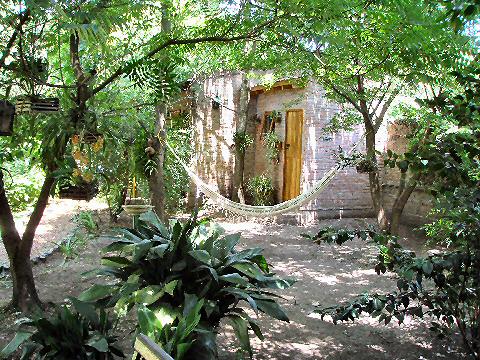
The spot is on a quiet little side street a few blocks from the train station. It’s a peaceful, tranquil locale, and the B&B truly is small – a guest house behind her own home available for two people to stay in – a beautiful garden filled with trees and orchids, one of her hobbies. Classes are available for up to three people at a time, and are held any day, by appointment – the B&B and the classes are separate entities – you can take advantage of either or both. We had a great time learning to make some unusual breads – at least for me – a pão de queijo from Brazil, chipas from northern Argentina, and we were going to make a fairly straightforward pan criollo, but rather than go with something that basic, since both of us make breads already, Teresita offered to teach us her two types of empanadas doughs, one for the oven, one for frying. I’m afraid I’m not going to give you any recipes. They’re Teresita’s, not mine to give out, and hers to teach. It’s worth the trip, and worth the price. My friend even decided that he and his wife might take advantage of some available days here and there and just get out of Buenos Aires for a quiet get-away now and again. Hey, maybe Henry and I will do the same.
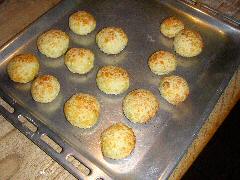
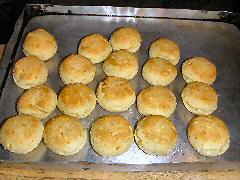
Pan de Queijo and Chipas
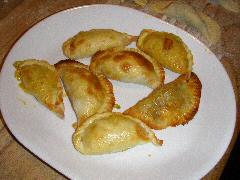
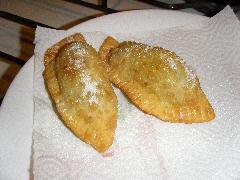
Baked and fried empanadas
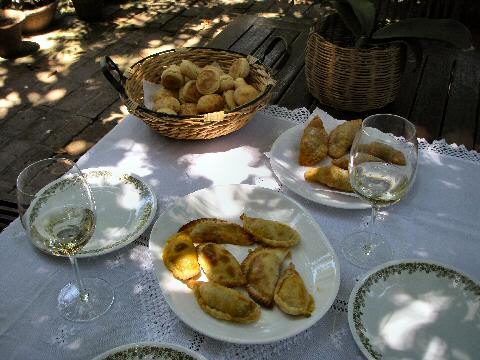
…and, lunch, bread-heavy and delicious!
Copyright © 2026 SaltShaker. This feed contains copyrighted photos and text from SaltShaker. If you are not reading this material in a feed aggregator or by e-mail subscription, the site you are viewing may be guilty of copyright infringement. Please contact [email protected] so that I can take appropriate action.
Plugin by Taragana
]]>“Compromise used to mean that half a loaf was better than no bread. Among modern statesmen it really seems to mean that half a loaf is better than a whole loaf.”
– G.K. Chesterton, Novelist, Essayist
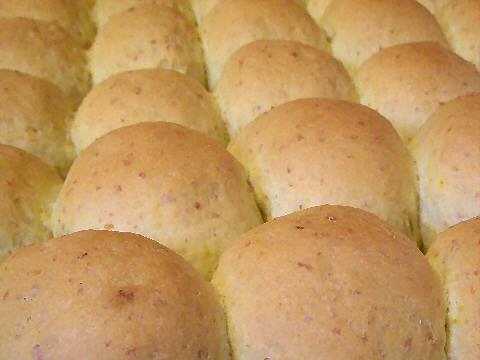
Buenos Aires – Breaking bread is our bread and butter, which requires bread, and butter, but even buttering up the bread baker it was costing us more bread. For the first year and nearly a half of Casa SaltShaker’s existence we relied on a local baker to provide bread rolls for dinner. They made good quality, tasty rolls, not the usual tasteless white stuff that passes for the staff of life here. And when we started off, they were 20 centavos a roll, but they gave us a discount and we were picking them up for 15 – that meant, since I was grabbing four dozen for a dinner of twelve folk, that we were spending a whole AR$7.20, or, at the time, US$2.40, for bread for a dinner. But steady inflation brought the cost per roll up to 40 centavos in just about 16 months, and, they stopped giving us any discount, claiming they were “losing money”. That meant, just for bread, we were spending AR$19.20, or just over US$6 – but really, just pretty ridiculous prices for rolls in our book. Even when we cut back to three dozen, which actually seems to be enough, it was still pricier than I wanted to shell out. Their claim of loss was simply ludicrous, given that I can turn out the recipe below for three dozen, for about 5 pesos, and that’s paying retail for my ingredients, including top quality olive oil.
So, I started experimenting around with bread recipes – discovering fairly quickly that recipes that I’ve used for years simply didn’t turn out the same here. The flour is different, the water is different, and anyone who spends any time baking, knows that those are key factors. It took some work, but I finally came up with a good, solid recipe that works with the local ingredients – one major thing for anyone here trying stuff out, I’m finding I need roughly one-third more liquid than I did for the same recipes in New York. I assume it’s some sort of absorbency level of the flour.
So, we have a basic “olive oil bread” roll that we’re now using, which is easy to vary if I want to flavor it with something that fits a particular cuisine – e.g., for last week’s Indian dinner I added a touch of cumin, turmeric, and mustard to the recipe – a mere ½ teaspoon of each, but it added a nice subtle flavor that fit the meal; or for our Louisiana Cajun/Creole dinner, I substituted molasses for the sugar. I’ve also started making flavored butters to go with the breads – mixing in a bit of chopped rocotos for our Peruvian dinner, ground peperoncino for our Portuguese dinner, smoked salt and drained tomato pulp for our Uruguayan eve, something that I think complements the flavors of the meal – so I’ll be starting to add notes to my dinner writeups on any changes that I make to the base recipe.
Copyright © 2026 SaltShaker. This feed contains copyrighted photos and text from SaltShaker. If you are not reading this material in a feed aggregator or by e-mail subscription, the site you are viewing may be guilty of copyright infringement. Please contact [email protected] so that I can take appropriate action.
Plugin by Taragana
]]>“Writing is a question of finding a certain rhythm. I compare it to the rhythms of jazz. Much of the time life is a sort of rhythmic progression of three characters. If one tells oneself that life is like that, one feels it less arbitrary.”
– Francoise Sagan, French playwright
Buenos Aires – One of the questions I get asked the most, especially when I’m teaching classes, is a sort of “How do you get from point A to point B?”…. Starting from reading about a dish, or a recipe in a book or magazine, or looking at an ingredient, where does the idea for the final dish come from? Here’s the short answer – I don’t have a clue. But the longer answer is, that there’s generally some sort of process, sometimes actually in front of me, working with ingredients, and some part of it just happens internally, in the back of my brain. A lot of the latter comes, I’m sure, from being a committed bookworm – I read everything about food and wine that I can get my hands on – cookbooks, magazines, newspapers, you name it. And somewhere, in the dim recesses of cognitive function, connections are made between different things that I’ve read about, seen, tasted, worked with… and it leads me from one spot to the next.
I was flipping through a cookbook that I just recently got a copy of, Mangoes & Curry Leaves, by Jeffrey Alford and Naomi Duguid – what looks to be a fascinating journey through the “Great Subcontinent”, i.e., India, Bangladesh, Nepal, Pakistan, and Sri Lanka. I haven’t gotten to sit down and read it, but I was flipping through it specifically because of the interesting dinner my family and I had at Banjara a week ago – and I was curious to find more information about the specific type of cuisine. There was a single page writeup on the people of Banjara somewhere in the middle of the book, but nothing listed in particular about their food. And then I spotted, on page 126, a recipe for Cumin-Flecked Skillet Breads. It just caught my eye, and I stopped to read about the skillet breads, and this one in particular… it required whole cumin seeds and atta flour (a type of flour specifically milled for making these types of breads), neither of which I had; then cayenne, salt, ghee (or melted butter), and hot water, all of which I did have…
 That led to looking up atta flour, first in the book’s glossary, which was of little help other than a definition, and then onto the internet looking for more information, along with possible substitutions – which, by odd coincindence involved a blend of white and whole wheat flours along with malted barley flour… I mean, who keeps malted barley flour in their kitchen… except, I was in Chinatown the week before my vacation and saw a small bag of malted barley flour and picked it up thinking, hmmm, this could be fun to play with in making some kind of bread… and while I didn’t have any whole cumin seeds, just ground, I did just pick up a little container of fennel seeds… which had me now thinking not Indian, but Italian, and those great semolina and fennel breads that I miss from New York…
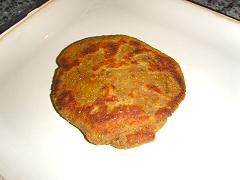 So the dough became a mix of equal parts of white flour, whole wheat flour, semolina flour, and malted barley flour, ¼ cup of each to be exact, plus two teaspoons of lightly toasted and then coarsely crushed fennel seeds, ½ teaspoon of cayenne flakes, a teaspoon of salt, a tablespoon of melted butter, and a cup of hot water. I then kneaded it together until it was all nice and smooth, and set it aside for an hour to rest. Now, after resting, both the bread and myself, the next step was simply to break off a small ball of the dough, form it into a disc – by hand, not rolling it out, according to the authors – less than ¼” thick, and simply fry it up in butter. It came out tasty, but, well, oily, as chapathi style breads often do – all that butter you know – I realize it’s the point of the type of bread, but…
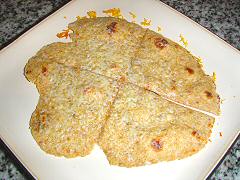 The authors had mentioned that they really liked this bread almost like a sandwich, filled with “hard cheese”… and that their kids like the bread with peanut butter… hmmm… not the latter thank you. Besides, two pieces of this bread seemed like a heart attack waiting to happen… What if I roll it out really thin and then fry it… no, wait, why fry it? I’m looking to lower the oiliness, if I make it really thin, why not just cook it dry – something like a naan or a tortilla? So I heated up a cast iron pan until it was very hot, rolled another ball of the dough out very thin, and then tossed it in the pan. When it was lightly browned on the underside, I flipped it, and following on the authors’ idea, grated some reggianito cheese over it and cooked it until the cheese melted. Now that’s really good – but it’s missing something. It’s a nice snack sort of thing, but the cheese is almost too strongly flavored for the fennel bread…
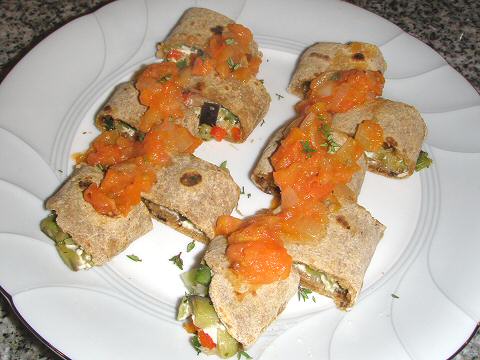
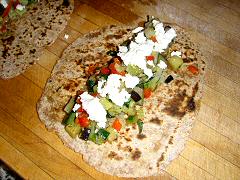 And so, hmmm… what’s in the refrigerator? Lots of good vegetables, and, as I usually have, things in the Mediterranean vein… fennel… wait, what about a sort of ratatouille-ish topping – the dish is certainly in the minds of every foodie out there with the current Disney movie – maybe a small dice of fennel, zucchini, eggplant, red bell pepper, hmm… all my garlic is soft and squishy… not good, but there are some shallots, so toss those in the pan, some chopped parsley, all cooked in just a touch of olive oil, salt and pepper to taste… top the dry cooked bread rounds… oh, there’s some fresh goat cheese, dollop a little of that atop… and wrap the whole thing up, and throw it in a hot oven just to melt the goat cheese and finish browning the outside of the breads… and maybe a little sauce – just some coarsely chopped onion and tomato, cooked just enough to soften them up, and then quickly hit with the hand blender, not to puree, but just to sort of smooth it out to more of a chunky sauce… slice the wraps, array on the plate, top with some sauce and a scattering of fresh thyme leaves… and there’s the dish in the picture up top… and delicious too…
Hmm… maybe some olives, yes, black olives next time…
See, all very (il)logical, yes?
Copyright © 2026 SaltShaker. This feed contains copyrighted photos and text from SaltShaker. If you are not reading this material in a feed aggregator or by e-mail subscription, the site you are viewing may be guilty of copyright infringement. Please contact [email protected] so that I can take appropriate action.
Plugin by Taragana
]]>