More From the Turkey Sandwich Front

Tuesday, January 26th, 2010 14:32 UTC

 Every few thousand years some shepherd inhales smoke from a burning bush and has a vision or eats moldy rye bread in a cave and sees God.”

- Kerry Thornley, co-founder of Discordianism

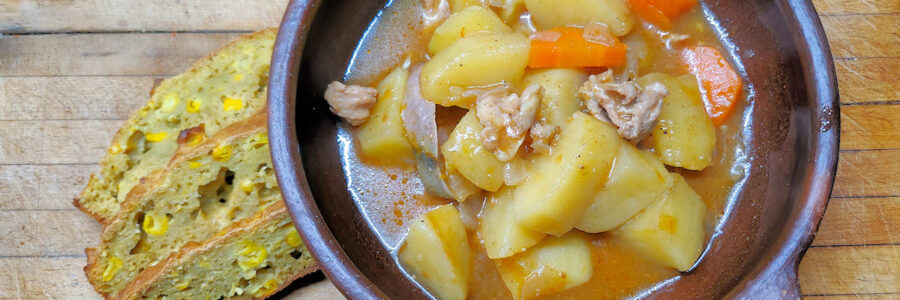
I stand corrected, or rather sit. You see, I made fun of the claim of Boedo’s Café Margot that the turkey sandwich was invented in their restaurant back in the 1940s. I pointed out that it was laughable simply at face value, not to mention, though I did mention, that the claim is disputed by their neighbors down the block, Trianón at Boedo 845. So here’s the correction, as it turns out, they’re not talking about the standard turkey sandwich with slices of turkey and some mayo, lettuce and tomato. They’re talking about what they both call the sandwich de pavita clasico, which, while having the mayo, lettuce and tomato, has shredded turkey escabeche as the meat ingredient. You may remember we went for a plate of the escabeche as an appetizer at Margot and liked it quite a bit.

Trianon - sandwich de pavita clasico

Trianón offers up the turkey escabeche in more combinations than Margot manages, though they have a limited number of blanco de pavita sandwiches, those made with the aforementioned slices of white meat (on the other hand, they also have turkey pizza and calzones, though not, surprisingly, empanadas – I asked, the waiter thought it was a good idea… watch for a new invention – could they really not have thought of that before?). Their escabeche is a bit more vinegary than Margot’s, but not over the top. And, they offer rye bread – possibly the first time I’ve seen rye bread offered at an Argentine restaurant (not counting the rye bread that turned out not to be available at the now defunct Mamma Europa deli oh so many moons ago). Really. Size and price-wise, about the same at both places. And, Trianón boldly proclaims on their menu, rather than a signboard, that they are the inventors of the sandwich.

I still think it’s a laughable claim. Pickling meat has been a common way of preserving it in many countries around the world for eons, certainly long before the 1940s, and the idea that prior to that no one ever stuck some pickled turkey between two slices of bread before and served it up makes little sense. Still, perhaps if you give them props for being a specifically shredded turkey escabeche, and paired with m, l & t, and tossed in that we’re talking about BA or at least Argentina, maybe we could give one of the two spots the credit. Except I think there’s another place a block or so away making the same claim… have to go check them out and see what they have to say.

The End

Alongside the Far Beaten Track

Monday, January 25th, 2010 09:34 UTC

 Railway termini are our gates to the glorious and the unknown. Through them we pass out into adventure and sunshine, to them, alas! we return.”

- E.M. Forster, author

A recent bout with the vagaries of Argentine supply and demand led me far afield. It was the sort of thing that would simply not have occurred to me before moving here, but has now become commonplace. You know that plastic tray that doubles as both the last shelf in the refrigerator and as the top for the vegetable drawer? Of course you do. Well, ours cracked. Slowly and surely it reached the point of in-utility. And so, I stopped by the store where we’d bought it four years and some ago, one of the major suppliers of home appliances here in town, and was told, “we only deal with the appliances, not the parts”. The salesman did scribble down an 800 number and suggested I call, it being the number for “the manufacturer’s customer service line”.

But, that was not to be so. Not only was it not a number for that, it wasn’t even a number that was at the manufacturer, nor a customer service line of any sort. It was a warehouse for a distributorship, the man who answered informed me, adding that they had, at one time, maybe 12-15 years before, had a contract for distributing those refrigerators. He had no further information. Enter the internet. A complicated search as it turned out, as the manufacturer turns out to be an Argentine subsidiary of an Argentine subsidiary of a European company. But I eventually tracked down a customer service number and called it, and, surprisingly, it was answered immediately. They informed me that they only dealt “with the appliances, not the parts”. That sounded so… familiar. But, they “knew of” a service company in the city that handled the parts. Only one.

A phone call, also answered quickly, resulted in the information that while, indeed, this appliance repair company did deal in parts, they had none of the tray I needed. However, they’d be coming back into stock in two days when they received their next order. I called back in two days. Nope, none had arrived, but definitely in next week’s shipment. A week passed, and no, perhaps the following week. This went on for five weeks, at which time they allowed that they really had no idea when or if ever they would have the trays back in stock. I called back to the manufacturer, perhaps there was another service company, outside of Buenos Aires, that could ship the tray to me. Well, there is one out in Caseros, in the province, about an hour away. I called. The man who answered informed me that he had “stacks” of the trays, but no, no shipping, they simply don’t do that. The trays either come with a technician to “install” them, a prohibitively expensive venture of several hundred pesos given the distance, or I could come pick one up, 40 pesos.

And so I found myself on a suburban train line out to the quiet little town of Caseros (when I mentioned I was headed that way to a local friend, who found the whole experience quite amusing, his only comment was, “they have the best marijuana out there”). From the train station it was a half hour walk through sleepy residential streets and on to the industrial section of town. There I found a high, unmarked door, looking more or less like the entrance to Sanford & Son’s junkyard. Locked. No sign. There was, off to the side, a buzzer, which I pressed. I waited, and waited. Luckily, I’d brought he phone number, and, just as I was calling it, the door slid slightly open and a surly young man looked out and asked what I wanted. Turned out he was the guy I’d talked to, and he immediately changed his demeanor to friendly, invited me in, showed me the “stacks” of trays (okay, there were three – trays, not stacks) that were there amongst what looked like, well, the Sanford & Son’s junkyard. I paid, he found some change, a plastic bag to put it in, and I was back on the street in… 15 minutes. A return walk to the station, and getting hungry.

D’Carmen - rabas

Right at the train station in Caseros there is a charming looking restaurant that lies alongside the tracks. It’s called D’Carmen. Actually, the inside of the place is not overly charming, it’s just sort of cafe-ish. But, there’s an outdoor garden with a dozen tables, spaced well apart, each shaded by a glowing red umbrella. Trees, flowers, birds. It’s actually quite lovely. And the menu looked rather interesting – usual suspects sort of stuff, but each with some tasty sounding twists. And, in the end, it was a tasty little lunch, if not quite what they promised. The fried squid rings, in and of themselves, quite good. Missing, however, the lemon-garlic aioli, as, well, the waitress wasn’t quite sure what that was. I explained, she assured me that no such thing had ever been served on the plate with the rings, it was clearly a “typo”. But, lemon wedges provided a bit of zing.

D’Carmen - fish steak

The “grilled, fresh red tuna steak” was an eye-popper, though only, it turned out, as a menu listing. It’s so hard to get fresh tuna here, and it really isn’t the season, but okay, they might have some frozen steaks. I asked, however, to be sure, if it was actually red tuna, the waitress had no idea, but went to ask, returning to inform me that yes, the chef said it was. Whether or not she ever actually asked I have no idea, but the fish that arrived was a steak of some sort of white-fish, certainly not tuna in texture. Nonetheless, it was good, if faintly over-cooked. It was sort of drowning in a soy-mushroom medley that really needed to be… somewhere else. On the other hand, the vegetable medley accompanying it (look at that, an actual vegetable medley, with fresh vegetables!) was delicious.

So, if you find yourself in Caseros, and are looking for something other than one of the ubiquitous pizza places or standard issue local fare sorts, D’Carmen makes for an interesting departure. It’s not spectacular, but it’s good, and it’s definitely something a little bit different.

The End

Mediterranean Privacy

Sunday, January 24th, 2010 11:55 UTC

 Everything secret degenerates, even the administration of justice; nothing is safe that does not show how it can bear discussion and publicity.”

- John Emerich Edward Dalberg Acton, First Baron Acton of Aldenham

Our business in private parties has picked up again, slightly later this year than usual – the last three summers we’ve been flooded with requests during November and December, this year it seems to be January and February. Last week, a group of friends decided on an evening out, some of them are studying and/or living here, others were visiting. The only restrictions, no mango nor mushrooms.

Mero

Rather than show the dish, which I’ve made before and you can see here, along with the “how to”, I thought I’d show one of our local fish, the mero, a type of sea bass. This is one of our two favorite fish, along with lenguado, or sole, from which to make ceviche or tartare, it’s just such a clean, fresh tasting white fish – especially when you start with a whole one and clean and fillet it yourself….

For the soup, a reprise of the watermelon gazpacho that I whipped up for our last dinner of 2009, with a few more herbs thrown in for color – basil and parsley.

Sausage risotto

At that same dinner, I’d made a caramelized shallot risotto with morcilla sausages and sweetbreads. Well, wouldn’t you know, but there wasn’t a sweetbread to be found. I hit every butcher shop in the neighborhood, and even the supermarkets. Not a one. Not even frozen. I decided on a trio of sausages instead – the morcilla, some fresh chorizos, and some cured fuet de Tandil, one of my favorite smoked sausages from the southwest part of BA province. Delicious!

Piquant pork chop

One of my favorite recipes from my time spent, many years ago, at Felidia Ristorante, Costolette di Maiale Piccanti, or Piquant Pork Chop. No cherry peppers here, but I used a mix of mild ají vinagre, or Italian frying peppers, and ají amarillo, spicy Peruvian yellow peppers, and pickled them myself. Other than that, stayed true to the recipe posted at the bottom of the linked page.

Pink Peppercorn Strawberries and Chocolate Mousse

Two great tastes that taste great together, as Reese’s might say… oh, they did. On the left, chocolate olive oil mousse topped with a sprinkle of coarse sea salt; on the right, a dish based on one from some trendy chef in the Val d’Aosta region, northwest Italy (which, interestingly, I’ve seen republished by Marian Burros in the NY Times, also slightly modified, as a New Orleans recipe).

Strawberries with Pink Peppercorn Caramel

2 cups sliced fresh strawberries
¼ cup sugar
2 tablespoons brandy or grappa
1 tablespoon balsamic vinegar
1 teaspoon molasses
1 teaspoon pink peppercorns, lightly crushed

Place the sugar in a pot with a tablespoon of water, stir to dissolve. Bring to a boil and simmer until it reaches the dark caramel stage. Remove from heat, add vinegar and brandy, return to heat and stir to dissolve. Add molasses and peppercorns and cook over low heat for one minute, until syrupy. Serve over the strawberries.

Yum…! I should have done those with the molasses cake from the weekend!

The End

Slow as Molasses

Wednesday, January 20th, 2010 20:20 UTC

Celebrating wasn’t the correct word. After all, it was a disaster we were talking about. 1919 and twenty-one people lost their lives and more than 150 ended up in the hospital with injuries. But it wasn’t your typical disaster – no plane or train or automobile crashes, no tsunamis, earthquakes or volcanoes. No, it was the Boston Molasses Flood. Yes, molasses. You see, there was this plant that produced molasses somewhere in the heart of Boston and one day, with no apparent warning, the main storage tank simply burst. It flooded not only the building, but the surrounding streets, with more than 2.5 million gallons of the sticky goo, and it didn’t move at the pace of the proverbial “slow as molasses”, it zipped along, with pressure behind it, at 35 mph. It took weeks, no, months, to clean up, and there are some who claim that, to this day, when the weather is hot and the air is still, the aroma of blackstrap lingers in odd corners of the neighborhood. So, it was a remembrance, a commemoration or memorial if you will. And, with a bit of license, I strayed from traditional molasses into related products.

Pomegranate Molasses salad

Alternative molasseseseseses (molassae?) are the darlings of many in the chef world, and, with good reason. One of the faves of many, including myself, is pomegranate molasses. It pairs well with many flavors, and I decided to make a simple salad dressing of roughly equal parts of it and olive oil along with salt and pepper. But what to dress with it? Cheese? Avocados? Grapefruits? Greens? Why not all of them? A basket of reggianito cheese filled with a puree of avocado touched with a little lemon, salt and chili flakes, supremes of pink grapefruit, and dressed radichetta, a local green that’s slightly spicy.

Cream of Beet Soup

This soup was worth it just for the vivid vermilion color. Sugar beets are, of course, one of the sources of sugar that goes into making molasses, so a perfect choice for a chilled summer soup. The base – lightly sauteed white and red onions until soft and just beginning to color. Then added marjoram and thyme, peeled and diced beets, and vegetable stock. Let it simmer until the beets were soft, then pureed in the blender. Added heavy cream, red wine vinegar, salt and pepper. Chilled. Adjusted the seasoning. Served with a dollop of homemade mascarpone flavored with a touch of lemon zest.

Fettucini with Seafood Rum Cream Sauce

I was thinking about rum and some sort of sauce. But not something sweet, I wanted to use it in a savory dish. I found this recipe online and liked the sound of it. Played around a little and decided that I wanted more seafood to it and less sauce. So pretty much followed the recipe to the letter except that I added in olive oil poached squid and clams that I then chopped up. A mix of red and yellow bell peppers instead of just red, really just for color, and I cut the amount of cream in half, it was just too heavy for my tastes.

Chicken in cachaca and rapadura

Another online selection from one of my favorite South American food blogs, Flavors of Brazil, chicken with cachaça and rapadura. The former is the famed sugarcane liqueur of Brazil, the latter, a dark block of boiled down sugar. Rapadura itself isn’t available here, but is essentially the same thing as the Peruvian and Bolivian chancaca, which we had on hand. Again, pretty much followed the recipe as is – for half and half, since that’s not available here, I used whole milk and added just a bit of cream to it. I also couldn’t see the reason for marinating for an hour in just cachaça before adding the rapadura for another 8 hours – if it was a last minute addition of the sugar it might make sense, but the difference in the sugar being there for 8 or 9 hours is not at all noticeable. No suggestions were given for serving it so I tossed on some halves of sweet yellow cherry tomatoes and sauteed some pea-shoots in butter and salt to top the dish.

Molasses Cake

An old favorite, old-fashioned molasses cake. Cream a cup of butter and cup of sugar together. Add in three eggs, one at a time, beaten at high speed, until the whole mixture is fluffy. On low speed beat in a cup of molasses, two cups of cake flour, two teaspoons of baking soda, ½ teaspoon each of salt, baharat, and ginger, and a teaspoon of cinnamon. Finish off with a cup of cooled strong coffee. Bake in ramekins until done. Serve with a drizzle of carob molasses and a sprinkle of five-spice powder.

The End

Sandwiches

Tuesday, January 19th, 2010 10:06 UTC

 Too few people understand a really good sandwich.”

- James Beard

Strobel’s San Pablo Sandwich

Growing up in the midwest, lunch was virtually always a sandwich. Even to this day I tend to prefer that for lunch, regardless of whether it’s some basic comfort version like grilled cheese, peanut butter, or tuna salad, or something fancy like a club. In general, while I like sandwiches here, they tend to be simply bread flanked versions of very basic porteño dishes, like sticking a milanesa or a lomo onto a roll, and, of course, ham and cheese is ubiquitous.

So, it was a great pleasure to find Strobel’s, Pasaje Carabelas 261, a small pedestrian walk right near to the Obelisco. It’s a gleaming, new looking, sandwich counter. There are a series of high tables with stools – my goodness, shared tables in Buenos Aires! – and a counter where you can place an order, or, you can wait for a waitress to come around and take it. They offer a dozen sandwiches, each named after a major world capital – the fillings don’t seem to necessarily relate to the name (the Sydney is chicken and mustard, the Roma is vegetables, the New York is steak and mushrooms, while the London is smoked salmon and cream cheese), but so be it – they describe them well.

And, having just tried one, I’ll say it was delicious – possibly the best sandwich I’ve had in nearly five years here (well, maybe excepting the lomo sandwich at Rodi Bar). I tried the San Pablo – grilled pacú with black olive tapenade – sorry about the photo, only had the phone camera with me. At lunch, the place is packed – they’re open from 8 a.m. until 5 p.m. only – they also serve coffee, some salads, and pastries – so you might have to wait for a spot to open up to sit – then again, a lot of folk seem to be local office workers who either grab a sandwich and take it to go, or wolf it down faster than I think I’ve ever seen Argentines eat. The prices range from mid-teens to mid-twenties for a sandwich, but they’re big, filling, and come with a small side salad.

The End

To Buenos Aires, Twice

Monday, January 18th, 2010 11:06 UTC

So who knew that Trujillo had a beach? I knew the city was located on the coast, but somehow, I’d pictured it slightly inland. After all, when anyone talks about going to the beach, they talk about Huanchaco. Then again, Playa Buenos Aires is not much of a beach.

On the colectivo to Buenos Aires beach

First, of course, is getting there – while one could take a taxi for about 20 soles, for a mere single one you can take one of the rickety micros, what look like short school buses, that roam the city in place of a true public transit system. Each has a driver and “conductor” who leans out the open door yelling out the destinations – the micro slows down, but rarely stops, unless there are lots of people waiting, the conductor leans out, grabs you by the hand and sort of swings you up and onto the bus. Henry’s sister Violeta and I hopped on one and headed for the west…

Buenos Aires beach

…and half an hour later arrived at the beach. The neighborhood is a little ramshackle and weatherbeaten, but so be it, it’s on the ocean, right?

Buenos Aires beach

Though, it turns out, there’s not much beach to the beach. Still, one could dip their tootsies in the water, no? We walked the concrete rambla for a bit, then hopped the bus back to the center of town and headed back to the house.

And thus, with little other fanfare or other things of note, concludes our wanderings to launch into 2010. We spent another day, mostly hanging with family and eating, then the following morning headed bright and early to the airport and the return flight to La Ciudad de Nuestra Señora Santa María del Buen Ayre and home.

And now, we return you to our regular programming….

The End

Mariposas

Monday, January 18th, 2010 01:12 UTC

Butterflies on the Gocta trail

I promised I’d post something with some of the butterflies from the Gocta waterfall trail.

The End

Walled City

Sunday, January 17th, 2010 14:23 UTC

Our last day in Chachapoyas and time to visit what’s billed as the Kuelap Fortress, high atop a mountain a couple of hours from town. As it turns out, it’s not so much a fort as a fortified town, estimated to have been built in the 6th century AD, and continually occupied right on through the Incan Empire period, until about 1570.

Cafe Pasado

But first, a stop in at a local cafe on the Plaza de Armas for a marmalade sandwich (I ordered butter, but apparently my mantequilla sounds like their mermelada, or, our waitress just screwed up), and a café americano, which here turned out to be a café pasado, albeit fancily served in a chemistry beaker.

Then, into the van, new set of faces this time, we’d overlapped with two different groups, and a 2½ hour drive out into the hills.

Macro

Our first stop, about 40 minutes in, an observation area looking out over the not well known Macro “towers” – what looks like just a hill is honeycombed with man-made caves, most with little rounded walls in front of them and each of which was a dwelling and/or burial site. There are, apparently, thousands of them in this hill, and at one time some 12-15,000 people lived there.

Kuelap

Our first view of Kuelap, perched high atop the mountain.

Kuelap

A short walk from the parking area, a mere 20 minutes and no steep hills, brought us to the south end of the city.

Kuelap

Our guide, Manuel, a local anthropology or history student (it wasn’t clear), shows us the site map before we enter. The town held 420 homes, a watchtower and temple.

Kuelap

The main entrance.

Kuelap

Some of the terraces within the walls, the round structures are the bases of the homes, each roughly 8 meters across.

Kuelap

Looking down from an upper terrace on another tour group just entering.

Kuelap

Manuel shows us the best preserved of the homes, with the walls nearly intact at full height of 4.5 meters. The kitchen has what amounts to a counter area, a grinding stone setup, and a pit, in which the bones of deceased family members were kept.

Kuelap

A half dozen of the homes are decorated with various icons that are believed to represent spiritual powers, and that these were, perhaps, the homes of the shamans.

Kuelap

Another look down at a series of homes.

Kuelap

This is a reconstruction of what it is believed the homes looked like.

Kuelap lunch

We return to the closest village for an unfortunately awful lunch of deep-fried whatever – this a trout, there were other options, all greasy and cooked far past the point they should have been.

We headed back to Chachapoyas where we gathered up our belongs, relaxed a little while and then met up again with Rolando who escorted us to the bus station and our overnight return, direct to Trujillo.

The End