“This wine is too good for toast-drinking, my dear. You don’t want to mix emotions up with a wine like that. You lose the taste.”
– Ernest Hemingway, Author
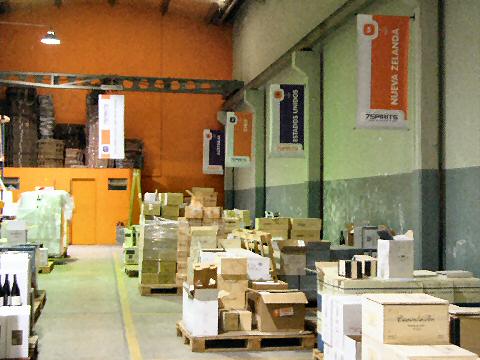
- Gran Víu Cariñena Selección 2001 – blend of grenache, cabernet sauvignon, syrah, and tempranillo.raspberry – milk chocolate – red bell pepper
really quite good (and the same wine I was drinking on election night) - J.A. Calvo Casajús Ribera del Duero 2005 – 100% tinto fino, or tempranillo.blue plum – cocoa – root beer
also quite good, if perhaps a touch fruity for my tastes - Oscar Tobía Rioja Reserva 2004 – 90% tempranillo, 10% grenacheblack raspberry – old leather – floral
excellent, my favorite of the tasting - Heras Cordón Rioja 2004 – 90% tempranillo, 10% gracianolicorice – tar – red cherry
I simply didn’t like this wine, even with decanting, which lessened some of the odd notes, it was still not pleasant – the importers think it might have been an off bottle
See, that was painless.
Copyright © 2026 SaltShaker. This feed contains copyrighted photos and text from SaltShaker. If you are not reading this material in a feed aggregator or by e-mail subscription, the site you are viewing may be guilty of copyright infringement. Please contact [email protected] so that I can take appropriate action.
Plugin by Taragana




 ]]>
]]>“The privilege of a lifetime is being who you are.”
– Joseph Campbell, author
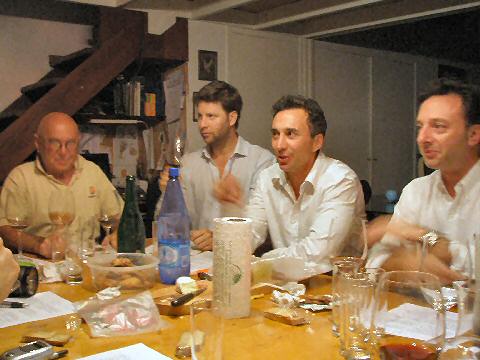
Buenos Aires – I hesitate to start this post off with an apology, because most of those the apology is aimed at probably don’t remember that this event was going to include them. But so be it – I apologize to my New York area wine geek friends. Sorry you didn’t get to be a part of this humble little event. It’s my fault of course, I up and moved to a different hemisphere, making it more or less impossible. So, just to remind those who’ve forgotten, and those who never knew about it – over the course of my career in the restaurant world, I slowly collected some very special wines – wines from the year I was born.
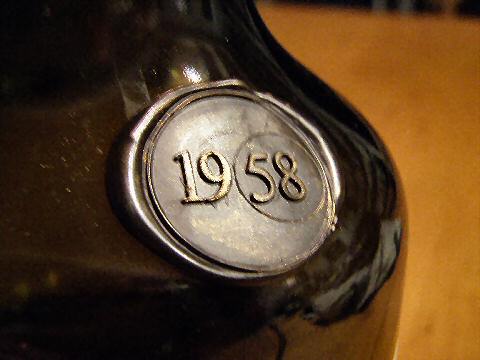
Now, 1958 was not a great year for wine. It really wasn’t. I arrived a year too early for one of the biggies of the 20th century. That meant that most wine from the year had simply been drunk, not stored away for the future. And that meant it was really hard to find for the most part. Still, it was a fun process, and over the years I managed to come up with eight bottles, which I laid down in my collection, planning on opening them with a group of my wine friends, in New York, somewhere around my 50th birthday. Being here, the group of friends shifted, and given the vagaries of everyone’s schedule, things got delayed by about six weeks. Last week, I finally gave up trying to plan around too many people’s personal lives, announced the date for last Wednesday, the 5th, and left it to them to figure out getting there or not. Including me, we ended up with nine of us here, and my friend Mickey rooted about in his own cellar and came up with a bottle from his collection.
So, overall, not a great tasting in terms of the wines, I’ll say that upfront. It was a special, rare treat to see how these wines had held up… or not. It was a great opportunity to talk about old wines and how they develop. And most of all, it was a truly special occasion for me, to share this with the group of friends I’ve found living here.
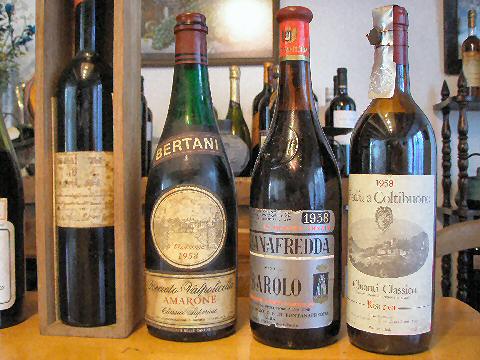
- Badia a Coltibuono Chianti Clasico Riserva – a handpicked blend of 90% Sangioveto and 10% Canaiolo, which spent two years in a mix of French and Austrian oak barrels. The vineyards were part of a monastery, and were originally planted in the 11th century. The 1958 was the winery’s first commercial vintage, though they have wines in their cellars dating back a couple of decades before that. This bottle was a gift from my friend Cliff, who worked for the importer in the U.S., back on my 40th birthday. Unfortunately, the wine was right on the verge of oxidized, and within five minutes of opening it, became pretty much undrinkable. For those few minutes it showed a little bit of dried cherry fruit, a touch of herbs, some old leather… then it was all gone.
- Fontanafredda Barolo – I bought this wine direct from the U.S. importer about 15 years ago when they had a special release of “library wines”. 100% Nebbiolo aged in large Slovenian oak barrels. The Fontanafredda winery has been in existence since 1878. Now, had this wine been a Barolo Riserva it likely would have still been in very good shape, as Barolo was one of the few regions that had a decent harvest in 1958 – being a basic Barolo, it was a bit simpler, easier drinking wine to begin with – still, the color was promising, a nice cherry red when we poured it – aromas of red fruits, old leather, milk chocolate, fennel, and clay were all there – faded, fading, but not gone.
- Bertani Amarone Clasico Superiore – Amarone being a wine made for longterm aging, it wasn’t as suprising to find a bottle in the importer’s stock about a dozen years ago, and I picked it up. What I didn’t know until I started researching these bottles is that not only was this Bertani’s first vintage of Amarone, but it was the first “official” vintage ever produced in Italy – prior to 1958, no one really thought about Amarone as a sellable commidity, it was just local wine. A blend of Corvina, Molinara, and Rondinella, aged for 8 years, yes, 8 years, in large Austro-Hungarian oak casks, followed by two years in bottle before release. This was the star of the tasting as far as I’m concerned – beautiful color, tons of red fruit, golden raisin, bittersweet chocolate, and spice – it was in great shape.
- Lopéz de Heredia Rioja – We switched to Spain, and the bottle that Mickey brought, as the last Italian wine was a dessert wine. I don’t know much about this one, other than that it was a special bottling produced for Macy’s. Yes, Macy’s – the label even pictures the store on it. It apparently was a one time thing. According to the current importer in the U.S., the wine should be a blend of 75% Tempranillo, 15% Garnacha (Grenache), and 10% Manzuela and Graciano, aged in older oak barrels. The wine wasn’t gone, though wasn’t in great shape – showing a bit of fruit, lots of toasted walnut flavors, and a bit leathery, it was a bit out of balance with high acidity, still, it was drinkable, and again, like the Barolo above, for a non-Riserva, in good shape.
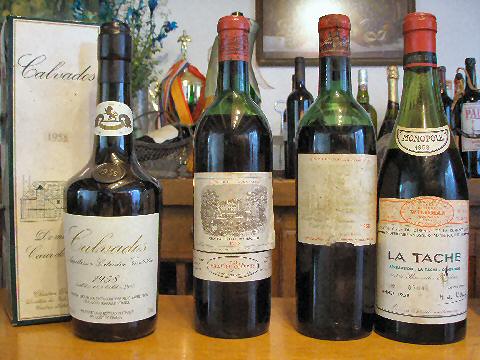
- Domaine de la Romanée-Conti La Tâche – Considered one of the world’s top wines, the La Tâche vineyards date back to 1232, though the DRC winery wasn’t founded until 1869. I picked this one up at an auction, from a private collection, about ten years ago. 100% Pinot noir, aged in French oak. Much as I’d have liked this to be the star, I didn’t hold out much hope – Burgundy had a terrible year in 1958, and the few notes I found online about this wine were a bit disparaging, plus, it had the lowest fill of all the wines in the tasting, down to low shoulder. Indeed, it was completely faded, though, given the airspace in the bottle, not oxidized – there just was little left to it – a bit of berry fruit, a touch of a floral note, a very mushroomy, earthy character (and the cork was all blackened with mold), it still had decent acidity, it just never opened up or showed any stuffing.
- Cos d’Estournel Saint-Estèphe – Cos is a 2ème Cru Clase Bordeaux, and has always been one of my favorites from the region. A blend of 78% Cabernet Sauvignon, 19% Merlot, and 3% of Cabernet Franc, aged in French oak. I purchased this at an auction from a private collection about 12 years ago. It was still in pretty good shape, showing classic red currant, floral, and graphite flavors, a little bit of dried leaves. It didn’t have great depth, but then, given the year, probably never did – it had, however, held up remarkably well.
- Château Lafite Rothschild Pauillac – Considered one of the top wines of the world, a 1er Cru Clase, these vineyards were originally planted in the 13th century, the winery came into being in the mid-17th. A blend of 71% Cabernet Sauvignon, 25% Merlot, 3% Cabernet Franc, 1% Petit Verdot, aged in French oak. I purchased this via the same auction as the Cos. This wine was the biggest disappointment – completely oxidized, coming out of the bottle looking pretty much like weak tea – it had no remaining charms or resemblance to wine, and really, other than the Amarone, this should have held up the best of all of them.
- DeBartoli Marsala Riserva “Vecchio Samperi” – Back to Italy, to Sicily. 100% Grillo, aged in oak for ten years. This bottle was a gift from the winery, handed to me by Marco DeBartoli himself, many years ago. It’s not surprising that this wine would hold up – dessert wines, especially those that are partially oxidized, and then fortified, to begin with, usually do. Beautiful roasted hazelnut flavors, white pepper, dried figs, a touch of dark caramel and honey, and a long, lingering finish. Simply amazing.
- Domaine Coeur de Leon Calvados – Okay, not a wine, a fruit brandy, and it wasn’t even hard to find given that Christian Drouhin, the owner of the distillery, didn’t even bottle it until it was forty years old in 1998, and I bought it about 5-6 years ago. My recollection is that this particular vintage was 70% Calvados apples and 30% pears, blended together. It’s a very rustic, rough style brandy – not quite grappa level, but not particularly elegant, though, that may have been influenced by the previous wine’s elegance. The pear flavors show through more than the apple, it has some nice floral notes. It was surprisingly lacking in complexity versus what I remember from having tasted it prior to buying it. Perhaps this is how Calvados fades…?
Copyright © 2026 SaltShaker. This feed contains copyrighted photos and text from SaltShaker. If you are not reading this material in a feed aggregator or by e-mail subscription, the site you are viewing may be guilty of copyright infringement. Please contact [email protected] so that I can take appropriate action.
Plugin by Taragana
]]>“There may be some perfectly nice people who use the word ‘brunch’ but I prefer not to know them.”
– Heywood Brown, author
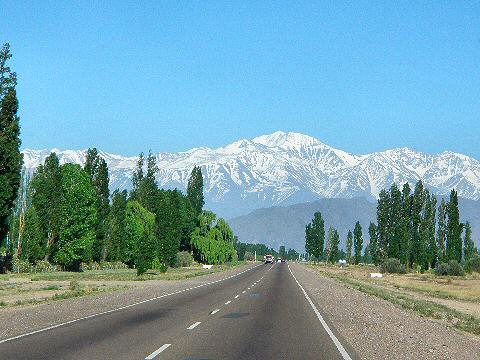
Perdriel, Argentina – Up bright and early after, once again, only a few hours sleep – but managed to get down to the hotel’s cafe and make my way through a cup of coffee, some cereal and fruit before the arrival of our transport. Back with David and Rachel for the day (things got switched around at last minute, originally I was supposed to spend the day with the one of the quintet I hadn’t yet, Jamal Rayyis, but, didn’t happen) – and off to this small town a bit south of the city of Mendoza and to the winery of Viña Cobos. They carted us off to the vineyards to look at the vines. We looked, though more at the nearby mountains; Rachel volunteered that we were ready to taste the wines, and thanks for the look at the grapes. They seemed a little nonplussed, but headed us back to the winery, a large cube sitting in a field, which, we were informed, was an exemplar of “American architecture” designed to go with their focus on U.S. exportation (the winery is a joint venture with Paul Hobbs of California). I asked what made the cube “American architecture”, and without missing a beat was told “it’s made of concrete, steel, and glass”. There you have it, our reputation. In a cube. I forgot to take a picture.
- Bramare Marchiori Vineyard Malbec 2006 – 15 months in 70% new oak, one year in bottle – spicy, black raspberry, violets, vanilla, white chocolate, good acidity, soft tannins – quite good.
- Bramare Marchiori Vineyard Cabernet Sauvignon 2006 – same treatment, black currant, dry leaves, good acidity, very drying tannins, a bit young, and not clear if it has the depth to develop well – time will tell.
- Cobos Malbec 2006 – the icon wine of the winery, 18 months in new oak – black cherry, red plum, pepper, soft tannins, hot finish – pretty decent, but again quite young and needs some time to develop.
One of the more interesting wineries we got to talk with, Decero (“from scratch”), has been in business a mere five months, produces only 5,000 cases of wine, and other than some sales from the cellar door, is focused 100% on export. Their one big claim is, for the moment, specious, but will change in the future, and that is that they “only produce single vineyard wines” – well, they only have one vineyard at this point, the Remolinos Vineyard, which is duly noted on each bottle. However, they plan to develop more, at which time the claim will come to have more meaning. Everything is very selective – they pick through the vineyards a minimum of twice to get the fruit at its proper moment of ripeness, the grapes are then hand-sorted at the winery, twice, to make sure that only the best is used. They currently produce, among those 5,000 cases, five different wines.
- Malbec 2007 – this is the second vintage, just bottled, the first having been shipped out 4-5 months ago when the winery opened its doors, officially, for business – 16 months in French oak – elegant, red fruit, violets, good acidity and length, well balanced, dry tannins – a classic, and delicious, Malbec.
- Cabernet Sauvignon 2007 – red currant, a touch of bell pepper (something they made a point “wasn’t there” because of their harvesting approach, but it is, and it’s not a problem, it actually adds to the complexity of the wine), spice, cocoa, good acidity, balance and length. Very good.
- Amano 2006 – this is from the first vintage, and was just released, so we were pretty much among the first people outside the winery, and the first journalists, to taste it – 60% Malbec, 35% Cabernet Sauvignon, 5% Petit Verdot – depending on varietal anywhere from 18 to 22 months in new French oak – spice, toast, juicy red fruit, floral, complex, great acidity and length, a little hot, but then it was just released, it needs time. Excellent.
- Petit Verdot 2006 – again one of my favorite grapes, and one of the few versions of it that’s 100% varietal produced in Argentina – red fruit, smoke, floral, good acidity, well balanced, dry tannins, young. Too young. But I think it’s got the stuff to develop quite well.
- Cabernet Sauvignon 2006 – they’d made a point of telling us that their first vintage of Cabernet had one several professional awards, so we asked to try it – the winery is basically across the street from Cobos, so they went and got a bottle – very ripe, jammy raspberry fruit, spice, good acidity, a little alcoholic, quite elegant – personally I liked the 2007 better, but I can see it as a personal preference.
You know, as I was looking back at my posts on the last trip to Mendoza, I realized I didn’t subject y’all to a bunch of tasting notes – though it seems they’re welcome at least amongst my wine geek friends and readers – I did visit Septima at that time, though we tasted entirely different wines than the rep brought with him to this tasting. He was kind of cute, and I don’t mean it physically, but he showed up, started off by telling us that this wasn’t his regular job but that the guy who was supposed to do it got tied up, that he didn’t know much about the wines, but he could tell us that the key point for Septima is that they’re a business, and they’re out to make money, so their wines may not be the best out there, but they’re drinkable, inexpensive, and sell well. The winery is a division of Codorniú, the Spanish sparkling wine company, they make 1.5 million liters a year, 70% of which is exported, most of it to the U.S. It was kind of refreshing to just have someone tell it like it is….
- Malbec 2007 – 6 months in 3rd use American oak barrels, all estate grown grapes (because “we can put that on the label and Americans like that”) – spicy, bright fruit, red plum, lots of sweet oak, a bit high acidity, soft tannins. Quaffable if nothing special.
- Septimo Día 2006 – 100% Cabernet Sauvignon, 70% of which is aged 10 months in French oak, 30% in American oak; 60% are their own grapes, 40% bought from other estates – black currant, light spice, tons of sweet oak, soft tannins, alcoholic – basically a fruit bomb with oak.
- Gran Reserva 2005 – 55% Malbec, 34% Cabernet Sauvignon, 11% Tannat – red currant, red plum, bright acidity, jammy fruit, drying tannins, good length, very young – not bad actually, though a bit in the “international red” style.
“Brunch”, which is what was slated for the end of the tasting turned out to be a standing affair around the tasting table with a couple of trays of coldcuts and cheeses, some dishes of dried fruits and nuts. And water. Hmmm….
Off to the airport, and back to our regular scheduled programming.
Copyright © 2026 SaltShaker. This feed contains copyrighted photos and text from SaltShaker. If you are not reading this material in a feed aggregator or by e-mail subscription, the site you are viewing may be guilty of copyright infringement. Please contact [email protected] so that I can take appropriate action.
Plugin by Taragana
]]>“When nature exceeds culture, we have the rustic. When culture exceeds nature then we the pedant.”
Confucius, philosopher
From there, it was back to the hotel to check e-mail, grab a quick nap, shower and dress for dinner, we were in the lobby shortly before 8 p.m. to head out to Familia Zuccardi, in eastern Mendoza, a bit of a drive, it was, I think, a bit after 9 when we got there. Here we started off in a brightly lit, classroom style tasting room, with a foursome of wineries each taking a half hour or so to present their wares….
Catena Zapata has been a family owned winery for over a century, focusing on high altitude viticulture. Their wines are marketed under several lines, and they’re not only one of the bigger wineries overall, but also one of the better known.
- Catena Alta Chardonnay 2006 – 100% Chardonnay from 5000′ altitude vineyards, all barrel fermented in half new and half second use French oak, and then aged for a year in barrel, full malolactic fermentation – green apple, caramel, herbal, minerally, underripe pineapple on the finish, good acidity, suprisingly, the oak, while there, is not overly noticeable given the time it spent in barrel – quite good.
- Nicolas Catena Zapata 2005 – a blend of roughly 78% Cabernet Sauvignon and 22% Malbec, the latter barrel fermented, though there’s a touch of both Merlot and Petit Verdot in the blend as well, around 2-3% total, 2 years aging in new French oak – intense red fruit, dried leaves, lightly toasted, soft, dry tannins, good balance and length, good acidity – good, but not showing great complexity or depth, then again this wine is still a baby and probably needs another two years before it’s really ready to drink.
- Malbec Argentino 2005 – 100% Malbec from the Uco Valley, barrel fermented and aged for two years in new French oak – black fruit, herbal, light floral, soft, dry tannins, lots of toasted oak, a bit flat on the acidity – really, the wine was completely closed, even after half an hour or so open – it’s not remotely ready to drink.
Belasco de Baquedano is a Spanish wine company with multiple vineyards in Spain, and a relatively new (four years old) winery in Mendoza. They produce about 200,000 liters of wine a year, almost all Malbec with just a little Petit Verdot and Touriga Nacional for blending purposes (2-5% of their vineyards).
- Rosa 2008 – 50% whole cluster cold fermented Malbec and 50% free run juice from their red Malbec – a very light, simple rose with good acidity, a bit of red fruit wafting about, some minerals, and way too much alcohol on the therefore thankfully short finish.
- Arguentota Malbec 2006 – the name comes from millcayac, the language of the indigenous Huarpe people, and means “soul of Cuyo” (the region) – aged for a year in first and second use French oak barrels – black fruit, black tea, toasted oak, hot spices (pepper, cumin…), soft tannins, once again short on the alcoholic finish.
- Swinto 2005 – old vine (100 year+) Malbec, the name means “crow” in the same language – vanilla, milk chocolate, black fruit, spices, toasted oak, and once again, a very alcoholic, hot finish, and again, quite short – I don’t know if it’s a stylistic choice, or that the wines are just too young – something just didn’t seem right with the alcohol levels and length of any of the three wines.
On to Trivento, a twelve year old winery owned by the massive Banfi Vintners marketing group – this winery producing over 30 million liters of wine per year, making it one of the largest in the country – they also lay claim to being the largest exporter of wines, with exports to 112 different countries.
- Torrontés Select 2008 – designed for, and solely marketed to, the U.S. – starting off with noticeable residual sugar, not quite white zin level, but quite obvious, high acidity, floral, a bit of apricot fruit, a sort of briny minerality, and high alcohol, especially on the finish – not pleasant.
- Amado Sur 2006 – meaning “beloved south”, a blend of 75% Malbec, 15% Syrah, and 10% Bonarda – delightful black raspberry and cinnamon flavors, good acidity, soft tannins, well balanced, though slightly hot on the finish, still quite a good wine.
- Golden Reserve Malbec 2006 – served from decanter, and it had been open when we arrived, more than an hour before – black raspberry, black tea, bittersweet chocolate and vanilla, soft, dry tannins, slightly high acidity – I think this wine is simply too young to drink, and they were attempting to compensate by decanting it – better they’d just left it to rest for another year or two and then open it up – it ought to be a real stunner at that point.
Coming in at only 30% of the size, Zuccardi is still considered a fairly large winery, producing around 1 million cases of wine a year, 65% is for export, to roughly 40 countries. Zuccardi is, perhaps, best known for its experimentation with oddball grape varietals, blends, etc., and is one of the two wineries in the country noted for its research laboratory facilities (the other being Bianchi, which I noted a few posts ago).
- Q Tempranillo 2005 – 100% Tempranillo aged for a year in new American oak, followed by a year in bottle – Tempranillo was actually planted here by the Spanish, who brought it from Rioja, in 1784, 70 years before the French showed up with Malbec – spicy, red fruit, old leather, juicy acidity, dry tannings, good balance and length – really good.
- Q Malbec 2006 – 100% Malbec aged for a year in new French oak, followed by a year in bottle – classic black plum, spice, and violet flavors, with toasted oak, vanilla, soft tannins, good acidity, and great length – very nice.
- Z 2006 – served from decanter, again opened up well before we tasted it – 2/3 Malbec aged 14 months in French oak, and 1/3 Tempranillo aged the same in American oak, then two years in bottle – which, if you do the math, means that this wine hasn’t yet been released, and isn’t even finished with the prescribed aging regiment – which shows, even with the decanting – though there was good black fruit and spice, a bit of strawberry, the wine currently was showing little acidity, too much alcohol, and sort of jagged tannins – though I predict the wine will be excellent in a few years, this was, like the Trivento wine, probably a mistake to show at this point.
- Alma 4 Bonarda Sparkling 2005 – this was served after the tasting, and more because it came up in conversation, so we sampled it while nibbling on hors d’oeuvres and waiting for dinner to begin – roast coffee and burnt chocolate were sort of hovering in the background, not unpleasantly, just oddly, with blackberry fruit, a bit of residual sugar, overall well balanced – the bubbles were large, more carbonated style than the fine ones of a methode champenoise, though they said it was produced via that traditional method.
- Q Chardonnay 2007 – this one also came up in conversation, so we tried it with dinner – quince, spice, good acidity, noticeable residual sugar, and way too much alcohol – it seemd like an imitation of one of those monster Chardonnays that California got a reputation for awhile back – not my style.
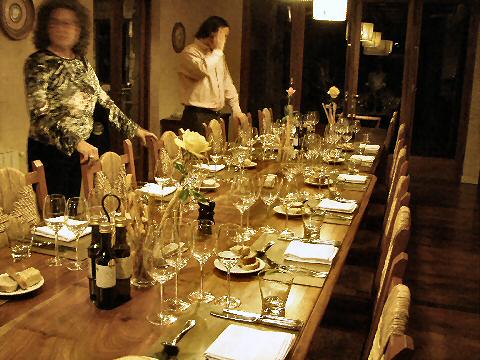
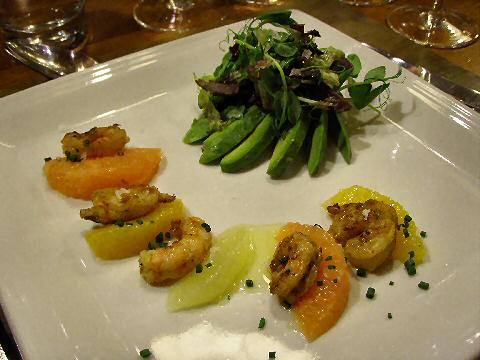
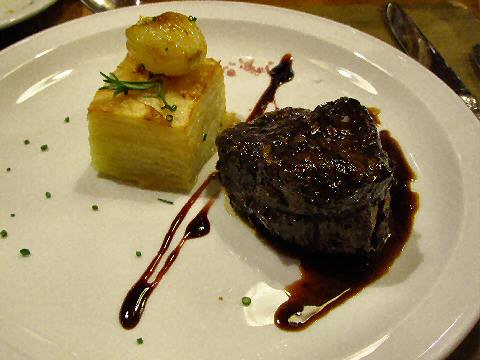
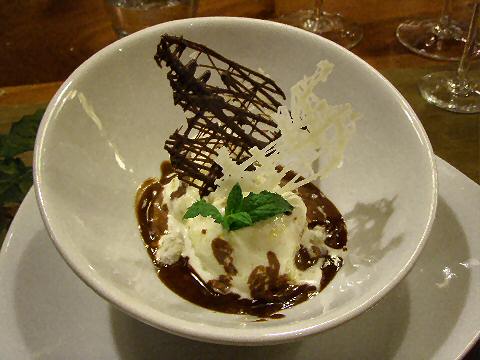
An hour or so drive back to the hotel, where I think we tumbled into our respective beds around 2 a.m. or so, might have been close to 3…. last morning coming up.
Copyright © 2026 SaltShaker. This feed contains copyrighted photos and text from SaltShaker. If you are not reading this material in a feed aggregator or by e-mail subscription, the site you are viewing may be guilty of copyright infringement. Please contact [email protected] so that I can take appropriate action.
Plugin by Taragana
]]>“I go by the theory of reciprocity – if we are accommodating to our customers, they will give us something back in return.”
– Michael Egan, CEO
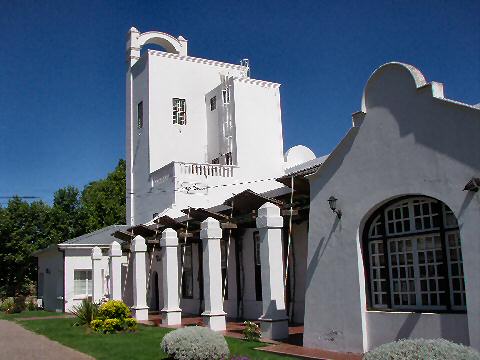
Luján de Cuyo, Argentina – I’m going to try to shorten up these posts a little – I’d like to get back onto food and catch up to present day, and I was tempted to just gloss over the rest of the trip, but I’ve also heard from quite a few people that they’re liking getting a sense of Mendoza and finding out about some of the new wine releases – so on with the show. After our five winery marathon in the morning, we were back in the car and headed to this community in the northeast of Mendoza where we were to lunch at Luigi Bosca, taste their wines, as well as those of two other wineries. By the time we arrived, it was well after 1 p.m., we hadn’t yet eaten, had sat through five presentations and tasted 18 wines – all on about five hours sleep, for the second night in a row. We suggested as diplomatically as we could to our host at Bosca that perhaps we could go with lunch first, or taste the wines over lunch – initially he resisted, but the reps from the other two wineries shuffled about a bit and avowed that they were pretty damned hungry too. And so, we had our most civilized tasting of the entire trip – tasting through our next nine wines while we ate our way through a delightful lunch in the covered courtyard at the winery.
Mi Terruño is a five month, yes, month, old winery, as in they’ve just released their first wines, 80% of which are for export, mostly to the U.S. – palate questions again and all that, and they’re clearly going for a big, fruity driven, toasted oak style….
- Chardonnay Reserva 2007 – yeasty, toasted oak style chardonnay with baked apple flavors, minerals, balanced by good acidity, depth, length, and just a spritz of carbon dioxide gas. Quite nice.
- Malbec Reserva 2007 – red fruit, black tar, smoky, vanilla, toasted oak, good acidity, great length. Definitely in that “international red” style, not notedly Malbec.
- Cabernet Sauvignon Reserva 2007 – red fruits, bittersweet chocolate, roasted coffee, good acidity and length, a little hot on the finish.
Mendel is also a relatively new venture, though with a couple of years under its belt, and is a partnership between a local family and flying winemaker Roberto de la Mota. The vineyards that are on the estate were planted in 1928 and, like many at the time, were used for producing bulk wine. They make two wines.
- Malbec 2006 – aged in French oak, a mix of 1st, 2nd, and 3rd use – spicy, black plums, pepper, good depth of fruit, a light touch on the oak, a little high on the acidity but I think that’s just the wine’s youth. Quite good.
- Unus 2006 – 70% Malbec and 30% Cabernet Sauvignon, 16 months in French oak – black fruit, a touch of tar, toasted oak, good depth and length. Also high in acidity, and had a strange, almost “gritty” mouthfeel – again, I think the wine is just too young to be drunk.
Luigi Bosca has a longer track record, and is a well-known winery on both the domestic and international scene.
- Brut Nature – sparkling wine made with 60% Chardonnay and 40% Pinot Noir via traditional methode champenoise – berry fruit, minerally, crisp acidity, good body, a bit flat on the finish.
- Gala 3 2007 – A blend of 50% Viognier, 40% Chardonnay, and 10% Riesling, half of the Chardonnay is put through malolactic fermentation and spends four months in French oak – beautiful floral aromatics, spciy, peach, apple, minerally, very complex, great acidity and length, delightful.
- Malbec D.O.C. 2005 – from 35 year old vines, cold fermented, and spending a year in barrel followed by a year in bottle before release – plum pudding, cherries, milk chocolate and vanilla, black pepper, good acidity, long, elegant finish.
- Finca Los Robles 2005 – a Malbec and Petit Verdot field blend, two years in French oak followed by a year in bottle – elegant, red fruit, spicy, a light touch on the oak, good acidity and length, still a bit young, but quite good and drinkable now, though I think it will improve with a year or two more in bottle.
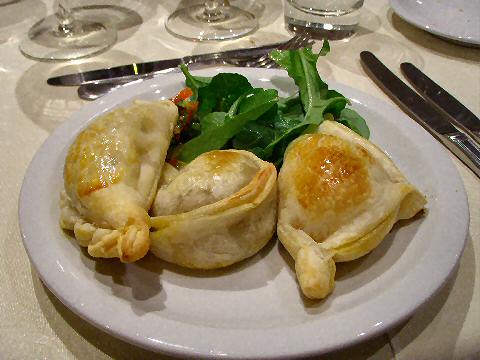
While we sampled the above wines we nibbled… or perhaps ravenously inhaled, a trio of empanadas – vegetable, beef, and goat – the latter being the first time I’ve seen a goat meat empanada, and absolutely spectacular.
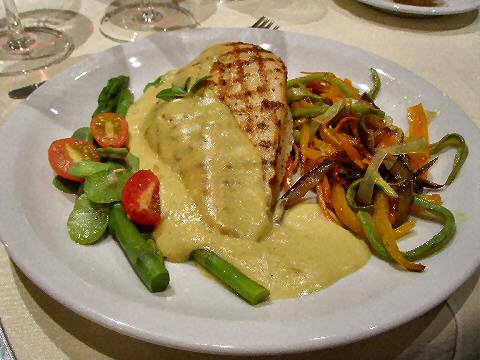
Followed on by a grilled chicken with a honey mustard sauce, fresh spring vegetables – cherry tomatoes, asparagus, fava beans. And then we moved off to the sitting area and chatted amiably over coffee and petit fours. Perfect!
Copyright © 2026 SaltShaker. This feed contains copyrighted photos and text from SaltShaker. If you are not reading this material in a feed aggregator or by e-mail subscription, the site you are viewing may be guilty of copyright infringement. Please contact [email protected] so that I can take appropriate action.
Plugin by Taragana
]]>“The Argentine industry was focused exclusively on the internal market and when I arrived to the country it only exported bulk wine. In the 90’s, everything changed. Argentina had to modify its wine-making style in order to grow exports, because what they were making for the local market was not what the rest of the world wanted. The great advantage was that there was an important base of implanted Malbec grapes; the varietal emblematic of Argentina.”
– Michel Rolland, “flying” winemaker
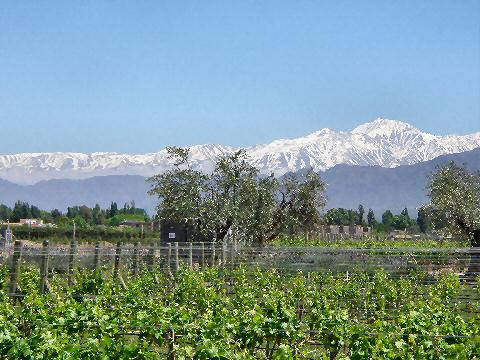
Chacras de Coria, Argentina – Next day dawned bright and early, not just for the locals used to getting up to get the wineries in motion, but for us as well, our quintet was bleary-eyed, having failed to convince hotel waiters to pump the coffee in intravenously as we spent only moments in our cafe chairs before our duo of cars arrived to cart us off in different directions. This day I was paired up with John Harding, a New York based marketing consultant for restaurants and the food and wine business, and we headed out to this pleasant little community that seemed to be at the foot of the peak called La Plata, where we made our first stop shortly after 9 a.m. at Alta Vista. Beyond the dramatic backdrop, Alta Vista has some things worth noting (and besides, I know some readers aren’t interested in the tasting notes, so here’s some stuff for them, too).
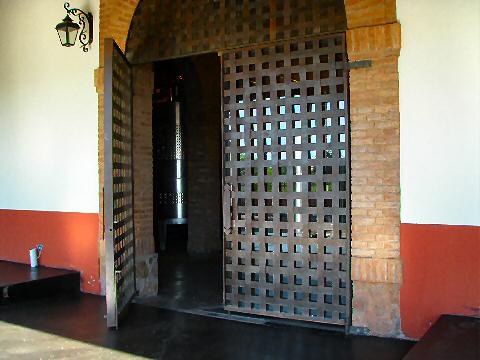
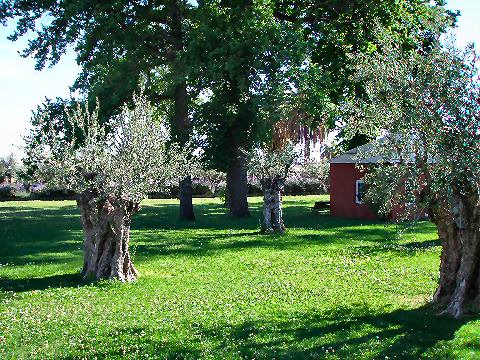
The winery is owned by a French family, the former owners of Piper-Heidsieck champagne, who now own a couple of properties in Bordeaux, one in Tokaji (Hungary), and this lovely spot in Mendoza (plus some vineyards in nearby Clos de los Siete, and up in Salta, where they grow their Torrontés). They took over from a bulk wine producer, Erise Hermanos, that had been operating there since 1899. The cool looking doors above are made from the steel barrel rings that encircled the huge wooden vats that the Erises used to ferment their wines. One of the more interesting things is that the Erise family also had olive trees on site, several hundred of them at one point, now down to a few dozen, but these had been planted before they began growing grapes, and are roughly 150 years old now.
The general manager of the winery, Philippe, who overseas the technical aspects for all of the family’s wineries, giving him a whole lot of frequent flyer miles, very smartly eschewed any prolonged tour of the property, showing off a few key points, and then, given that we were on a tight schedule, heading us straight into the showy tasting room, and we got down to the business of tasting….
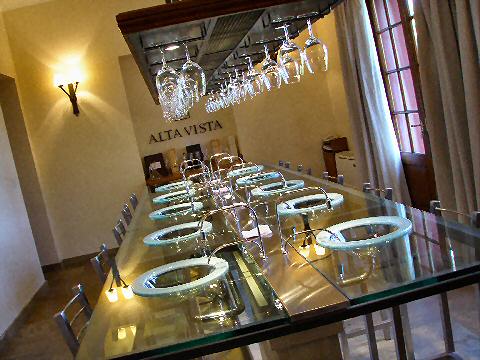
- Premium Torrontés 2008 – apricots, white pepper, a light floral component, great acidity, delicious, everything a Torrontés ought to be.
- Premium Malbec 2007 – blue plums, bittersweet chocolate, vanilla, mace, good acidity, long finish, very good
- Atemporal Blend 2007 – a new introduction of 45% Malbec and 11% Syrah aged in French oak, and 25% Cabernet Sauvignon and 9% Petit Verdot aged in American oak – very young, indeed, too young to be drinking it, literally having been bottled earlier in the week, still, it had some bright fruit, a bit of spice, good acidity and length – it needs time, and currently the alcohol shows out of balance – it’ll be interesting to see this one after it sits in bottle for 6 months to a year.
- Malbec Gran Reserva 2006 – the one thing we both particularly liked is that, after our previous day’s experiences, no mention was made of “trying to fit the American palate”, and indeed, the wines are all very individual at Alta Vista, with 55% going to export (and not just the U.S.), and all lines are the same in both domestic and foreign markets – this is a classic Argentine style Malbec with dark black plum flavors, candied violets, cinnamon, great acidity, soft tannins, well balanced, and a long finish – again, everything the grape should be.
- Temis 2006 – Alta Vista was the first winery in Argentina to bottle “single vineyard” wines (all 100% Malbec), each of them being treated identically in the winemaking process, in order to show off the differences of the sites – with only about 2,500 cases made of all three together, 400 of which head to the U.S., these are not easy to find – this one from chalky soils in southern Mendoza – soft, elegant, with red plum and black tea flavors, good length, showing a little alcohol on the finish, but it’s still young.
- Serenade 2006 – coming from the clay soils along the route across the mountains to Chile, this was the favorite for both of us – black plum, violets, light spice, and a note of clay, soft tannins, good acidity and length, solid finish
- Alizarine 2006 – from limestone soil with boulders at the depth of only about a meter and a half, this wine shows strong minerality, with a sort of wet stone aroma, black plums and violets, a bit heftier wine, this was also the only one of the three whose tannins were not soft, being actually a bit on the drying side.
- Alto 2005 – and last, the winery’s icon wine, 75% Malbec, 25% Cabernet Sauvignon, all aged in new French barriques, infanticide, really – way too young, and almost all structure, with just hints of the depth of black fruit, spice, chocolate that it will carry when it develops – I’d guess it needs another two years before anyone other than the winery’s lab should pop open a bottle again.
With Philippe having exceed his “limit” of three wines to show us, but then again, we were interested in the single vineyard wines in particular, and the next winery hadn’t yet shown up with their samples, it was really because we’d pooped out on the winery tour part that we had a lot of extra time, so he’s not to blame…. Next up, Argento, a 7.2 million liter winery that is a division of the Catena Zapata group (which in total makes 30 million liters of wine), created in 2005 as a joint venture with Terence Conran’s British corporation with the intent to export 100% of their production (currently not exported to the U.S., but it will be starting in January).
- Torrontés 2007 – a completely different style of Torrontés with plenty of residual sugar, honey, apricots, floral, pine needle aromas, for me lacking in acidity with a somewhat cloying finish, and not a type of Torrontés that I’m fond of, though it’s popular among those who like wines with some sweetness.
- Malbec Clasico 2008 – high acidity, red plums, lots of toasted oak, even more so on the finish, and very dry tannins, to get all technical on you, they put this wine through 100% malolactic fermentation, which, for me, strips out all the character of a grape like Malbec, still, they’re selling the stuff in 42 countries, so someone must think they like it.
- Artesano 2006 – a blend of 50% Malbec, 25% each Syrah and Cabernet Sauvignon, aged in a mix of French and American barriques – a bit high in alcohol, though that may be its youth, red and blue fruit, pepper, and heavy on the toasted oak, still, it has a certain elegance hovering in the background and may come together in another year or so.
Winery number three for the day was hovering in the background, and as Argento was ushered out, Melipal was ushered in. The name comes from the Mapuche name for the southern cross constellation (the Mapuche are one of the principal “first peoples” tribes from the southern Andes), and was originally the name of the family’s farm, now also their winery, with their first bottling in 2003 (using a contracted winemaking facility), and their own winery built just in 2004. They only grow Malbec, and offer up a limited range of wines, which I was already familiar with as a local friend of mine here in BA is their distributor.
- Malbec Rose 2008 – a common approach to Malbec roses here in Argentina makes use of a blend of green harvested, i.e., underripe, grapes and “bleed off”, or “free run” juice from the red wine process, and this one is a 50:50 mix. Unfortunately, I find it gives the roses too much acidity and not enough depth, in general – this one had light berry and cherry fruit, a bit of spice, some dry tannins, a bit of carbon dioxide prickle, but it was short, and had a slightly alcoholic finish.
- Malbec 2006 – 60% of the grapes come from a vineyard that was planted in 1923, the rest from young vines, and the wine spends a short time in American oak – it was pointed out that this wine is, once again, designed for that now infamous American palate – black and blue fruit, very spicy, a ton of toasted oak, good acidity, soft tannins, and an oaky finish – more or less that “international red” style that doesn’t say “Malbec” to me, but still makes a perfectly drinkable wine.
- Malbec Reserva 2006 – too young to be being shown, and they clearly knew that, as they’d decanted the wine about 20 minutes before they had us taste it – from selected blocks of the 1923 vineyard, all aged for 18 months in a mix of French and American oak – black fruit, spice, violets, dry tannins, good acidity, notable toasted oak – given the time to open up, it was showing quite elegantly, though I imagine that right now, if you poured it straight from the bottle after opening, it’d be a bit rough.
And, on to our fourth winery for this stop of the trip, and getting on to a little past noon by this point (3 presentations, 14 wines, 3 hours and counting), Carlos Pulenta, a 1 million liter producer that exports some 80% of their production, a good percentage to the U.S., and here we were once again engaged in conversation about the palate. Interestingly, Carlos Pulenta has made one of my favorite Argentine whites for the last couple of years, a Semillon and Chardonnay blend in their Tomero line, but because of their market research, they’ve decided to stop making this, and now plan to sell a big, oaky Chardonnay, and use the Semillon to make a slightly sweet, lighter wine. What a shame. I can’t say, given the two wines they brought to show us, that I was impressed with their market research on other fronts, either….
- Vistalba “A” 2006 – there’s also a “B” and “C”, each successively lighter weight, this one being the gran-daddy, a blend of 90% Malbec and 10% Cabernet Sauvignon, all spending 18 months in new French oak and another year in bottle – a bottle that bears mentioning, as it has the most complex label I think I’ve ever seen on a wine, with paragraphs of information on the front label, no back label, part of it in English, part in Spanish, part in Roman numerals – and something we chatted with them about, the packaging was a complete turnoff for both of us; the wine – black fruit, nutmeg, very sweet oak and tannins, good acidity, high alcohol, long, oaky finish.
- Tomero Petit Verdot Reserva 2006 – I’m a fan of the Petit Verdot grape variety, and it’s one of those things that I’ll seek out to try at various places – this one is too young to be drinking, though I think it has some potential as an unusual style – black fruit, bramble, pepper, brown butter, nutmeg – hey, a recipe… – a bit alcholic, dry tannins, slightly short finish, but I think it’s just its youth – I’ll be curious to see this one in about a year.
Finally, to our fifth (and last) winery for this stop, Santa Ana, founded in 1891, and marketing 80% of their wine domestically, which initially gave us some relief as we figured the whole palate question would be lessened, but, the three wines they brought to show us are three wines that they make specifically for the U.S. export market, so it was back into the question….
- Eco 2008 – a 100% organic, reduced sulfites Malbec, which they’re quite proud of, as justifiably so, but strangely, which they fail to mention on the label other than in small print on the back – hey, play that one up for marketing, you know? On the other hand, it wasn’t the best wine we had that day – thin blackberry fruit, light spice, enamel stripping acidity, dry tannins… I’d go back to the drawing board on this one.
- La Mascota 2006 – 100% Malbec from Maipú, all aged in French oak, blackberry jam, light spice and very high acidity again, perhaps a winemaking style choice? The residual sugar did little to balance it out, the dry tannins and very short finish didn’t give it much help either.
- Unánime 2005 – 60% Cabernet Sauvignon, 25% Malbec, and 15% Cabernet Franc, a new introduction for them, and a completely different style, that actually worked quite well – dark black currant fruit, a bit of pepper, sweet oak, dry tannins, good acidity, good length, smooth finish – eminently drinkable, something we were grateful for, both in being able to focus on in our conversation with them rather than the two previous wines, but also as the final taste on our palates.
We were running about an hour behind schedule by this point, despite attempting to speed things up with not touring, but such is life when you get involved in marketing and wine conversations. Back into the car, and headed to stop number two for the day….
Copyright © 2026 SaltShaker. This feed contains copyrighted photos and text from SaltShaker. If you are not reading this material in a feed aggregator or by e-mail subscription, the site you are viewing may be guilty of copyright infringement. Please contact [email protected] so that I can take appropriate action.
Plugin by Taragana
]]>