Hear, mortals, the sacred cry:
“Freedom! Freedom! Freedom!”
Hear the noise of broken chains,
see the noble Equality enthroned.
Their most honorable throne have opened
the United Provinces of the South.
And the free ones of the world reply:
“To the Argentinian people, Hail!”
– from the Argentine National Anthem
Vicente López – This suburban area just north of the city is named after writer, twice interim president – never elected, he just happened to be in the right place at the right time and was asked to fill in after the resignations of two different presidents – and author of the national anthem’s lyrics, some time exile, Vicente López y Planes. I spent a day up there this last week just wandering about – it’s a fairly large zone, generally divided into the este and oeste sides – I chose the west because there were a few things in particular I wanted to see on this trip – and, of course, there was a planned meal destination (which I couldn’t find and ended up eating elsewhere, but that’s another post). It’s definitely a pretty area, in general I would guess mostly upper middle class and upper class homes, and, the presidential residence.
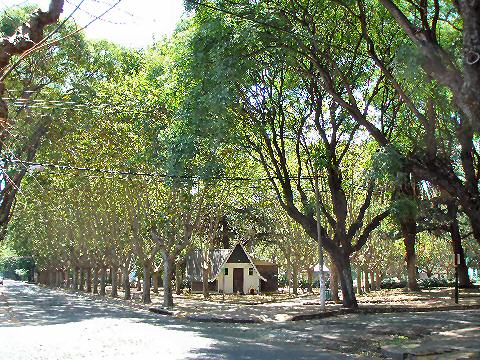
The central park, Plaza Vicente López y Planes is beautifully tree lined…
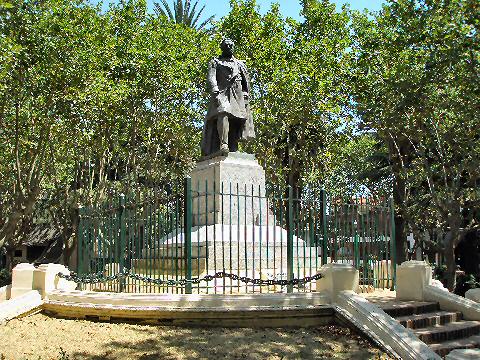
And the man himself stands watch in the center of the plaza.
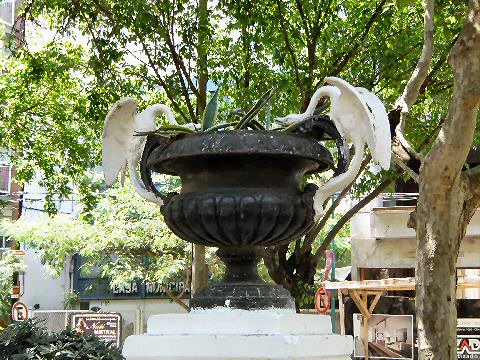
I just happened to like this urn… birdbath… no real idea what it was, but it was mounted up atop a tall pedestal.
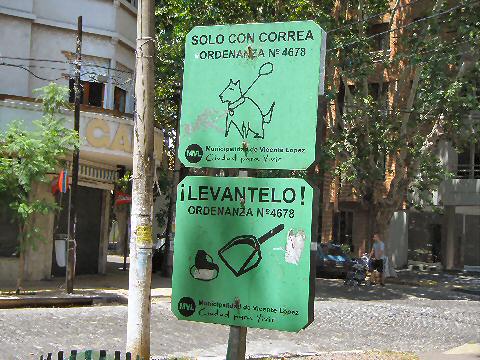
I just had to – I mean, a town in this area that actually has pooper scooper and leash laws! What a novel concept… personal responsibility and concern for others and the environment in Argentina.
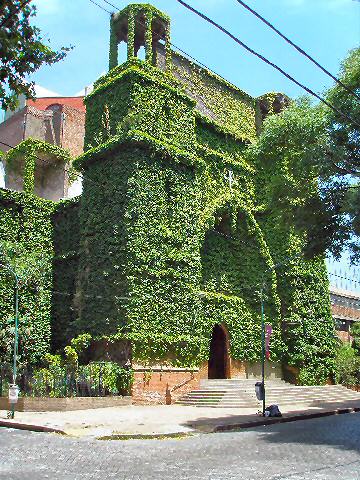
The ivy covered town cathedral…
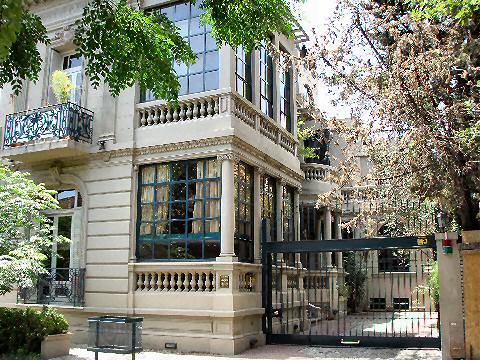
…a building that simply caught my eye – modern, somewhat out of place – and clearly caught the eye of others, there’s a plaque on the wall that states the building won first prize in an Argentine architecture competition for the best renovation of a building.
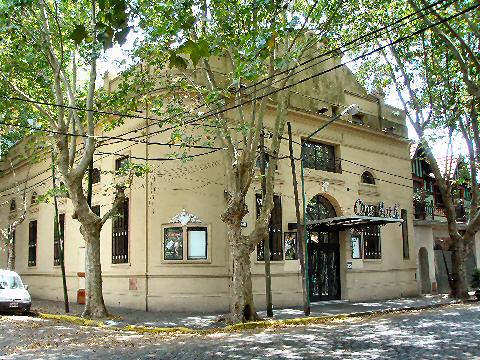
The old Cine York theater, a landmark in town.
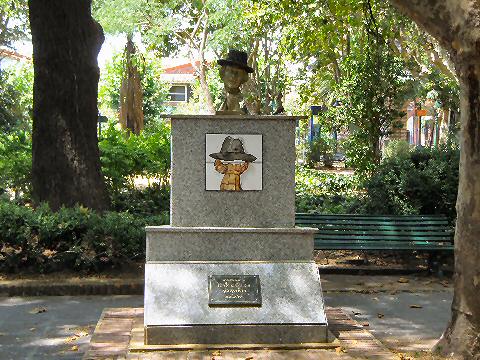
A monument to Juan Carlos Altavista, a movie actor famed for his character as a tramp, Minguito Tinguitella.
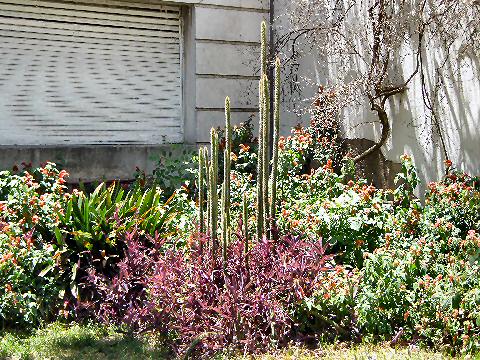
I didn’t have any trouble finding flower gardens here…
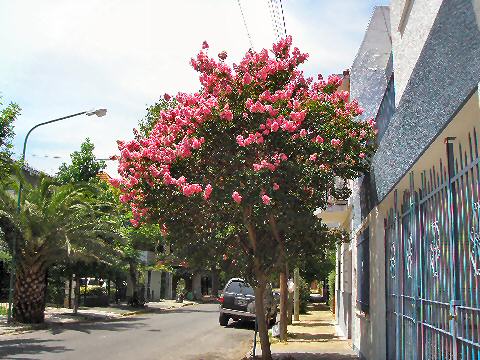
…or gorgeous flowering trees….
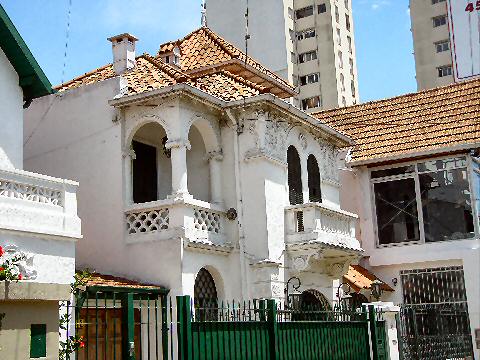
…or beautiful old colonial buildings…
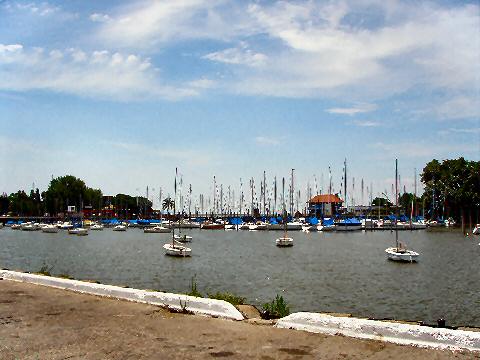
…and ending up just after lunch at the local port, where riverboat tours leave from on the weekends, and a surrounding of little outdoor cafes and parrillas (where I should have eaten… but again, that’s another post).
Copyright © 2026 SaltShaker. This feed contains copyrighted photos and text from SaltShaker. If you are not reading this material in a feed aggregator or by e-mail subscription, the site you are viewing may be guilty of copyright infringement. Please contact [email protected] so that I can take appropriate action.
Plugin by Taragana




 ]]>
]]>&”…the true social and industrial boost begun in 1924 when a Japanese citizen called Gashu, who discovered how fit the zone was for the production of flowers, settled in the land. Along with a group of Japanese immigrant workers, he started the first large plantations. Just five years later producers of Portuguese, Italian, Belgian and Dutch origins were emulating him. Nowadays, with almost 400 floral establishments, this city is the first flower producer in the province. The abundant nurseries, with an enormous offer in plants and flowers, have become a permanent attraction, especially during weekends.”
– from Enjoy South America website
Belén de Escobar – Sounds lovely, doesn’t it? I guess I just missed the area where all those floral establishments are. I knew I didn’t get out to the riverside area, and I did concentrate in the center of town, so maybe the nurseries are out more along the edges (though I did head out Route 25, as noted yesterday, and didn’t see anything but a shopping mall, the zoo, and the brewery where I had lunch). Perhaps I need a guide. Either way, there were some very pretty little plazas in the center of town, all of which the various tourism websites touted as spots to go and see flowers – and there were some, just not the quantity nor quality I’d have expected from “the City of Flowers”.
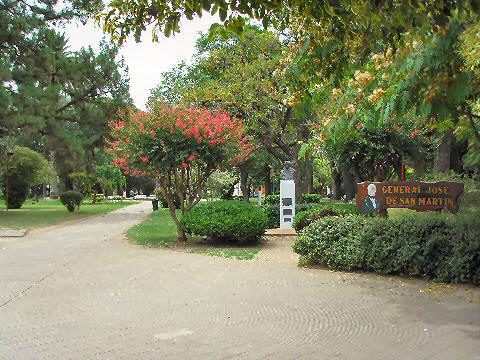
No doubt that Plaza San Martín, one of two major plazas that I encountered, is well landscaped…
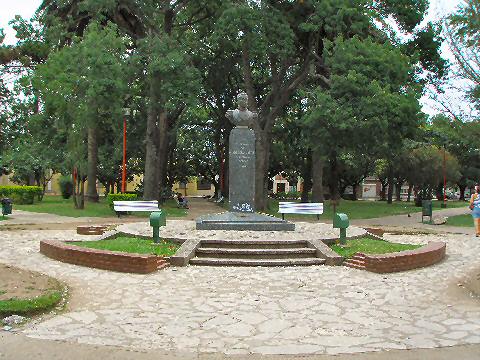
And the man’s bust graces the center… lots of grass and trees, no flowers…
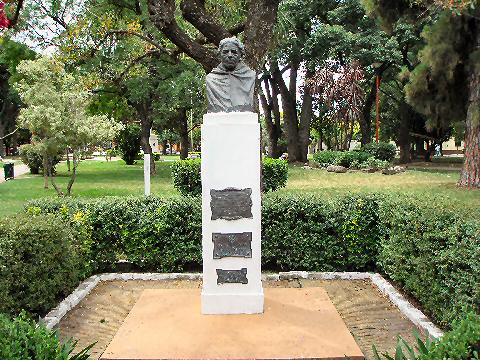
He shares the plaza with Dr. Eugenia Tapia de Cruz, a serious looking woman who appears to have been the founder of the city, the main local church, currently covered in scaffolding and closed, is named after her.
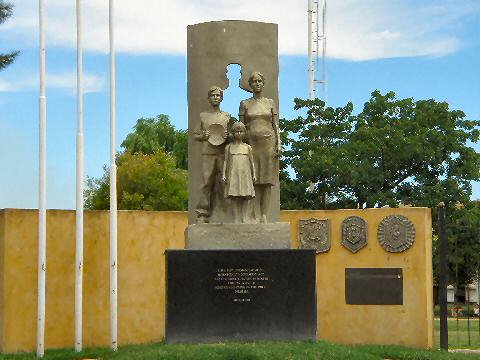
At one corner of what seems to be the main city plaza is this monument to “those who have fallen”, though there’s no indication of where, how, or why they fell…
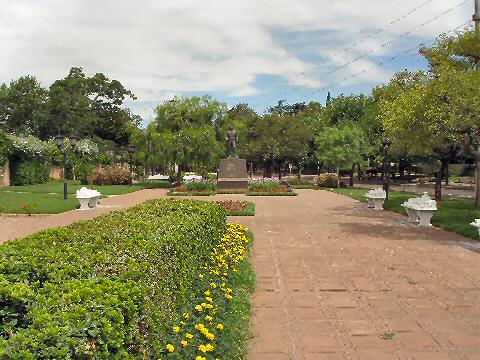
General de Rosas merits his own plaza, which actually has some quiet pretty flowerbeds, though not overly well tended at the moment. There’s a nice gazebo on the opposite end from the general’s statue…
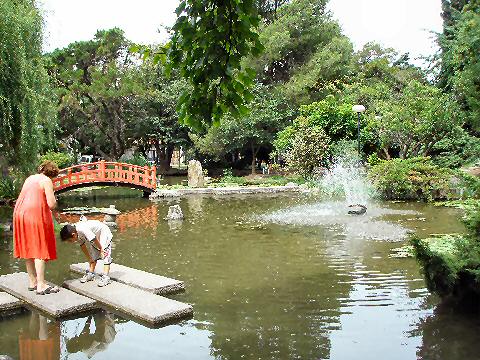
The one thing that was open was the Japanese garden – locals, clearly known to the gatekeeper, wander in and out at whim, strangers like myself get blocked and asked for a contribution to enter – but hey, it’s only a peso.
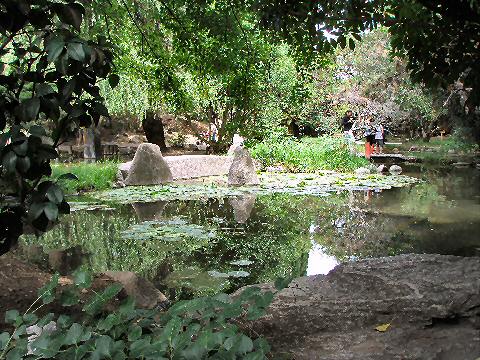
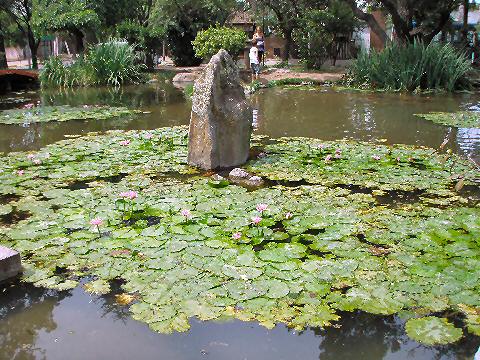
A nice central pond is well stocked with lilypads and koi. Overall, the garden, while pretty, is quite small, and very tranquil. Other than being next to the main park in which an open air rock concert was going on.
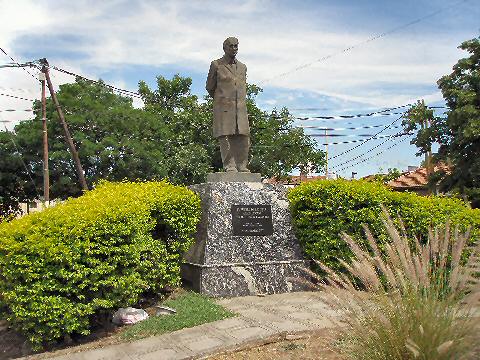
Dr. René Gerónimo Favaloro was the doctor who I gather invented the procedure for coronary bypass surgery. I’m not clear why his statue stands at the side of the central park in Belén – he was born and raised in the provincial capital of La Plata, and much later established his primary clinic out in the province of La Pampa, and further along, a cardiac specialty medical training facility in the city of Buenos Aires. But, here he is.
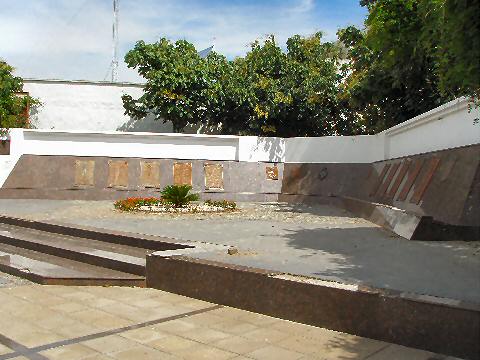
There is a small wilted flower patch at the equally decrepit monument to the Malvinas/Falklands war, with missing plaques, lists of names of those who were killed in the battle…
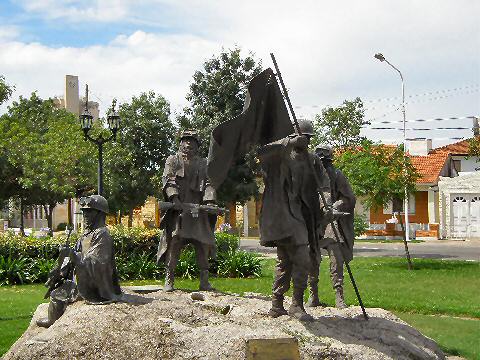
…more interesting, in the center of this little plaza, a monument to the four folk from Belén and surrounds who lost their lives there – Rodolfo Manuel de la Colina, Orlando de Chiara, Jorge R. Sosa, and Jorge Roberto Inchauspe.
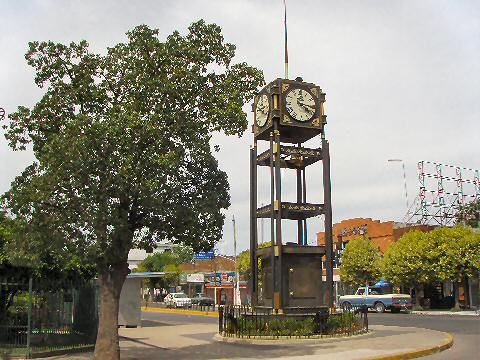
…and, the sight of this clock down the street as I reach Ruta 25, reminds me of how late it’s getting and that I must be headed out to the brewery, hoping it’s open for lunch.
Copyright © 2026 SaltShaker. This feed contains copyrighted photos and text from SaltShaker. If you are not reading this material in a feed aggregator or by e-mail subscription, the site you are viewing may be guilty of copyright infringement. Please contact [email protected] so that I can take appropriate action.
Plugin by Taragana
]]>“Fort Apache is not actually the real name of the isolated ghetto that lies four miles to the north of the centre of Buenos Aires. A journalist first coined the phrase after a shoot-out in front of the local police station in the early 1980s and it has stuck ever since. Most of the 30,000 inhabitants of the 22-block labyrinth are descendants of indigenous Indians from the interior of Argentina and bordering countries. It is a self-contained community, with its own set of codes, and a shocking crime rate. Built in two stages, the project was originally part of the Ongania dictatorship’s plan for the eradication of shanty towns in the 1960s but, later, during preparations for the 1978 World Cup, the military government, worried about security and the image Argentina would portray to the rest of the world, rounded up delinquents, placing them, out of sight, in the Ejercito de los Andes estate, a name that has long been forgotten.”
– Neil Clack, The Independent
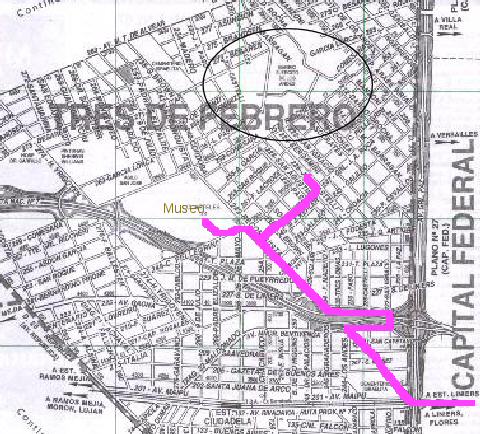
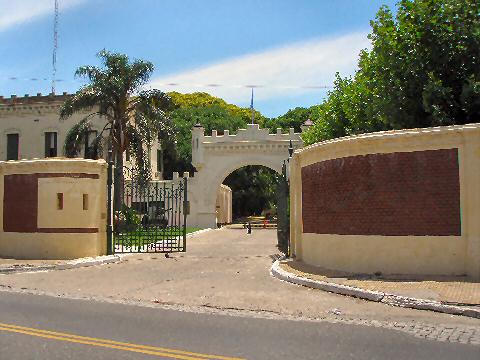
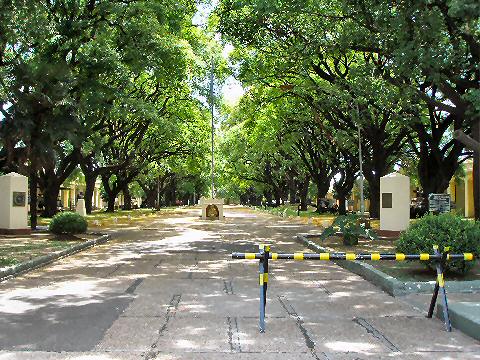
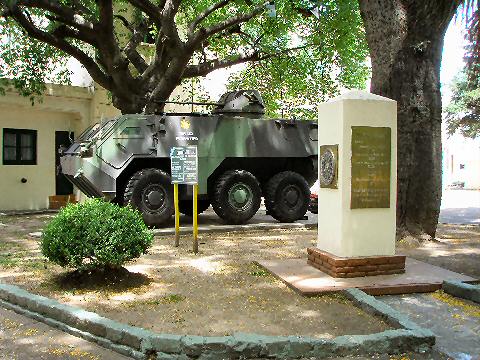
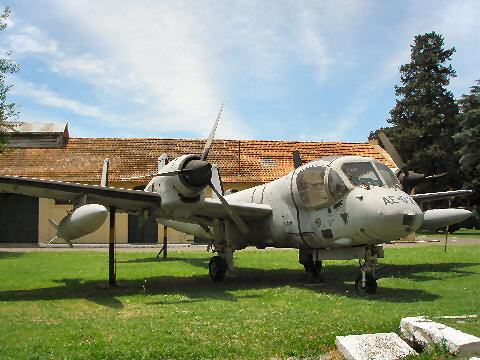
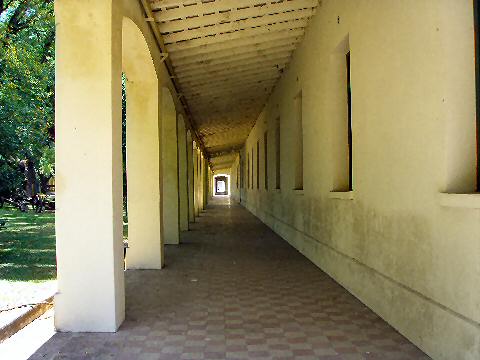
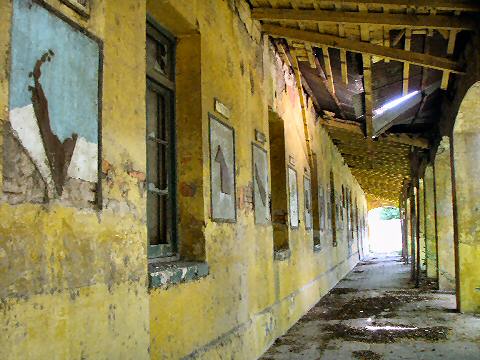
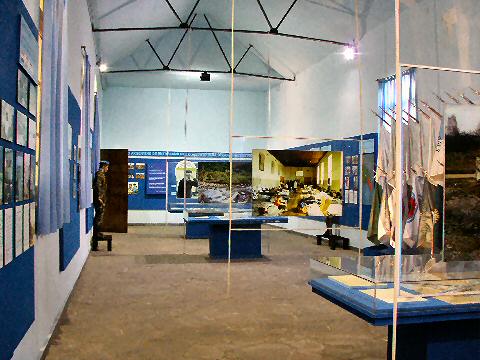
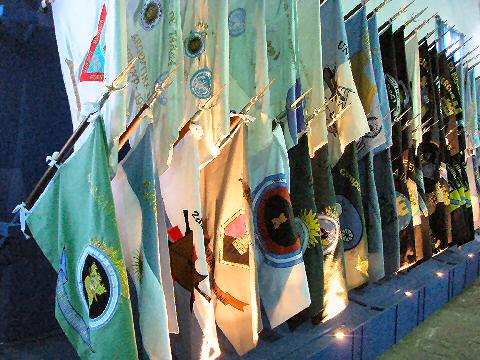
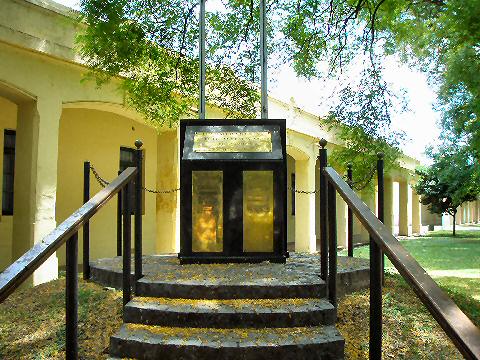
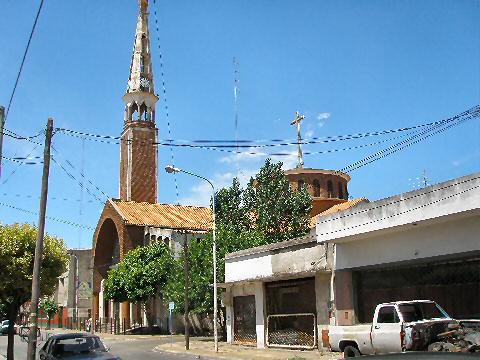
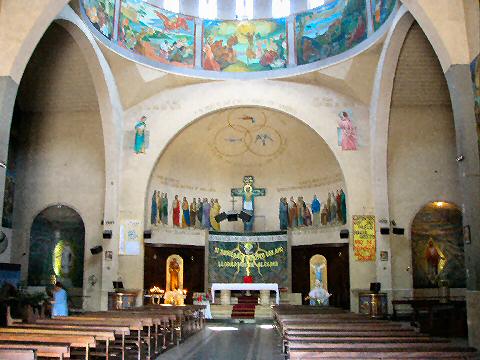
Now, leaving, we weren’t quite sure where to go next – figuring that the other cemetery would be closed as was the first down by the Liniers station, we didn’t head there – good move since it would have taken us right through the western edge of Fuerte Apache (the circled area on the map). Our Guia T indicated that the 124 bus had a stop in front of the museum and would take us back to Recoleta – turns out not – and apparently not for some time, as no one we asked had any recollection of the 124 ever running through the neighborhood (and online research shows a completely different starting point for the line). But we’d spotted an interesting looking church a couple of blocks away and walked over to take a quick look…
By the way, I’m not following Barbara to any more offbeat locations without a little research….
Copyright © 2026 SaltShaker. This feed contains copyrighted photos and text from SaltShaker. If you are not reading this material in a feed aggregator or by e-mail subscription, the site you are viewing may be guilty of copyright infringement. Please contact [email protected] so that I can take appropriate action.
Plugin by Taragana
]]>“We would drive up the Avenue, but we haven’t got the price
We would skate up the Avenue, but there isn’t any ice
We would ride on a bicycle, but we haven’t got a bike
So we’ll walk up the Avenue
Yes, we’ll walk up the Avenue
And to walk up the Avenue’s what we like”
– Judy Garland, lyrics from A Couple of Swells
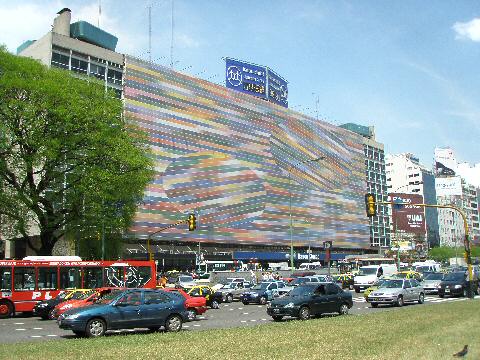
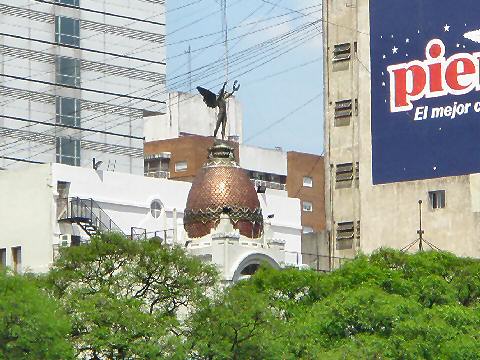
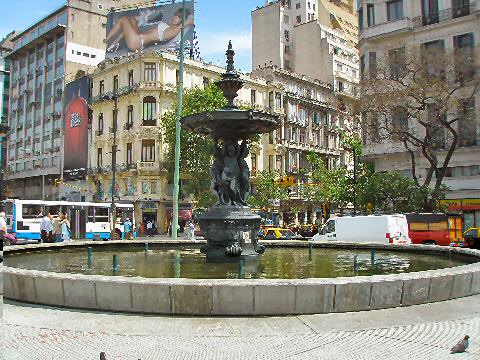
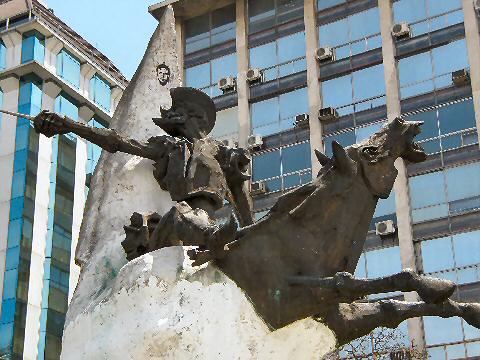
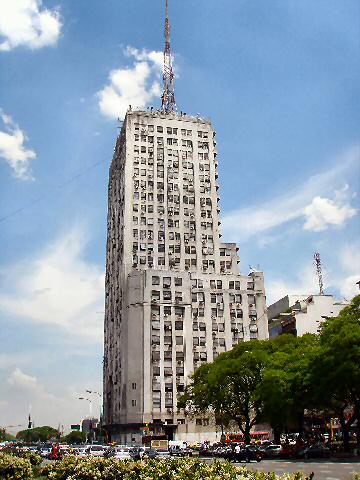
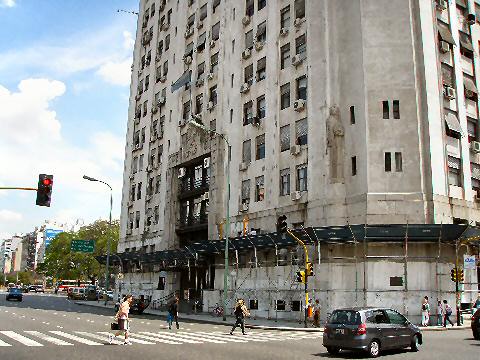
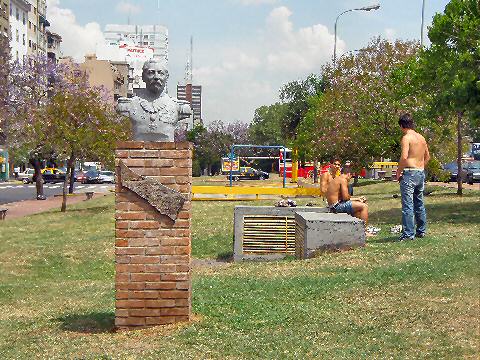
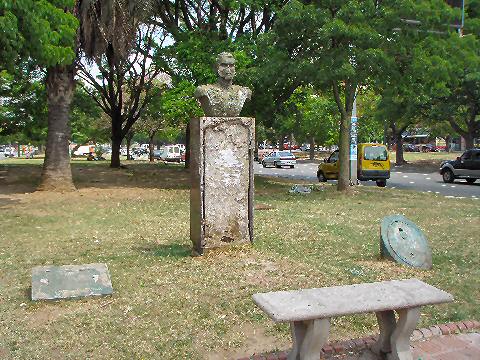
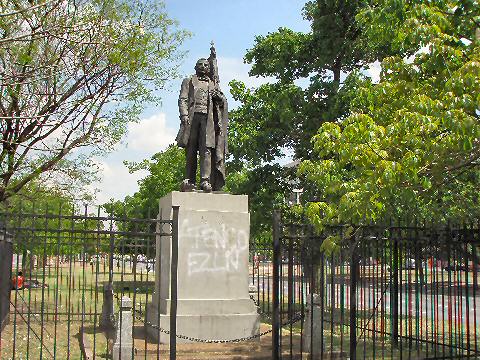
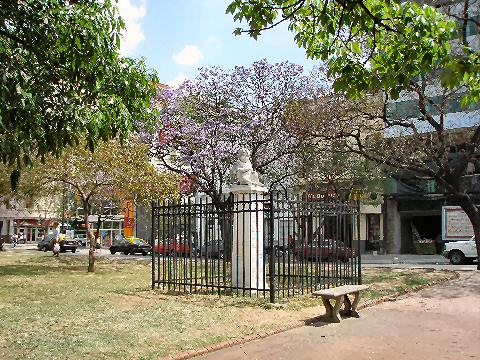
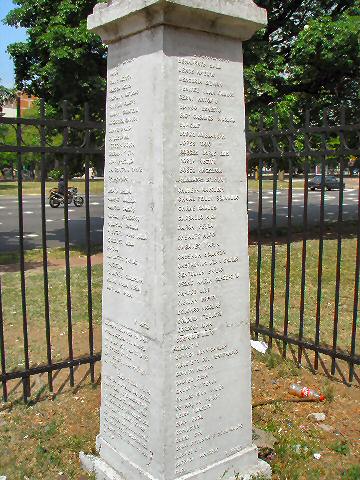
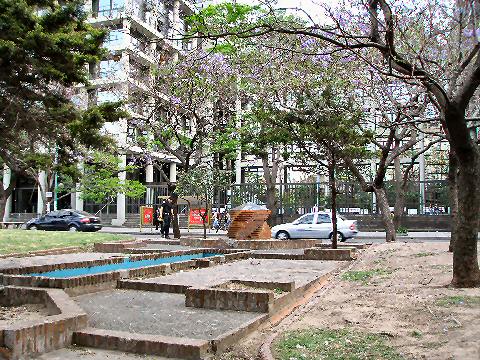
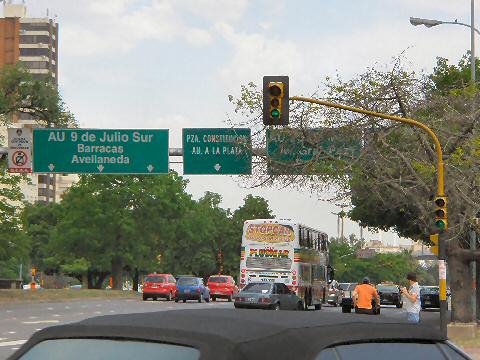
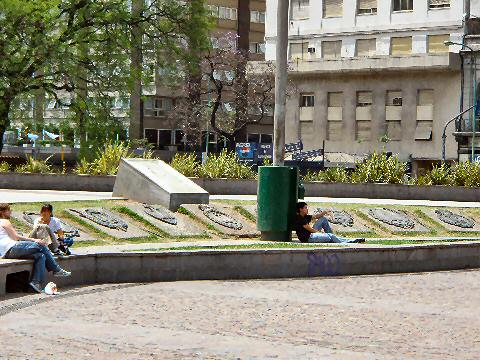
Buenos Aires – When we left off on walking on the last post, we’d made it to the plaza around the Obelisco as we meandered Av. 9 de Julio. There’s really no more to be said about the avenue itself that I didn’t say in that post, other than to note that as one moves further south and away from the downtown area, the street becomes more a mix of residential and commercial, lower height buildings, and the traffic islands tend to be greener and with less in the way of benches, paved pathways, etc…. On to the photos.
Copyright © 2026 SaltShaker. This feed contains copyrighted photos and text from SaltShaker. If you are not reading this material in a feed aggregator or by e-mail subscription, the site you are viewing may be guilty of copyright infringement. Please contact [email protected] so that I can take appropriate action.
Plugin by Taragana
]]>“A lot of people are afraid of heights. Not me. I’m afraid of widths.”
– Stephen Wright, comedian
Buenos Aires – While it may not be the most commonly asked question in Buenos Aires, which is probably “Where do I get the best steak?” (an unanswerable query if ever there was one), it certainly comes up a lot – “Is Avenida 9 de Julio really the widest street in the world?” (Just for numbers sake, though there’s disagreement, and it depends where along the avenue, but roughly, it’s 110 meters wide and has 18 lanes of traffic.) But there’s not a simple answer. If you include highways, then no, there are wider highways, both in terms of number of lanes (Highway 401 outside of Toronto has 21 lanes) and physical width. But let’s limit it to streets and avenues. There’s some contention that the avenue that connects the Forbidden City to Tian’anmen Square in Beijing has more lanes, but I haven’t seen a definitive answer. There’s an avenue in Brasilia, Brazil, which is physically wider at 250 meters, and another in Canberra, Australia at the same width, but, both have fewer traffic lanes – the one in Brazil, amazingly at that width, apparently only has four lanes of traffic!
Still, like many things in this country where the people are as proud of their patrimony and claims to fame as they are critical of their own national problems, let’s face it, it’s a really wide street. It’s home to a wide range of architecture, from the Beaux Arts style of the French embassy at its northern end on through modern office buildings, block academic styles, and into low height, simple commercial buildings, almost strip-mall like, at its southern terminus, where it becomes a highway in its own right. I spent a day walking the 26 blocks that constitute the avenue section, with an eye primarily on the wide range of sculptures and monuments that freckle its traffic islands. It’s a somewhat zigzagging walk to make, as at moments the traffic islands are in the center of the whole thing, and at other times the central median narrows to nothing and the side islands widen out into small plazas. A good percentage of the statuary is not identified by inscription or plaque, but I’ve done my best to ferret out information where I could. Just because of the quantity of information, I’ll break this post into parts over the next week or so.
The avenue was planned out for construction in 1911, but the work on it did not begin until 1937. Within four months, the first five blocks, from Mitre to Tucumán were open, but then it took more than forty years to complete the avenue – perhaps a claim to have been the slowest avenue to be built would be in order? It’s name, by the way, commemorates July 9, 1816, Argentina’s “birth-date” – though when planned in 1911, it was to be called Ayohuma after a major battle in the struggle for the country’s independence.
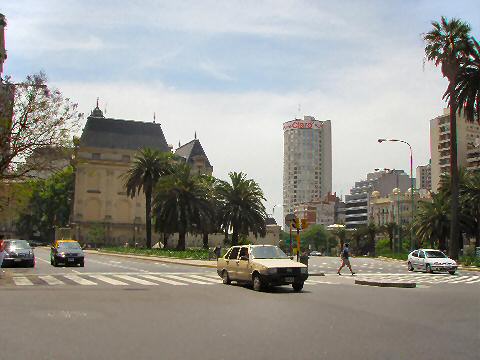
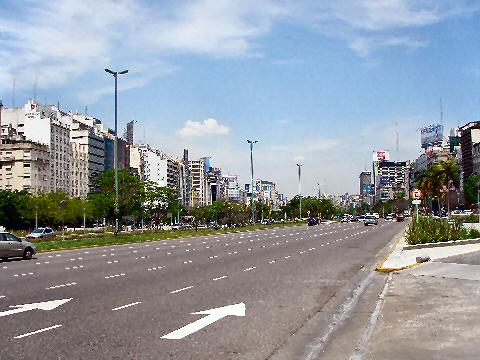
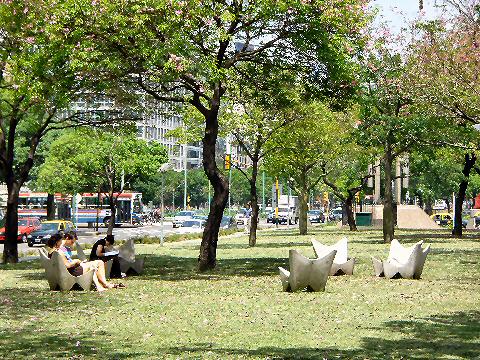
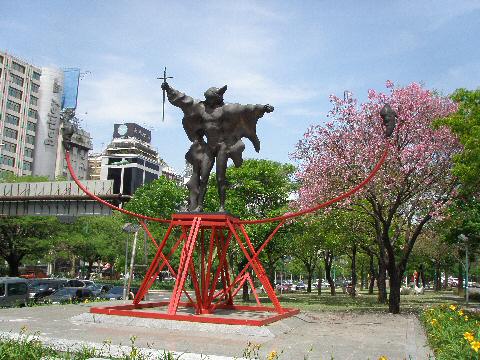
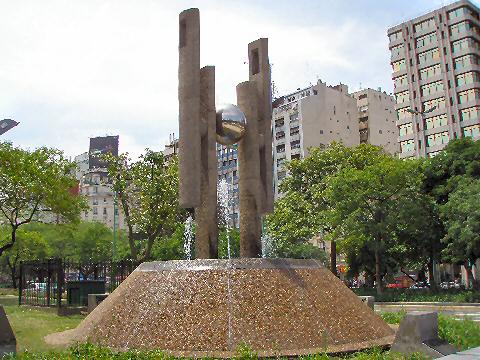
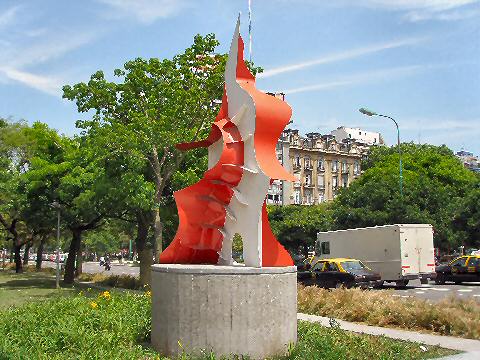
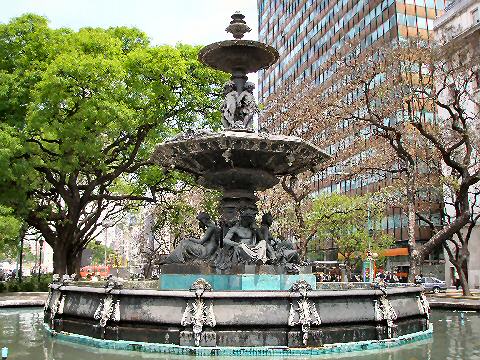
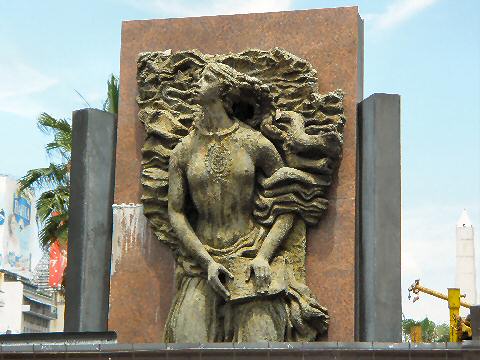
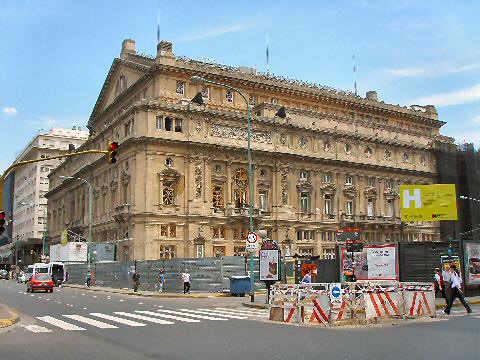
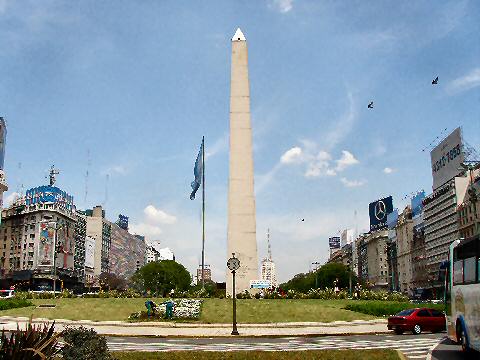
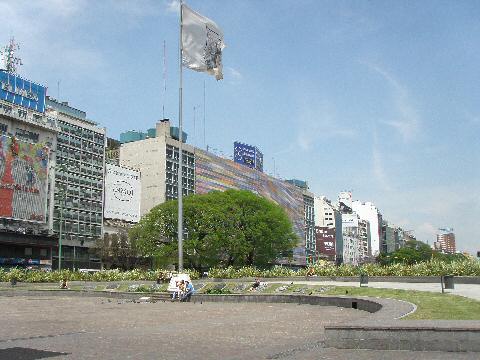
I’m going to leave off here, at the “central marker” point of the avenue, and pick this up in another post….
Copyright © 2026 SaltShaker. This feed contains copyrighted photos and text from SaltShaker. If you are not reading this material in a feed aggregator or by e-mail subscription, the site you are viewing may be guilty of copyright infringement. Please contact [email protected] so that I can take appropriate action.
Plugin by Taragana
]]>“There is around the name of Garibaldi a halo which nothing can extinguish: a whole life devoted to one object – his country; a name consecrated by deeds of honor, first abroad, and then at home; valor and constancy more than admirable; simplicity of life and manners which recalls the men of antiquity; all the most mournful trials and losses manfully endured; glory and poverty! Every particular relating to such a man is precious.”
– Giuseppe Mazzini, Italian politician
Buenos Aires – Sometimes you just don’t feel like a long walk. Maybe you only have a short few moments on a lunch break, or stepping out of the exhibition center, but you’re here in Buenos Aires, and you know you need to see a sight or two, and there’s one, right there in the middle of the street. We’re at Plaza Italia, a confluence of three major streets, the hub for many a bus line, and an easy reference point when you’re meeting up with acquaintances for whatever you’re up to next. To the east, coming to a point between Av. Santa Fé and Av. Las Heras, is the stretch of the Botanical Gardens; to the north, between Las Heras and Av. Sarmiento, the Municipal Zoo; to the west, the La Rural exhibition complex, and to the south, all of Palermo Viejo awaits. And in the center, in a pretty little plaza, Giuseppe Garibaldi watches over it all.
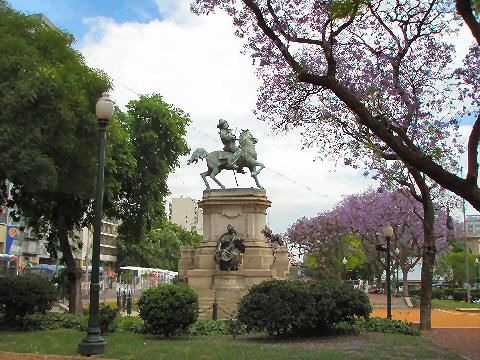
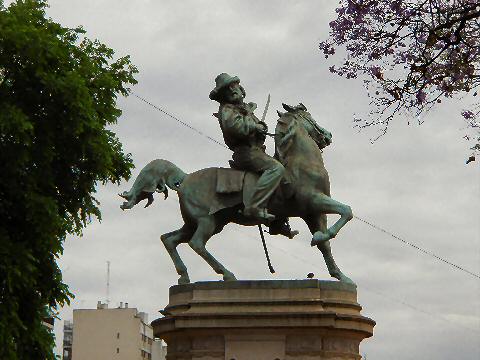
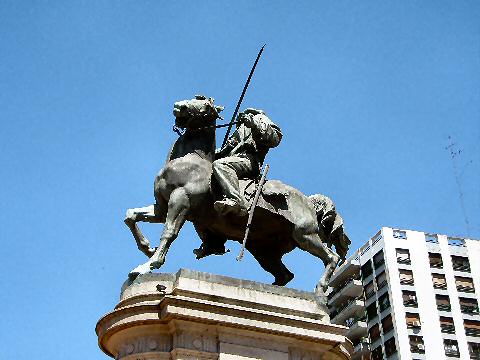
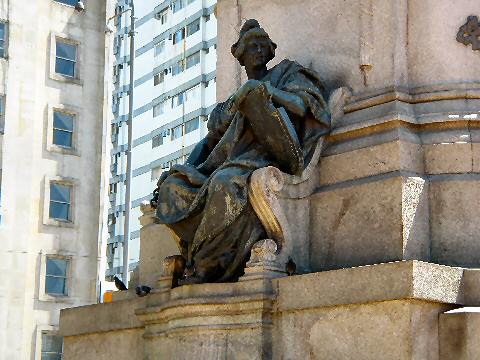
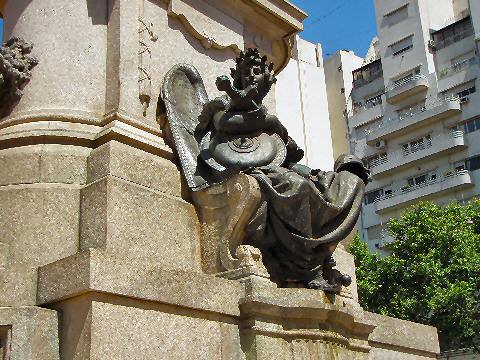
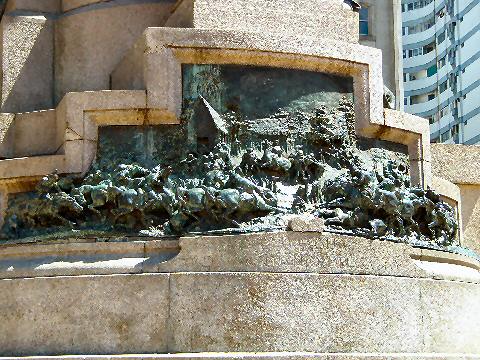
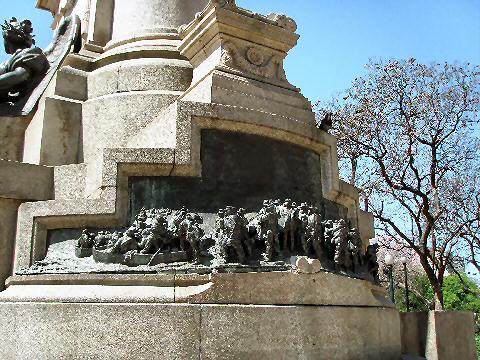
The rest of Plaza Italia is taken up by a nice array of bushes, trees, and benches. There is a small brick, orange glass block and tile shrine to the Virgin of Lujan (the guardian of travelers if I understand it all correctly). And see, hardly any walking.
Copyright © 2026 SaltShaker. This feed contains copyrighted photos and text from SaltShaker. If you are not reading this material in a feed aggregator or by e-mail subscription, the site you are viewing may be guilty of copyright infringement. Please contact [email protected] so that I can take appropriate action.
Plugin by Taragana
]]>