&”…the true social and industrial boost begun in 1924 when a Japanese citizen called Gashu, who discovered how fit the zone was for the production of flowers, settled in the land. Along with a group of Japanese immigrant workers, he started the first large plantations. Just five years later producers of Portuguese, Italian, Belgian and Dutch origins were emulating him. Nowadays, with almost 400 floral establishments, this city is the first flower producer in the province. The abundant nurseries, with an enormous offer in plants and flowers, have become a permanent attraction, especially during weekends.”
– from Enjoy South America website
Belén de Escobar – Sounds lovely, doesn’t it? I guess I just missed the area where all those floral establishments are. I knew I didn’t get out to the riverside area, and I did concentrate in the center of town, so maybe the nurseries are out more along the edges (though I did head out Route 25, as noted yesterday, and didn’t see anything but a shopping mall, the zoo, and the brewery where I had lunch). Perhaps I need a guide. Either way, there were some very pretty little plazas in the center of town, all of which the various tourism websites touted as spots to go and see flowers – and there were some, just not the quantity nor quality I’d have expected from “the City of Flowers”.
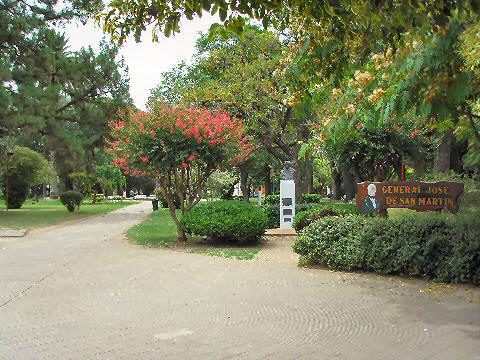
No doubt that Plaza San Martín, one of two major plazas that I encountered, is well landscaped…
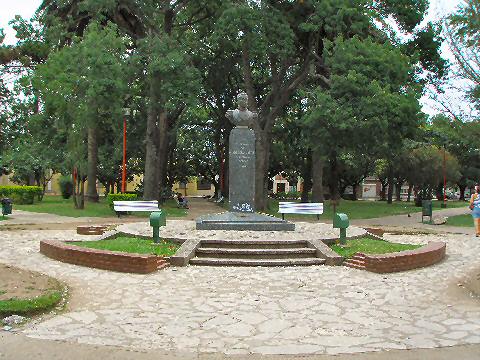
And the man’s bust graces the center… lots of grass and trees, no flowers…
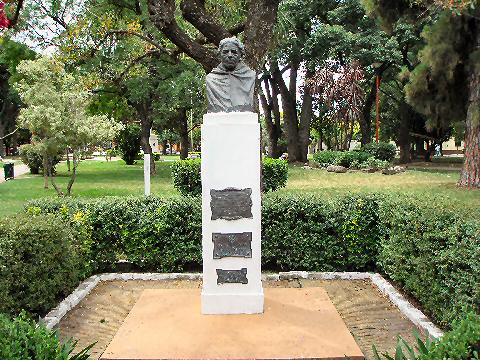
He shares the plaza with Dr. Eugenia Tapia de Cruz, a serious looking woman who appears to have been the founder of the city, the main local church, currently covered in scaffolding and closed, is named after her.
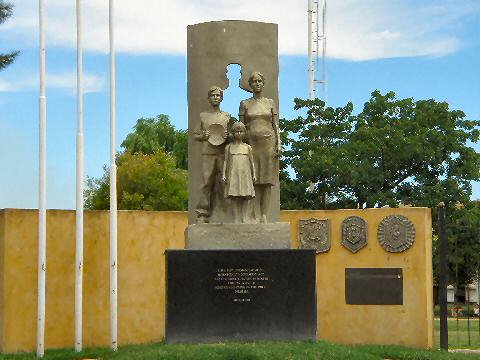
At one corner of what seems to be the main city plaza is this monument to “those who have fallen”, though there’s no indication of where, how, or why they fell…
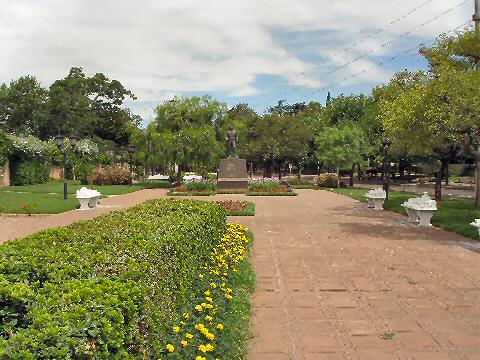
General de Rosas merits his own plaza, which actually has some quiet pretty flowerbeds, though not overly well tended at the moment. There’s a nice gazebo on the opposite end from the general’s statue…
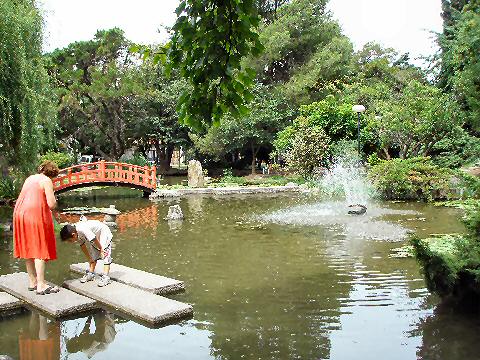
The one thing that was open was the Japanese garden – locals, clearly known to the gatekeeper, wander in and out at whim, strangers like myself get blocked and asked for a contribution to enter – but hey, it’s only a peso.
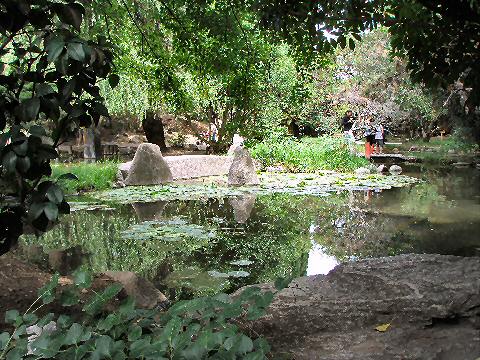
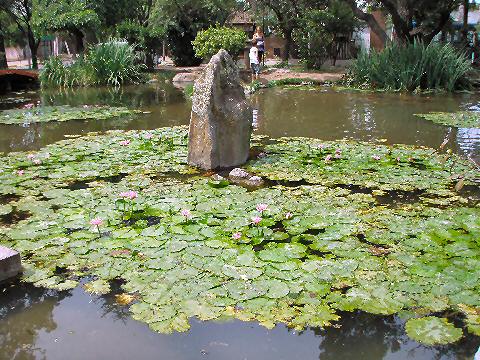
A nice central pond is well stocked with lilypads and koi. Overall, the garden, while pretty, is quite small, and very tranquil. Other than being next to the main park in which an open air rock concert was going on.
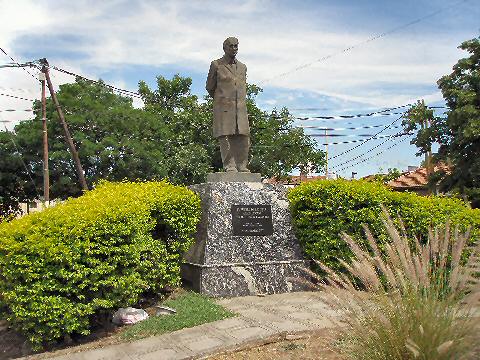
Dr. René Gerónimo Favaloro was the doctor who I gather invented the procedure for coronary bypass surgery. I’m not clear why his statue stands at the side of the central park in Belén – he was born and raised in the provincial capital of La Plata, and much later established his primary clinic out in the province of La Pampa, and further along, a cardiac specialty medical training facility in the city of Buenos Aires. But, here he is.
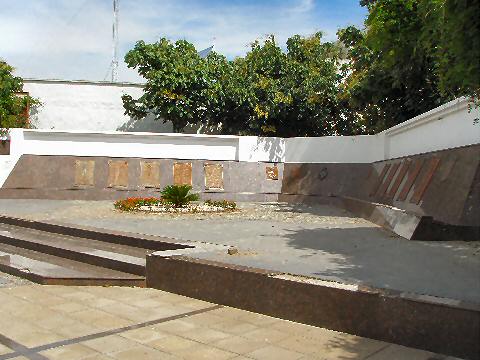
There is a small wilted flower patch at the equally decrepit monument to the Malvinas/Falklands war, with missing plaques, lists of names of those who were killed in the battle…
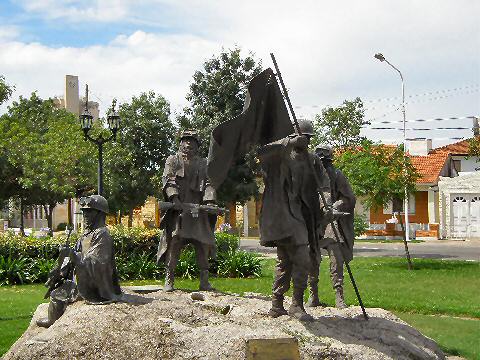
…more interesting, in the center of this little plaza, a monument to the four folk from Belén and surrounds who lost their lives there – Rodolfo Manuel de la Colina, Orlando de Chiara, Jorge R. Sosa, and Jorge Roberto Inchauspe.
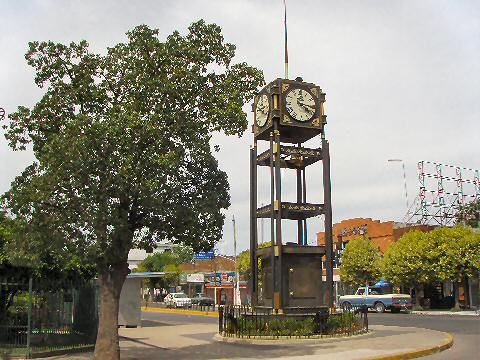
…and, the sight of this clock down the street as I reach Ruta 25, reminds me of how late it’s getting and that I must be headed out to the brewery, hoping it’s open for lunch.
Copyright © 2026 SaltShaker. This feed contains copyrighted photos and text from SaltShaker. If you are not reading this material in a feed aggregator or by e-mail subscription, the site you are viewing may be guilty of copyright infringement. Please contact [email protected] so that I can take appropriate action.
Plugin by Taragana




 ]]>
]]>“Fort Apache is not actually the real name of the isolated ghetto that lies four miles to the north of the centre of Buenos Aires. A journalist first coined the phrase after a shoot-out in front of the local police station in the early 1980s and it has stuck ever since. Most of the 30,000 inhabitants of the 22-block labyrinth are descendants of indigenous Indians from the interior of Argentina and bordering countries. It is a self-contained community, with its own set of codes, and a shocking crime rate. Built in two stages, the project was originally part of the Ongania dictatorship’s plan for the eradication of shanty towns in the 1960s but, later, during preparations for the 1978 World Cup, the military government, worried about security and the image Argentina would portray to the rest of the world, rounded up delinquents, placing them, out of sight, in the Ejercito de los Andes estate, a name that has long been forgotten.”
– Neil Clack, The Independent
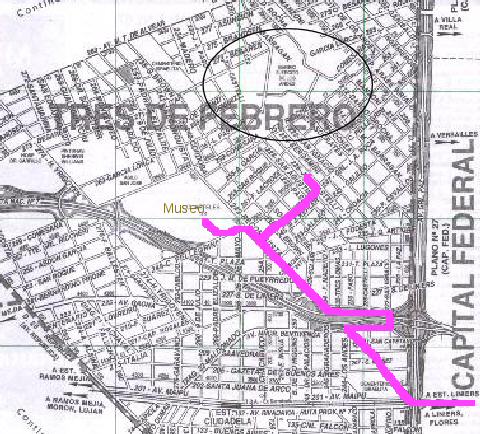
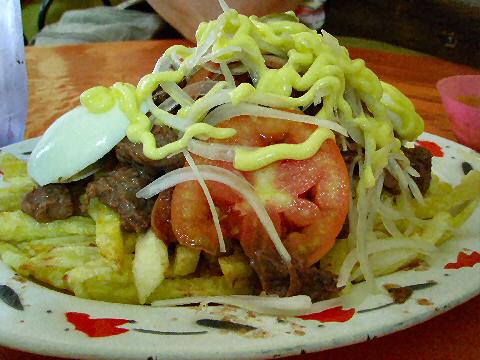
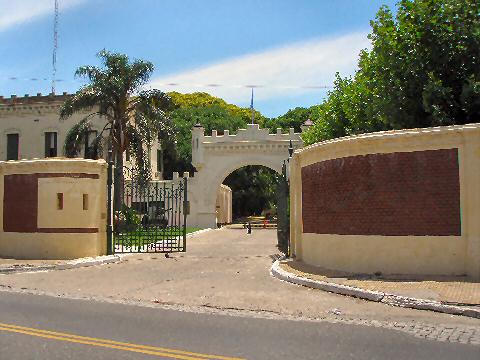
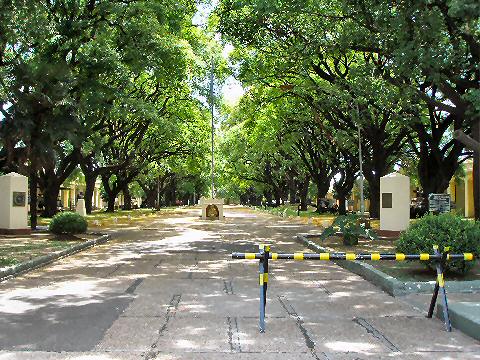
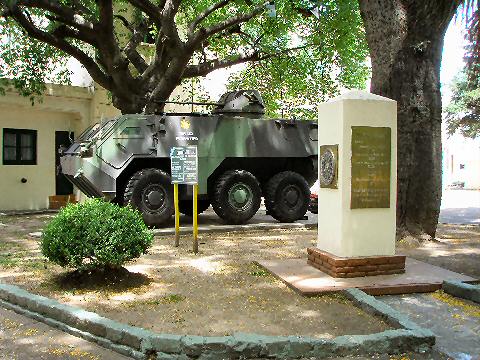
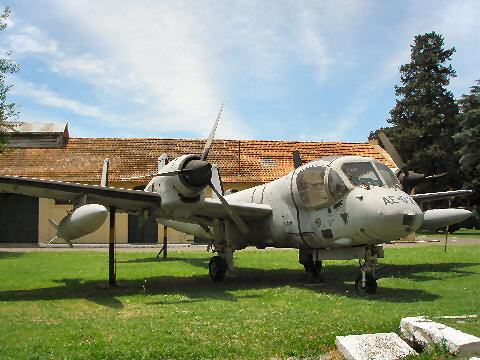
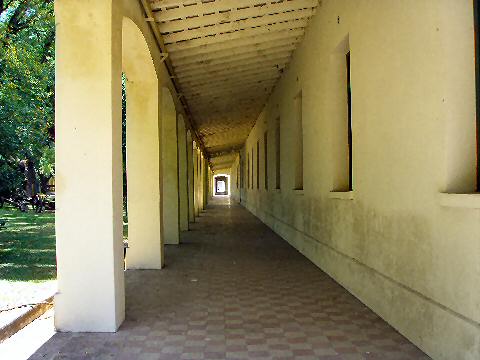
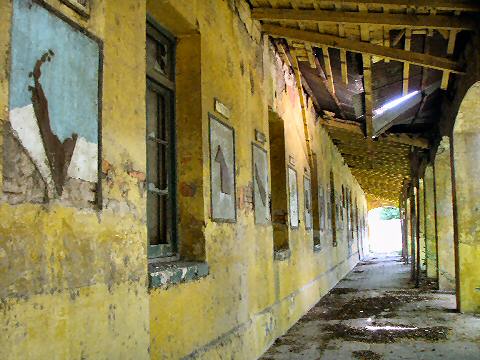
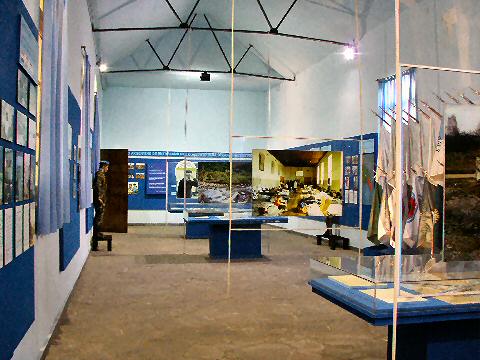

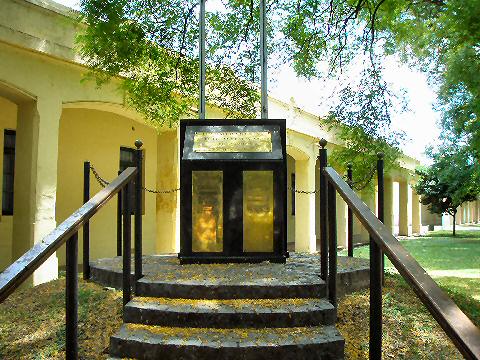
Now, leaving, we weren’t quite sure where to go next – figuring that the other cemetery would be closed as was the first down by the Liniers station, we didn’t head there – good move since it would have taken us right through the western edge of Fuerte Apache (the circled area on the map). Our Guia T indicated that the 124 bus had a stop in front of the museum and would take us back to Recoleta – turns out not – and apparently not for some time, as no one we asked had any recollection of the 124 ever running through the neighborhood (and online research shows a completely different starting point for the line). But we’d spotted an interesting looking church a couple of blocks away and walked over to take a quick look…
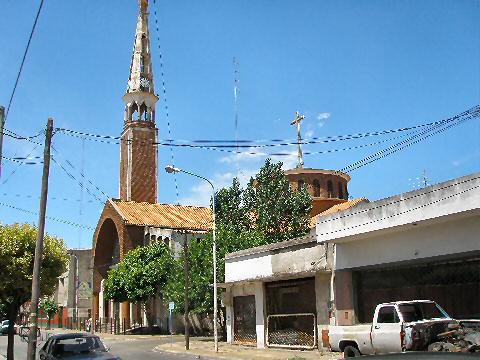
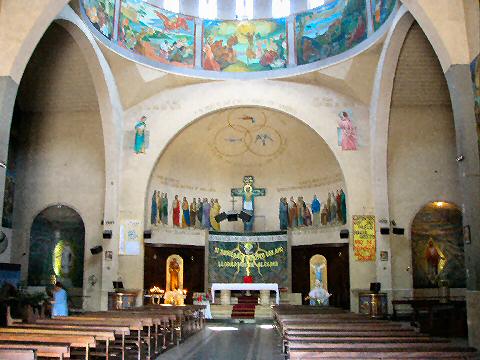
By the way, I’m not following Barbara to any more offbeat locations without a little research….
Copyright © 2026 SaltShaker. This feed contains copyrighted photos and text from SaltShaker. If you are not reading this material in a feed aggregator or by e-mail subscription, the site you are viewing may be guilty of copyright infringement. Please contact [email protected] so that I can take appropriate action.
Plugin by Taragana
]]>“…we now live in the second robber baron era. One of the things that happens in such times is that the wealthy and powerful get to construct huge building and homes. Yet, however we may feel about the 19th century power hoggers, we are still attracted to the architecture and structures they were rich enough to build. Now, take a stroll through the downtown of a gentrified city of today or drive into the carelessly wealthy suburbs.”
– Sam Smith, Progressive Review
Acassuso – I have been to this small suburb north of the city once before – it was evening, we were there for another purpose, and I didn’t get a chance to see much of it. At some point way back when I wrote my great hamburguesa round-up, a local friend had sent me a note saying “you must try the burger at Pepino’s” and giving me an address in this river community about half an hour north of the city. I had nothing planned for last Sunday other than just getting out of the house, and thought, hey, why not? So, off to the northern suburbs…
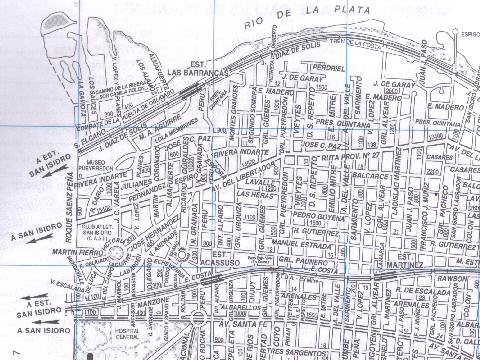
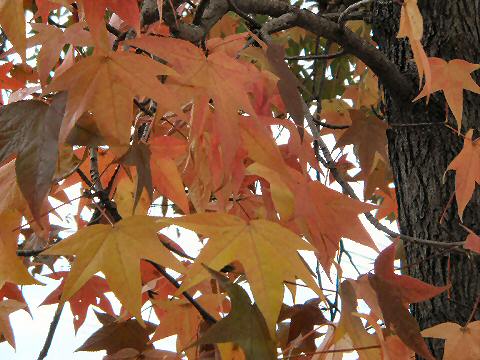
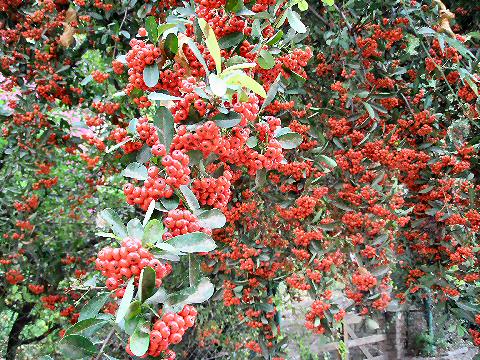
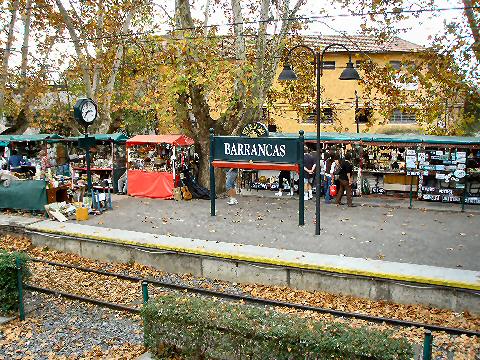
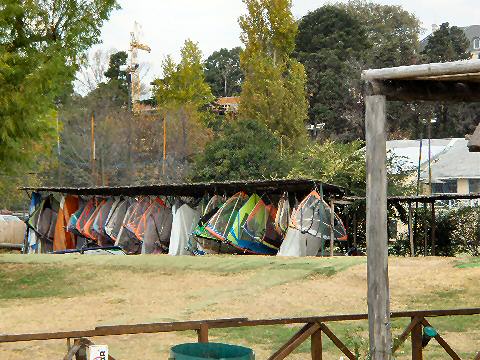
I don’t know much about Acassuso, its history, or… hmmm… really much of anything. I would say from wandering around for the day that it seems to be a pretty wealthy suburb, with the majority of homes being behind security fences of one sort or another, private guards on the streets (though, none of them gave me a second glance as I snapped photos), fancy boutique stores, and a whole lot of English and French being spoken by the various people I passed or who were eating in one of the two restaurants I checked out. Yes, two… I was hungry. Mostly, it got me a couple of pictures of fall foliage (interestingly, the town is planted with a lot of what I think of as North American trees – oak, maple, ash, birch, willows – that I don’t see here in other places), a visit to Peru Beach, so-named because it’s at the end of a street named Peru, and not much of a beach – more of a riverbank with some casual cafes setup in a strip mall along the water, and places to rent kayaking, windsurfing, parasailing, and sailing equipment, plus a roller hockey arena in active use. There’s a cute little antiques fair that lines one side of the Tren de la Costa train station (called Barrancas rather than Acassuso) on Sundays – one of two train lines that run through here, I took the regular suburban train out to the town’s main station. More on the restaurants after the photos…
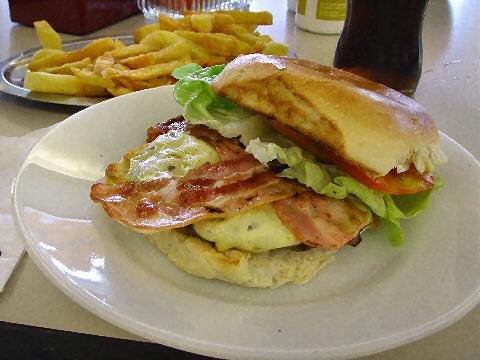
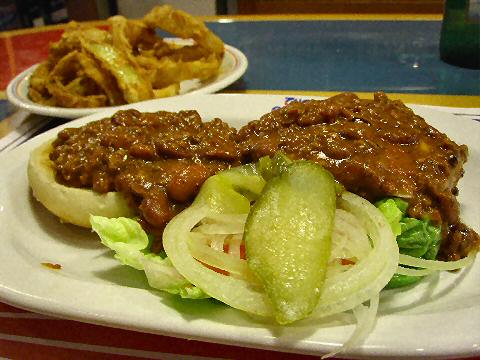
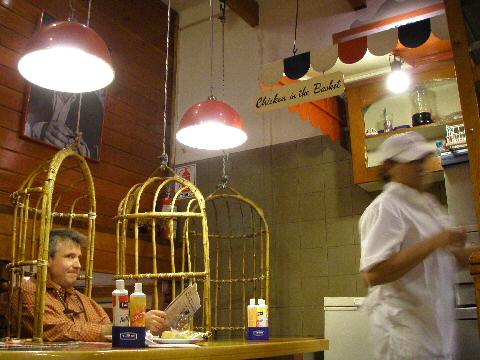
My first stop, given the recommendation, was Pepino, Libertador 14475 – which is basically a big hamburger and hot dog stand. It’s setup to look like a bit nicer spot than that, but that’s really all they offer, other than a salad bar. The place was jammed with people, mostly families with small kids, indoor and outdoor seating, formica tables, vinyl booths and chairs, waiters rushing about taking orders – given that the choices are limited, it’s a quick and easy thing to decide. French fries arrived quickly – brought around by a guy who had plastic baskets of them stacked ten high as he ran around dropping them off on tables – clearly not made to order, and cold. The bacon cheeseburger arrived a good ten minutes later, so they’d have been cold anyway if I’d wanted to eat them together. The burger is tasty, well seasoned, and probably started off at 3-4 ounces before cooking weight. By the time it was cooked (well done, no options, and too thin to do anything else with anyway), it couldn’t have weighed in at more than about 2-3 ounces. It more or less disappeared under two strips of reasonably crispy bacon, lots of melted cheese (again, no options, just cheese) and pickles. The bun was a traditional soft style. All in all, points for the flavor, though not thrilled with the size or execution.
Copyright © 2026 SaltShaker. This feed contains copyrighted photos and text from SaltShaker. If you are not reading this material in a feed aggregator or by e-mail subscription, the site you are viewing may be guilty of copyright infringement. Please contact [email protected] so that I can take appropriate action.
Plugin by Taragana
]]>A little dirt on our carrots doesn’t mean they’re organic.”
– Kelly Barron, “10 Things Your Farmer’s Market Won’t Tell You”, Smart Money
Buenos Aires – I’ve been thinking about going out to and writing up the Mercado Central for a long time. It’s an interesting trip to make for those who are into farmers’ markets, but it does require a bit of time commitment, no question. For the intrepid adventurer, the only way to go is the #86 bus, which you can pick up along Av. Rivadavia at many a point. Make sure it’s the correct ramal, or branch, of the #86 – while all the ramals go past the Mercado Central, some will simply drop you along the highway service road nearby – a hike – take the branch labeled for the market as its destination, which will go right inside and drop you at any of several points within the market itself. Coming back there’s a bus stand right inside the entrance – there are also a few stops scattered here and there in the market, though finding them isn’t always easy.
Now, for the casual fruit, vegetable and meat shopper, is it worth the trip? Are you going to find things that you can’t find at any of the markets in town? Are the prices that much better? I can’t answer the first one as value is individual, but I suspect it’s no. The second, definitely not – in fact, I saw less variety of product, despite far more quantity, than what I can find at Mercado del Progreso or Mercado Belgrano. You will potentially save money, if you have a way to cart stuff back in quantity. For the most part, small quantity purchases aren’t a huge savings over prices at your local verduleria, depending on where you live, and in some cases I saw more expensive than what I can get locally. The discounts come in when you start buying 5 or 10 or 20 kilo cases of things. If you’ve got a car and go out that way, and have something to do with that quantity of a fruit or vegetable, it’s likely you’ll save a fair amount.. less gas, time, etc… The place is also big… really big. You’ve got several dozens of pavillions, some of which are simply warehouses, but still seem to do some form of trade off the loading docks, you’ve got public retail areas, you’ve got a few restaurants, you’ve got fish markets (not open on Saturdays it turns out), meat markets, and even a locksmith and hardware store… Our sense is that some folks simply use this place the way folks in town use Coto, or Jumbo – an all around shopping mart.
One of the most interesting things to do at the market, besides sitting yourself down at one of the open air parrilla stands for a plate of inexpensive food, takes place only once a month. The first Saturday of each month to be exact. You see, the Mercado is on the site of an old estancia. And by old, I’m talking 1600s. The place is called Los Tapiales (link in Spanish, more history following the link at the bottom of that page), and it’s partially the home of the original owner, though it’s been expanded on, once in the early 1800s and once in the early 1900s. It’s now a museum, and unfortunately, because of its location, not a popular tourism destination, so the Argentine government only provides enough funds for basic maintenance and a once a month docent to guide folks around (in both Spanish and English). The story of the place and visiting it is worth the trip in and of itself – it’s located about a block inside the main entrance, up the hill to the left – there’s not even a sign to indicate it – just look for what looks like a paved driveway heading up into the trees to the left.
For the rest, I leave you with photos of the day…
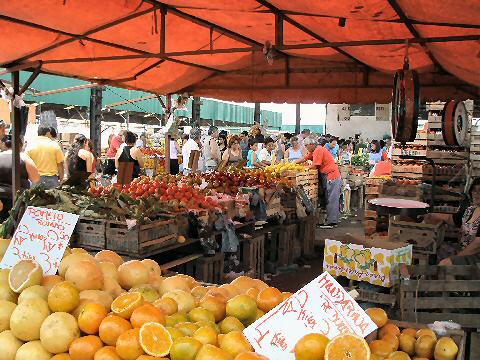
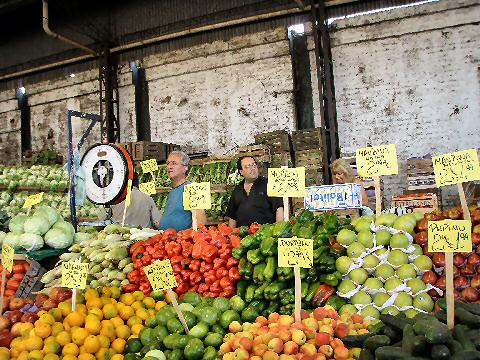
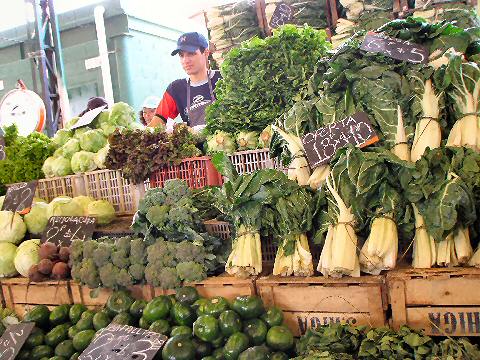
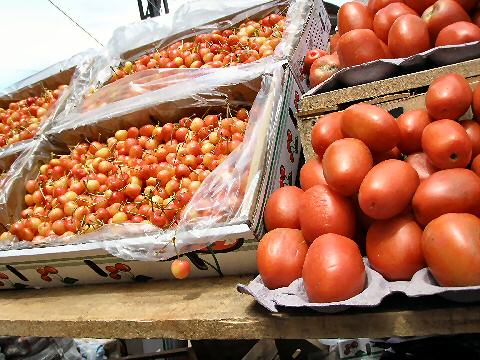
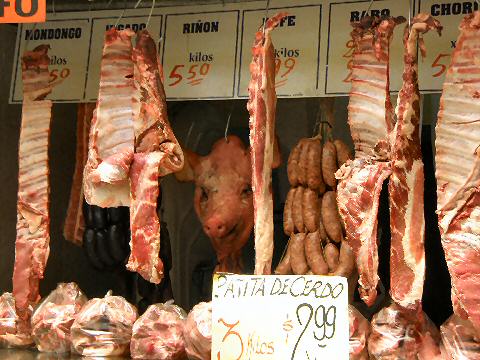
(gotta love the whole pig’s head peaking out from behind the rest…)
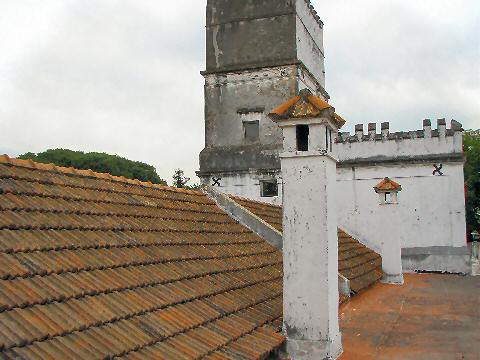
Copyright © 2026 SaltShaker. This feed contains copyrighted photos and text from SaltShaker. If you are not reading this material in a feed aggregator or by e-mail subscription, the site you are viewing may be guilty of copyright infringement. Please contact [email protected] so that I can take appropriate action.
Plugin by Taragana
]]>“Under the step, toward the right, I saw a small iridescent sphere of almost unbearable brightness. At first I thought it was spinning; then I realized that the movement was an illusion produced by the dizzying spectacles inside it. The Aleph was probably two or three centimeters in diameter, but universal space was contained inside it, with no diminution in size. Each thing (the glass surface of a mirror, let us say) was infinite things, because I could clearly see it from every point in the cosmos. I saw the populous sea, saw dawn and dusk, saw the multitudes of the Americas, saw a silvery spiderweb at the center of a black pyramid, saw a broken labyrinth (it was London), saw endless eyes, all very close, studying themselves in me as though in a mirror, saw all the mirrors on the planet (and none of them reflecting me), saw in a rear courtyard on Calle Soler the same tiles I’d seen twenty years before in the entryway of a house in Fray Bentos, saw dusters of grapes, snow, tobacco, veins of metal, water vapor, saw convex equatorial deserts and their every grain of sand, saw a woman in Inverness whom I shall never forget, saw her violent hair, her haughty body, saw a cancer in her breast, saw a circle of dry soil within a sidewalk where there had once been a tree, saw a country house in Adrogué, saw a copy of the first English translation of Pliny (Philemon Holland’s), saw every letter of every page at once (as a boy, I would be astounded that the letters in a closed book didn’t get all scrambled up together overnight), saw simultaneous night and day, saw a sunset in Querétaro that seemed to reflect the color of a rose in Bengal, saw my bedroom (with no one in it), saw in a study in Alkmaar a globe of the terraqueous world placed between two mirrors that multiplied it endlessly, saw horses with wind-whipped manes on a beach in the Caspian Sea at dawn, saw the delicate bones of a hand, saw the survivors of a battle sending postcards, saw a Tarot card in a shopwindow in Mirzapur, saw the oblique shadows of ferns on the floor of a greenhouse, saw tigers, pistons, bisons, tides, and armies, saw all the ants on earth, saw a Persian astrolabe, saw in a desk drawer (and the handwriting made me tremble) obscene, incredible, detailed letters that Beatriz had sent Carlos Argentino, saw a beloved monument in Chacarita, saw the horrendous remains of what had once, deliciously, been Beatriz Viterbo, saw the circulation of my dark blood, saw the cods and springs of love and the alterations of death, saw the Aleph from everywhere at once, saw the earth in the Aleph, and the Aleph once more in the earth and the earth in the Aleph, saw my face and my viscera, saw your face, and I felt dizzy, and I wept, because my eyes had seen that secret, hypothetical object whose name has been usurped by men but which no man has ever truly looked upon: the inconceivable universe.”
– Jose Luis Borges, Author, The Aleph
Adrogué – One of the things I’d been told not to miss on my visit to this town, is it’s array of plazas. A simple pattern of six, connected by a network of streets that includes diagonals – a pattern of byways that the same city designers later used on a larger scale for the center of La Plata, the provincial capital. The pattern of six was important – it was the number of ships in the fleet of Almirante Brown, the naval leader for whom the partido is named, and, the plazas are not only laid out in his fleet’s sailing pattern, but each of them is named after the commander of the vessel in that position – or so the legend goes. It was a simple enough walk, and gives a nice flavor of this central part of town – immediately notable that virtually every home is behind gates, regardless of location or size. A hold over, perhaps, from the days when Adrogué was the weekend spot for the Buenos Aires gentry, 1872-1920, roughly.
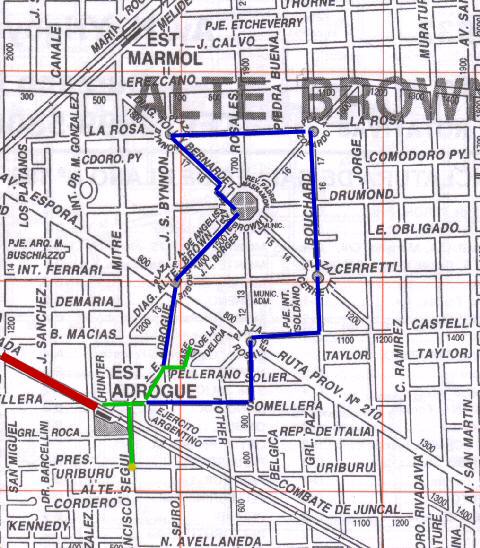
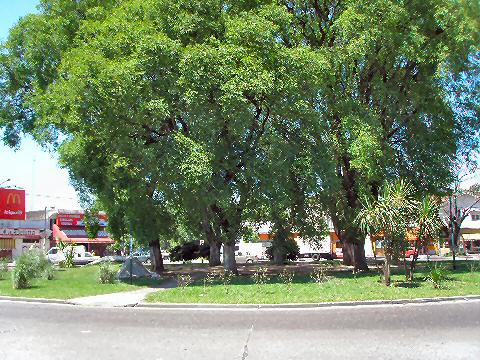
From my empanada adventure in the previous post, I headed back to the center of town and embarked on this little jaunt – following the blue line on the map, and first up, Plaza Rosales. A very plain round, in a fairly heavily trafficked commercial area, a ring of six trees in the center, and facing onto the main diagonal, a map set in ceramic tile of the town’s principal routes.
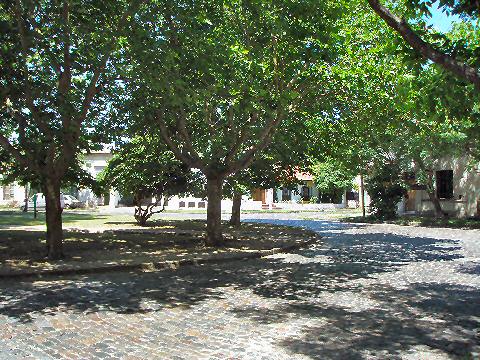
A short walk along a tree-lined street, set with small ranch style homes, mostly of fairly modern brick, which would lead me to believe that many of them have been redone over the last couple of decades, and I arrived at Plaza Cerretti. Here, cobblestones line the street, the trees are somehow darker, larger, almost, strangely, a touch foreboding. A pizzeria, with a half dozen folk gazing at the plaza sits to one side, a young couple necks on a bench under the trees, a young man catches some sun in one of the few non-shaded patches.
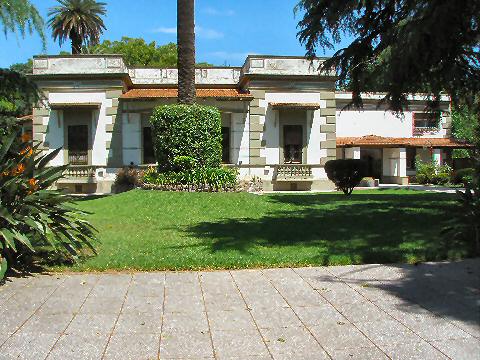
As I walk along Bouchard, the homes are suddenly larger, mansions really – and many, including this one, behind a stone wall with small inset fences where one can glimpse the grounds, are for sale. In fact, much of Adrogué’s real estate seems to be for sale, I think every block I walked on had anywhere from one to three real estate signs posted along the way.
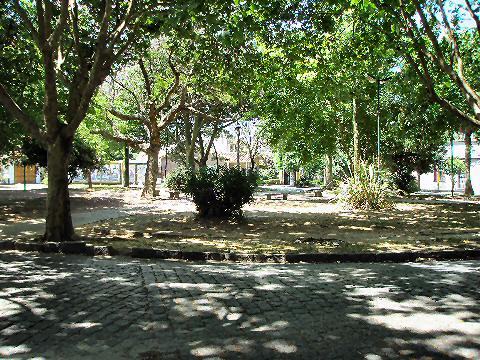
I reach Plaza Azopardo, a sparse, somewhat weedy and vaguely unkempt spot, one of the few places I see on my walk that doesn’t seem well cared for. Not that it’s rundown, it’s more… rumpled, like it has just awoken and thrown on a few trees and bushes in order to answer the door.
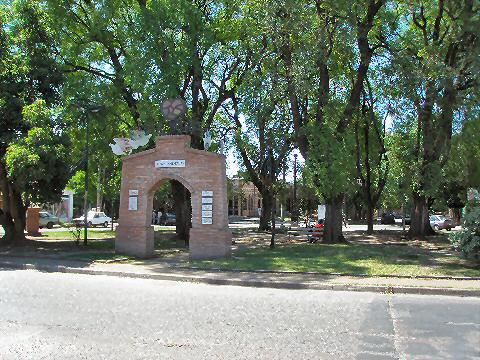
Turning now, and heading along La Rosa, the homes are more modest, but numerous small institutes seem to have taken over their care, and I see schools and study centers of various sorts. It’s a longer, nearly unbroken stretch, but shortly I find myself at Plaza Bynnon, where a large brick archway with a wind mobile of angels mounted above it greets those entering the heavily wooded round.
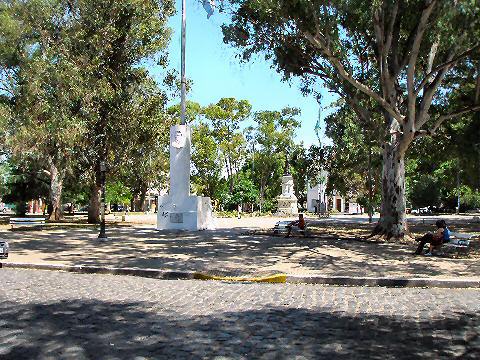
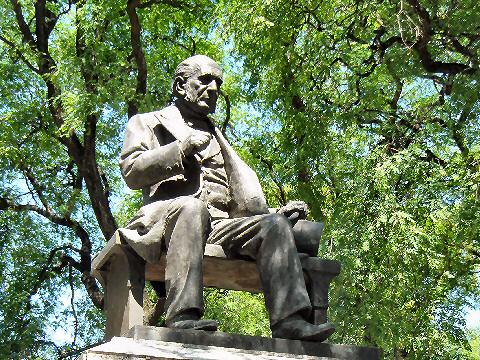
And, heading into the center of the formation, I very quickly reach the central town “square”, with it’s high statue of Almirante Brown himself, looking out across the waves as his fleet heads forward. Here, children play, people are catching sun, a clear gathering place for much of the town, and off to one side is a large elementary school, which appears as if it may be the principal one for the town.
And then heading down the main commercial diagonal, back towards the downtown area, I reach the last of the hex, Plaza Adrogué itself – and why I say above that the names of the plazas are a legend, because nothing I’ve uncovered indicates that Adrogué himself was a naval commander of any sort, but a civilian merchant for his entire career, amassing quite a fortune, still, perhaps I just haven’t seen anything documented.
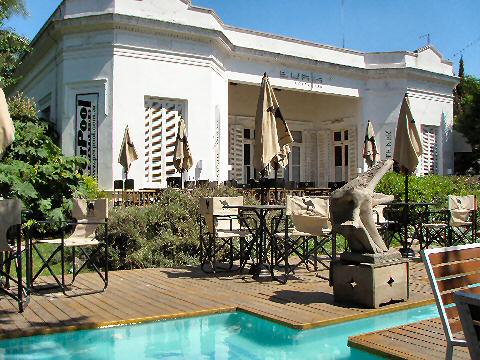
Not that this walk was tiring, taking up a mere hour or so, but had this playground of a sushi bar been open for an afternoon snack on my way back, I might have stopped in for a bite at poolside… this is still clearly a town with an edge of wealth about it.
Instead, I head back to the train station and the capital.
Copyright © 2026 SaltShaker. This feed contains copyrighted photos and text from SaltShaker. If you are not reading this material in a feed aggregator or by e-mail subscription, the site you are viewing may be guilty of copyright infringement. Please contact [email protected] so that I can take appropriate action.
Plugin by Taragana
]]>“Wherever in the world I might sense the smell of gum trees, I feel as if I had been take back to Adrogué. And that is exactly what Adrogué was: a large and quiet maze of streets surrounded by lush trees and country houses, a maze of many peaceful nights that my parents liked to traverse. Country houses in which you could guess how life was behind those country houses. In some way, I have always been there, I am always here. You take the places with yourself, the places are within yourself. I am still among the gum trees and labyrinths, that place where you can easily get lost. I guess you might as well get lost in Paradise. Bizarre statues turn pretty, a ruin that is not a ruin, a tennis court. And then, in the very Las Delicias Hotel, a big room with mirrors. I have certainly found myself in those infinite looking glasses. Many arguments, many scenes, many poems that I imagined were born in Adrogué or were fixed in Adrogué. Whenever I talk about gardens, whenever I talk about trees, I am in Adrogué; I have thought about that city, it is unnecessary to name it.”
– Jorge Luis Borges, Writer
Adrogué – I mentioned some time ago that this summer I was going to start ranging out from the Capital and exploring various spots in the surrounds. This last week seemed like as good a time as any to start. I’ve heard, numerous times, about this town to the south – famous for being the home of Las Empanadas de las Abuelas, a restaurant that regularly wins awards for its empanadas, and also now and again from visitors who stay at a little B&B called Teresita, which doubles as a cooking school, making it a destination for folks looking for a vacation that includes a bit of training in local cooking. One of these days I’ll check the school out and get back to you…
The trip to Adrogué starts off at the beautiful Constitución station here in Buenos Aires – a pretty stunning building that formed part of a complex of buildings that included not only the rail station (and now bus station), but also connected into one of the main Mercado de Las Frutas, a center for the sale of farm fresh produce. The trip currently costs a whopping 60 centavos, which perhaps seems less of a bargain when you find yourself on a train that’s literally in tatters – ripped up seats, broken windows, missing hanging straps. The riders a mix of all ages and backgrounds – this train passes through various southern neighborhoods, both savory and un, on its way to a final destination of either the town of Glew or Alejandro Korn. There are other ways to get to Adrogué, but this is the simplest and least expensive, and at least during the day, felt safe, if scruffy.
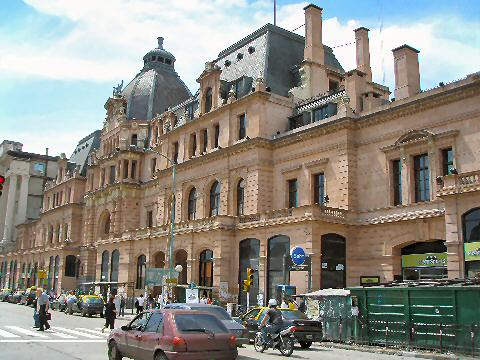
Arrival in this town of 30,000 inhabitants, the “capital” of the partido of Gran Buenos Aires called Almirante Brown, is a slightly less imposing experience… The town is named after the “founder”, i.e., the person who donated the land for it – Esteban Adrogué – in the late 1800s.
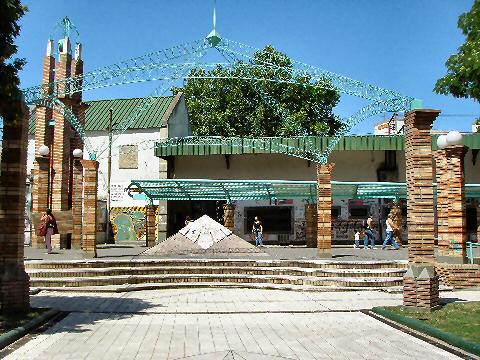
The first thing to do was find a map – which doesn’t really separate out Adrogué, no boundary definitions, but a large page of the entire partido. I had two plans in mind for this first visit – empanadas, and a walking tour of the principal plazas – the latter to be covered in a subsequent post…
I first delved slightly into the downtown and La Delicia neighborhood, the sort of green zigzag heading off to the upper right of the station (by the way, for whatever reason, the map is not oriented with either north or south at the top, but sort of east-northeast – the red line showing the train actually runs off to the north as it heads off the picture). I didn’t know about the famed hotel mentioned by Borges, and if it still exists, either actively or as a monument or museum of sorts, it will have to wait for a future visit.
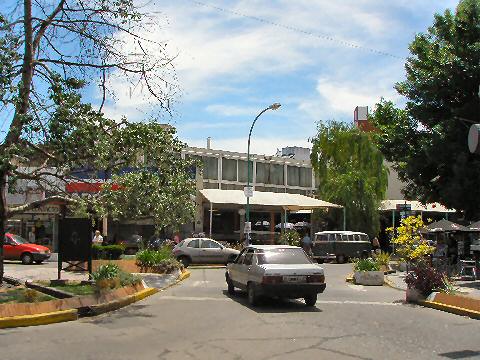
I then headed back to the station after orienting myself a bit to the commercial center, which is filled with little cafes and shops, and plenty of interesting looking restaurants – so this might well be a spot worthy of returning to for a bit of dining. From there, I headed to “the other side of the tracks”, into the western part of town…
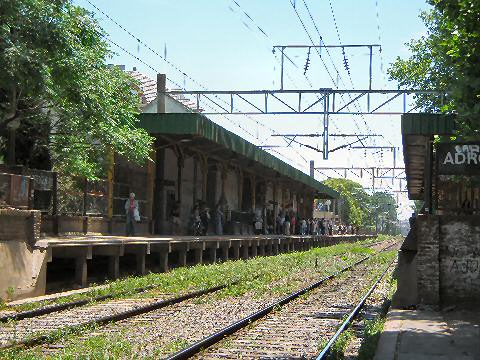
And, on to Las Empanadas de Las Abuelas, the yellow dot at the end of the green two block trek to the west, which turns out not to be anything like I pictured. I had visions of adorable grandmothers (abuelas) busily slaving away in the kitchen, serving up carefully hand crafted pies with a smile and a twinkle in their eyes. Instead, a fairly commercial seeming spot, with a couple of twenty-something whatever girls in attendance, you know the type. Perhaps a bit of eye candy as the delivery boy brings in tray after tray of empanadas from wherever those truant grandmothers are actually working, if they are.
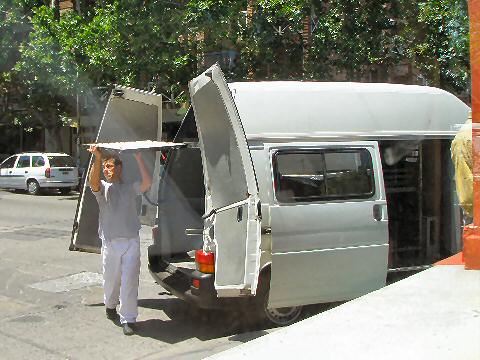
A query as to the specialties of the house yielded the one word response “empanadas”. An attempt to clarify that into baked or fried and one of the dozen or so choices of fillings yielded the same single palabra. Since clearly no guidance was going to be forthcoming, I forged ahead and picked baked, one each of the carne, carne picante, and the unusual palmitos y queso – hearts of palm and cheese. It seemed different enough to be worth trying. I also ordered an humita, a cousin to the better known, at least in other parts of the globe, tamal – but made with fresh corn added, cheese, and generally lightly sweetened.
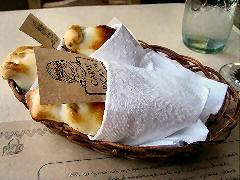
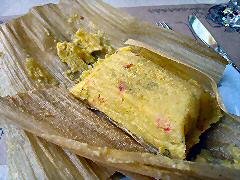
The verdict on these cute little pies, a basket of them, individually wrapped in napkins, each with a name card telling you what it is… well, I can’t say these are the best empanadas I’ve ever had. They’re good… quite good in fact. The crust is a bit flakier and almost more pastry-like than many. The meat filling is nice and savory and juicy – cut bits of steak, not ground beef, the basic version having a nice mix of olives and sweet peppers, the picante adding in a bit of hot pepper flakes – not many, and in fact, other than side by side I’d be hard pressed to have said they were different. The hearts of palm version interesting, in a sort of… if I hadn’t remembered ordering it I’d be surprised to find it in front of me way… I swear that in addtiion to the palmitos and a bit of cheese, it was filled with salsa golf – a mix of mayo and ketchup that’s wildly popular here. The humita, well, I should just stick with tamales… the former are simply too sweet for me most of the time. Nothing bad about it, it fits local tastes, but it’s not my thing… let’s leave it at that.
Copyright © 2026 SaltShaker. This feed contains copyrighted photos and text from SaltShaker. If you are not reading this material in a feed aggregator or by e-mail subscription, the site you are viewing may be guilty of copyright infringement. Please contact [email protected] so that I can take appropriate action.
Plugin by Taragana
]]>