In human life there is constant change of fortune; and it is unreasonable to expect an exemption from the common fate. Life itself decays, and all things are daily changing.”
– Plutarch, Greek Historian, Biographer, Essayist
Buenos Aires – Continuing on my series of Supreme Directors’ walks – we pick up, chronologically, though not geographically, with General José Casimiro Rondeau Pereyra – generally just referred to as Rondeau. Fittingly, perhaps, the street named after him is off in the southern barrios, punctuated by gaps, odd angles, the backsides of many buildings, and, not much of interest.
Likewise his life and career were checkered – born in Buenos Aires, moved shortly thereafter to Montevideo, where he went to school, returned to BA to enlist in the armed forces, and shortly returned to Montevideo to continue his military career. Captured by the British and sent to England, released when the British lost, went to Spain, fought in the Napoleonic Wars, returned to Uruguay to lead various campaigns, went to Peru to do the same, replacing “the Great Liberator”, José de San Martín as leader of the troops there. At age 42 he was elected in absentia as the third Supreme Director of the country, but refused to return to Buenos Aires, continuing to carry on his various military campaigns against the Spanish royalists in Peru – so Ignacio Álvarez Thomas was named acting Supreme Director and filled in for him during the entirety of his year’s term. After losing a couple of battles he was relieved of command, returned to Buenos Aires where he served briefly as provincial governor, and then was re-elected to the position of seventh Supreme Director, which he served as for about seven months until the government was toppled by a military coup. He returned to Uruguay where he led numerous military campaigns to eradicate the native population, was elected governor when Uruguay declared its independence from the rest of the union, until replaced by a rival, however, he continued to serve as the army’s general for the country, later as War Minister, and finally was killed during the siege of Montevideo in 1844, at age 71.
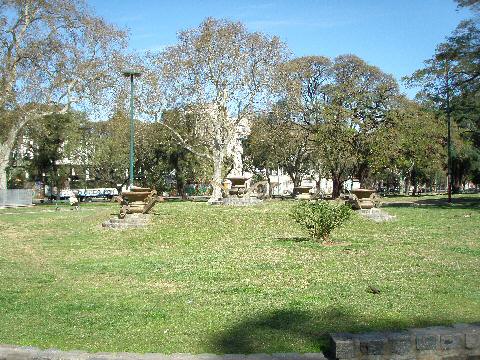
Our walk begins at Parque España, which technically isn’t along Rondeau, but is a good beginning point just a block away – named because at one point, the Spanish Embassy was located to one side of the plaza. The park, designed by Carlos Thays, and clearly at one time quite beautiful, was designed as the “southern botanical gardens” for the city, originally as the the Plaza de los Inválidos, or Invalids Plaza – so named because it was surrounded by half a dozen hospitals, several of which still exist. Today it’s a bit rundown, with a good number of homeless hanging about, as well as locals, and kids from the neighboring high school taking a break. The site was originally the home of the southern slaughterhouses for the city, connected with the nearby Mercado del Sur, the covered market that was originally on the site that is now Constitución Station. At one time there were half a dozen important sculptures in the park, most have been moved to the grounds of the nearby Centro Cultural del Sur and one to Parque General La Paz. I only noted this one remaining central sculpture, though various tour guides claim that a couple of the others remain in different corners of the park.
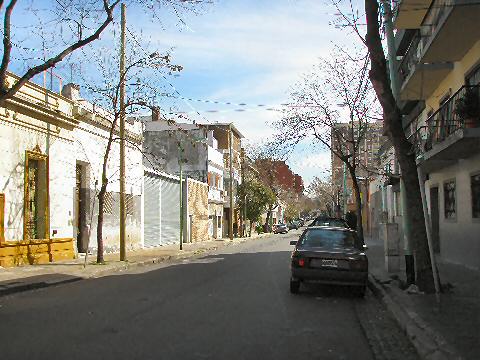
The street begins in the 1500 block, at Sáenz Peña, and is not particularly notable, mostly smaller one family homes with a few scattered apartment buildings.
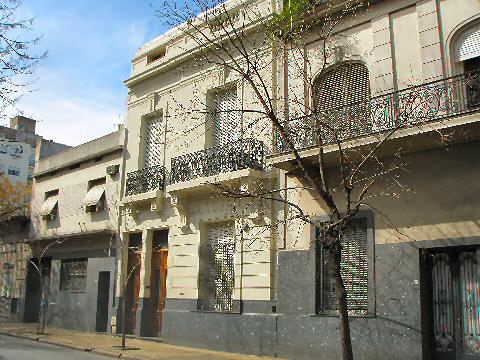
As I entered the second block, approaching the corner of Solis, I was immediately aware of the sweet aroma of chocolate, permeating the air. A bit of zigzagging about and on the cross street, and I found, along the block of Solis to the right, the offices of the Fenix Chocolate company, though the aroma was clearly emanating from a nearby building – I later found that the “factory” is at Solis 2022, just off the corner. I’ve heard the place is worth a visit if you can arrange it…
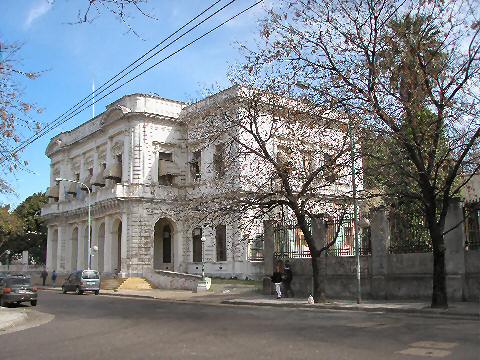
Within just a trio of blocks, Rondeau comes to its first gap, ending at the grounds of a Gastroenterology Hospital – quite a pretty building actually, though the newer additions on the grounds are basically ugly bunkers…
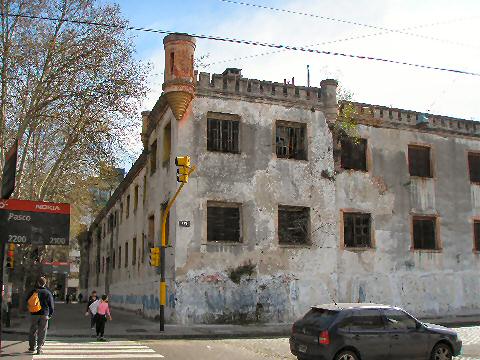
Picking up on the other side of the hospital, the first building you run into is the backside of the Caseros Prison which I mentioned on one of my Paint by Numbers walks…
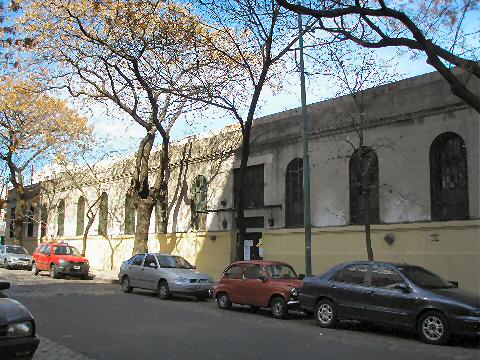
Another block on and the low, concrete block structure that is, I gather, a convent run school of some sort…
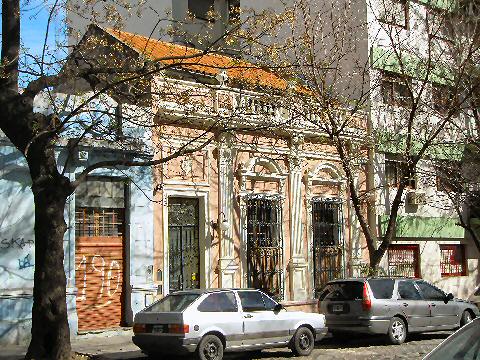
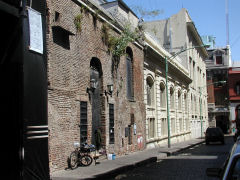
The street isn’t totally devoid of charm, though the homes that are most interesting standout precisely because they’re so out of character with their surroundings…
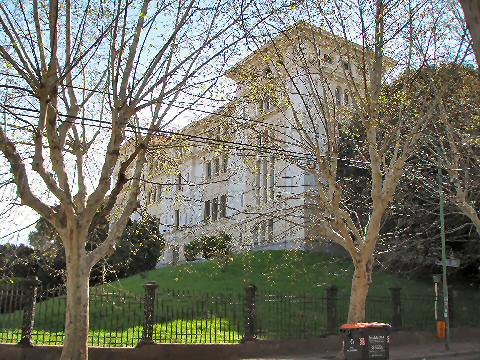
The side of the Instituto Bernasconi, also noted in the previous walk.
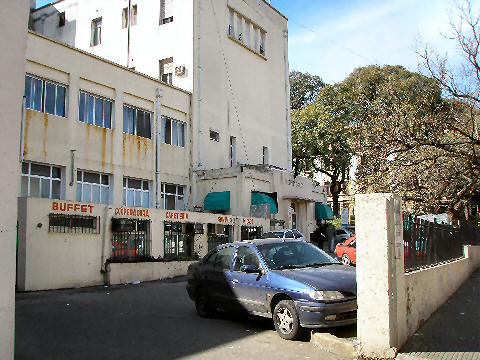
I suppose if one needed refreshment at this point one could stop at the comedor attached to the side of the Hospital Sarda, but I don’t think I would…
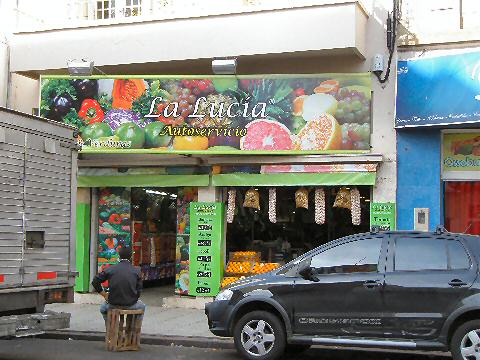
A moment’s side trip to the right on Av. La Rioja yielded up this interesting self-service fruit and vegetable market – not huge, but with great prices and selection – perhaps not worth the trip just for that, but an interesting side note.
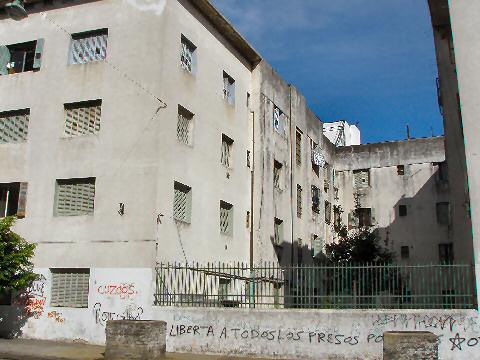
The back of the Casa Colectiva Patricios, a public housing project built in 1939.
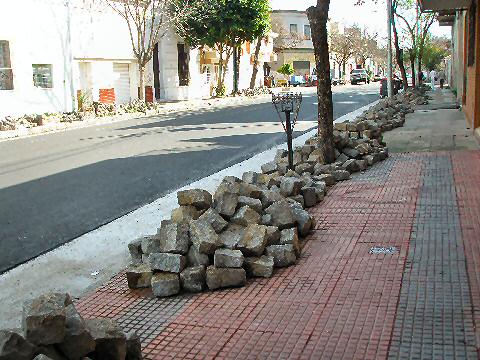
This has been going on all over the city – part of the new administration’s fix-em-up projects – the old cobblestones are being torn out and the streets paved. On Rondeau, from 3300-3500, plus the side streets were all underway.
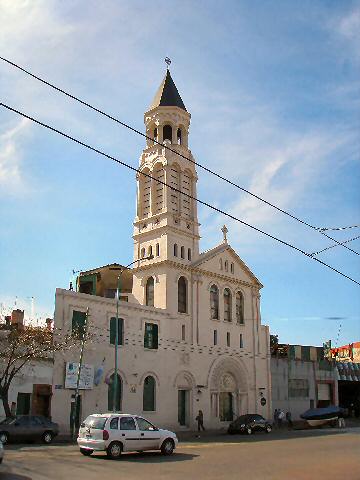
Rondeau reaches another gap, of about a block this time, where it crosses Av. Chiclana, an intersection where several streets come together. Nothing of great note here, though the pretty Instituto San Bartolome, which is an elementary and junior high school, stands out.
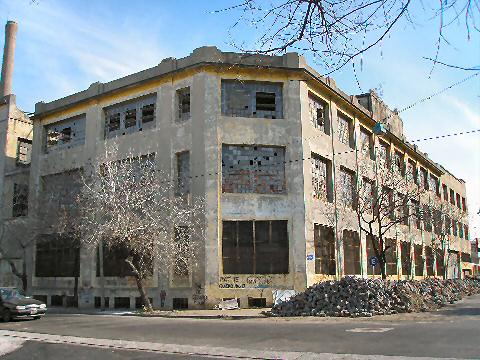
Within a few short blocks the street draws to an end at Av. La Plata, fittingly, perhaps, the last thing on the block is the abandoned hulk of the José Ferrarini factory, which at one time, though it declared bankruptcy in 2005 (my how it’s gone downhill in only three years) was one of the leading producers of metal wire in the city, if not the country.
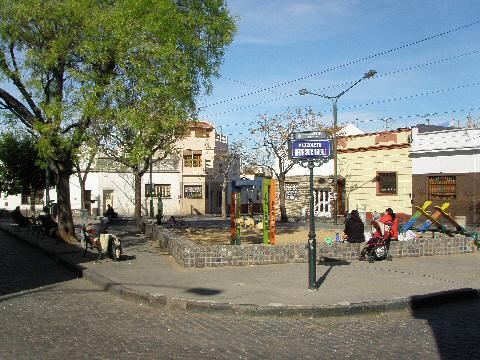
Though my “official” walk was at an end, I noted an odd street feature on my map just to the left of the street end – a small plaza surrounded by a small rectangle of streets, branching out in an “X” from the corners to a larger rectangle of streets. Sort of looks, in a two-dimensional view from above, like an emerald cut gemstone – regardless, I had to go peek, and found the pretty little Plazoleta Enrique Santos Discépolo, he having been a tango musician and composer who lived from 1901 to 1951. Quite popular apparently, with several well known compositions to his credit.
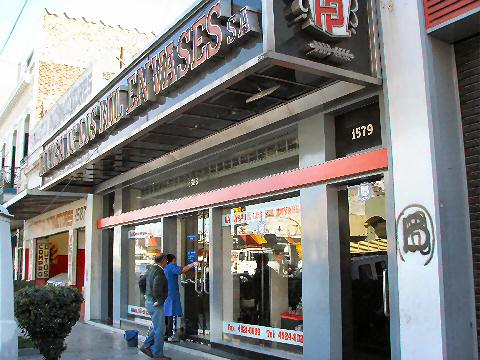
For the foodie, especially those who live here, perhaps the key thing to do is note La Casa de los Mil Envases, located a few blocks to the right along Av. La Plata at 1583, past the giant Carrefours San Lorenzo shopping center. If you need to can it, jar it, pack it in something, really, anything that is a container of any sort, from teeny tiny vials to big plastic boxes, in plastic, glass, and metal – this is the place to find it. Canning jars galore!
And, from there, just a few short blocks to the La Plata station on the E line…
Copyright © 2026 SaltShaker. This feed contains copyrighted photos and text from SaltShaker. If you are not reading this material in a feed aggregator or by e-mail subscription, the site you are viewing may be guilty of copyright infringement. Please contact [email protected] so that I can take appropriate action.
Plugin by Taragana




 ]]>
]]>“…born in a mansion and died in a shack…”
– from A Fierce Green Fire by Marybeth Lorbiecki
Buenos Aires – I’ve been to the barrio of Barracas (literally “shacks”) before, but always with a particular destination in mind. A friend suggested we take a real wander through the neighborhood – perhaps over time more than one, and we started off with a simple approach, printing out the city government’s self-guided walking tour – a good intro to many of the barrios in the city (a click of a button in the upper right corner and you can change the printout to English or Portuguese). They’re not detailed, by any stretch of the imagination – they tend to give a couple of sentences on each of maybe two dozen sites of interest – but it’s enough to take you on an interesting wander through an area – you’ll spot things on your own that aren’t included. Much of what they government tends to think will be interesting are sites where someone famous in the government world once lived or worked, or major companies that once were, or still are, king of the sandpile in their particular field.
In fact, the tour of Barracas begins with a former major cookie factory, segues in the middle to the remains of a major clothing manufacturer, and at roughly the endpoint is a former chocolate producer. On the way, you pass down streets where you are assured that once upon a time, the rich and famous and powerful lived. It’s a little hard to see that in this part of the barrio – what at one time were the quintas or mansions and grounds of some of the wealthiest families in the early years of the city, changed radically after the yellow fever epidemic of 1871, when those families headed for areas away from the river and neighboring areas where poor immigrants lived. The barrio became a collection of shacks – hastily erected structures – which housed the workers for the docks and factories that also began moving into the area. Today, most of that, at least in the part of Barracas that the walk guides you through, is a strange mix of old one and two family buildings of anywhere from poor to high quality construction, but nothing overly fancy, lots of churches, factories, and the blight of a zone that has no historic edifice protections – ugly apartment towers.
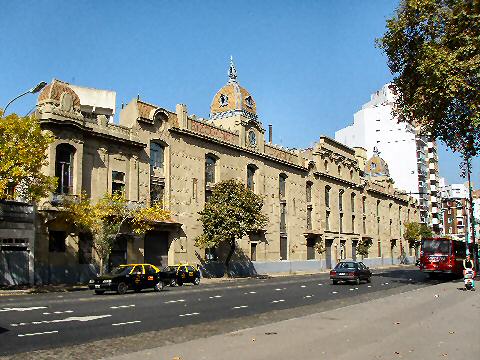
The tour starts just off of Parque Lezama in San Telmo, at the point where San Telmo, La Boca, and Barracas all come together. It heads down Av. San Martín and after a short strip of gas stations and McDonald’s, reaches the former cookie factor of Canale, which once, apparently “perfumed the entire barrio”. Poetic, if unlikely, given the size of the barrio and the stench of the waterfront…
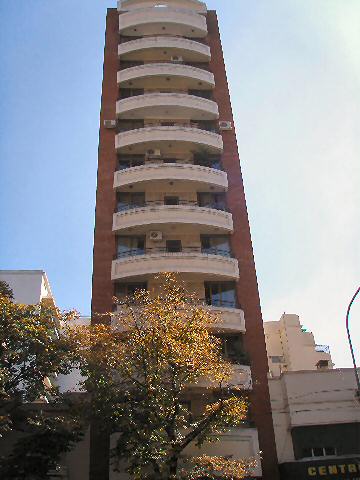
In the midst of one and two story homes and businesses, every block seems to have one or two apartment buildings jutting up like the proverbial sore thumb. The worst part, with most of them, is that some architect and some owner actually came to agreement on a set of plans for these, looked at them and said, “oh yeah, that looks good… and so in keeping with the neighborhood…”.
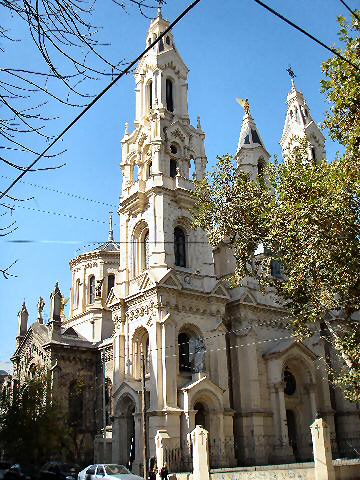
Amongst the many churches in the barrio, this one stands out for its stunning gothic influenced architecture, multiple chapels, and, most interestingly, it wasn’t built by the Catholic Church, but by the parents of a young woman who was assassinated by a spurned would-be lover. Many of the statues that grace the church are of secular figures who were part of the story, rather than the usual saints and prophets and such. The church has guided tours on Sundays at 11 a.m…. one of these days it will be interesting to go back for that… there’s a gated grotto in the churchyard that looks like it might be the mausoleum for the young lady herself.
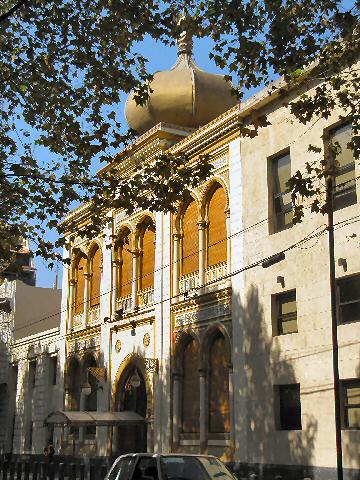
In the middle of a tree-lined street nearby is the surprising architecture of the Templo Israelita Or Torah, an orthodox, sephardic synagogue, with an onion dome, ornate doorways, and from a quick glimpse we were allowed of the inside, gorgeous Andalusian tiled mosaics in the entry foyer and a courtyard. Because of the Passover holiday no tours were being offered, but we were told we could call after this week and arrange for a tour. That’s a definite one to put on the list!
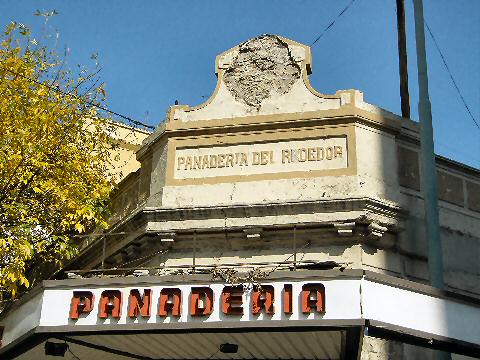
This old bakery caught my eye – clearly there for a long time, and I kind of like the juxtaposition of the old cast concrete sign with the “modern”, though still clearly fairly old, marquee sign.
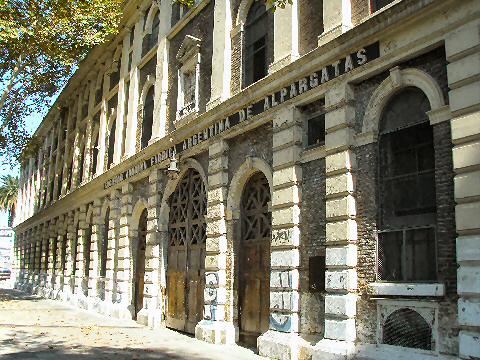
The tour continues to the site of what is/was one of Buenos Aires’ most important textile manufacturers, Alpargatas. Strangely, or maybe not, given the odd sense of what’s important, the tour talks about the factory building – which is a huge, full city block, plain, dingy grey, concrete structure with its only notable feature a strangely out of place art deco style entrance. Much of the building appears to now be an outlet store for the textiles and clothing. Of more interest, and not mentioned, is the opposite side of the street, where stand the remains of the offices of the company, a building that was clearly far more ornate, and which now is nothing more than a facade, behind which is an employee parking lot and a couple of warehouses.
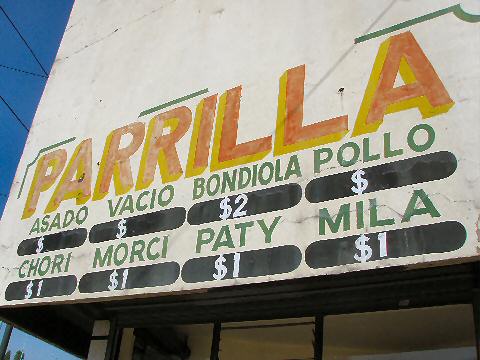
This local parrilla caught my eye – it’s little more than a lunch counter now with a couple of different sandwiches offered – at quite reasonable prices, no?
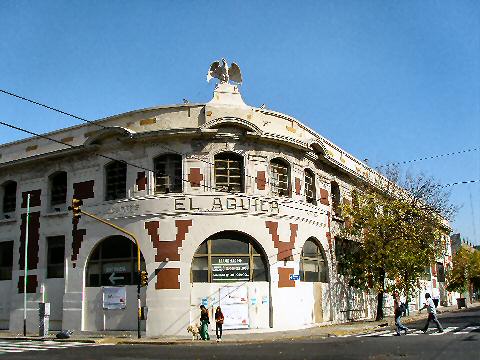
The former plant for the El Aguila (“the Eagle”) chocolate company, which still exists, though elsewhere. Most of this building has been converted to storage for the attached Easy store, more or less the local version of a Home Depot.
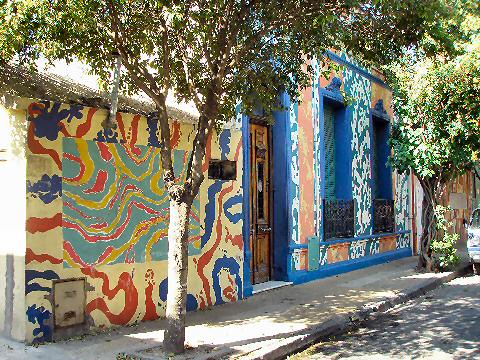
This was a fascinating find – I vaguely remember reading about this on a local travel site, though it didn’t really sink in at the time. This is a short, 3-block long narrow street (which the guide describes as a “sinuous alleyway”… I’m not sure that one 10° bend qualifies as sinuous, and it’s significantly wider than most alleys. A local artist, Marino Santa Maria, worked out a deal with the folks in the neighborhood (well, most of them, a few of the houses clearly had owners who didn’t go for the idea) to paint, tile, and in other ways decorate the homes along the street in interesting abstract swathes of color.
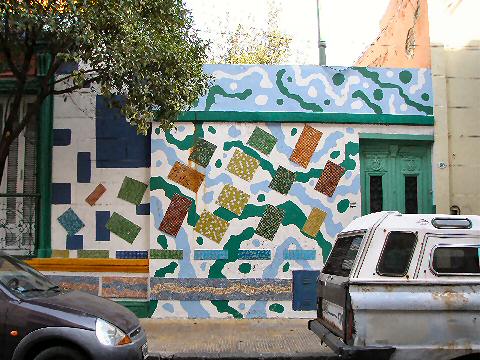
Each house is done up in a completely different fashion, which leads to a fun riot of color, that while perhaps not as striking (and not as easy to get to) as the Caminito in La Boca, which shows up on postcards and is a regular stop on local tours – mostly so that the guides can get a cut of the souveniers sold, is far more interesting for those with an eye for interesting street art to wander.
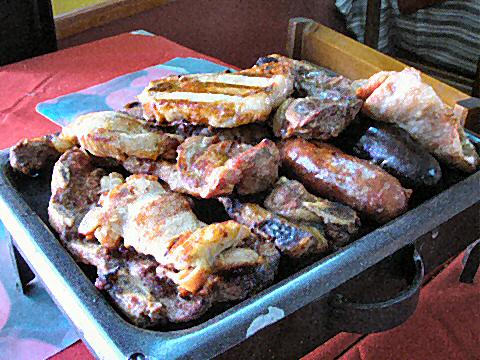
Conveniently located right at the end of the street, at the corner of Av. Suarez, is the parrilla Lanin, Suarez 1999, where we were served up one of the more jam-packed parrilladas for two that I’ve encountered – so much that between two of us we only made it through half, the rest we carted away – and roughly a mere 20 pesos apiece. Not only that, but it was really a very good mixed grill, with chorizo, morcilla, kidneys, intestines, steaks, pork chops, and ribs – well seasoned, and offered up with a decent, very garlicky chimichurri. The place attracts, at least during our lunch, a mix of local factory workers and businessmen, many of whom probably come there nearly daily for lunch. [Closed]
There’s a whole lot more to the barrio, which is actually one of the bigger ones in the city, than this short wander, but it was an interesting introduction to a portion of it….
Copyright © 2026 SaltShaker. This feed contains copyrighted photos and text from SaltShaker. If you are not reading this material in a feed aggregator or by e-mail subscription, the site you are viewing may be guilty of copyright infringement. Please contact [email protected] so that I can take appropriate action.
Plugin by Taragana
]]>In November 1889, the young army officer Felicíssimo do Espírito Santo Cardoso handed a dismissal letter to Dom Pedro II and conducted the Emperor to the ship that would carry him into exile. That act was more symbolic of the change from monarchy to republic than Field Marshal Deodoro’s cry of “Long live the Republic!” The change was, however, limited to the departure of the Emperor and the inauguration of a field marshal as president. The new regime did not transform the aristocracy into a republican society, and Brazil continued divided between a privileged minority and the scorned masses. We proclaimed the Republic but did not construct it. The elected presidents were members of a republican aristocracy, and they continued governing for it. They were not elected from the people and for the people. Our Republic was more unequal than the empire had been, more unequal than any monarchy. Royal families resemble their people more than our governing officials and their families resembled the Brazilian people.”
– Cristovam Buarque, Brazilian Senator and Economist
Buenos Aires – It’s been a very long time since I even hinted at my Paint By Numbers scheme of touring odd spots in town. A week or so ago I simply decided one day to resume it with a wander down the street 15 de Noviembre de 1889, the date that Brazil was, officially anyway, turned from an empire into a republic. At least, I’m assuming that that was the seminal event for naming this street – nothing in domestic history here caught my eye as a likely candidate, and it seems an auspicious enough event to have had a street named after it.  The street runs from the barrio of Parque Patricios, nearly at the park itself, right into the heart of barrio Constitución, in fact, ending right at the back of the main train station there, interestingly, in a nerdy sort of way, parallel to Av. Brasil, just two blocks away, for its entire length. In the course of checking out the history of various things, I discovered a probably not well known bit – for a four day period, starting on November 15, 1889, the first four days of Brazil’s existence as a republic, they used this “imitation United States” flag based on their own colors, and then promptly reinstituted a redesigned version of the earlier empire’s flag.
On to the tour… the street starts, or at least the end I started at the corner of Catamarca, in front of the huge Instituto Felix Fernando Bernasconi, a school which takes up two blocks on a side, some great archictectural details which, unfortunately, I wasn’t able to enter the grounds to get good shots of, and far more statuary than most schools tend to have. From there, the street starts off as a residential one, mostly two-story, one-family homes, which only stretches for a short four blocks. At that point, on one side we hit the old Caseros prison, which is being torn down – in fact if you check the link there to Wikipedia, you’ll see that a huge amount of work in demolition has been done in comparison to my photo below; and on the other side, the Garraham hospital, a public pediatric hospital, which seems to be a mix of some renovated modern bits and some truly rundown wings that at first glance, as you’ll see, I thought were simply occupied by squatters – apparently not. After this several block stretch, the neighborhood turns predominately residential again, with a bit of commercial, and a mix of homes and apartment buildings, also noticeably more rundown as I headed into Constitución. And finally, after a mere 16 blocks, ends at the back of the train station.
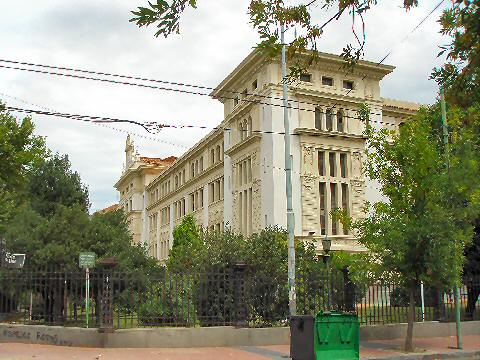
The start of my walk at the massive Instituto Felix Fernando Bernasconi
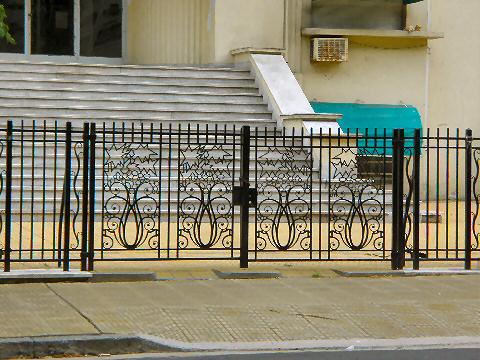
Though not actually along 15 de noviembre de 1889, this art deco gate on the neighboring Hospital Sarda, a maternity hospital, caught my eye.
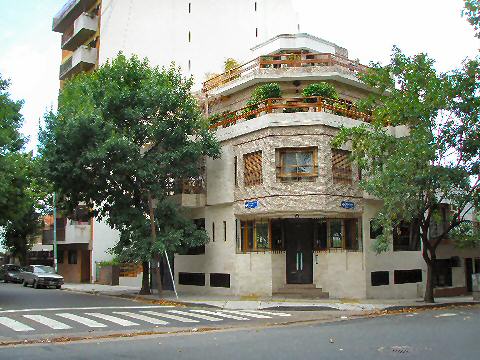
Beginning at the corner of Catamarca with this lovely home with garden terraces, a slightly larger but fairly typical home for the first four block stretch.
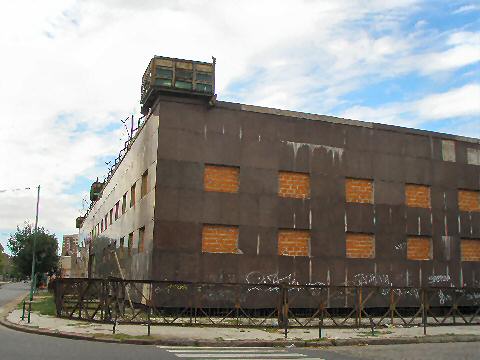
The Caseros Prison, the main structure already demolished, with just the surrounding low level structure still standing.
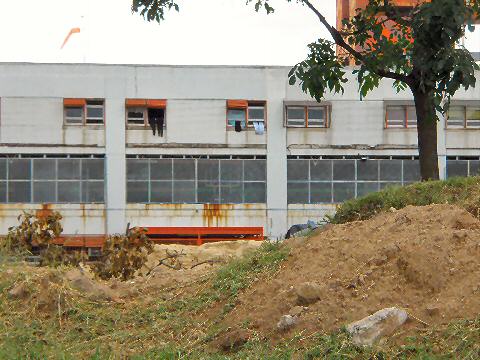
The unfortunately most visible wing, at least from this side, of the Hospital Garraham, a pediatric hospital – it wasn’t until I saw people and ambulances coming and going from various driveways that I realized it was actually still an active hospital and not an abandoned one with squatters.
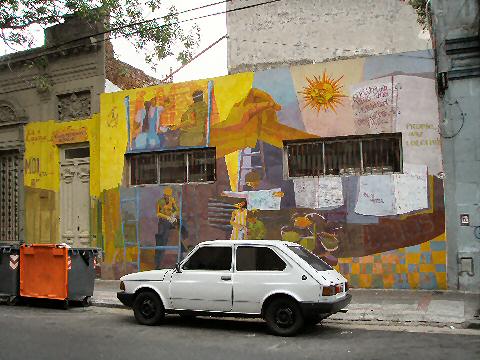
As I headed into Barrio Constitución, the neighborhood takes a turn, poorer, but in some ways, more colorful. Nothing really to say about these buildings, they’re just amongst the ones that caught my eye.
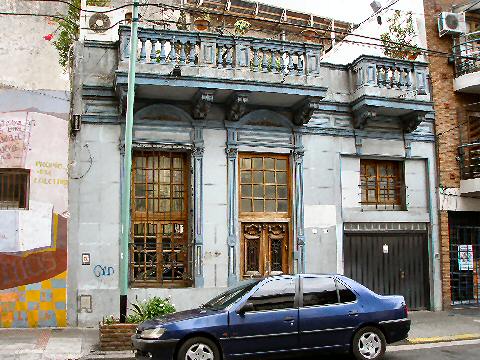
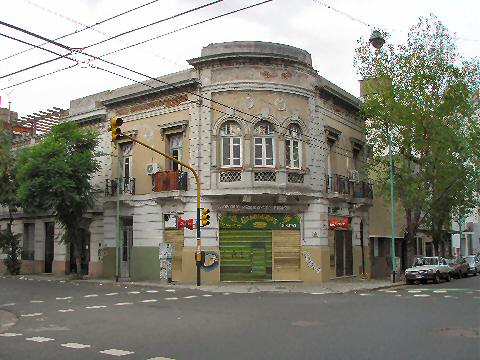
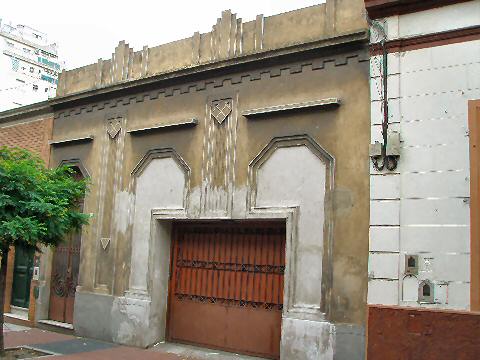
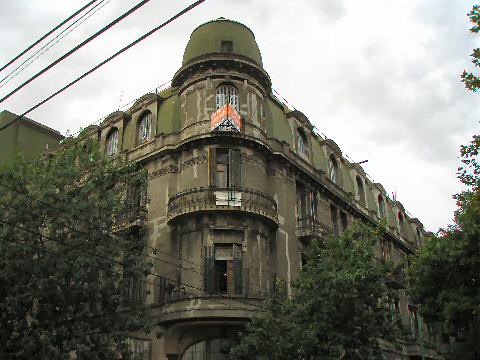
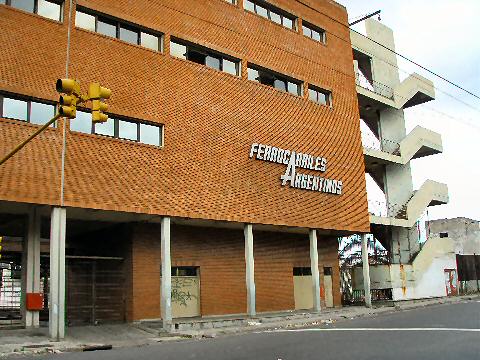
And, the street ends at the back, or the offices anyway, of the Constitución train station.
Copyright © 2026 SaltShaker. This feed contains copyrighted photos and text from SaltShaker. If you are not reading this material in a feed aggregator or by e-mail subscription, the site you are viewing may be guilty of copyright infringement. Please contact [email protected] so that I can take appropriate action.
Plugin by Taragana
]]>He who interrupts the course of his spiritual exercises and prayer is like a man who allows a bird to escape from his hand; he can hardly catch it again.”
– St. John of the Cross, Christian mystic
Buenos Aires – I’m a day or two behind Robert at Line of Sight in writing up our cultural adventure this past weekend. We joined a tour of the Santa Casa de Ejercicios Espirituales, a currently operating convent in the heart of Constitución. The tour is offered the third Sunday of each month, and we were regularly assured that we were amongst the privileged few to have ever visited the convent… well, no one was turned away, there were probably about 60 of us on the tour, they do it once a month and have for years… you do the math. The 6 pesos entrance fee which is stated as voluntary is apparently only as voluntary as their giving you an entrance ticket, i.e., you get a ticket in exchange for your fee. I didn’t see anyone getting a ticket without anteing up the cost. There are also a couple of opportunities to spend a bit more – the central plaza has a gift table setup, along with food and drink for sale, and on the way out, fresh bread is offered for sale.
I don’t know that I have a lot to add to what Robert said, perhaps some more photos. We were informed upfront that photography was only permitted in the patios, not indoors, as it would apparently upset the convent sisters, not that we saw many of them on our tour. I being the irreligious rebel that I am, kept my camera in hand throughout, quietly snapping away from hip level, so there are a few strange angles (and alot of shots that simply didn’t come out), whereas he was carrying a full sized camera and couldn’t really get away with it. Oh the peril I put my soul in for your edification…
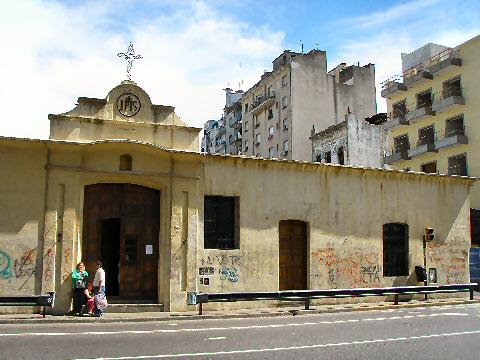
The building takes up a city block, built around a series of nine patios – a large central one, and eight smaller ones. It’s actually surprising how much beautiful greenery and detail there is inside, especially given how nondescript the exterior is. Not quite true, it’s actually quite descript… it’s ugly on the outside, with tons of graffiti and little maintenance – I guess, perhaps, it’s a way of hiding the treasures that are inside…
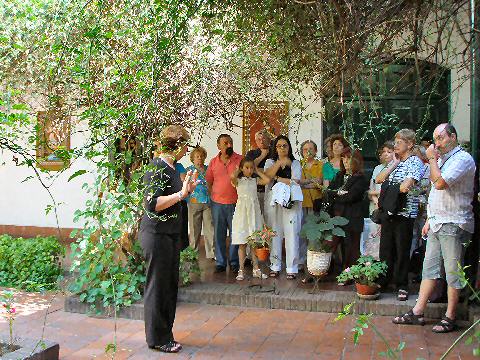
We began in a light filled patio, with a guide who not only explained everything in detail, but who continually quizzed her audience on their knowledge of dates, spiritual leaders, and catechism. What she would have done had she known there was a Jew amongst her flock…
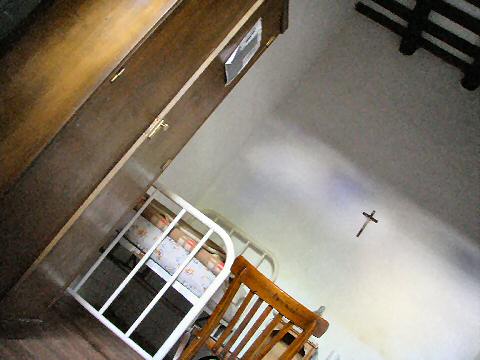
The convent sisters stay in “cells”, which are ostensibly much like this one – we didn’t have access to the parts of the convent where they live, not surprisingly. However, there are a series of cells offered up to the public for a mere 45 pesos a day, room and board inclusive, for those who want to get away to meditate, reflect, or just hang out.
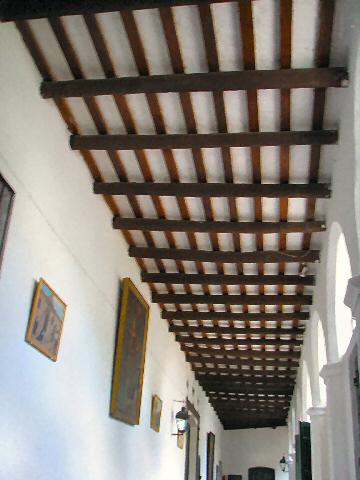
Part of the secrecy is probably the incredible art collection. There’s no question they have a ton of it, lining every passageway. And much of it is from the early 1800s when the convent was in its heyday.
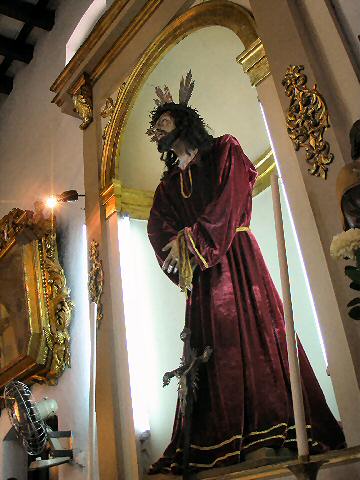
There are, of course, numerous statues to that Jewish guy who started this whole thing…
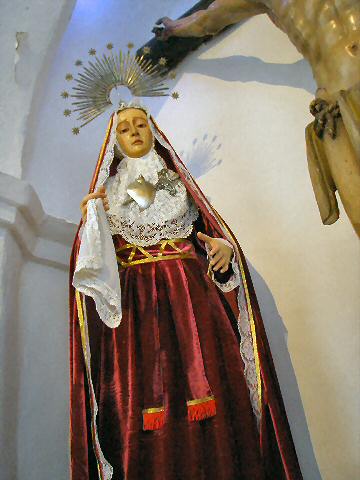
…and his mom.
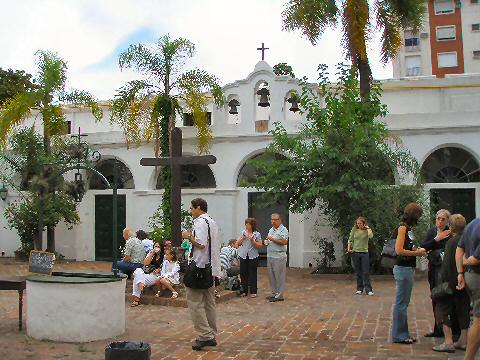
The main patio has an old well, some nice bells, lots of lovely plants, and the gift “shop”…. We sampled a torta frita, a fried flatbread that was pretty dense and tasteless. Luckily the bread at the end of the tour that’s available for sale is far better tasting.
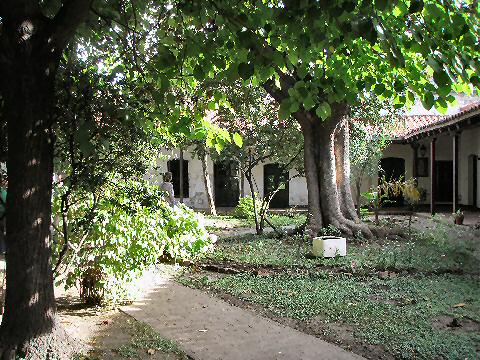
One of the last patios to be visited is just completely dense with old trees and beautiful walkways – probably my favorite of the tour.
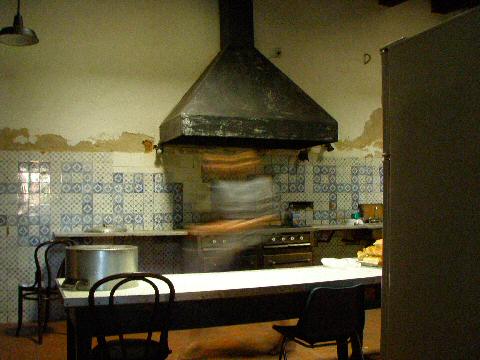
And, the main kitchen, where bread baking takes place, at least on days when there are visitors – it wasn’t clear if this was the kitchen used by the sisters on a daily basis, it didn’t really look like it, but it’s hard to say. By pure chance, one of them walked through as I was snapping this photo (from the last patio) – but since I wasn’t using a flash, she became a blur of motion that I kind of thought looked cool.
Copyright © 2026 SaltShaker. This feed contains copyrighted photos and text from SaltShaker. If you are not reading this material in a feed aggregator or by e-mail subscription, the site you are viewing may be guilty of copyright infringement. Please contact [email protected] so that I can take appropriate action.
Plugin by Taragana
]]>
Copyright © 2026 SaltShaker. This feed contains copyrighted photos and text from SaltShaker. If you are not reading this material in a feed aggregator or by e-mail subscription, the site you are viewing may be guilty of copyright infringement. Please contact [email protected] so that I can take appropriate action.
Plugin by Taragana
]]>