“There is around the name of Garibaldi a halo which nothing can extinguish: a whole life devoted to one object – his country; a name consecrated by deeds of honor, first abroad, and then at home; valor and constancy more than admirable; simplicity of life and manners which recalls the men of antiquity; all the most mournful trials and losses manfully endured; glory and poverty! Every particular relating to such a man is precious.”
– Giuseppe Mazzini, Italian politician
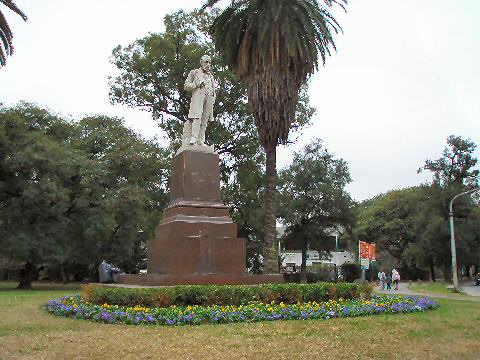
Buenos Aires – Sometimes you just don’t feel like a long walk. Maybe you only have a short few moments on a lunch break, or stepping out of the exhibition center, but you’re here in Buenos Aires, and you know you need to see a sight or two, and there’s one, right there in the middle of the street. We’re at Plaza Italia, a confluence of three major streets, the hub for many a bus line, and an easy reference point when you’re meeting up with acquaintances for whatever you’re up to next. To the east, coming to a point between Av. Santa Fé and Av. Las Heras, is the stretch of the Botanical Gardens; to the north, between Las Heras and Av. Sarmiento, the Municipal Zoo; to the west, the La Rural exhibition complex, and to the south, all of Palermo Viejo awaits. And in the center, in a pretty little plaza, Giuseppe Garibaldi watches over it all.
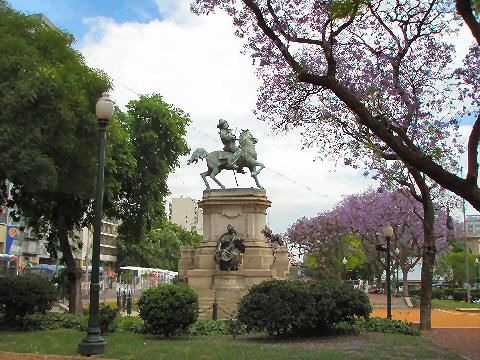
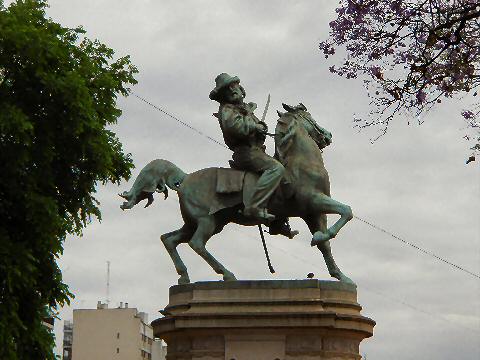
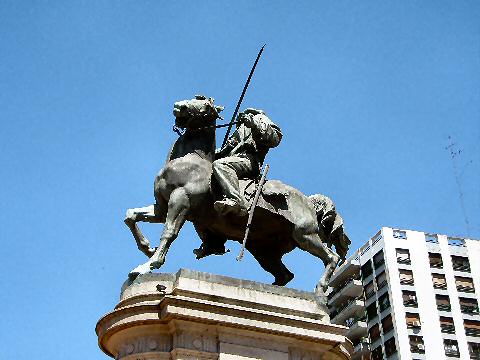
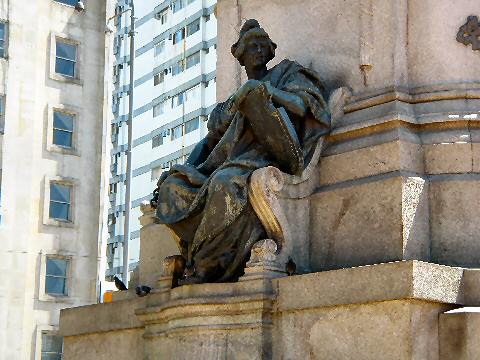
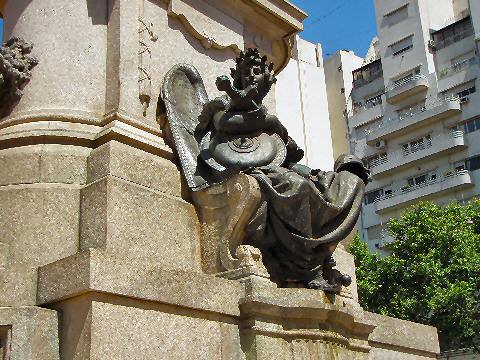
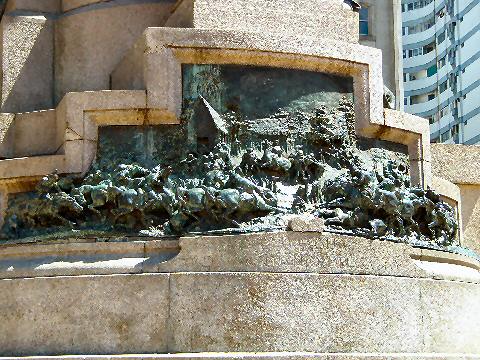
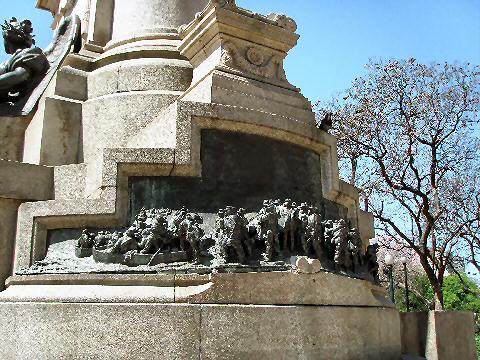
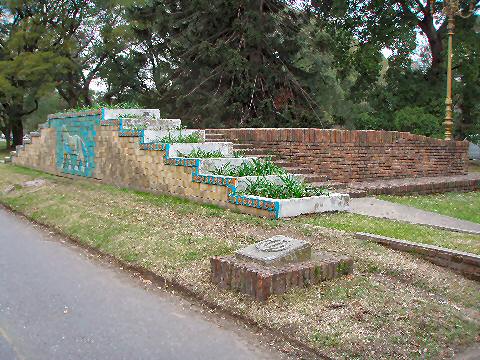
The rest of Plaza Italia is taken up by a nice array of bushes, trees, and benches. There is a small brick, orange glass block and tile shrine to the Virgin of Lujan (the guardian of travelers if I understand it all correctly). And see, hardly any walking.
Copyright © 2026 SaltShaker. This feed contains copyrighted photos and text from SaltShaker. If you are not reading this material in a feed aggregator or by e-mail subscription, the site you are viewing may be guilty of copyright infringement. Please contact [email protected] so that I can take appropriate action.
Plugin by Taragana




 ]]>
]]>“The people? They are the dust you draw your circles in. THOSE are the people! Sicilians are hopeless. I mean exactly that! Nothing changes here… EVER!”
– Abbot Manfredi, in The Sicilian (1987)
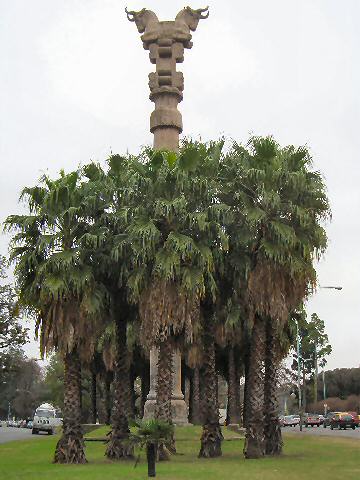
Buenos Aires – As I mentioned the other day, I found myself walking around Plaza Sicilia, on the chance of sighting a Statue of Liberty replica that the city’s database asserted was there. As long as I was mucking about and checking out statues, I figured, why not cover the plaza? Part of it I’ve mentioned on occasion – the Jardín Japonés, though it occurs to me I’ve never really done a writeup on it – not that it’s a particularly outstanding one – it’s about what one might expect going in. Perhaps one day… back to the Plaza as a whole – it’s more or less bounded by Avenidas Libertador, Sarmiento, Alcorta, and Casares, at the far eastern edge of Palermo and the Parque 3 de Febrero. There’s a long, narrow traffic island running along the Alcorta side, and smack dab in the middle of it is what appears to be the sort of launching point for the plaza – this little dias with a Persian Lion (that strangely seems to be diagrammed for butchering), followed by a towering pedestal with two bulls’ heads atop, called the Column of the Persian Temple (a replica of the column at the Palace of Persepolis), gifts of the Iranian government to the city of Buenos Aires. I’m not even sure that these are considered part of Plaza Sicilia, given that they’re on the traffic island. One of the two plaques in front of the lion has been removed, the other is the Iranian coat-of-arms.
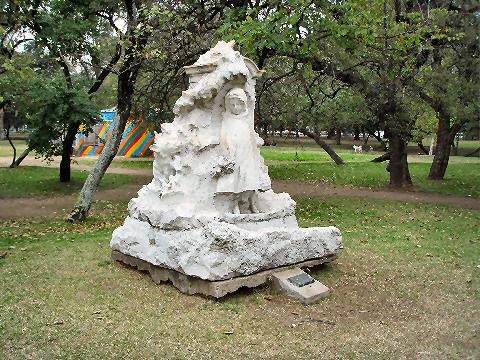
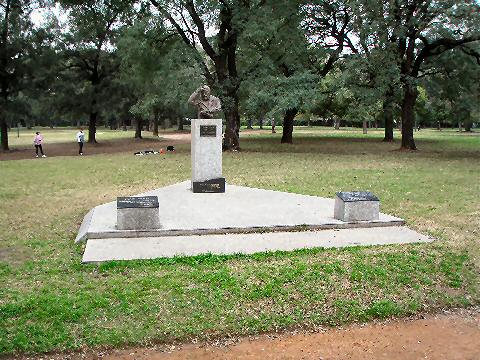
From there, entering the plaza proper, the next encounter is with the Caperucita Roja, or Little Red Riding Hood. The sculpture dates from 1937, and is by French scupltor Jean Carlus. Originally the work was located in Centro, in the Plaza Lavalle, facing onto Av. Córdoba, but was moved to this spot in 1972, where it balances atop a piece of concrete removed from the first site. More than once in its history, the bronze plaque that sits in front of the statue (and that of most of the monuments in this park) has been stolen and had to be replaced – whether the plaques (and sometimes whole busts or statues) are being stolen for their sentimental or historical value, essentially souvenirs, or as sources of scrap metal, is up for debate.
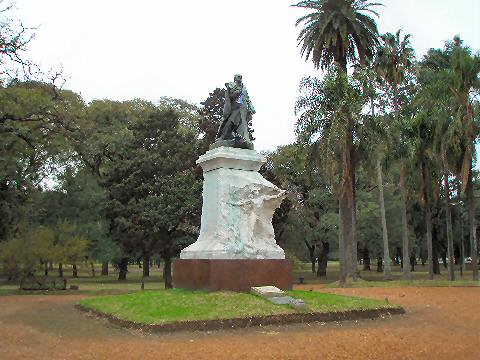
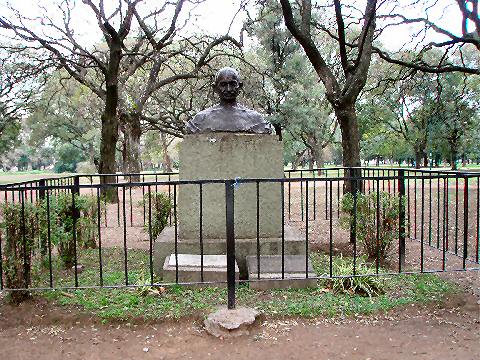
In 1998, on the 50th anniversary of India’s independence, that nation gifted a bust of Mahatma Gandhi to the city of Buenos Aires, and it is positioned along Libertador not far along to the east. The statue is a work by Indian sculptor Ram Vanji Sutar, who also sculpted the bust of Gandhi that sits at East 21st Street and 2nd Avenue in Manhattan, along with many statues that grace government buildings throughout India.
Copyright © 2026 SaltShaker. This feed contains copyrighted photos and text from SaltShaker. If you are not reading this material in a feed aggregator or by e-mail subscription, the site you are viewing may be guilty of copyright infringement. Please contact [email protected] so that I can take appropriate action.
Plugin by Taragana
]]>