“We would drive up the Avenue, but we haven’t got the price
We would skate up the Avenue, but there isn’t any ice
We would ride on a bicycle, but we haven’t got a bike
So we’ll walk up the Avenue
Yes, we’ll walk up the Avenue
And to walk up the Avenue’s what we like”
– Judy Garland, lyrics from A Couple of Swells
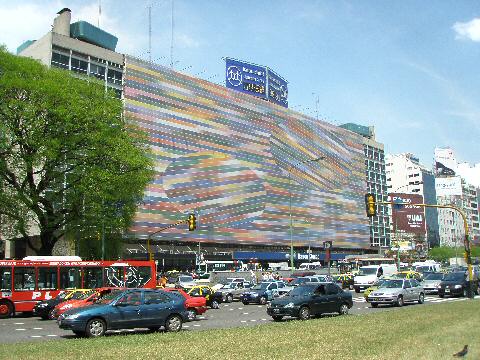
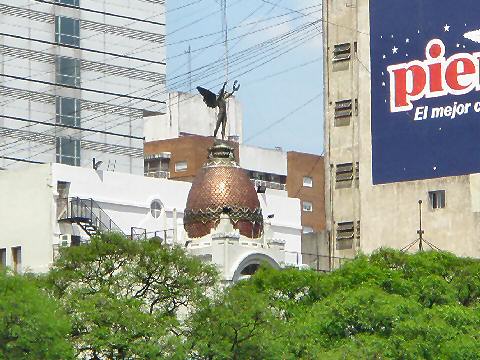
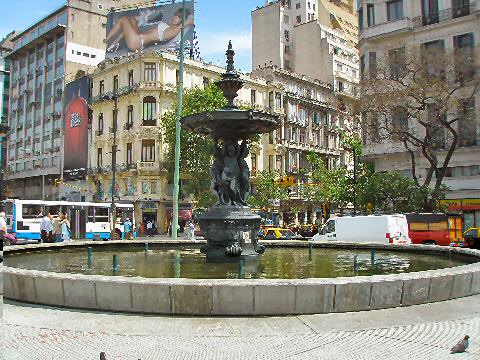
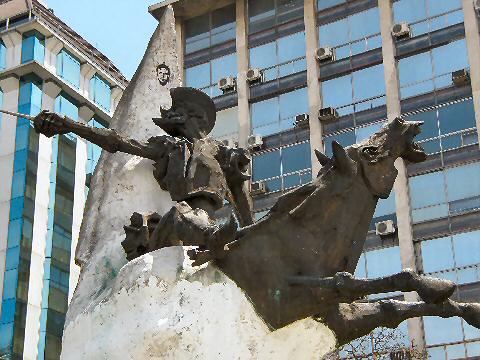
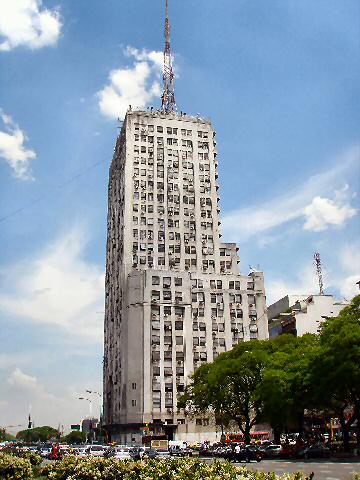
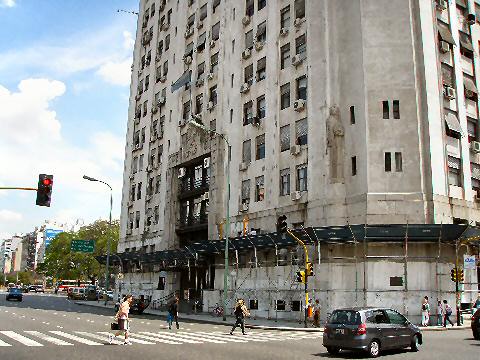
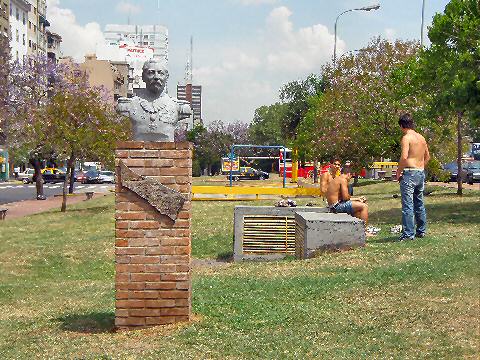
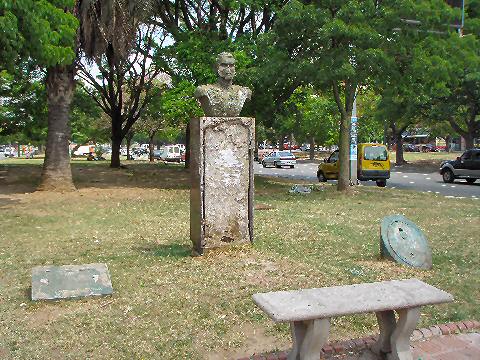
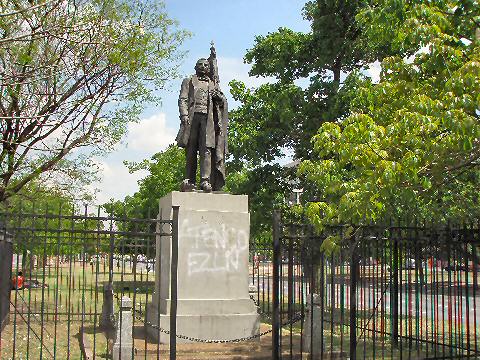
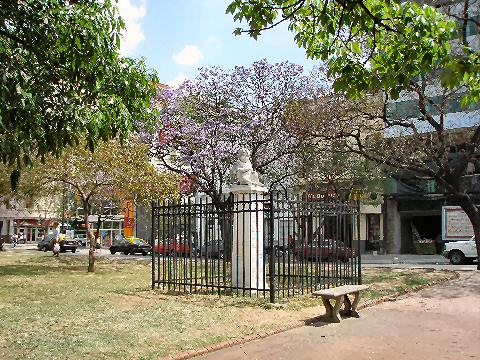
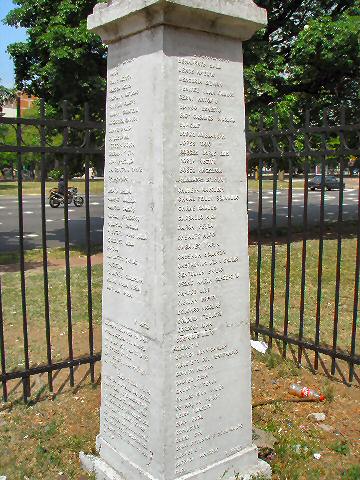
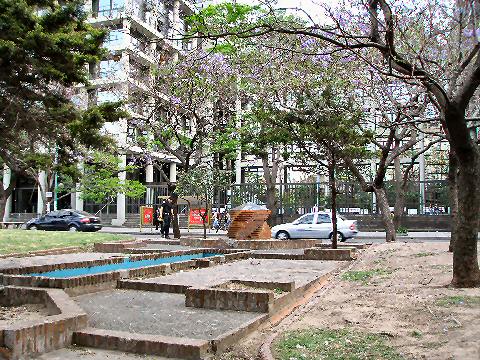
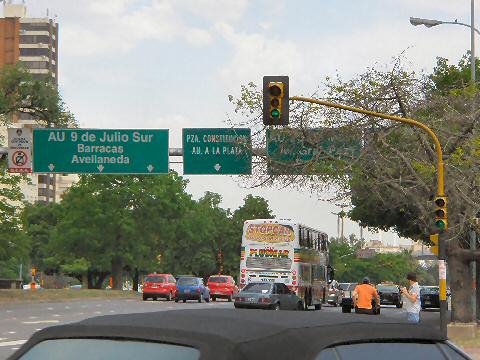
Buenos Aires – When we left off on walking on the last post, we’d made it to the plaza around the Obelisco as we meandered Av. 9 de Julio. There’s really no more to be said about the avenue itself that I didn’t say in that post, other than to note that as one moves further south and away from the downtown area, the street becomes more a mix of residential and commercial, lower height buildings, and the traffic islands tend to be greener and with less in the way of benches, paved pathways, etc…. On to the photos.
Copyright © 2026 SaltShaker. This feed contains copyrighted photos and text from SaltShaker. If you are not reading this material in a feed aggregator or by e-mail subscription, the site you are viewing may be guilty of copyright infringement. Please contact [email protected] so that I can take appropriate action.
Plugin by Taragana




 ]]>
]]>“A lot of people are afraid of heights. Not me. I’m afraid of widths.”
– Stephen Wright, comedian
Buenos Aires – While it may not be the most commonly asked question in Buenos Aires, which is probably “Where do I get the best steak?” (an unanswerable query if ever there was one), it certainly comes up a lot – “Is Avenida 9 de Julio really the widest street in the world?” (Just for numbers sake, though there’s disagreement, and it depends where along the avenue, but roughly, it’s 110 meters wide and has 18 lanes of traffic.) But there’s not a simple answer. If you include highways, then no, there are wider highways, both in terms of number of lanes (Highway 401 outside of Toronto has 21 lanes) and physical width. But let’s limit it to streets and avenues. There’s some contention that the avenue that connects the Forbidden City to Tian’anmen Square in Beijing has more lanes, but I haven’t seen a definitive answer. There’s an avenue in Brasilia, Brazil, which is physically wider at 250 meters, and another in Canberra, Australia at the same width, but, both have fewer traffic lanes – the one in Brazil, amazingly at that width, apparently only has four lanes of traffic!
Still, like many things in this country where the people are as proud of their patrimony and claims to fame as they are critical of their own national problems, let’s face it, it’s a really wide street. It’s home to a wide range of architecture, from the Beaux Arts style of the French embassy at its northern end on through modern office buildings, block academic styles, and into low height, simple commercial buildings, almost strip-mall like, at its southern terminus, where it becomes a highway in its own right. I spent a day walking the 26 blocks that constitute the avenue section, with an eye primarily on the wide range of sculptures and monuments that freckle its traffic islands. It’s a somewhat zigzagging walk to make, as at moments the traffic islands are in the center of the whole thing, and at other times the central median narrows to nothing and the side islands widen out into small plazas. A good percentage of the statuary is not identified by inscription or plaque, but I’ve done my best to ferret out information where I could. Just because of the quantity of information, I’ll break this post into parts over the next week or so.
The avenue was planned out for construction in 1911, but the work on it did not begin until 1937. Within four months, the first five blocks, from Mitre to Tucumán were open, but then it took more than forty years to complete the avenue – perhaps a claim to have been the slowest avenue to be built would be in order? It’s name, by the way, commemorates July 9, 1816, Argentina’s “birth-date” – though when planned in 1911, it was to be called Ayohuma after a major battle in the struggle for the country’s independence.
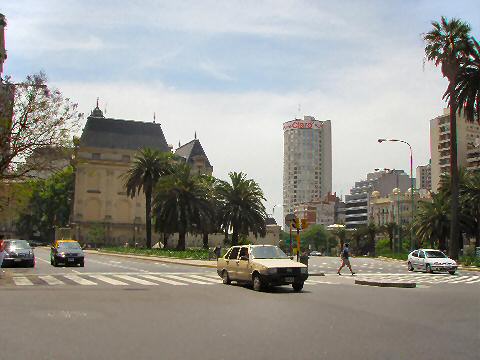
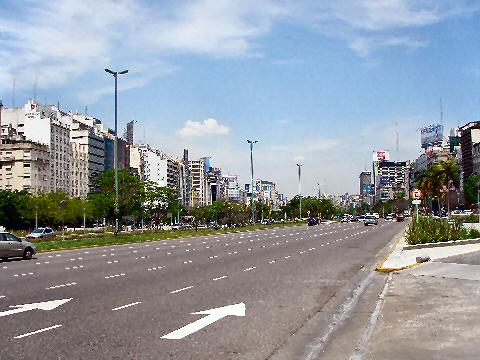
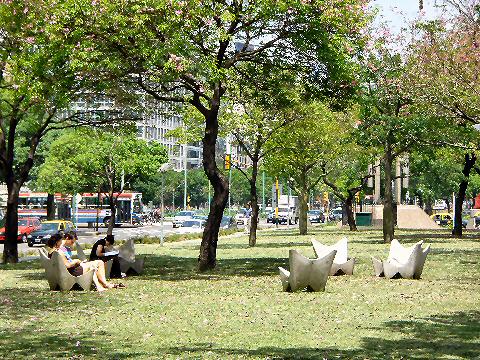
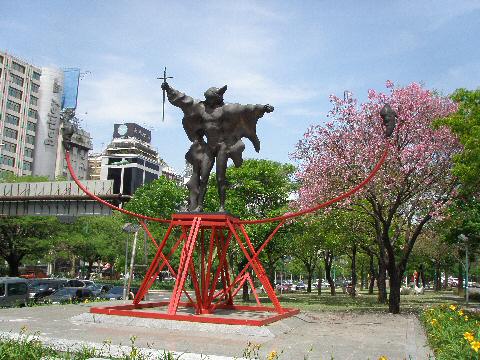
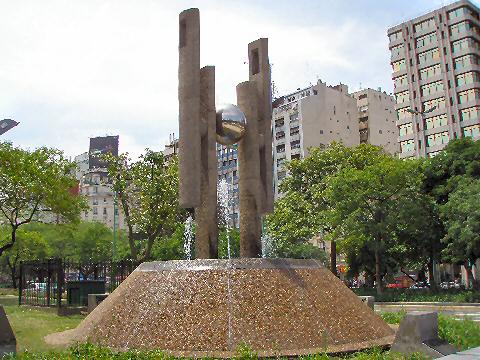
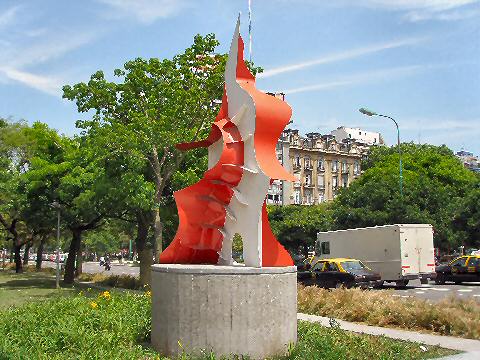
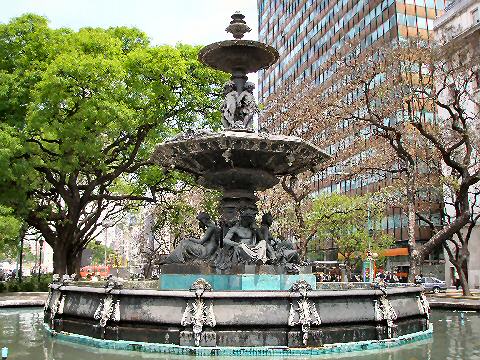
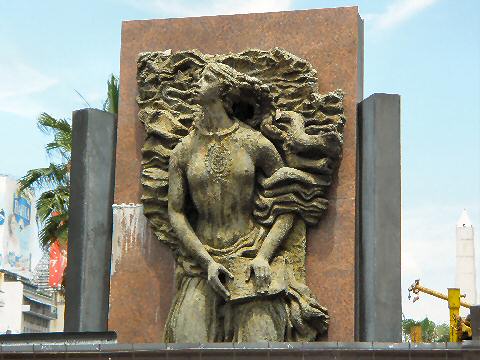
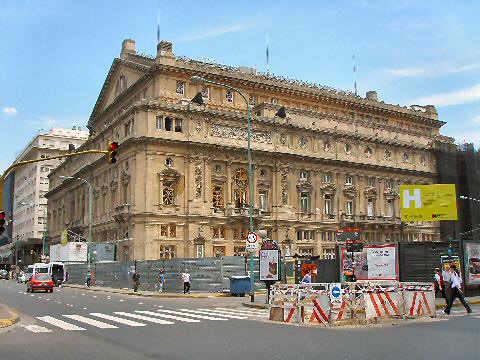
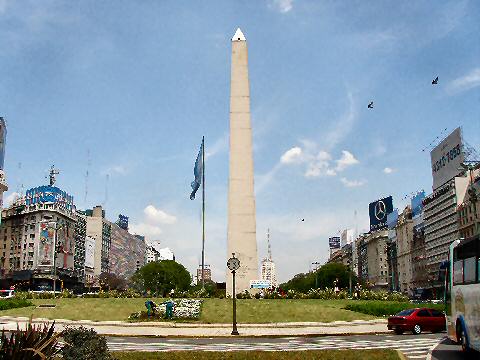
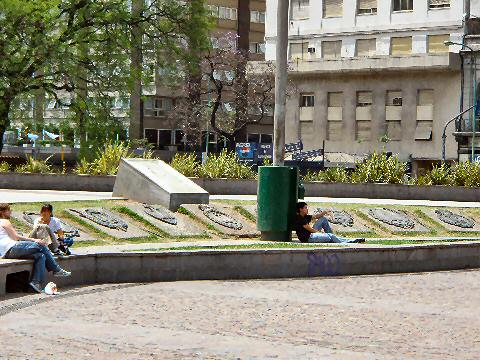
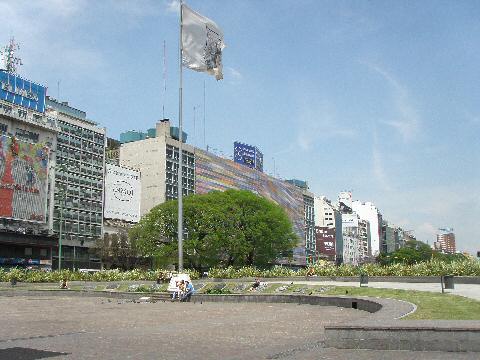
I’m going to leave off here, at the “central marker” point of the avenue, and pick this up in another post….
Copyright © 2026 SaltShaker. This feed contains copyrighted photos and text from SaltShaker. If you are not reading this material in a feed aggregator or by e-mail subscription, the site you are viewing may be guilty of copyright infringement. Please contact [email protected] so that I can take appropriate action.
Plugin by Taragana
]]>If one does not know to which port one is sailing, no wind is favorable.”
– Seneca, Roman philosopher
Buenos Aires – I generally avoid the Puerto Madero area of town – it’s a multi-block strip of renovated docks and warehouses, akin to something like the South Street Seaport in New York, filled with overpriced apartments, office buildings, and tourist-trap style restaurants. That said, some of those restaurants, despite being designed to extract high numbers of dollars and euros from the wallets of visitors, are actually pretty good. I’m not quite going to say “they’re worth the price”, because to date I haven’t found one that I couldn’t pretty much get the same experience and quality elsewhere in town for a significantly lower price, but at the same time, there’s a certain ambiance of being along the peaceful docks, with folks strolling hither and thither, catching the rays, etc. I had to be over that way one day last week, and decided to walk the length of what’s known as Puerto Madero Este, or “the other side”.
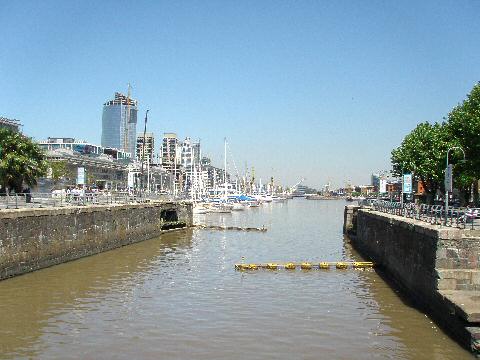
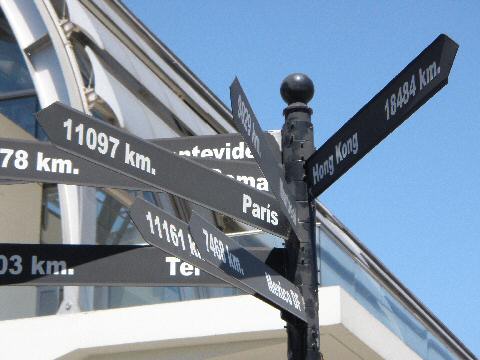
The first thing, of course, is to get your bearings… at least in relation to the rest of the world’s capitals…
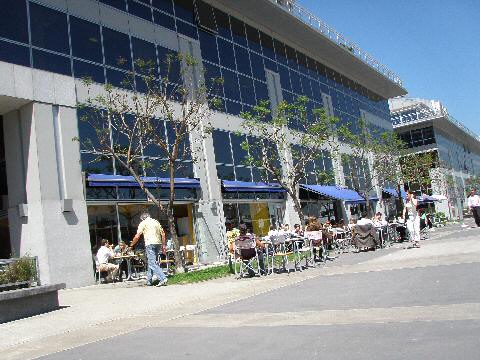
You can immediately see the difference between the two sides of the port – the Madero Este side being almost entirely new construction, lots of gleaming metal, glass, huge buildings…
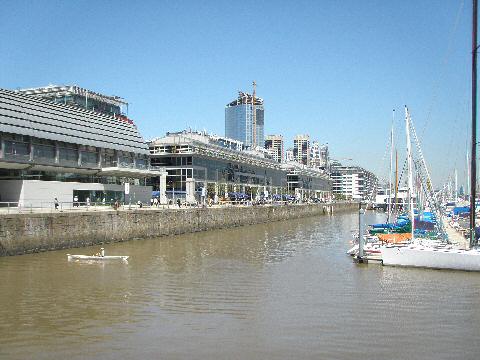
…versus the earlier conversion, where they utilized the existing warehouses and converted them to apartments, offices, and restaurants, but left the facades intact, merely restoring and upgrading them.
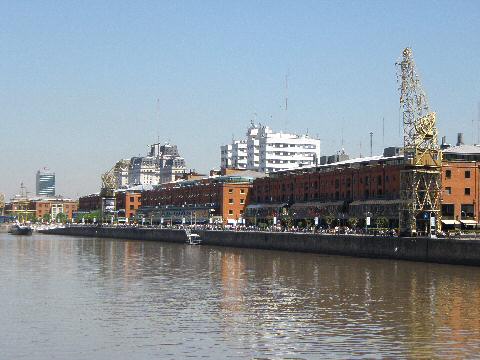
Up close, one of the nice things is that the restaurants with outdoor seating have nice, wide sidewalks with plenty of space to put out tables, versus the cramped terraces on the other side.
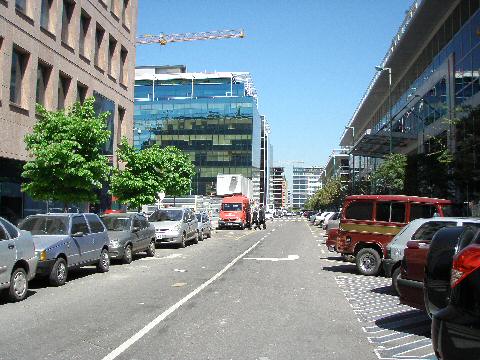
Puerto Madero Este is also not just a single strip of buildings along the water, but is actually 3-4 blocks deep at different points, with streets running in between. Lots of construction is still underway.
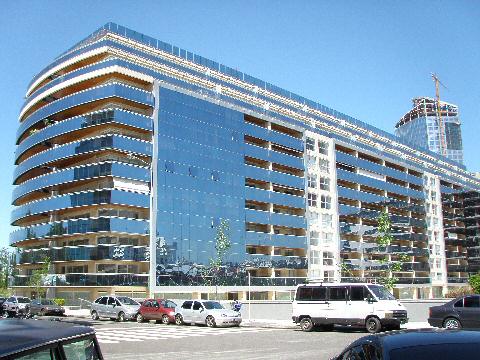
And some of the newest construction truly stands out in a very “modern” style.
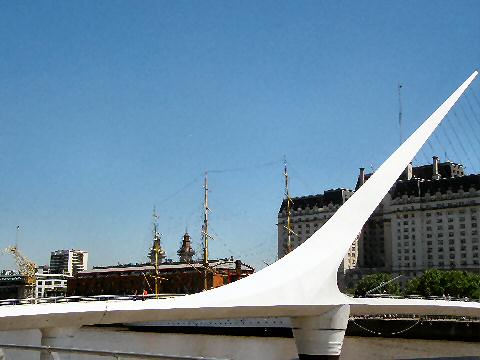
Of course, you get a different angle on the Puente de las Mujeres, or Women’s Bridge, the footbridge in the middle of the port that connects the two sides.
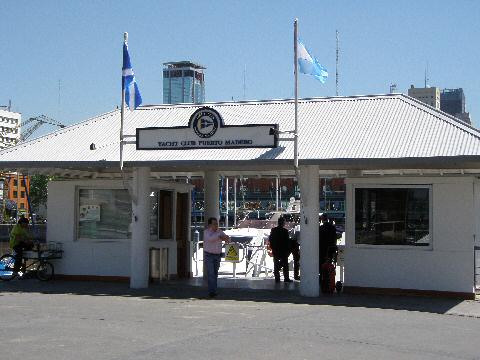
And, there’s the yacht club, presumeably mostly accessible just to those who pay fees to have their boats “parked”.
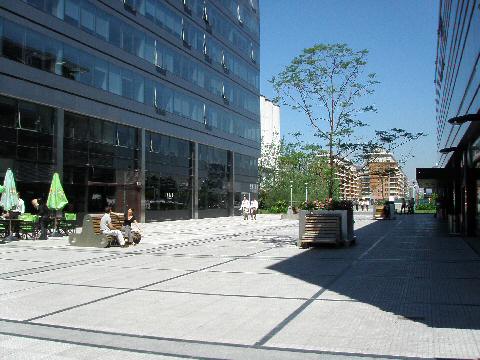
And in some sections, there are nice wide plazas, with seating areas, places to take in the sun, and just relax.
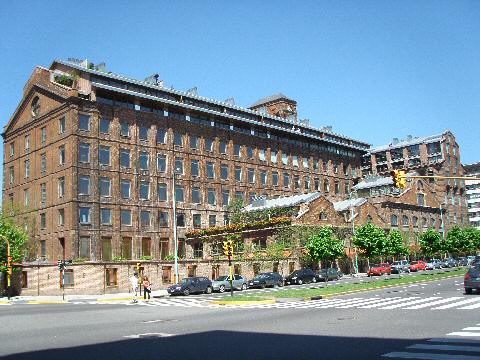
The famed Faena Hotel + Universe (hey, I didn’t name it), designed by Philip Starck – which you can’t really tell from the outside, being one of the buildings that was left somewhat as an old warehouse from the exterior – it’s more of a fantasyland inside.
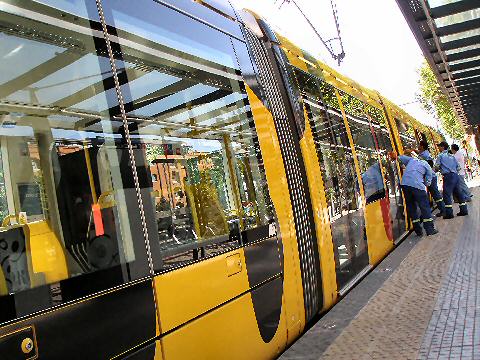
And, of course, the real reason I walked all the way to the far end, so I could cross back over to the “original” side and take the new train… for a peso it’ll carry you from Independencía to Cordóba, with stops in between at Belgrano and Corrientes. It doesn’t move particularly fast, and follows traffic lights as opposed to getting the right of way, and it only runs about every 15 minutes, so I’m not convinced that it provides much utility. Still, after walking the entire length one way, it was nice to get to sit going the other way… I’m fairly certain I was the only non-tourist on the train.
Copyright © 2026 SaltShaker. This feed contains copyrighted photos and text from SaltShaker. If you are not reading this material in a feed aggregator or by e-mail subscription, the site you are viewing may be guilty of copyright infringement. Please contact [email protected] so that I can take appropriate action.
Plugin by Taragana
]]>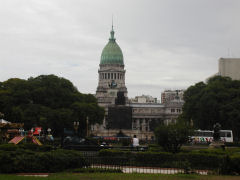 Buenos Aires – I had a couple of hours before my lunch date yesterday, and after running a few errands found myself near to the Plaza Congreso. The plaza has become home to daily gatherings of the unemployed and/or homeless – most just seem to choose a spot that is theirs for the day, some stay throughout the night, the fountain in the center varies between use as a bathing area for them and a play pool for local children. While certainly not the most rundown or dangerous of plazas in the city, except for weekends when an artesanal crafts fair takes over the park, it is one of the less savory.
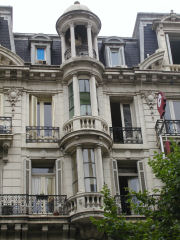
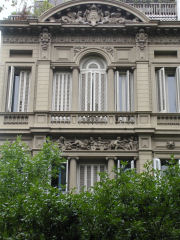
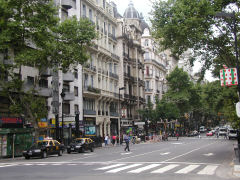 Stretching from the National Congress building to the Presidential Palace is the famed Avenida de Mayo, the city’s official processional route. I’ve travelled it by bus and taxi, purely by happenstance, and even walked the length once during the gay pride parade, though my attention wasn’t on the architecture that time. Back during the late 19th and early 20th Centuries, this was one of the main avenues to be completely rebuilt in a style that was intended to imitate the capitals of Europe, and especially Paris. Most of the buildings built at that time are still standing, and are a tribute to the French Beaux Arts architectural style.
Beaux-Arts architecture depended on
sculptural decoration along conservative modern lines, employing French and Italian Baroque and Rococo formulas combined with an impressionistic finish and realism. Slightly overscaled details, bold scuptural supporting consoles, rich deep cornices, swags and sculptural enrichments in the most bravura finish the client could afford gave employment to several generations of architectural modellers and carvers of Italian and Central European backgrounds. – from the Wikipedia
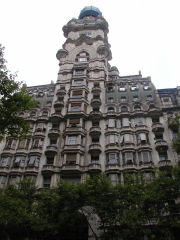 Possibly the most famous landmark building on the avenue is the Palacio Barolo, at #1370. Finished in 1923 for a rather wealthy textile merchant, Luis Barolo, and, at the equivalent height of 24 stories was the highest building in Buenos Aires at the time. The dome has a lighthouse with 300,000 small lights in it, most famously used for broadcasting the results of the Dempsey-Firpo fight to the residents along the coast of Uruguay, nearly 60 kilometers away! The Italian architect, Mario Palanti, had a thing for Dante’s Divine Comedy, and the building is filled with allusions to that work – a division into three parts of Hell, Purgatory, and Heaven, the dome containing representations of the nine angelic choirs, and the building having a height of 100 meters, to represent the 100 songs of the Comedy. The Salvo Palace, in Montevideo, Uruguay, is a twin to the Barolo.
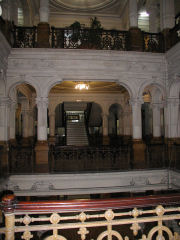
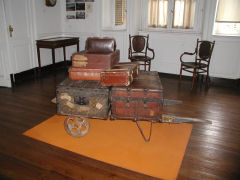
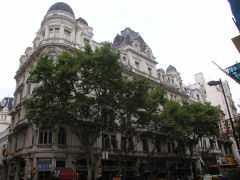 For those into social and government history, it’s a fascinating glimpse into that world. The building that the museum is in is the former Majestic Hotel, now home to the offices of AFIP.
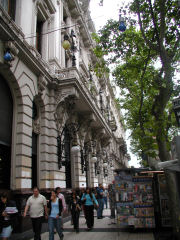
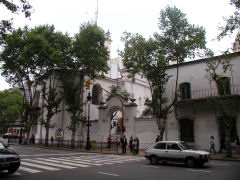
At 1199 is this interesting looking building. I wasn’t able to find out anything about it, but liked its look. Its major claim to fame, as such, is that on the ground floor it houses the Restaurante Plaza Asturias, one of the city’s most famous old-line Spanish restaurants, and somewhere I have yet to make it to. 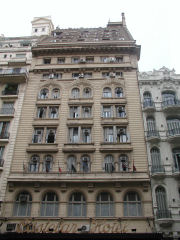 The 1100 block is the last block on the west end of the avenue, before crossing the 18-lane expanse of Av. 9 de Julio. One of the last interesting buildings is the Hotel Castelar, built by the same architect who built the Palacio Barolo, and originally called the Hotel Excelsior. Though the facade itself isn’t all that special, what I noted was way up at the roof line, where the sloped roof is dotted with several stories of windows – sort of attic hotel rooms. I continued on across the boulevard, and into the eastern section of Avenida de Mayo, where the architecture starts to trend a bit more modern – many buildings have been replaced during the last century, and there was also a slight turning towards the art nouveau style.
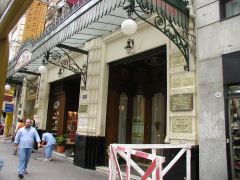 At 825 I came across the famed Café Tortoni, possibly the most historically well known café in Buenos Aires. It falls into one of those “must go” spots, that for one reason or another I haven’t. It really comes down to being an elegant coffee shop, but was, in its day, the gathering spot for some of Argentina’s most famous writers, artists, and actors. Leaning heavily towards the touristy end these days (and the main reason I haven’t bothered), it’s still a major piece of history (and therefore I ought to…).
Copyright © 2026 SaltShaker. This feed contains copyrighted photos and text from SaltShaker. If you are not reading this material in a feed aggregator or by e-mail subscription, the site you are viewing may be guilty of copyright infringement. Please contact [email protected] so that I can take appropriate action.
Plugin by Taragana
]]>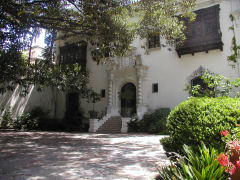 Buenos Aires – I’d seen a posting for a photography show, at the Fernández Blanco Museum of Hispanic American Art, Suipacha 1422, of the work of Edward S. Curtis. It sounded fascinating, if nothing particularly “Hispanic American,” being an exhibition of some of his photos of North American Indians. His work entailed 24 years of painstaking photography and recordings, including over 50,000 photographs, mostly portraits, 10,000 cylinder recordings of music and languages, and cost nearly a half a million dollars. That was in the early 1900s! The exhibition takes up a couple of small rooms in the basement of this museum, and consists of 60 photographs (part of a two-exhibition travelling show). It’s quite interesting, and if you’re in the Retiro neighborhood, worth the trip (the exhibition moves on in late December).
The rest of the museum is devoted to “Hispanic American Art,” officially. In truth, it’s mostly works of the Catholic church, encompassing a variety of statuary, paintings, and artefacts of a religious nature, much related to the conquest and conversion of the indigenous population, and covering a time period from the 16th to the 19th centuries. These take up virtually the entire ground floor and the level above. The balance of the basement beyond the special exhibition is a few rooms of furniture, implements, and a bit of art from some clearly wealthy families of the Spanish colonial era.
While religious art, especially of a Catholic nature, is not my forte, I found one painting in particular a bit unusual. It’s a representation of San Vicente Ferrer, a Dominican missionary famous for the sheer numbers of folk he converted to Catholicism throughout Europe, including many Jews. He is apparently generally depicted holding an open book, usually the Book of Revelations, or The Apocalypse, while preaching, with a halo behind his head. What was unusual in this particular picture was that in addition to all of the usual symbolism, including the book of the Apocalypse (though closed in this painting), he has what appears to be a horn coming out of his head. Somewhat like a shortened unicorn horn, complete with a slightly spiraled and warped shape, it is growing right out of the center of his skull and is framed by the halo. Other iconography shows him with a flame either directly atop his head or floating above it – and it’s possible that in the painting in the museum it is supposed to be a flame as well, it’s an old painting, and somewhat faded. I couldn’t find any information as to why this peculiar addition to his depiction, but it’s the sort of thing that I find fascinating.
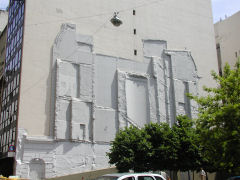 This is the memorial for the bombing of the Israeli Embassy back on March 17, 1992. It’s a small park where the embassy stood from 1950 until 1992 at the corner of Suipacha and Arroyo. As you can see, they’ve left the outline of the walls of the building where it was attached to the adjacent embassy (El Salvador). Interestingly, the information on the memorial, including what’s on the plaque along the wall, is that 29 people were killed and 242 were injured in the attack, but, the memorial only lists the names of 22 people who died. I have to admit to some curiousity about the missing seven…
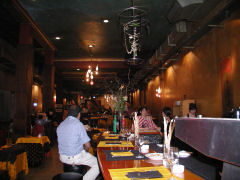 In the same general neighborhood there’s a restaurant I’ve been wanting to try, Filo, at San Martin 975. I don’t remember who recommended it, but it was pointed out as one of the better casual Italian restaurants in the city. I like the style – very industrial modern. Real linen napkins and placemats (in vivid yellow and black), a well stocked bar (a huge selection of single malt scotches, including many difficult to find marks, plus bourbons and Irish whiskeys), and platters of focaccia chips on the bar. The crowd is an interesting mix of businessfolk, backpackers, and ladies who lunch. You can eat at the bar, something I like to do when solo. I snapped a couple of photos before being stopped by the bartender who told me that photography of the room was not permitted (well, here’s one anyway). I asked why. The reply could best be summed up as “We have many businessmen who eat lunch here with women or other men who might not want their wives to see who they’re with.” That’s a line I can’t argue with.
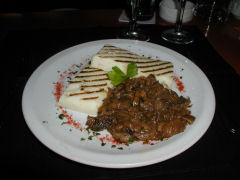 The menu is quite extensive, leaning towards antipasti, salads, pizzas, and pastas. It’s very Italian; much more so than what usually passes for Italian food here. If the rest of the items on the menu are as good as what I sampled, it’s no wonder that the place is packed (it seats about 100, when I first arrived, and snapped the photo above, it was about 1:00, by 1:30 every seat was taken and there was a line of people waiting for tables). I started off with this Cocktail de Funghi (I’m not sure why they used the English spelling of cocktail, but they did), which was an excellent stewed mix of various wild mushrooms served with two grilled tiles of white polenta.
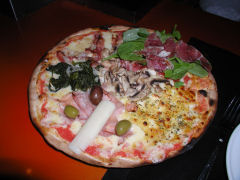 The bartender informed me that their pizzas are really their specialty, even though the pastas are good as well. I looked around and pizzas seemed to be on every table, so I went along with the theme. Amongst the various offerings was a Pizza Filo, the house pizza, described as “put together in the moment to the chef’s whims.” I like to see how creative cooks can get, so I ordered a small one of those. The pizzas are thin crust, wood-burning oven pizzas, with toppings and a sprinkling of cheese – not the usual medium to deep dish drowned in melted mozzarella versions that are typically served in local restaurants. The “Filo” was not quite what I expected. I’d sort of figured on some sort of interesting combination of the moment that the chef felt like putting together. Instead, the pizza is divided into six slices, and roughly a dozen different toppings are used, but each takes up some random portion, roughly anywhere between 20-40% of the pizza, which means that they overlap in various combinations, depending on what part of the pie you’re eating at the moment. Quite good! I especially liked the small section where the spiced ham and hearts of palm overlapped, and the crispy bacon and arugula section.
I’ll be back.
Copyright © 2026 SaltShaker. This feed contains copyrighted photos and text from SaltShaker. If you are not reading this material in a feed aggregator or by e-mail subscription, the site you are viewing may be guilty of copyright infringement. Please contact [email protected] so that I can take appropriate action.
Plugin by Taragana
]]>