O human race born to fly upward, wherefore at a little wind dost thou fall.”
– Dante Alighieri, The Divine Comedy
Buenos Aires – It’s amazing how time flies. It’s been more than two years since I posted a little walking tour along Avenida de Mayo and mentioned some of the beautiful Beaux Arts style buildings, including the towering Palacio Barolo. At the time, I didn’t know that the building’s management offered guided visits, in both Spanish and English, but found out about them shortly thereafter. For two years it’s been on my list to do – and this week presented a perfect opportunity, on a fortuitous happenstance. I was out with a trio of friends who are in town visiting for my upcoming birthday (this Friday, 50, send gifts), and we’d decided to follow along the same route as part of our day out. We wandered in to the building just to look at the beautiful lobby, and by chance, the young man who guides the tours was there, and told us he had people coming for a tour in English in a mere quarter hour if we wanted to join. We agreed, popped down the block for a cafecito, and ran into one of our Casa SaltShaker guests from this last weekend, who turned out to be the person who’d booked the tour. We all returned together and started off on this rapid paced look at the building.
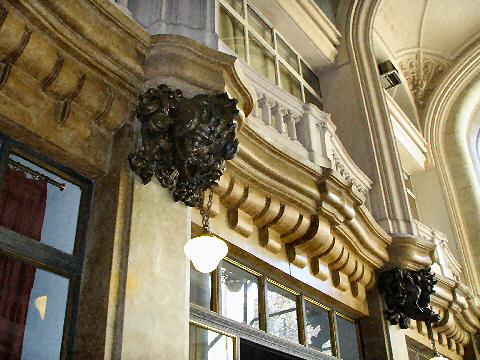
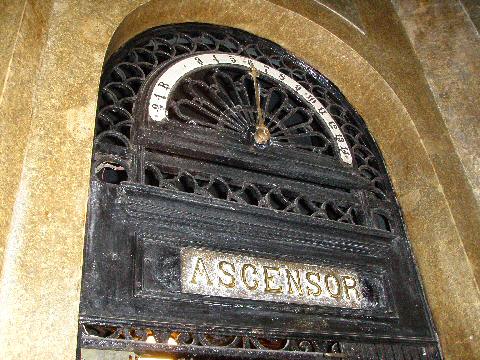
I’ll be honest here, I would have preferred something more in-depth on the history of the building, the architecture and passion that went into this allegory to Dante’s Divine Comedy. It’s even possible that at some time in the past the tour included more of that. At this point, however, it consists of a rapid fire delivery (his English is understandable, but not fluent by any stretch) that basically announces that the lower floors (the ground through 8th floors) are designed around the nine circles of hell, with demonic, dragonish sorts of figures (along with some explanation I didn’t quite get about the differences between the male and female lamp holders), inlaid gold colored metal spirograph-like designs on the floor that represent the pits of fire, and… well, no other detail, other than to point out that the elevators have some masonic touches, like the “A” in Ascensor and the tip of the floor indicator.
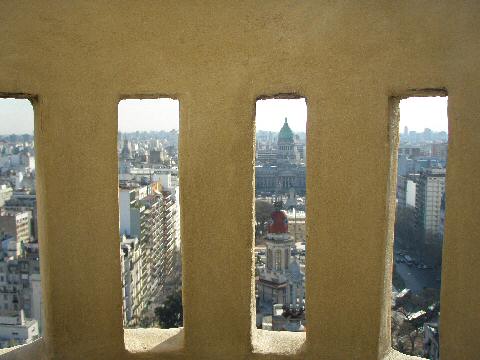
We then hopped on an elevator up to The Terraces of Purgatory, the 9th floor, where one can look out over a circular balcony and down into the center of the lobby. Here, a fairly plain look, with nothing particular noted by our guide other than leaning over the railing (not something I do – I’m not good with heights), and that there were red and white tiles on the floors, and green ones outside of our view in the offices, representing the colors of the Italian flag. Within seconds we were back on the elevator and up to the 14th floor, the start of The Spheres of Heaven, where a small, one-person elevator is centered to take one up into the dome of the building, and a surrounding steep, narrow, spiral staircase is available to climb to the top (six levels to the observation deck from which the photos were taken (with me not getting too close to the edge…), and then another two spiral up through a tight squeeze into the lighthouse itself (not at all recommended for the acrophobic), a glass bubble with the light mechanism in it that didn’t really fit the six of us even with me cowering on the floor. The intent of the lighthouse was to send communications to the twin tower at the Palacio Salvo in Montevideo, Uruguay, and apparently it sorta-kinda works, the architect having not quite taken into account the bit of curvature of our planet, though one can see to Uruguay (in the distance in the second photo), there’s not quite a direct line of sight to the other tower I gather. Still, if one can manage from either observation point, there are some pretty amazing views of the Congreso plaza and the rest of the city laid out below.
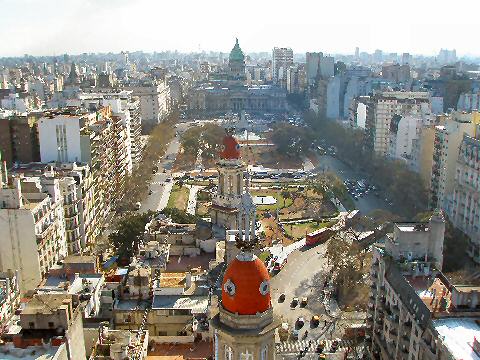
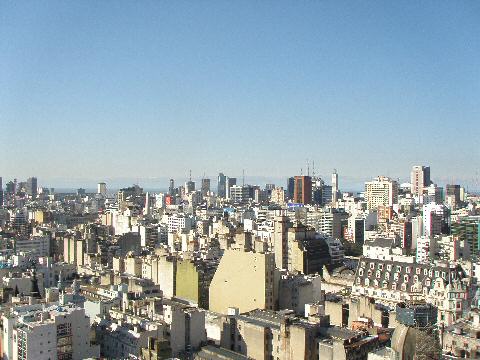
This, is apparently what most visitors want to see, and I guess I can follow the logic even if I’d rather be inside and/or down below. So at least half the thirty minute tour is spent on the observation deck and in the bubble, with little commentary, just being left to one’s own devices to snap photos. A bit of a cheat for the 15 pesos price, but then, the only way to get these views.
Copyright © 2026 SaltShaker. This feed contains copyrighted photos and text from SaltShaker. If you are not reading this material in a feed aggregator or by e-mail subscription, the site you are viewing may be guilty of copyright infringement. Please contact [email protected] so that I can take appropriate action.
Plugin by Taragana




 ]]>
]]>“Architectural detail fell away initially as part of changing style preferences. Once Art Deco morphed into Art Moderne (progressively more streamlined and simpler detail), we moved into the hegemony of Modernism (Corbu, Mies, et al). Structure was king and detail was derided as old fashioned. So, as construction required less and less artisan skills for wood or stone detail carving/designing, those skills were passed on/learned less and less. To where we now have the situation that carved stone detailing is prohibitively expensive due to significant lack of skilled laborers.”
– from a discussion on Cyburbia
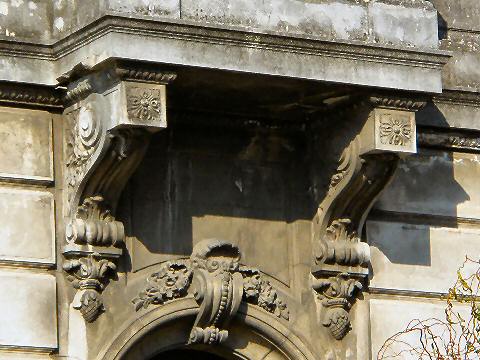
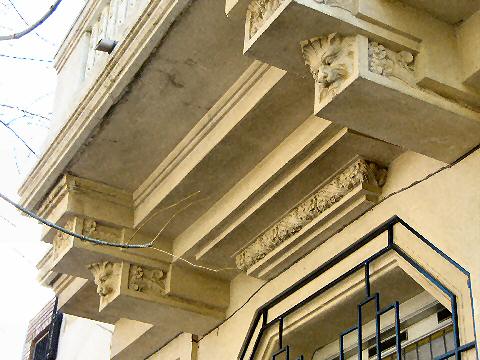
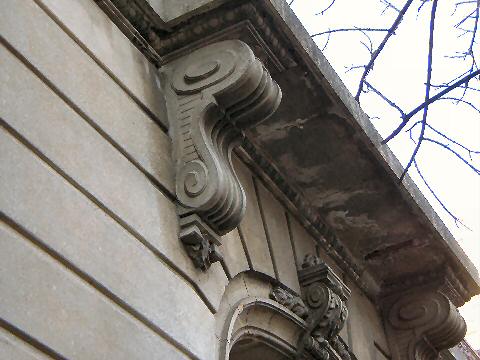
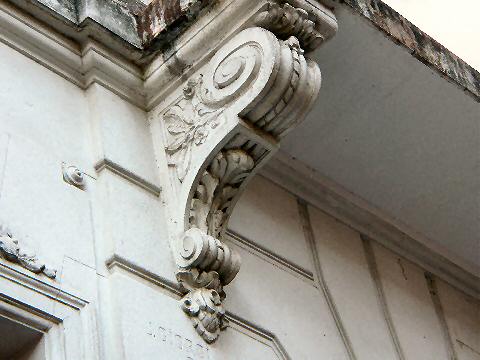
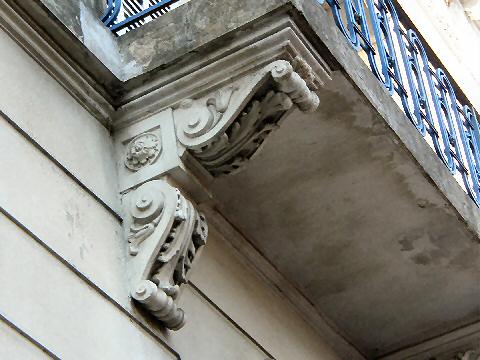
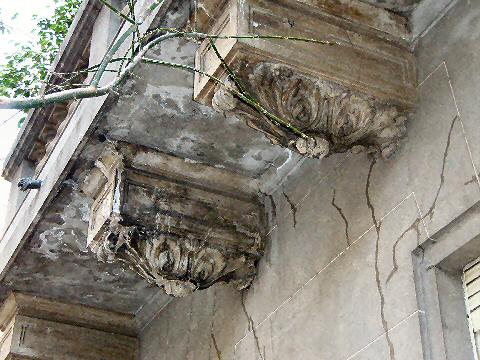
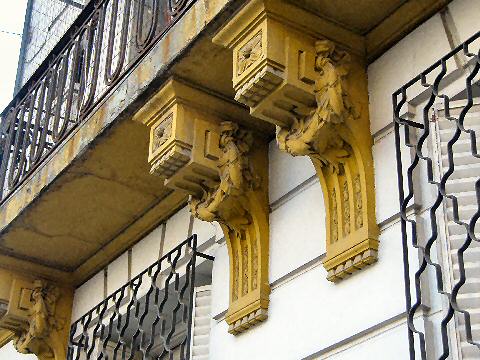
Buenos Aires – Robert, over at line of sight, has got everyone in town looking up at domes and submitting ideas for the best dome in the city. I have no plans to make a contest out of this, but as I was walking the other day towards my various cheese destinations, I suddenly found myself looking at those little thingies, many of them curly-cue sorts, that support balconies. An internet search reveals that these are known as either a console or a corbel. It’s been pointed out by several people in e-mails to me that they miss my little walks and looks at different neighborhoods, along with things like various architectural details, so here, without comment, are a bunch of consoles along the street Pringles (named after, presumably, Juan Pascual Pringles, a colonel in the military during the war of independence, and later the leader of the Argentine Unitarian Party, and not after the processed chip), other than the last one, which was, technically, around the corner after I hit the end of the street at the corner of Rivadavia and Treinta y Tres Orientales.
Copyright © 2026 SaltShaker. This feed contains copyrighted photos and text from SaltShaker. If you are not reading this material in a feed aggregator or by e-mail subscription, the site you are viewing may be guilty of copyright infringement. Please contact [email protected] so that I can take appropriate action.
Plugin by Taragana
]]>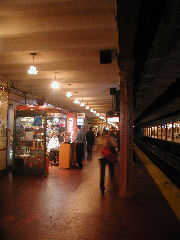 Buenos Aires – When it comes to public transportation in Buenos Aires, there are a few “musts”. You must take a colectivo at least once, rocketing and careening through the streets, preferably with a driver who thinks the horn is as important as the steering wheel and gas pedal. You must take the Tren de la Costa up to Tigre, just to experience the ride and watch the scenery. And key, you must, simply must, take the A train. The A train was the first line of the subte system (June 1, 1914), and the stations and trains still maintain the vestiges of a bygone era – a time when the subway system was, in some manner, a ride of elegance, a ride for those of the elite, those who didn’t need to walk to get where they were going.
 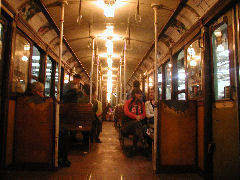 The lamps still look like old gas lamps, the cars are panelled in darkened and stained wood, the doors are manually operated to open them if you wish to exit, and, in the last moment before alighting, there are mirrors alongside the doors in which to check your appearance before you step out into the world again. The A line runs from the center of the downtown world on out to barrio Caballito (soon to be extended out to barrio Flores), ending at the stop Primera Junta, where it joins up with the suburban train lines.
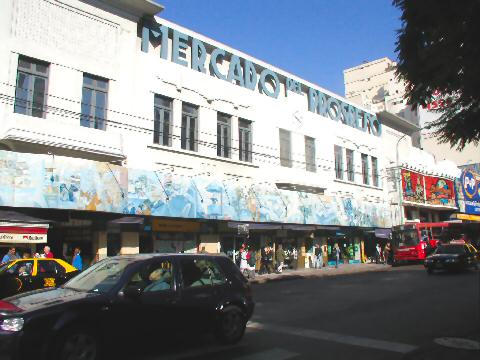
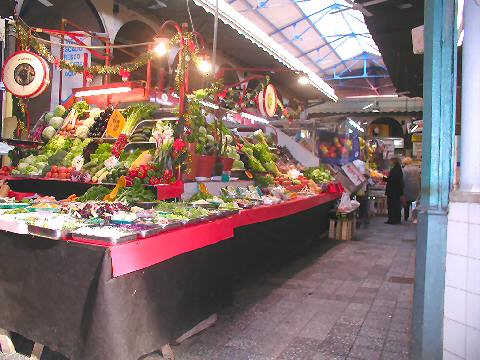
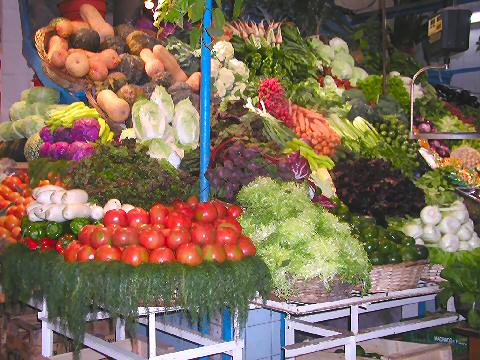
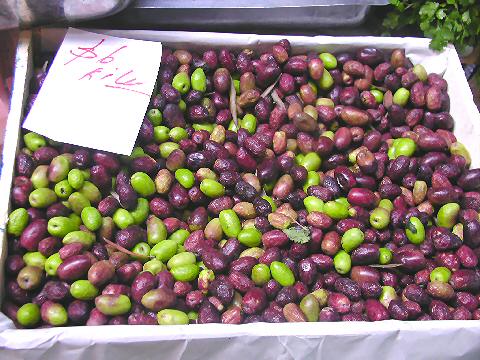
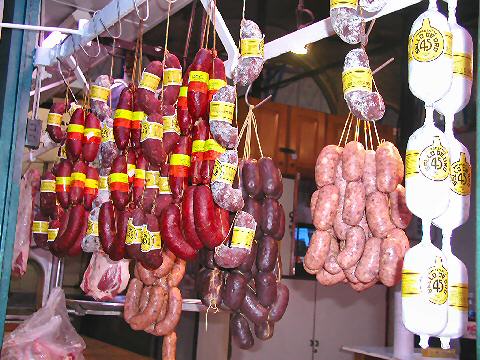
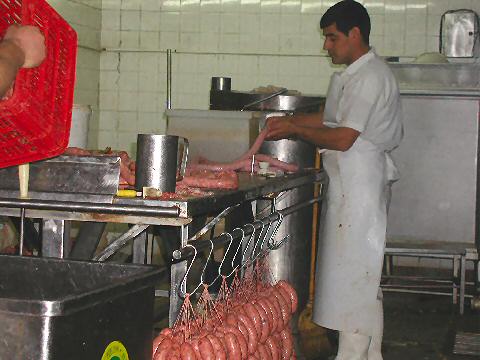
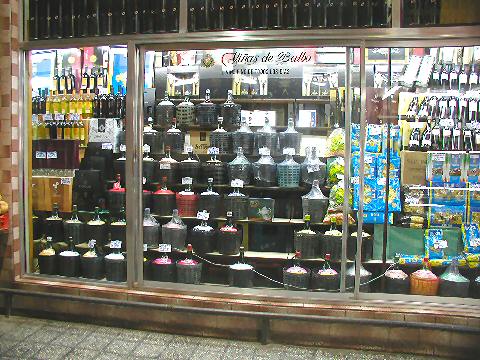
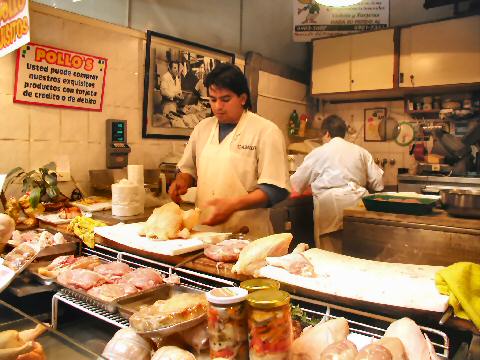
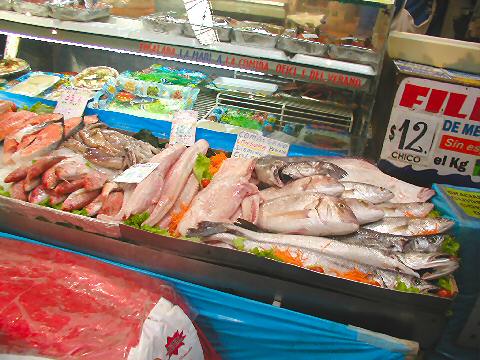
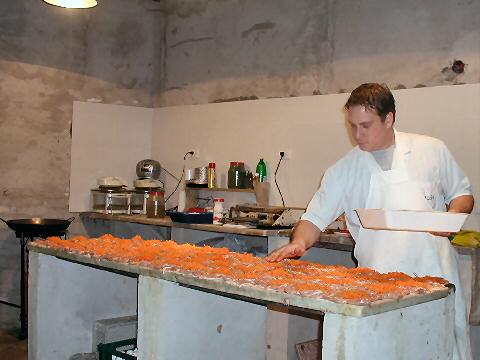
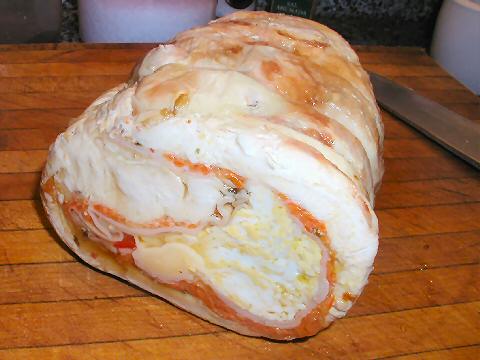
When you exit into the sunlight at Primera Junta, you find yourself along Avenida Rivadavia, one of the principal thoroughfares of the city. You also find yourself across the street from the hulking Mercado del Progreso, Rivadavia 5430, a nearly block-square food market that dates back 130 years. Inside, you won’t find the fancy imported spice and cheese shops of Mercado Belgrano, but instead, shop after shop dedicated to fresh produce – much of which you won’t see anywhere else in the city (a huge box of raw olives to brine yourself – a mere 6 pesos per kilo), beef and other red meats, chicken, rabbit, fish, wine (one store with a huge display of various jug wines), and local artesanal products like cheeses, sausages, and matambre. In fact, as you wander the corridors, it’s not unusual to come across a work table laid out with a local butcher hand preparing and rolling some of the best matambre you’ll ever taste, or stuffing meters and meters of fresh chorizos.
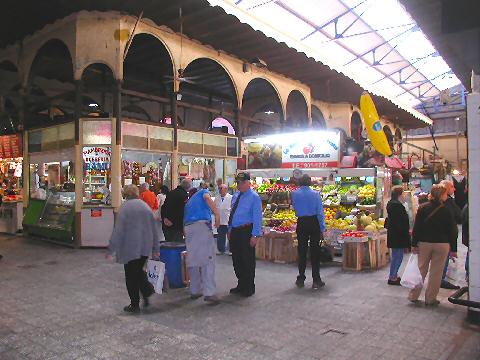
While open to the public Monday through Saturday during the mornings (until 1:00) and then later in the afternoon from 5:00 – 10:00, the market is a private enclave of iconoclastic producers. I wasn’t in the space snapping photos more than two minutes before I was accosted by the market’s security. Luckily, they were delighted with my reasons for being there and taking photos, and a few smiles all around and suddenly stall owners were offering me samples and chatting about their products, and even demanding that I include their photos in my writeup! I’ll leave the rest of this as a photo essay.
Mounds of fruits and vegetables throughout the market.
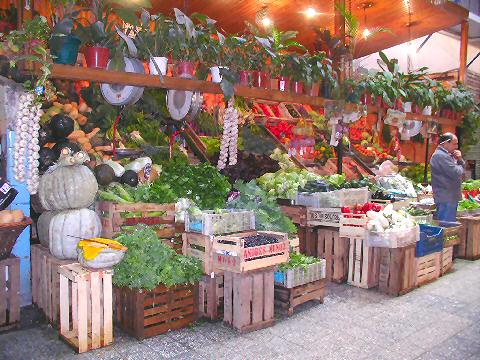
More mounds, including oddities like raw olives, various peppers and potatoes that you don’t see elsewhere in the city.
Numerous producers of various types of sausages, all artesanal made, from fresh to cured, and even a demonstration of sausage making at one shop.
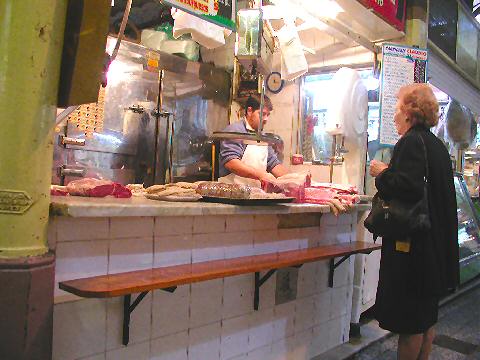
A display of various brands of jug wine, and one of the numerous butcher shops.
A shop specializing in chicken and rabbit (including it’s own nearby workshop – below), and one of the two fish markets.
Making chicken matambre by hand, and the final result (after roasting it off) – quite possibly the best matambre I’ve ever had.
Copyright © 2026 SaltShaker. This feed contains copyrighted photos and text from SaltShaker. If you are not reading this material in a feed aggregator or by e-mail subscription, the site you are viewing may be guilty of copyright infringement. Please contact [email protected] so that I can take appropriate action.
Plugin by Taragana
]]>The zone is a four block strip of stores, along with the side streets for a block on either side of Jujuy, from 1200 (at Av. San Juan) through the end of the 1500s (at Av. Juan de Garay), which puts it squarely in Barrio San Cristobal. Roughly 3/4 of the stores are related to cooking supplies – ranging from small to large appliances, to utensils, to chefs’ clothing, with some stores specializing more in housewares and others in restaurant gear. You will find, if you’re willing to spend time going in and out of stores, a far more wide ranging selection of things, and perhaps that one special item you’ve been looking for, if you shop in this area. You will not, however, save any money. Virtually every item has two prices on it – a wholesale price and a consumer price. I comparison shopped a half-dozen items (a Kitchen-Aid mixer, a local brand mixer, chefs’ knives, and a couple of different types of pots and pans) and found that the consumer prices were no different than I see elsewhere in the city. And, in some ways, it feels worse, because there is the glaring wholesale price in front of you. Now, I know that at wholesale price they’re not losing money, but I couldn’t figure out the difference to reach the retail prices, it certainly wasn’t a flat rate, and varied from about 10% above the wholesale to some items that were nearly 40% above. E.g., the Kitchen-Aid mixers jumped from 1800 pesos to 2500 pesos, and I’ve seen them in the 2300-2400 peso range in other stores, though rarely with the full range of the brand’s colors available as here; while in the same store, a small restaurant grade salamander (above stove broiler) only jumped from 158 pesos to 177 pesos – maybe because it’s the sort of thing they don’t think consumers are likely to buy?
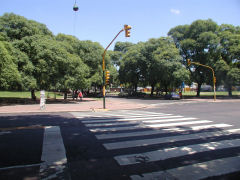 I had the option of two different streets that fit my criteria of being named after famous dates in local history. I had plenty of energy after my wander along Jujuy, so I decided to take on the longer of the two, 24 de Noviembre, a 24 block primarily residential street that begins at Parque Patricios and stretches back through the Parque Patricios zone, into San Cristobal, and finally into Once, ending at Av. Rivadavia right off the back end of the Once train and bus station. There unfortunately isn’t a huge amount to say about the street itself,
 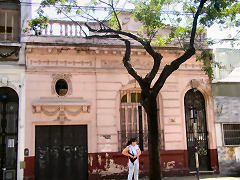 as it really is a predominately residential street, and one with minimally interesting architecture. Towards the southern end, in Patricios and Cristobal, most of the houses are smaller, two-story affairs, and a mix of blocky, flat-roofed buildings built mostly around the 1920s, to strips of more modern row-houses, probably built in the 1960s. There are scattered small warehouses, a few schools and churches, and the usual sort of neighborhood coffee shops or takeout lunch counters.
November 24, 1849 – Governor Juan Manuel de Rosas of the Province of Buenos Aires signs an agreement with the British to end the blockade of the Rio de la Plata. I haven’t been able to find out much about this, but it appears that it may have involved a joint British and French endeavor to block the port access to the river, in response to de Rosas prohibiting their access to navigating up the river, that was, after two years of conflict, settled by treaty. This will take a little more research…
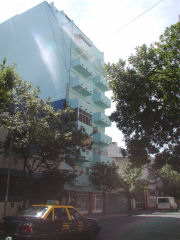
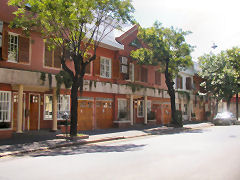 One interesting feature I saw more than once was the setup of long strips of apartments set back from the streets along narrow, gated mews, something I haven’t seen elsewhere here. At #1926 there’s a wholesale to the public meat and cheese store, where as best I could tell, you can walk in and buy at wholesale price plus tax, a wide variety of meats and cheese. The one drawback appears to be in the quantity world – you’d better be having a party, as everything was being sold whole – i.e.,an entire prosciutto, 2-3 kilo wheels of cheese, most of a side of beef – you get the idea. While walking the area you’ll first pass through an area that is the parish, or at least few blocks dedicated to, San Vincente de Paul and then on to one of the San Miguels (my usual source for listings of catholic saints has 9 different Saint Michaels plus another dozen Blessed ones), and finally ending up in the primarily Jewish quarter with several social and religious societies. Along the way there are several small transient hotels, this Miami Vice looking apartment building, and this glowing red and orange alberque transitorio.
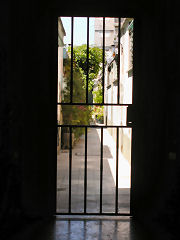
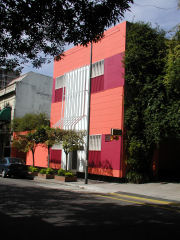
Albergues Transitorios are not unique to Argentina, they are, very simply, short-term stay hotels. They range from semi-respectable sorts of motels where one can flop for a day, to the much more common hourly rate hotel for amorous encounters. There are numerous of the latter, and they can be found in virtually every barrio in the city – given the reasonable paranoia of taking someone home after just having met them in a bar, or on the street, and the generally suspicious nature of folk here (people are regularly surprised when I’m willing to tell them where I live), guidebooks and websites that specialize in this sort of thing highly recommend never taking someone home with you. And, of course, most hotels don’t permit overnight “guests” to stay in your room, not to mention, people would talk… Hence the popularity of the albergue transitorio, where you can, apparently, generally find a clean and safe environment in which to have an encounter, and then move on anonymously.
At the corner of 24 de Noviembre and Juan de Garay I found myself feeling rather peckish, and stopped in at Restaurant San Miguel, Juan de Garay 3196. Clearly a neighborhood hangout, with a large percentage of the crowd on a first name basis with the staff, I felt like a semi-intruder in someone’s home. The decor is sparse – strange vivid purple trim on the windows, a few too many ceiling fans, faux granite tables and floors, trophies and pictures from the owner’s participation in tango competitions, water-stained ceilings, and for the most part, staff that seem so much to belong to the space that they very well may have been there for several decades. Customers too blended right in. There was a rotating table of bus and taxi drivers who seemed to come and go as they ate their meals with the table never emptying out completely, paying for their meals after a chat with co-workers and then moving on.
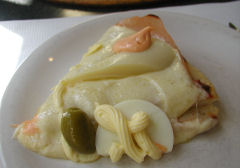 The restaurant is a combination pizzeria and parrilla, and, given my penchant for pizza, I opted for the former. The house specialty is the La San Miguel, which I hesitated to order, though my waitress assured me that it would be bárbaro, or “way cool.” It was very possibly the oddest couple of slices of pizza I’ve ever had, though at the same time, not bad. I won’t go for “way cool,” and I probably wouldn’t order it again should I find myself back at San Miguel, but the combination of tomato sauce, thinly sliced ham, a thick slab of mozzarella, slices of hard-boiled egg, wedges of heart of palm, whole green olives
 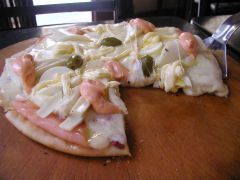 (I still don’t get the whole olive thing here – pit them already!) which were supposed to be whole black olives, all topped with generous squiggles of salsa golf and mayonnaise. No doubt a cholesterol nightmare, but interesting nonetheless – and the dough and sauce were excellent, the latter loaded with garlic and oregano. I think I should have gone with my non-specialty of the house choice of the Española, a pizza topped with chorizo cantimpolo, roasted red peppers, black olives, fresh tomato, and lots of garlic. Maybe next time. A whole “chica” pizza is a bit large for one person, coming it at around 9-10″ in diameter, and the large is about a 15-16″ affair, so this is definitely a place to go for pizza with at least one other person.
Copyright © 2026 SaltShaker. This feed contains copyrighted photos and text from SaltShaker. If you are not reading this material in a feed aggregator or by e-mail subscription, the site you are viewing may be guilty of copyright infringement. Please contact [email protected] so that I can take appropriate action.
Plugin by Taragana
]]>