“The potato takes little care of lung and heart. It reaches the head, but only, as I said, the lower head, not the upper head. It does go into the lower head, where one thinks and exercises critical faculties. Therefore, you can see, in earlier times there were fewer journalists. There was no printing industry yet. Think of the amount of thought expended daily in this world in our time, just to bring the newspapers out! All that thinking, it is much too much, it is not at all necessary — and we have to thank the potato diet for that! Because a person who eats potatoes is constantly stimulated to think. He can’t do anything but think. That’s why his lungs and his heart become weak. Tuberculosis, lung tuberculosis, did not become widespread until the potato diet was introduced. And the weakest human beings are those living in regions where almost nothing else is grown but potatoes, where the people live on potatoes.”
– Rudolf Steiner, philosopher
Buenos Aires – There are those restaurants that everyone knows about, recommends, and no one writes anything new about. These are the sorts of places that show up in every guidebook, piece of hyperinflated promotional fluff, or casual mention – just because… everyone knows about them. Several in town come to mind – and perhaps I’ll eventually get to them all, but I may as well start with La Cabrera Norte, Cabrera 5127 in Palermo, 4832-5754, which is ever so slightly north, though perhaps more west, of La Cabrera sans more than that. And what does everyone talk about when it comes to La Cabrera? The side dishes. Oh, the steaks too, which, in a beef-centric culture like this are quite good as well. In fact, they’re better than quite good – I’d put the steaks at La Cabrera up there among the better ones in the city, and as you can see in the photo below, there was no wanting of forks to dig into them.
I was out last Sunday with a group of master sommeliers who’d flown in for a tour and series of seminars out in the vineyards of Mendoza, but they were spending a couple of days seeing Buenos Aires, dining out, and generally having a good time. Knowing a couple of them, and the person who organized the tour, I got myself attached to the group for the day, which is not only great fun when the people are (and anyone who knows sommeliers that have been around for awhile knows they know how to have a good time), but gets me a chance to pop in on places that I don’t frequent all that often. So here we were, eight MS’s, myself, and the PR person who’d put it altogether, and they shove the menus in my hands and say, “Choose stuff we’ll like.” No pressure, you know?
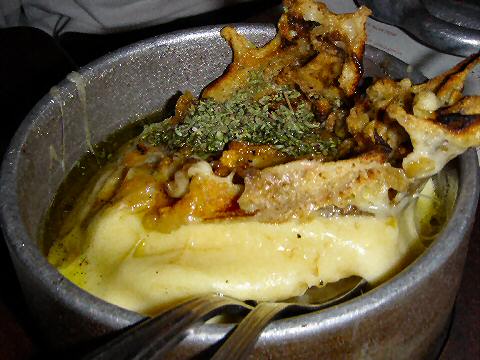
We had to give them a bit of the usual suspects and a bit of the off the wall stuff – so a round of chorizos, morcillas, chinchulines (the latter two – blood sausage and grilled intestines), and the weirdest looking provoletas I think I’ve ever seen – no, that’s not a sea monster crawling out of the ooze….
Then on to a couple of mounded salads, followed by a trio of steaks – entraña, bife de chorizo, ojo de bife (respectively, skirt steak, loin steak, rib-eye) – which, at La Cabrera Norte (and the non-norte spot as well), are simply huge – ten of us couldn’t finish the three steaks. So, while the menu can look pricey at first glance, given than each steak can easily feed 2-4 people, depending, you know?, it’s not really.
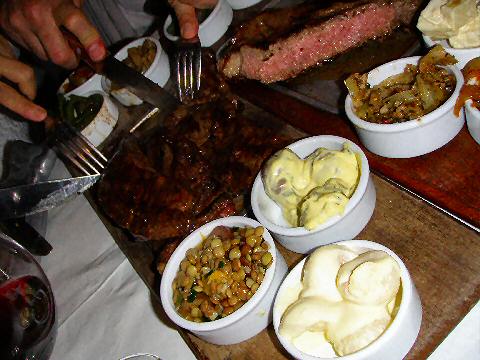
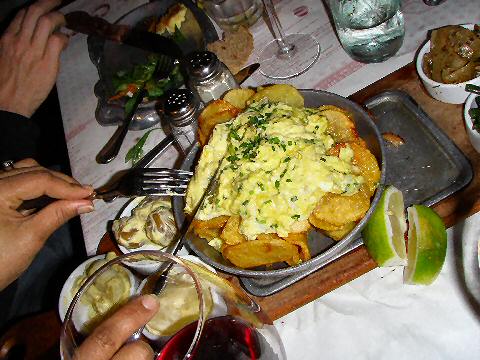
Now, the side dishes are not so much side dishes as little ramekins of stuff – starchy stuff. Each steak comes with a half dozen (not the dozens and dozens that most folk seem to hype) little ramekins – potatoes in mayonnaise, roasted potatoes, potatoes in some sort of eggy dressing, hearts of palm in mayonnaise, chambota (onions and peppers in oil), and lentils, all served room temp – each of which is a few forkfuls – which is not to disparage them, it’s plenty of food – but we’re not exactly talking about some sort of amazing accompaniments to the steaks. They’re good, but that’s about as far as I’d go. There’s also the ubiquitous chimichurri and salsa criolla, though the latter is served pureed, which is flavorful, but not my style. Personally, I’m more for just going for the steaks – the entraña is really excellent – and ordering another provoleta, and cholesterol be damned for one day every now and again. The french fries, which of course we needed to order, are simply okay – nothing special, and perhaps a little overdone and greasy. Plus they have this very strange dish called papas fritas criollas, which are basically french fries topped with a mess of soft scrambled eggs (which, no, don’t come with side dishes, we just set the bowl on the empty platter from one of the steaks). Odd, just odd, but the group wanted to try them – personally I like the provencal, with garlic and parsley, but hey, this was something different….
Overall, La Cabrera Norte gets high marks for food. The ambiance is a bit boisterous, and the place tends to be packed, at a lot of times, with tourists (Sunday afternoon I could hear enough English being spoken around the place to think I was back in Manhattan) – and the waiters all cater to that crowd. It’s not that you won’t find locals there, but more likely early on in the week in the late evenings….
Copyright © 2026 SaltShaker. This feed contains copyrighted photos and text from SaltShaker. If you are not reading this material in a feed aggregator or by e-mail subscription, the site you are viewing may be guilty of copyright infringement. Please contact [email protected] so that I can take appropriate action.
Plugin by Taragana




 ]]>
]]>“French speaking countries in Africa have always enjoyed a special relationship with their former colonial master. French influence in those countries remained strong even after independence, with currencies tied by a fixed exchange rate to the French franc, military agreements allowing the stationing of French intervention forces in Africa, and a strong presence of French companies in Francophone territories.”
– Emmanuel Wongibe, editor, Radio Deutshe Weller International
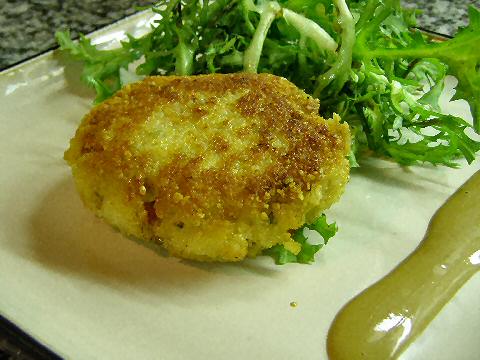
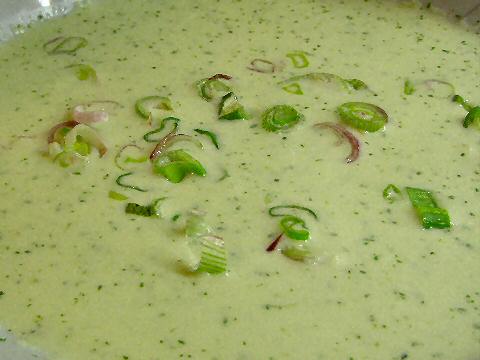
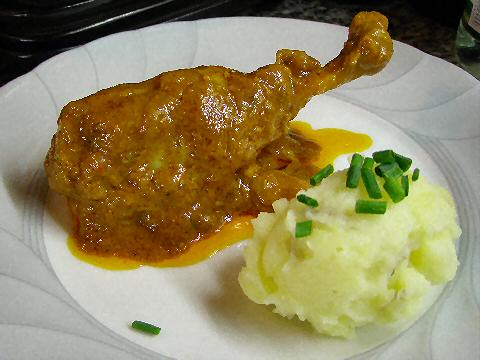
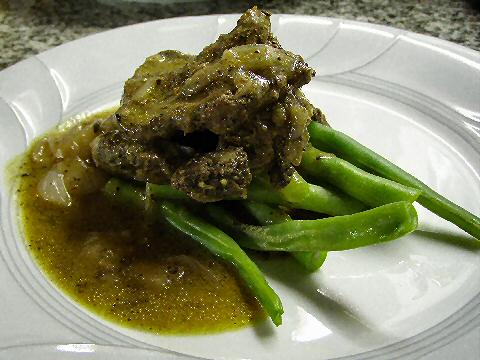
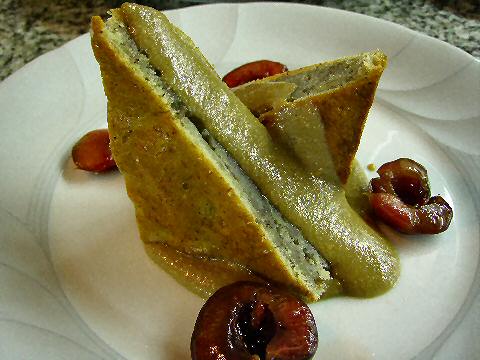
Buenos Aires – Fifty years have passed since the fall of French Equatorial Africa, splitting apart into separate states, tossing off the yoke of French colonial masters. Likewise in the neighboring Congo, and not far away in western Africa, in Mauritania. It seemed as good a moment as any to explore the flavors that spring from the combination of African tradition with French colonial cuisine.
Copyright © 2026 SaltShaker. This feed contains copyrighted photos and text from SaltShaker. If you are not reading this material in a feed aggregator or by e-mail subscription, the site you are viewing may be guilty of copyright infringement. Please contact [email protected] so that I can take appropriate action.
Plugin by Taragana
]]>“Linking these extremes is food activist Isabel Alvarez, an anthropologist who has studied colonial cuisine and teaches the history of food at St Marcs University. She owns El Senorio de Sulco, a cliff-edge restaurant overlooking the sea in the elegant Lima suburb of Miraflores. Alvarez, of Andean (Quechuan) and Catalan descent, is evangelical about preserving authentic dishes, such as the pre-Hispanic huatia sulcana, beef braised in a clay pot and strewn with aromatic herbs, which is on the restaurant menu. She says there has been a revival of interest in Peru’s rich food history and attitudes to cooking as a profession have changed. Sons and daughters of well-to-do families are embracing the formerly lowly work, training in Lima’s 20 or so cooking schools.”
– Judith Elen, Eyes Peeled
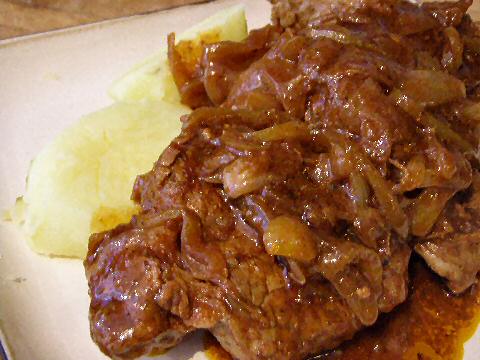
Buenos Aires – It’s hard to believe, but there are days when I don’t feel like cooking. Really. Henry’s not very good about those days, and given that although he’ll pretty much eat anything put in front of him, he strongly prefers the flavors of Peruvian cuisine, those are usually the days that he’ll pick for a manipulative tantrum – something that is rarely effective at getting me to do anything more than stick an unopened can of tuna in front of him with the can-opener and a fork. On the other hand, I like to eat well too, and it happened, the other day, that I had picked up a nice piece from the end of a lomo, or loin of beef, that was sitting in the refrigerator looking forlorn and awaiting my attention.
Rather than head into butting heads territory, I flipped through Tony Custer’s The Art of Peruvian Cuisine (well, the Spanish edition), looking for something simple to make. Of course, my eyes lighted on a recipe that looked mouthwatering in his photo, and takes hours to make. Truthfully, a huátia sulcana probably takes all day to make – a huátia being a traditional, pre-hispanic cooking oven that’s created for a one-time use – you dig a firepit, build a fire, put lots of big stones in it to heat up really hot, put your food in, and then build a clay dome over it. The food is considered done when the dome more or less collapses in on itself. Our garden is kind of the reverse of what you need – lots of clay underneath a bit of topsoil, and besides, it was already noon, I wasn’t about to start digging.
Now, the sulcana part, apparently, was a near modernization – I assume it refers to a place or pre-hispanic culture in some way, though I didn’t find any references that fit (the only other sulcanas I came across were some New Zealand moths) – instead of a firepit covered by a clay dome, the food is cooked slowly in a sealed clay pot. Now, in his book, Custer takes it a step further into modern day and braises it all slowly in a “deep, thick sided pot”. I have no doubt that following these steps results in an amazingly rich, complex and satisfying dish. Did I mention it was already noon? I also didn’t have the half a dozen different aromatic herbs lying about, at least not in fresh form – though, strangely, I had a small handful of hierba buena and cilantro in the refrigerator that I’d picked up a couple of days earlier – and if you see photos of the real dish, you’ll note that mine is missing all the “strewn aromatic herbs” – they’re just in the sauce.
So here is the completely inauthentic, yet took under 30 minutes to make version of a huátia sulcana, lunch special. It was so good, we can’t wait to try making the real thing!
And let’s all meet up one day at El Senorio de Sulco for the real thing….
Copyright © 2026 SaltShaker. This feed contains copyrighted photos and text from SaltShaker. If you are not reading this material in a feed aggregator or by e-mail subscription, the site you are viewing may be guilty of copyright infringement. Please contact [email protected] so that I can take appropriate action.
Plugin by Taragana
]]>“The Federal Republic of Central America, also known as the United Provinces of Central America, was a short-lived state in Central America, which consisted of the territories of the former Captaincy General of Guatemala. An experiment in republican democracy, it existed from July 1823 to 1840. It was intended to be a federal republic modeled after the United States of America…. The republic consisted of the states of Guatemala (which initially included a large part of what is now the Mexican state of Chiapas), El Salvador, Honduras, Nicaragua, and Costa Rica. (Panama was still part of Colombia at the time.)”
– Wikipedia
Buenos Aires – There was nothing in particular about the weekend that inspired a Central American themed dinner, simply whim. I’ve been exploring some of the cuisine from the various countries that make up “Central America” (now seven countries rather than the “original” five, Panama and Belize having been added in later on). The fact that the short-lived Federal Republic had five member states made it easy to fit into a five course tasting menu, you know?
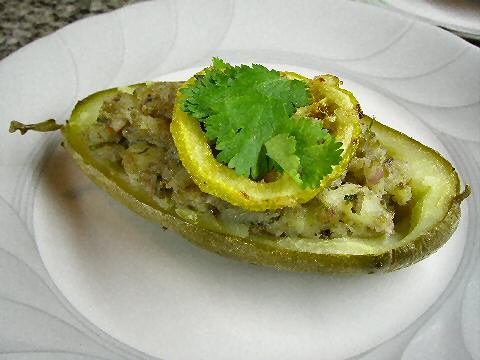
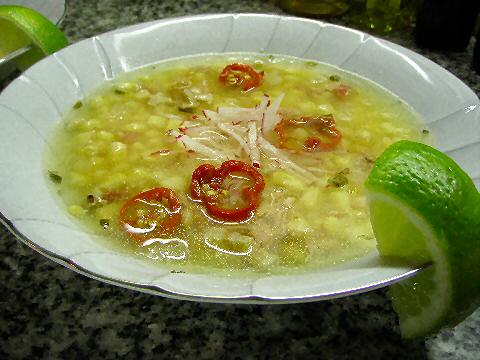
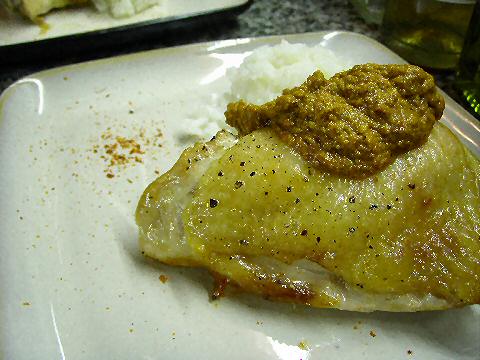
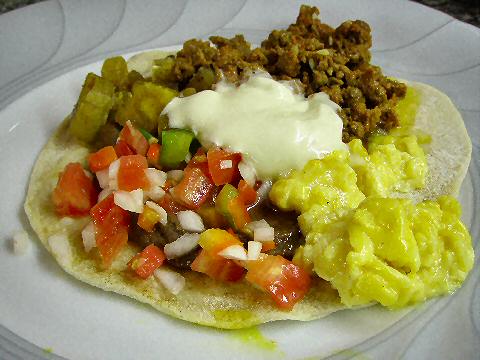
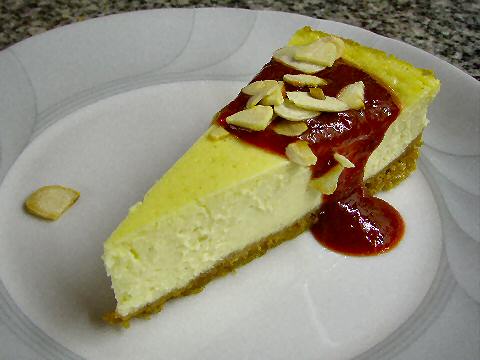
Overall, I’d say most folk were quite happy with dinner – I know we were.
Copyright © 2026 SaltShaker. This feed contains copyrighted photos and text from SaltShaker. If you are not reading this material in a feed aggregator or by e-mail subscription, the site you are viewing may be guilty of copyright infringement. Please contact [email protected] so that I can take appropriate action.
Plugin by Taragana
]]>Every man with a bellyful of the classics is an enemy to the human race.”
– Henry Miller, Author
New York City – The first week I moved to The Big Apple, in 1982, someone told me I had to go check out “the best deli in the city” because they were probably going out of business that year, the building being sold to developers… I went. It was an experience, and for a boy from the midwest, still wet behind the ears, their corned beef and their pastrami were a revelation. Prior to that the versions I’d had, likely, were all vacuum-packed slabs of meat from commercial ventures, good no doubt, but in a different sphere of existence from these hot, steaming hunks of meat carved up to order, piled high on bread, a squirt of mustard, a handful of pickles on the side. Nothing more, nothing less. And, so I discovered the world of the “true” New York deli at Katz’s, 205 East Houston Street, Lower East Side. In short order, too, I found my way to Ratner’s, the Second Avenue Deli, Gus’s Pickles, and others… all long gone.
But Katz’s remains. And every year for the last twenty six years, I’ve heard that I have to run right down there because developers are buying the building and it will be no more. And, once every two years while I lived here I would wander my way over and run the gauntlet to end up with a heaping helping of melt in your mouth meat. I haven’t been since moving away a bit over three years ago now, and Sunday afternoon I met up with a friend with whom I usually head out to try interesting and obscure Asian spots that he’s discovered. He suggested Katz’s. It was so out of the blue, so out of character, that I couldn’t think of anything to say but “yes”. And so we trekked down to the Lower East Side, hopping off the bus in front of Yonah Schimmel’s, the only spot one goes to for a really good knish… no, I mean a really good knish… but knowing what lay in store for us, we ambled on by. We continued past Russ and Daughters… peering longingly in the window at the array of smoked fishes, and pickles, and… no, really, we know what we’re in for, we must… keep… going…
And so, we finally entered the cacaphonous, begrimed hall that is, probably always has been, and probably always will be, Katz’s – a place most of the world only knows from When Harry Met Sally as the spot where she demonstrates faking an orgasm… We began the arduous task of “dining”, a term that can only be applied to the experience by one with the loosest possible definition of the term. The security guard at the door looked us over, handed us a couple of “tickets”, the same speech that he must give a thousand times a day rolling off his tongue – don’t lose the ticket, all tickets must be turned in when you leave, whether it’s been used or not, keep the ticket with you at all times… yeah, yeah, heard it before… let’s move on. Pick a line, the shortest line, in front of any of the “cutters”. It’s a push and shove match for the most part, and the tables come so close to the cutting counter that there’s not really any space for a line anyway. The place is full of Asians… how odd, for years it’s been all about the Jews eating Chinese food, clearly they’ve decided to return the favor.
We pick a “line” with only one guy in front of us… how were we to know he was ordering a dozen sandwiches to go? A near quarter hour ticks by until we finally get to the counter, slip a couple of singles into the tip jar – it’s the only way to get a sample slice or two, not to mention friendly rather than surly service. We order one pastrami and one corned beef sandwich, on rye, smear of mustard, don’t think about ordering anything else… really.. no potato pancakes no matter how good they are… no salads… okay a handful of pickles, but really, no more than that. Hand over one of the tickets, the cutter marks it with strange squiggles that will mean something to the cashier later. One of us moves down the line to wait another ten or so clicks of the minute hand, a line that ought to move quickly since it’s just cans of soda, bottles of beer, and french fries… lots of people are getting french fries… fools… they have no idea how much food they’re in for. A couple of Dr. Brown’s Creams, hand over one of the tickets, more squiggles, grab some straws… let’s find a table, thank god we didn’t go stand in the line for those potato pancakes, no matter how good they are. Shove the debris from the last customer off to the side and sit at one of the longer “communal” tables, it’s the only space available, and if we’re lucky, one of the two or three cleanup guys around will actually deign to pick up some of the trash from past customers.
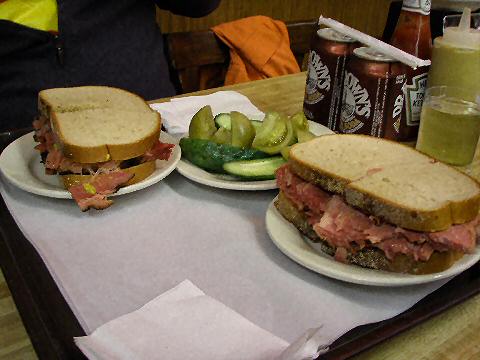
And, we dig in. And it’s everything I remember it to be. The pastrami, spiced and smoky and so tender it falls apart as we tear through our half a sandwich each… a pickled tomato or cucumber interspersed here and there. Then, on to the corned beef, saved becase we know what the experience will be… the long pink slices ribboned with fat looking like o-toro, tuna belly… and, in similar fashion, melting on the tongue. I learned long ago not to hesitate at this point, if one slows, one will not be able to finish, and indeed, my companion, who has “taken a break” between the pastrami and corned beef finds himself too full to continue before he’s made it halfway through the latter, and gives up, pushing his plate away grimly. But I am gamely licking my fingers as the last morsel disappears. Then again, I hear the developers are coming, and perhaps I, no longer resident of the city, will never see the inside of Katz’s again….
Copyright © 2026 SaltShaker. This feed contains copyrighted photos and text from SaltShaker. If you are not reading this material in a feed aggregator or by e-mail subscription, the site you are viewing may be guilty of copyright infringement. Please contact [email protected] so that I can take appropriate action.
Plugin by Taragana
]]>“Whoe’er has gone thro’ London street,
Has seen a butcher gazing at his meat,
And how he keeps
Gloating upon a sheep’s
Or bullock’s personals,
as if his own;
How he admires his halves
And quarters–and his calves,
As if in truth upon his own legs grown.”
– Thomas Hood, 19th century poet and humorist
Buenos Aires – One of the most common areas of questions I get is about the cuts of meat here in Argentina. The usual comes from an expat, looking for a particular cut of meat that they remember fondly from back home. Or sometimes it’s a visitor simply trying to figure out what part of the animal they’re ordering off a menu. And here’s the rub, as they say, beyond different names because it’s a different language, they’re simply not the same cuts of meat. Think of it this way – if I put a block of clay in front of you and tell you I want it divided into eight pieces that don’t have to be equal in size or form, I’m going to get a different division from every person I do that with. And, culturally, traditional ways to cut up an animal have come to vary from place to place – not just Argentina. Look, for example, at these first two diagrams (lifted and modified from answers.com, though I have the feeling they got them from elsewhere) – the “primary” cuts of beef in the U.S. and Britain (each primary cut gets further broken down into secondary cuts):
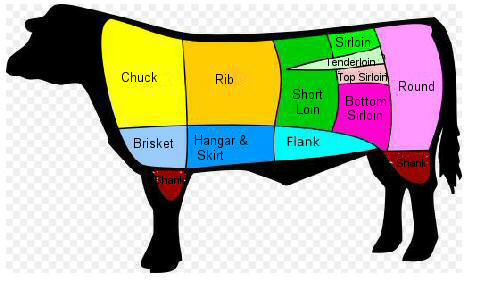
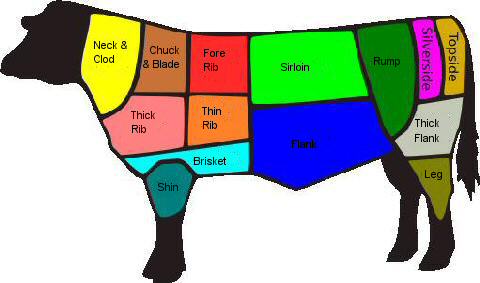
The first diagram is that of the primary cuts we’re used to in the U.S. (with a minor alteration, where I have “Hanger and Skirt” is tecnically referred to as the “Plate”). The second diagram is the same animal cut the way it would be cut in Britain. You can see that the animal is simply divided up in a very different manner, let alone different terminology. That’s not to say you can’t roughly approximate a particular steak between one country and another, but it would be hard to get the exact same thing.
Moving on to Argentina, the primary cuts look like this:
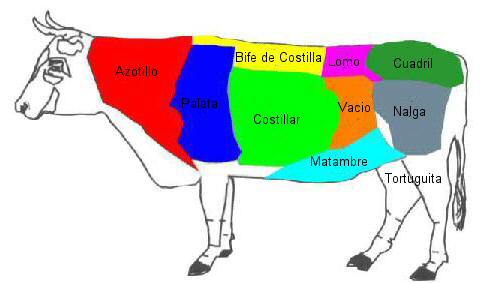
Now as I mentioned, these are just the primary cuts – for example, if one starts along the spine of the animal, moving from about midway through the azotillo and on through the bife de costilla, the individual cuts are the aguja, bife ancho, & bife angosta. The cuadríl is divided into the cuadríl, colita de cuadríl, & peceto. The costillar is split into part of the bife de chorizo and various rib cuts, while the paleta, continues down to the falda and then into that white space in front of the matambre. Inside of that, surrounding the diaphragm, is the entraña, or hanger steak. The ever popular bife de chorizo runs basically the same as a U.S. tenderloin, along the bottom of the lomo and on into the top of the costillar, basically forming a giant chorizo, or sausage, shaped cut that is on the inside of the ribs.
The most common cuts you’ll see in steakhouses, and their closest U.S. equivalents, since those are the ones I’m most familiar with (keeping in mind that they are almost all served boneless here), are:
asado de tira – ribs, but cross cut in strips (with bone)
bife de lomo – sirloin
bife de chorizo – tenderloin
cuadríl – rump steak
entraña – hanger steak
ojo de bife – rib-eye
peceto – top round, the “best” end of it is essentially a filet mignon
vacio – flank steak
falda – skirt steak
matambre – flank steak where it continues across the belly
Three other terms to know, though only two that you’re likely to see on a menu – ternera is a calf that is 1-2 years old, novillo is a male calf that is 2-3 years old (there is some overlap of the categories as the grading is partially by weight), vaquillona is a female calf, 2-3 years old, but I’ve never seen that on a menu, though very occasionally in a butcher shop.
Obviously there are more cuts here and there that aren’t diagrammed or explained, but hopefully this gives a good basic overview, and gives a sense of why it’s so hard to answer the question when someone asks for a direct translation.
Copyright © 2026 SaltShaker. This feed contains copyrighted photos and text from SaltShaker. If you are not reading this material in a feed aggregator or by e-mail subscription, the site you are viewing may be guilty of copyright infringement. Please contact [email protected] so that I can take appropriate action.
Plugin by Taragana
]]>