I’ve summed up the history of this dish already in that last post (linked above), and my first post on the topic. I’m not going to do so again… let’s go straight to my “awards” for the best versions I’ve tried. I have no doubt that one or another of these will be replaced at some point in the future. Indeed, a couple of the places marked in black on my map, indicating they’re now defunct, were among my favorites at one time – I’d love the soft rolled omelet version offered at Munich Recoleta (long closed) to be on a plate in front of me once again (pictured at the top of the post).
The gospel for the recipe is a simple scramble of eggs – never whisked, just moved around in the pan so that you have streaks of white and yellow. Seasoned with salt and a small amount of pepper, and with a julienne of cooked ham. On the side, never mixed in, and never on top, should be papas pays, or, crispy shoestring potatoes, lightly salted. And that’s it.
Let me start with the two most classic versions, the first of which is also, for me, far and away the best.
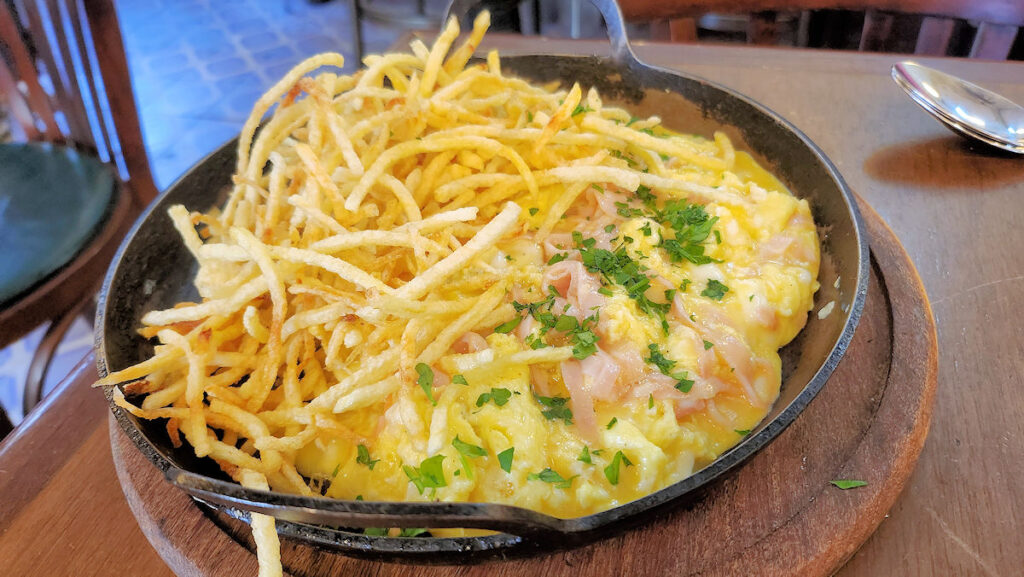
This is as traditional as it gets, and if you truly want to try the dish as “it was meant to be”, you should just head yourself over to Los Galgos, Av. Callao 501, San Nicolas. First off, this is one of my favorite bodegones….
A bodegón is a classic institution of local gastronomy. It’s an interesting word in that its original meaning is a “still life”, as in a painting of domestic objects, usually food related, captured in time. At some point in the mid 19th century it came to refer to a particular type of tavern. While there are no hard and fast rules, there are certainly customary signs that you’re in a bodegón, the decor tends to be older in style, lots of dark wood, memorabilia, photos – usually of celebrities or sports figures, some hanging garlic, salamis, or hams, the classic touch of an old time cash register is not out of place.
The food – a mix of the traditional local “diner” type dishes of Argentine cuisine, usually interspersed with something “ethnic” to indicate the heritage of the family that owns the place. Most often that will be some specific regional dishes to some part of Spain or Italy, and to a lesser extent, Germany. People have their favorite spots to go, their favorite tables to sit at, their favorite waiters to serve them, and, their favorite dishes – most places have one or two specialties that they’re known for. Generous portions, simple but delicious (one hopes) preparations, are hallmarks. If Cheers had been a restaurant rather than a bar, it would have been a bodegón.
This is about as dead-on as you can get. It’s a soft scramble, not hard, with ham, and the egg was clearly left separate at the start of the cook. It’s served on the side of a huge mound of beautifully crisp shoestring potatoes. I suppose you could call the sprinkle of parsley an addition, but it probably wouldn’t even bother a purist. It’s a whopping portion – intended for two as a meal – and runs just shy of $11 these days. The dish has a place of honor on the menu, and is, I think, the only place that Grupo Gramajo has given an award to for its authenticity. They also offer a version made with mushrooms instead of ham for the veggie folk. Los Galgos also offers the best version I’ve had of one of my favorite local desserts, the milhojas de manzana, a multi-layered baked apple tart.
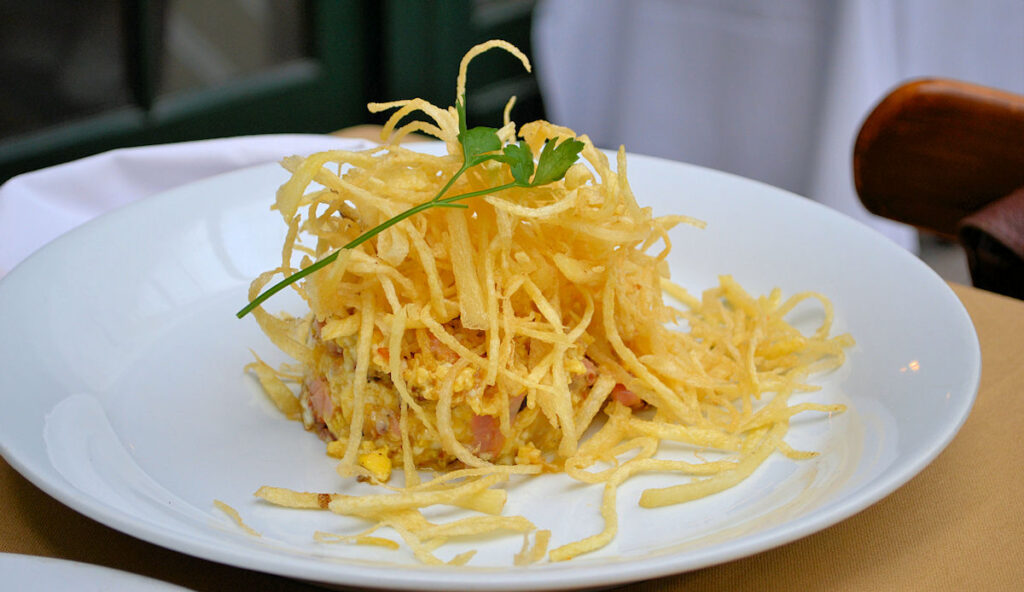
One ought to make a visit to El Club del Progreso, Sarmiento 1334, San Nicolás, the probable place of the dish’s invention. Now, given the legendary description of something thrown together in the midst of a hangover, it is unlikely that any care was taken as to plating, but, the club likes to claim that their version, while modernized and plated prettily, is the true one. It’s certainly one of the two nicest presentations of the dish I’ve encountered – the eggs and diced ham with very finely chopped herbs plated up in a ring mold to create about an 1½” high, 3? across cylinder, and then topped with absolutely crackly, crispy long shoestring potatoes. For me, despite the elegant presentation, the thing that takes away from this one being at the top is that the eggs are pretty much hard scrambled – which may help it hold together in a cylinder, but the dish lacks the creaminess of soft scrambled eggs. They also, at some point, took to putting diced bell pepper into the mix, though they’ll happily make it without. These days it runs around $11 – a far better price than the over $30 that they were charging the first time I visited, though given the size compared to the one above, it’s around three times the price.
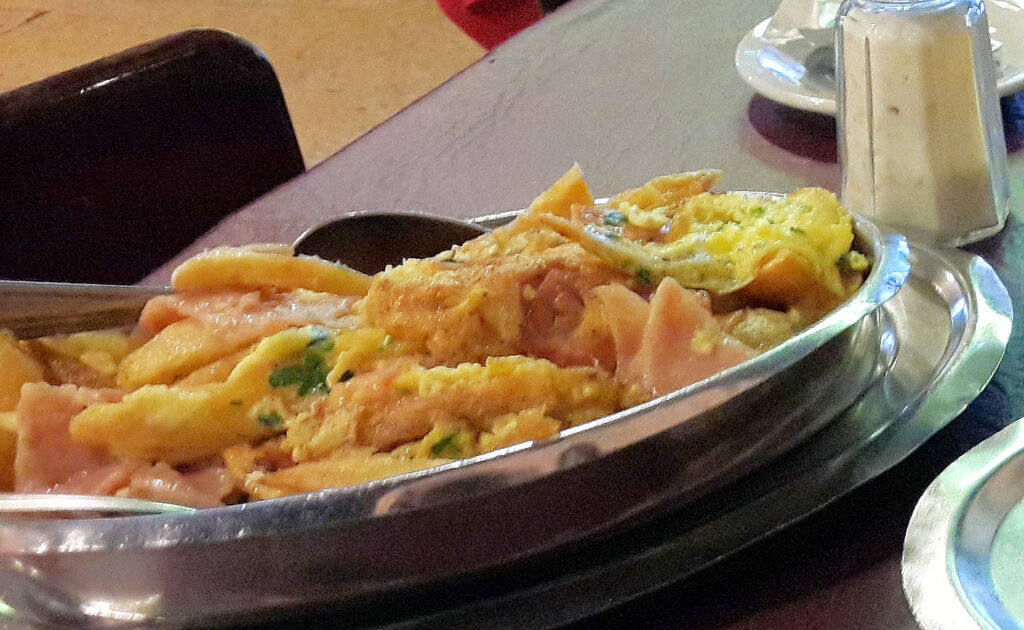
I don’t have a great photo for this one, it was in the background of a photo of the main dish I was focused on. But the version of Revuelto Gramajo from Albamonte, Corrientes 6735 in Chacarita, is an excellent one. It’s got the whole soft scramble thing down pat. Here, they go… bigger than the traditional, in that the ham is not julienned or diced, but rather draped slices of the cold cut – like cutting each slice in quarters. They also use regular fries and toss them into the scramble – though given that they’re still crisp, I’d guess they do that at the last moment so they don’t get soggy. And, as many places do these days, there are peas in the mix. It’s well seasoned and delicious – and the version with regular fries tossed into the scramble is far more common than the classic approach – it’s pretty much what you’ll see at almost any bodegón. For this approach, this one tops the list for me. It’s also the best value of these four spots, coming in as a large side dish for barely over $4. Albamonte also has great pizza, and one of the best roast chickens around, in a white wine sauce.
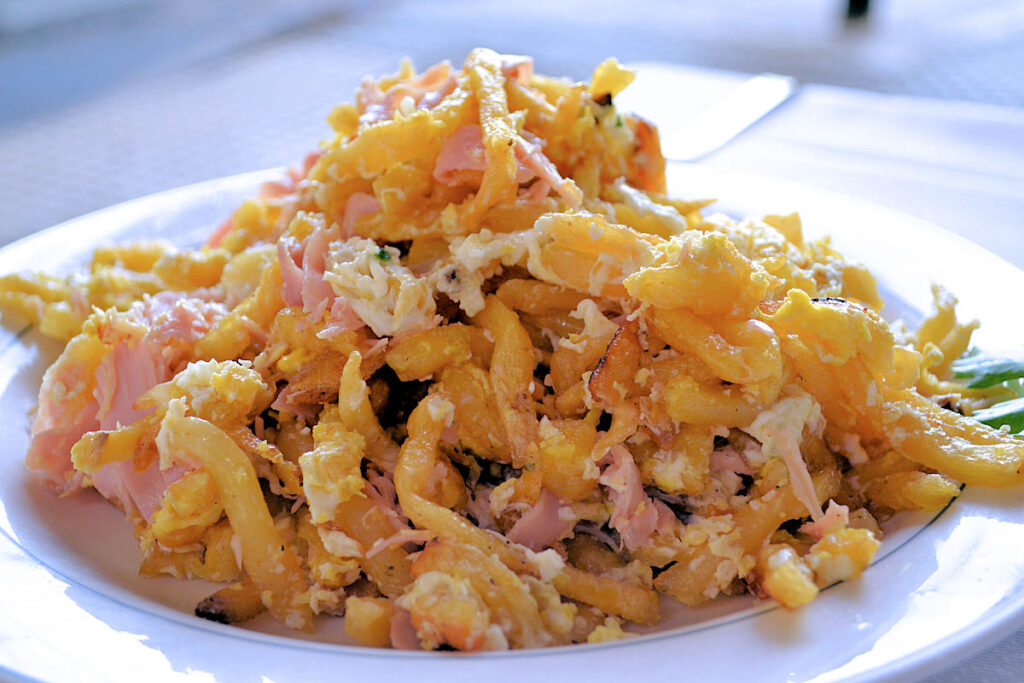
And, finishing off with a version that strays a bit from the classic, but not so far that it’s unrecognizable. The offering at Liber Resto Bar, Av. del Libertador 690, right by the Patio Bullrich shopping mall in Recoleta, is for me, the best balanced version of one that goes on a tangent. It’s a generous portion, a mound of beautiful golden fries – not shoestring, but fairly thin – let’s say, McDonald’s thin. The addition of dark, caramelized onions (as opposed to the barely cooked onions at many places that offer the dish), and thin shreds of both ham and chicken breast is where it goes in its own direction. It’s also one of the better seasoned versions of the dish around – with not just salt, but a decent amount of pepper. At around $9, it’s a great option.
And that’s where I’m going to end this one. There are plenty of other delicious versions – you can see that on the map above, and there are also, as noted, a few to avoid. Since this is a dish I really enjoy when it’s made well, there will be more to come!
Copyright © 2026 SaltShaker. This feed contains copyrighted photos and text from SaltShaker. If you are not reading this material in a feed aggregator or by e-mail subscription, the site you are viewing may be guilty of copyright infringement. Please contact [email protected] so that I can take appropriate action.
Plugin by Taragana




 ]]>
]]>A friend’s boyfriend, who is Argentine, finds himself subject to racism regularly. In a wine bar, I watched as a clearly late 30s-early 40s couple was carded by the bartender, despite there being many obviously much younger folk at the bar, only to realize after the fact that they were the only black people at the bar. I, myself, once received a reservation request as follows: “My name is Charles and I’m white and from Boston. I see from your bio that you’re JEWISH. I’ve never eaten JEW food and don’t think I’d like it. Don’t serve any.” which just reinforced my memories of Charles from MASH.

But all that aside, I’ve been to Boston, I think, four times before – once as a kid on a family vacation, and three other times – once in the early aughts for my friend David’s wedding, and twice more to visit him and do a bit of gastronomic exploring, in 2012 and 2017. The first two of those were just for two days, the last for three, and, this time, for a whopping 3-1/2. So there’s a ton of places to explore I’ve not been to, and, at the same time, my real experience of Boston and Bostonians, is somewhat limited. This time, I actually took the time to do things like walk the Freedom Trail and wander around a bit. I still come away with an impression of a certain level of staid stuffiness, but maybe that’s because I come to the party with that mindset.
Now, just before we jump to Boston, I stopped for two iconic visits (and to visit with my sole remaining aunt) in New Haven, Connecticutt.
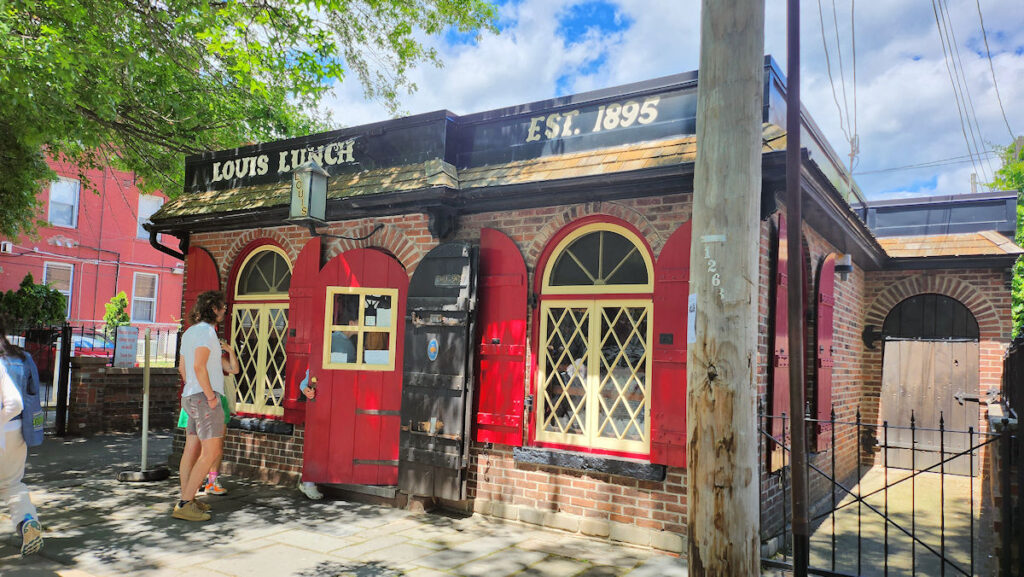
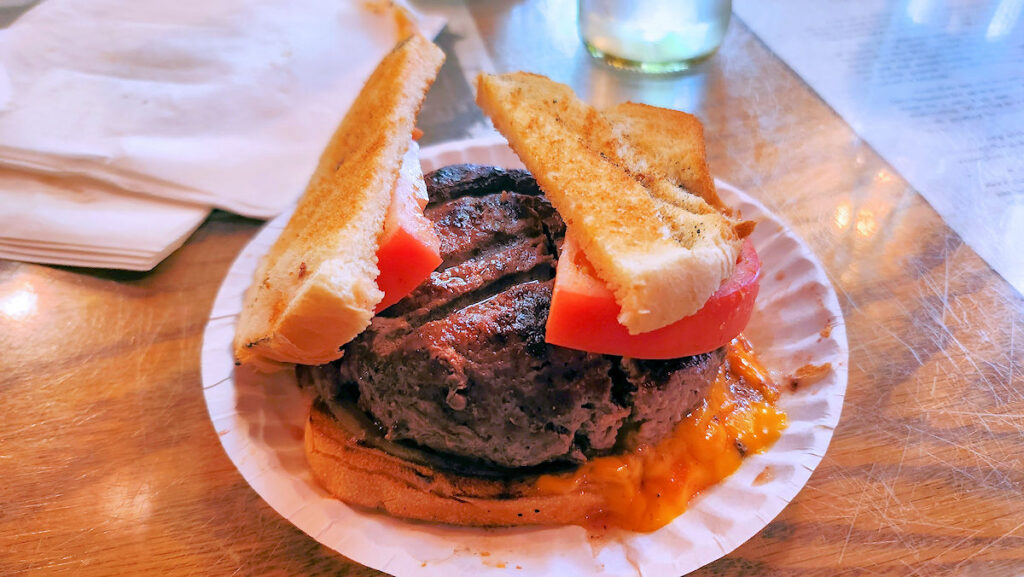
In all the years I lived in New York, and previous visits to New Haven to see my aunt (and uncle while he was alive), we never really ate out much. And somehow, I never managed to make it to the famed Louis’ Lunch, 261 Crown Street (it’s just a short bus or train ride away from NYC). This is the supposed birthplace of the American hamburger. It’s still served, more or less, the way it was invented in 1895. Toasted white bread, a burger patty sitting atop melted cheese if you want the cheeseburger version (which was not one of the original options) and a slice of grilled onion, topped with a thick slice of tomato, and no condiments on it, nor available. No one has, to the best of my knowledge, ever claimed this as one of the best burgers around, and it’s not. It’s good, well seasoned, and I like the simplicity of the accompaniments, but I found it overcooked, into about medium-well territory, despite their “we only serve burgers medium rare” policy. Decent potato salad on the side.
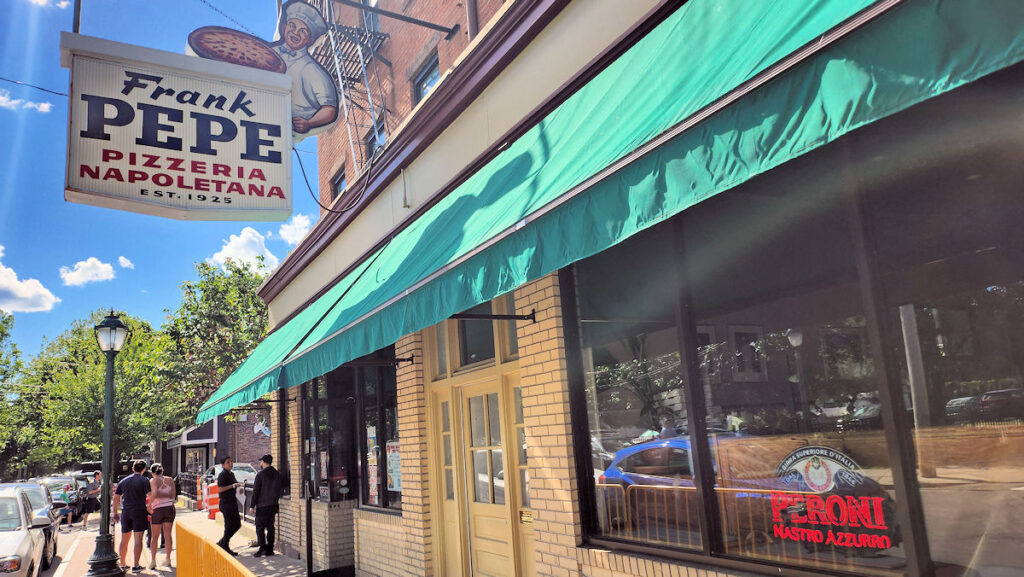
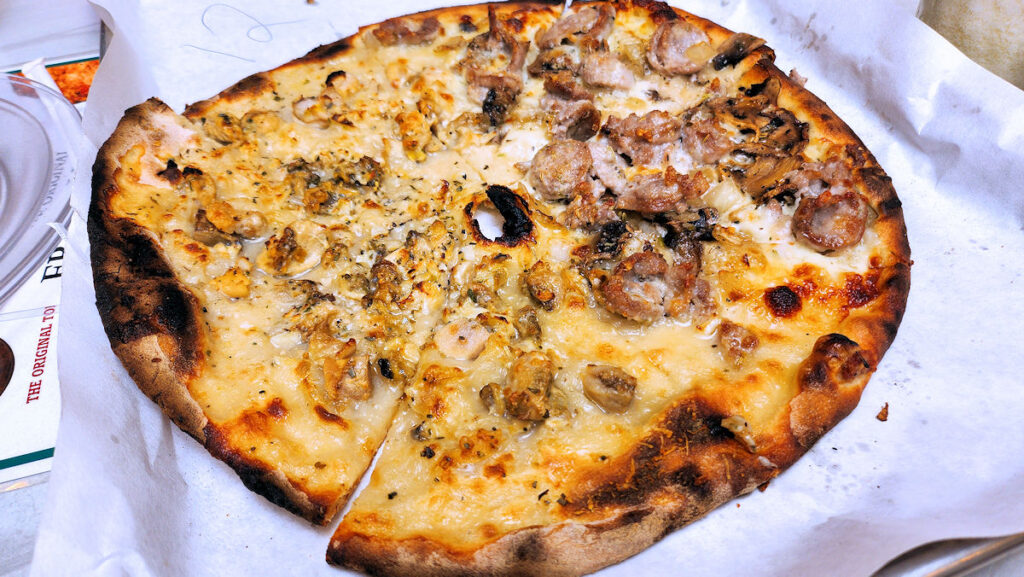
And, a visit to the iconic Frank Pepe pizzeria, 157 Wooster Street, for their acclaimed “white clam pie” Neapolitan style pizza. Now, to my mind, this style of pizza is not Neapolitan, but with its cracker thin crust, seems far closer to Roman style. We split a half white clam and half sausage and mushroom pie – my aunt isn’t fond of the clam pizza. It’s good, but no more than that. It’s really garlicky, not a bad thing, the toppings are generous, and if I lived nearby I’m sure I’d get pizza from here again – depending on how good the pizza is at other contenders for top spot, like Sally’s Apizz, and Modern, and a few others.
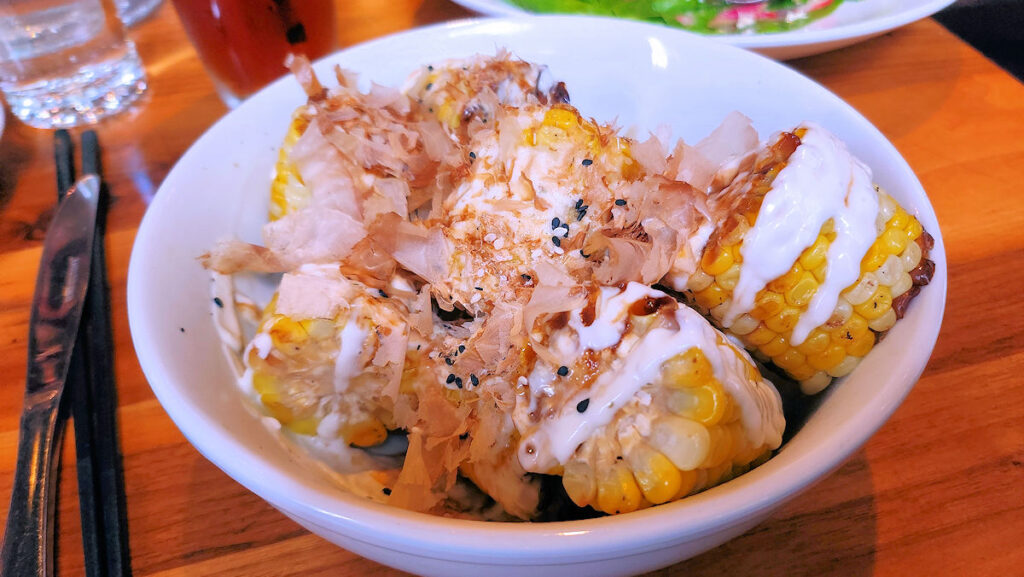
I arrived mid-day and just wanted a snack. Near to where I was staying, I spotted Banyan Bar + Refuge, 553 Tremont, which was on the “dumpling list”. You know there’s a dumpling list. Unfortunately, it turns out they only serve dumplings for happy hour, from 4-6pm daily, and no exceptions were to be made… <sad emoji face>. But I thoroughly enjoyed a bowl of their take on elotes, the Mexican street food, here lathered with a miso aioli, bonito flakes, and a light sprinkling of furikake, along with a little green salad. Just trying to cut through whatever I might have built up in my arteries over the days in Panama City, New York City, and New Haven. The dumplings remain to be tried on a future visit.
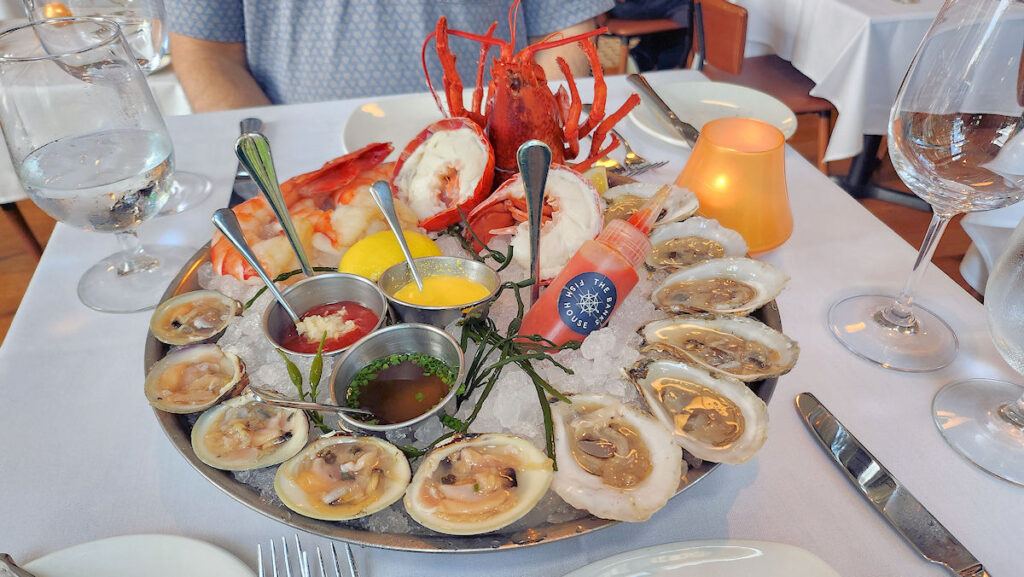
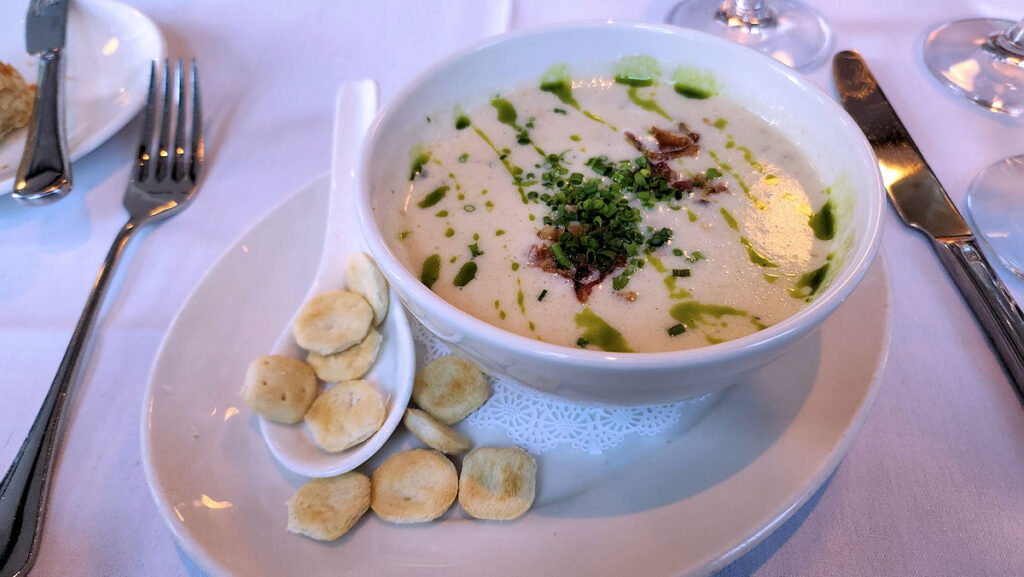
I met up with David at The Banks Fish House, 406 Stuart Street, for dinner. This place was on the list because we both saw and liked a photo and description of their clam chowder with Berkshire pork belly and chive oil. It was quite good, though I have to admit, I’d pictured the chowder with lovely, crispy, diced pork belly, while this just had about a tablespoonful of finely chopped pork, almost like “bacon bits”, that didn’t add a lot to the dish. Better, was the seafood platter we shared (among other dishes) with half a dozen each of clams and oysters, big juicy prawns, lobster tail, and of note, an excellent house-made hot sauce and saffron aioli.
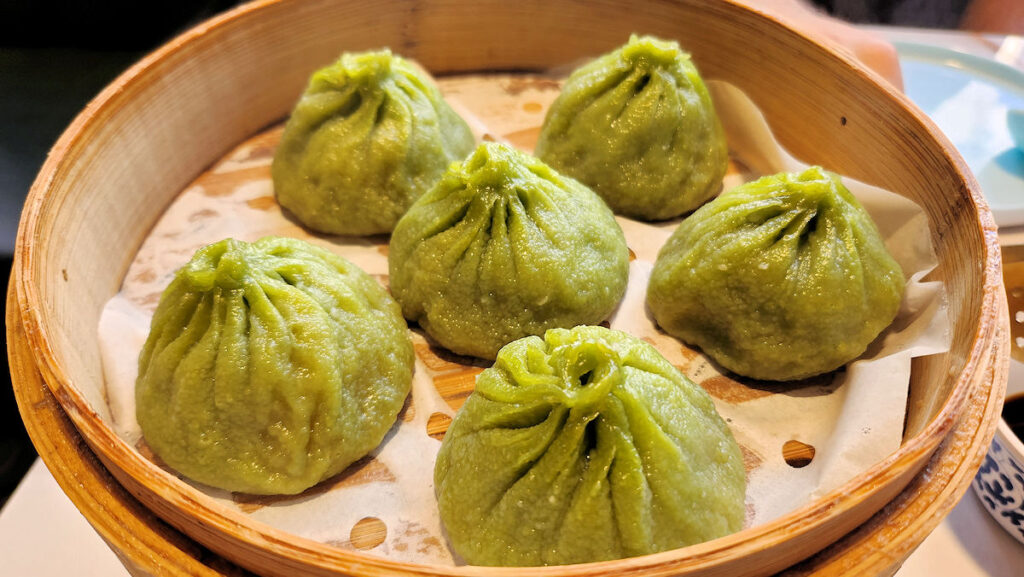
Next day started our “dumpling dive”, with visits to four places in Chinatown. A return to Hei La Moon, which had been our favorite during our last dumpling crawl, in 2017 – they’ve moved locations, and shortened the menu (and no longer have the amazing bean curd skin roll – they have another one, not the same, and the manager told us they’d dropped the really amazing one from the menu), and no longer do the rounds with the dim sum cart, you now order off a menu and they deliver by cart. From there it was to Gene’s Chinese Flatbread Cafe for acceptable hand-pulled noodles with chili-cumin lamb. On to Nan Xian Express for boring, slightly weird dumplings and cucumber salad. And, not on our list, but serendipitously encountered, fantastic soup dumplings at Fuchun Ju, 55 Beach Street, where we indulged in the best of the day – abalone and pork soup dumplings (pictured), and dried scallop and pork soup dumplings.
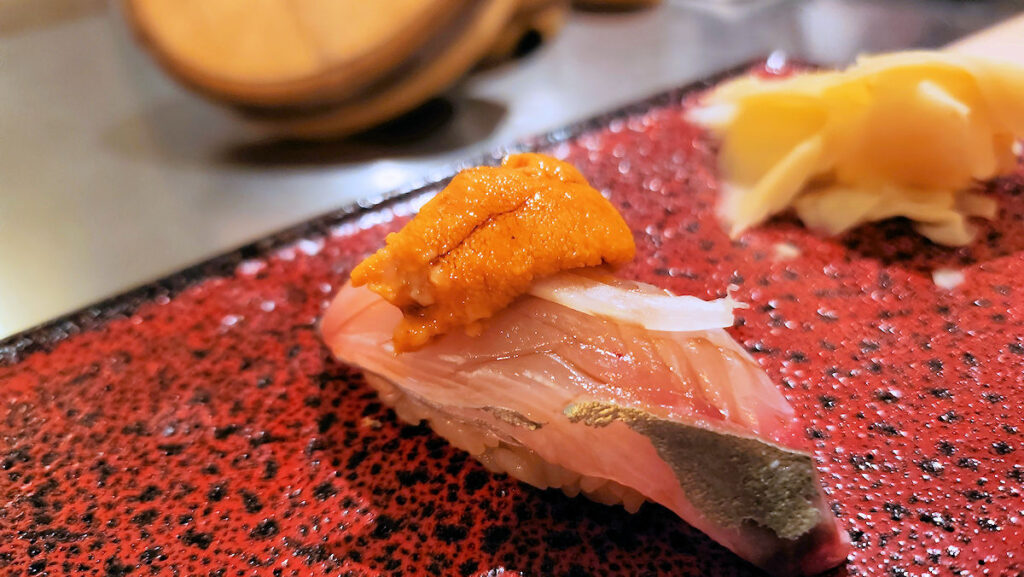
David had arranged an omakase night out at his current favorite sushi bar, No Relation, 11 William E Mullins Way. Exquisite. Some of the best sushi I’ve had in a very long time. And the small, private counter for, I think, ten, with two chefs attending to everyone, plus someone on hand to recommend sake and wine pairings, impeccable. Favorite piece of the evening, this nigiri of shima aji, yellowtail tuna, topped with a sliver of sweet Vidalia onion and a tongue of sea urchin.
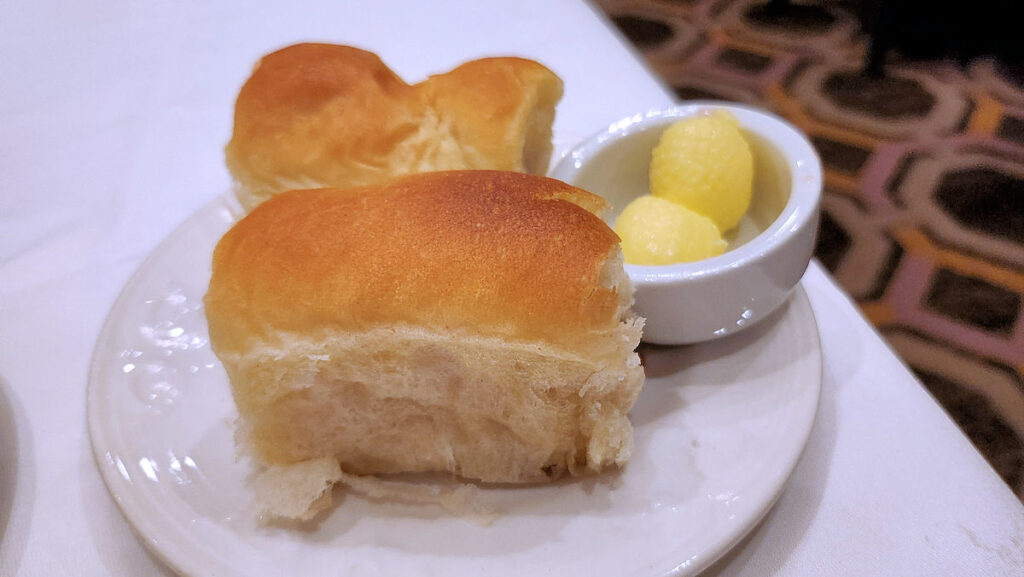
Having started with the two iconic visits in New Haven above, while I was out marching about on my first day in Boston, along the Freedom Trail, I spotted the famed Parker House (now an Omni, and the header photo for this post), and its equally iconic Parker’s Restaurant, 60 School Street, the birthplace of not one, but two items of gastronomic historic import. They’re only open for breakfast and lunch, so I popped in early the next morning for the former. Asking about the famed Parker House rolls, I found that they only offer them at lunch. However, a bit of conversation with my waiter(s) in Spanish, as they all spoke it, and someone opined that they had just come out of the oven in preparation for lunch and he could snag me a couple. Damn these are good. I’ve had other versions of the Parker House roll in other places, but none of them were this light, fluffy, and delicious.
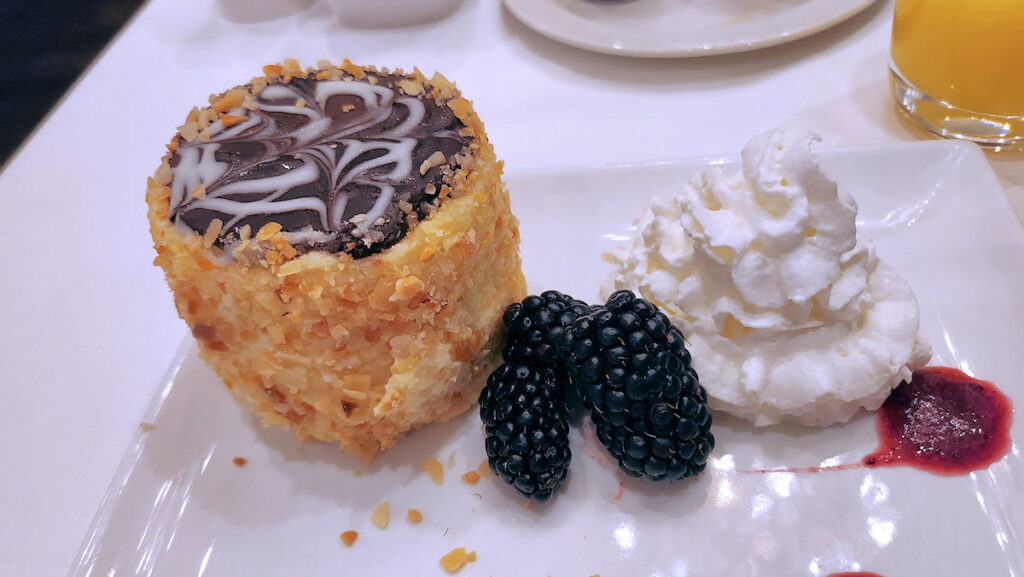
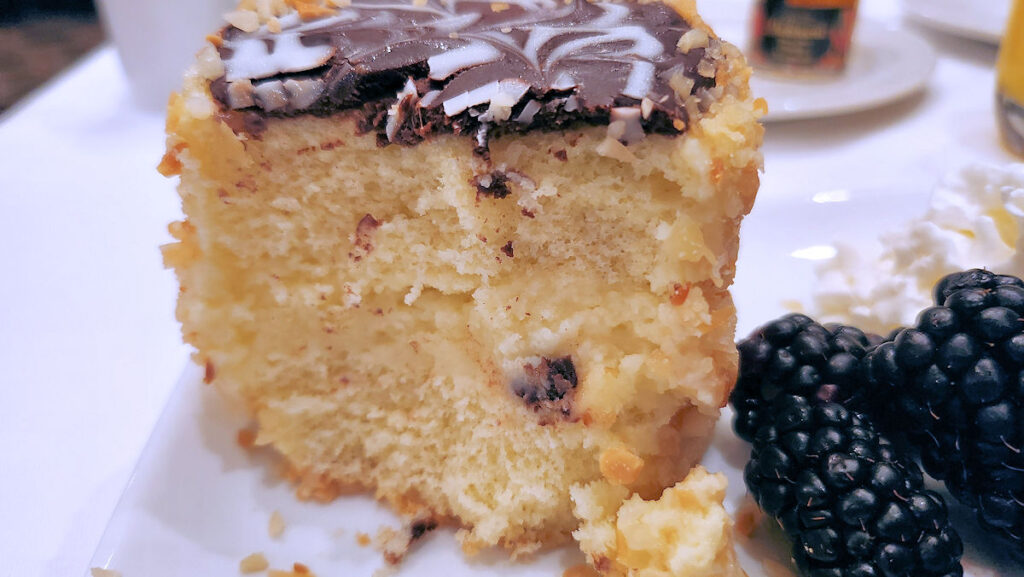
And the other, is the famed “Boston Cream Pie”. Life is short, eat dessert for breakfast, or something like that. We all know I’m not a huge dessert fan, but, in the interests of… science? First off, it’s not a pie. It’s a cupcake. A fancy cupcake, but a cupcake. The cream filling is minimal, a sort of thin ribbon like frosting between two layers of a regular cake. And the topping is a waxy chocolate glaze. I ate just under half of it and decided it wasn’t really my thing. I ate the berries. Personally, I think the Boston Cream doughnut at DD’s is better, if just because it has more cream filling and a more generous chocolate glaze. Oh well.
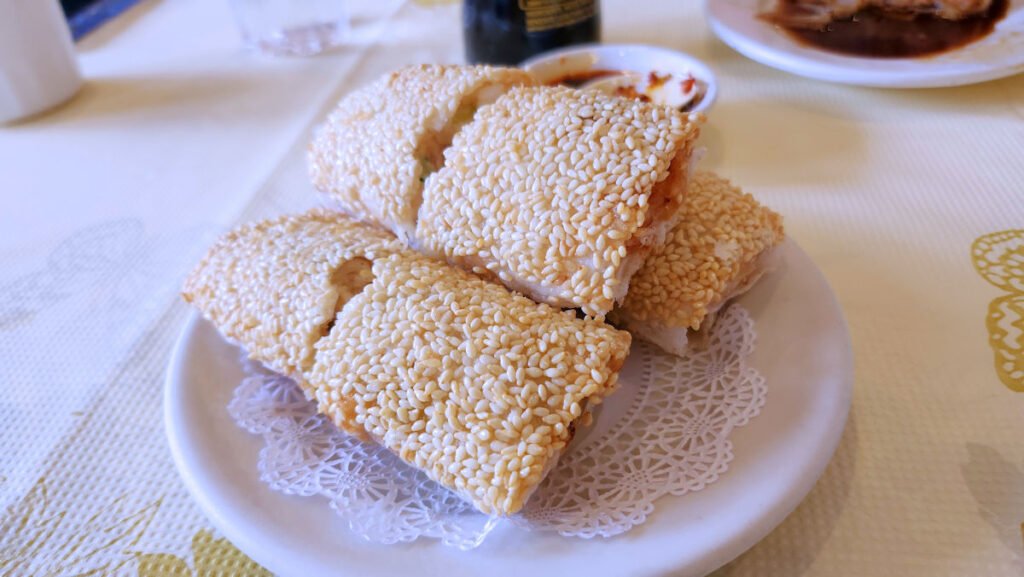
Day two of dumpling diving was a bit less successful. We started off with a good array of dumplings at District Kitchen in Malden, just northeast of the city, with David and I being joined by another Boston friend, Brian. No wows, but we enjoyed the soup dumplings, calamari dumplings, and “Mama” dumplings, which seemed to be fairly standard pork potstickers, but very good. Then we moved on to Sun Kong, 275 Eastern Avenue in Malden, for really excellent bean curd skin rolls with pork, mushroom, and bamboo shoots, a beef filled rice noodle roll, and very different and very delicious pan-fried rolls filled with shrimp and water chestnuts, and coated with sesame seeds. The day went downhill from there, gastronomically, with oily, chewy, inedible potstickers and szechuan peppercorn pork at Noah’s Kitchen, and insipid, watery pork and chive dumplings and wontons in chili oil at Bess’ Cafe, both in Brookline, the opposite side of town.
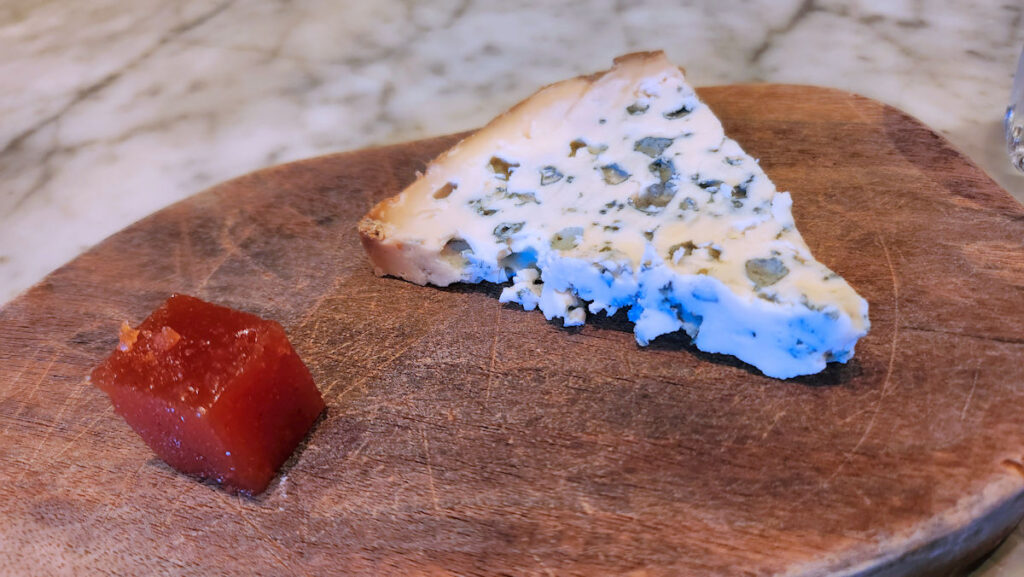
I soloed the next two meals, with a light dinner of a wedge of Valdeón blue cheese, some jamón ibérico, and a glass of excellent red wine, all from the Castilla y León region of Spain, at Barcelona wine bar, 525 Fremont Street. The experience was marred by both deafeningly loud music and shouted conversations, and, the previously mentioned carding incident. Given both, I wouldn’t go back, despite the food and wine on offer.
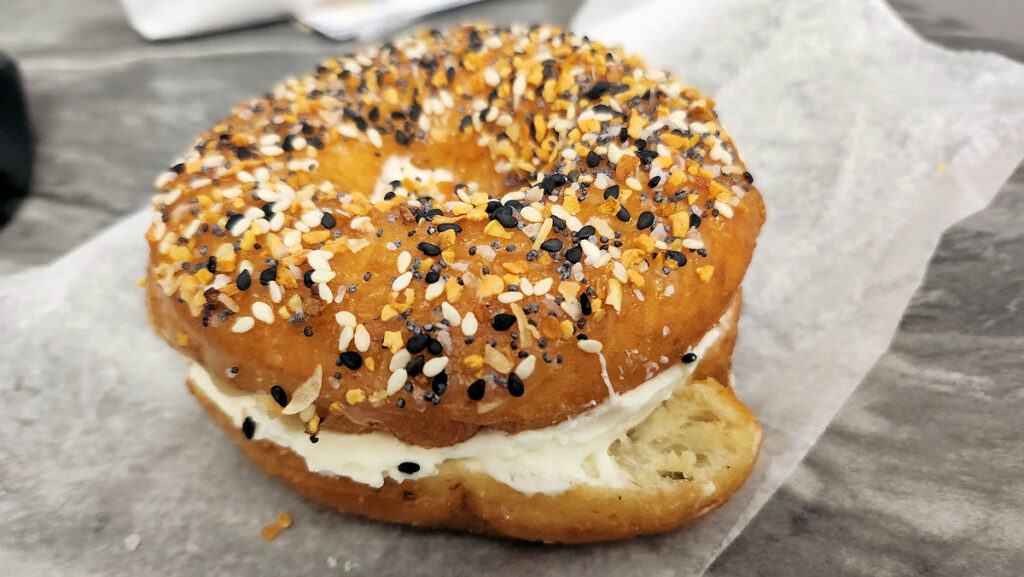
Another breakfast. What am I doing eating breakfast? I don’t eat breakfast. But Blackbird Doughnuts, 492 Tremont Street (and other locations) was recommended for their unusual flavor combinations. I couldn’t resist trying their “Everything Bagel Doughnut”, despite that I could easily see it being a potential abomination. It’s not – first off, it’s not a sweet doughnut, or only a barely sweet doughnut, sliced in half and slathered with cream cheese. And obviously, the doughnut is topped with everything mix. Flavorwise, it’s okay. It’s pretty much just the same flavors as an everything bagel with cream cheese would be, though the flavor of a doughnut is different from that of a bagel. And the soft, squishy texture is a little off-putting contrasted with mental expectations. A salted toffee doughnut was better, if lacking a bit in the salt. Meh.
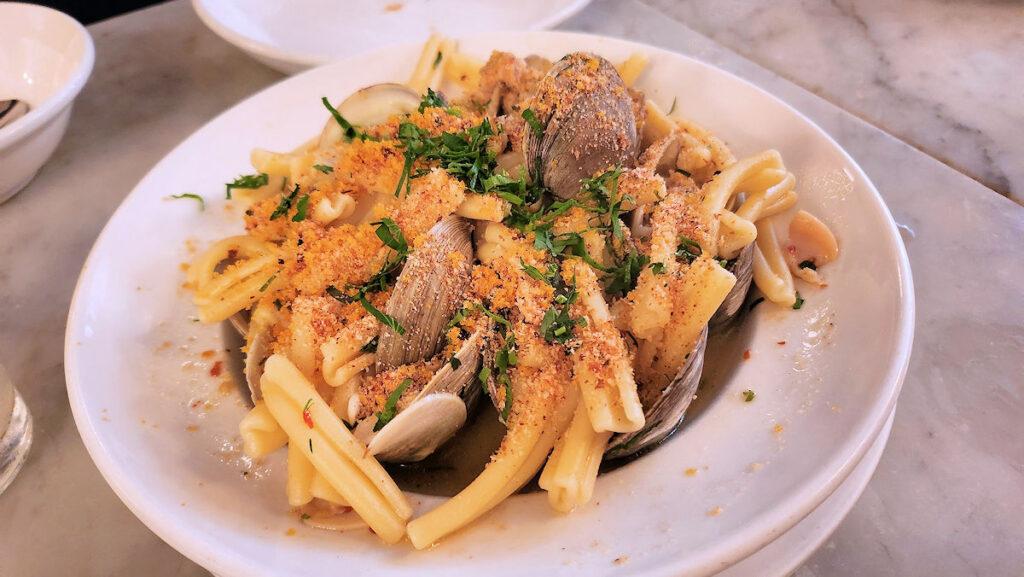
David and I decided on a non-dumpling day and headed for a mutual favorite, Neptune Oyster, 63 Salem Street. I’d had one of the best sandwiches of my life there during my 2012 visit. That sandwich, a sort of reverse vitello tonnato, is no longer on the menu. We shared a platter of excellent oysters on the half shell, a tuna tartare with pesto (a little too salty for our tastes), and a delicious plate of casarecce pasta with white clams, garlic, chili, and bottarga.
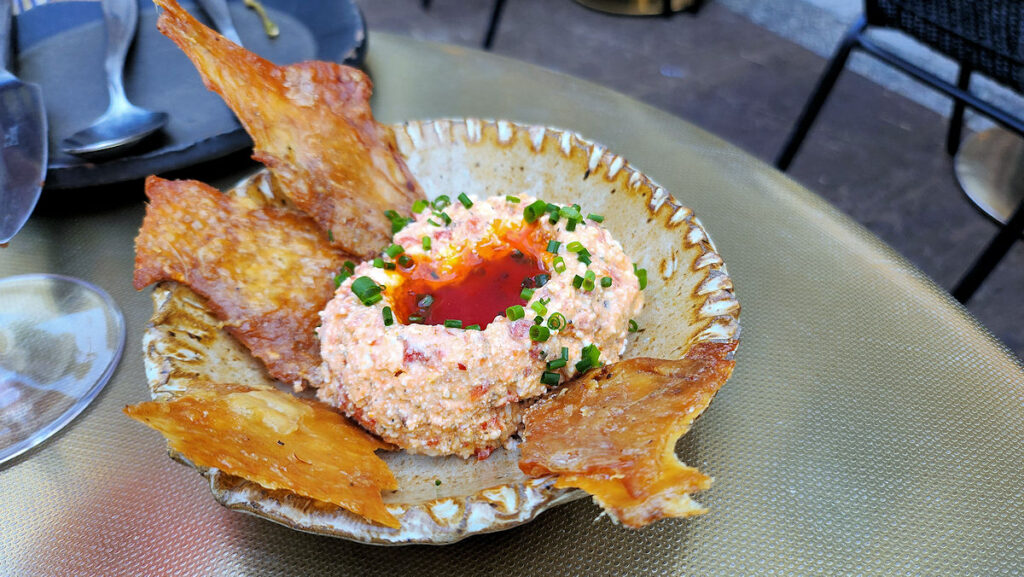
And, finishing off my Boston whirlwind, dinner out with Brian, at a place I’d simply spotted nearby when looking for good wine bars. Krasi, 48 Gloucester Street, is a Greek wine bar that serves primarily meze, small plate nibbles to accompany the wine. Greek wine is not my forte as a sommelier, and so I was glad to find that they have one on staff, who has stitched together a pretty amazing Greek wine list of two dozen wines by the glass and around two hundred by the bottle. He picked out a fantastic lighter red for us to accompany a selection of plates. Winner for me was this Htipiti, a dip of whipped feta cheese with chili, roasted red peppers, and sweet pepper oil, served with the “delivery vehicle” of crispy chicken skin (and more skins provided to finish off the dipping, as four of them were clearly not enough for this quantity of dip). If I lived in the area, I’d be here once a week.
Nice way to end my Boston visit. It was back to NYC early the next morning, lunch with friend John for his birthday at Loring Place, written up back in 2017, and as good now as it was then. And then an overnight flight back home to Buenos Aires.
Copyright © 2026 SaltShaker. This feed contains copyrighted photos and text from SaltShaker. If you are not reading this material in a feed aggregator or by e-mail subscription, the site you are viewing may be guilty of copyright infringement. Please contact [email protected] so that I can take appropriate action.
Plugin by Taragana
]]>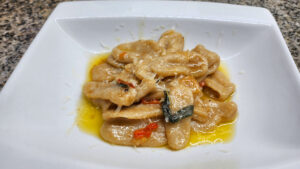
Somewhere along the line in my pasta posts I’ll get into the difference between corzetti and, well, corzetti. There are the ones we see in posh pasta restaurants that are lovely, delicate coins of pasta stamped with some sort of intricate design. And then there are the hearty lozenges that are vaguely intended to mimic a figure eight. Preliminary research suggests the pasta of the nobility versus that of the commoners, but I haven’t done a deep dive yet.
However, this dish, simple as it appears, garnered so much praise from guests that it surprised me. Sometimes, the classics are all you need! These are, obviously, the common folk ones – I don’t have a corzetti stamp, and am not about to shell out the quantity of pesos that they cost for a pasta I might make a few times over the years. The dough is different from most pasta dough that I’ve worked with, being a mix of high-gluten flour, salt, olive oil, and water – amounting to around a 60% hydration. It’s serve up in a simple brown butter with garlic, chili, black pepper, and sage, and sardo cheese, which is an Argentine cow’s milk version of pecorino sardegno, a sheep’s milk grating cheese.
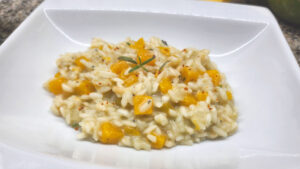
This is one I’ve been playing with for a bit to get to where I wanted it. It’s a squash and gorgonzola risotto, at heart. I toast the carnaroli rice dry until it just starts to color. Separately, I sauté onions and diced butternut squash in olive oil until they, too, are starting to take on color. Add in the toasted rice, and rather than starting this with wine, I start it with grappa, which gives it a little bite in the background, and then continue cooking it with vegetable stock until the rice is just al dente and creamy. It’s finished with a local gorgonzola cheese (not gorgonzola dulce, you want a little sharpness) pictured at the top of this post, finely chopped rosemary, and a little butter. Decorating the top, a sprig of rosemary and some tajín spice (ground chili and citrus zest). Yum!
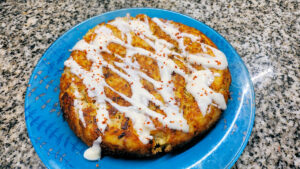
We had some leftover, and I mixed it with some egg and let it chill overnight, then made it into a tortilla de arroz, a big rice tortilla, then topped it with plain yogurt and tajín spice for lunch.
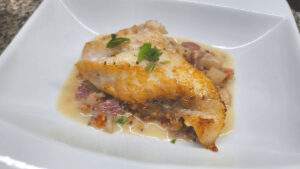
I covered our pasta from this week in my last post, the oxtail ragú, and while I loved that dish, it’s pretty much a classic, no invention going on there. This dish is one I’ve played with in the past, where I paired palometa with a walnut and smoked ham broth with a variety of beans in it. It was an idea taken from a dish I’d read about. I liked it, but wasn’t excited by it. This one has gone through numerous refinements, resulting in eliminating the beans entirely, and a related, but different, flavor profile.
The fish is mero, a type of local stone bass, and it’s simply dusted with salt and pepper and sautéed in olive oil and butter, and then topped with some chopped lemon verbena.
The broth starts with a roux derivative made with olive oil, walnut flour, and just a little wheat flour to help it thicken. It’s then used to thicken a simple fish stock made with the fish bones and trimmings, leeks, and a couple of dried anchovies. Separately, I sautéed a mix of finely diced sopressata, fennel, walnuts, palm hearts, limo chilies, and both yellow and black mustard seeds. I put the sautéed mixture in the plates, spooned over a bit of the sauce, and topped it with the fish.
And that’s how we ended the month of May. Mais oui!
Copyright © 2026 SaltShaker. This feed contains copyrighted photos and text from SaltShaker. If you are not reading this material in a feed aggregator or by e-mail subscription, the site you are viewing may be guilty of copyright infringement. Please contact [email protected] so that I can take appropriate action.
Plugin by Taragana
]]>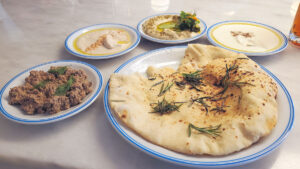
Cafe Mishiguene, Cabello 3181, Palermo – The casual off-shoot of the spectacular Mishiguene, to which we’ve been many a time. Mostly it’s sandwiches and nibbles. I decided to order up a big flatbread (mine didn’t come out puffy, everyone else was getting these big, puffy balloons of bread – joked about it and the manager came over and insisted on getting me a second one – which I didn’t want – too much bread – so she insisted I take one home – which I didn’t want, but she insisted more – I gave it to a homeless guy on the walk home). It’s good flatbread, puffy or not, though perhaps a bit too much rosemary atop – easy enough to remove.
I ordered a quartet of dips – labneh, babaganoush, tahini, and chopped liver. All, well, just kind of okay. Surprising given how good the parent restaurant is. These were just all a bit out of balance, mostly they tended towards lemony or vinegary, without enough salt to counteract the acidity. I can’t say I was wowed by any of them. And, expensive. The sandwiches do look good – maybe I’ll go back and try one.
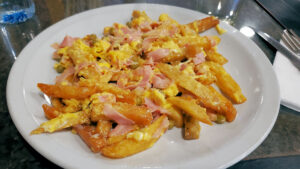
Miro, Av. Pueyrredón 1841, Recoleta – A little neighborhood café where I probably wouldn’t bother to write this one up except that it fits in to my long running search for a really good revuelto gramajo. This wasn’t it. Really oily fries, a meager amount of dry, hard-scrambled egg, a few wisps of lunchmeat ham, and no seasoning.
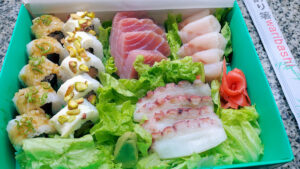
Bait Sushi, Cabrera 3533, Palermo – Apparently a delivery and/or pickup only sushi spot, popped onto one of the local food delivery apps. Not bad actually. Really fresh fish, I like that in addition to the ubiquitous salmon, which I didn’t order, they also had tuna, white fish (unspecified), and octopus. Plus some creative rolls that don’t rely on cream cheese. I’ll order from them again. [Closed]
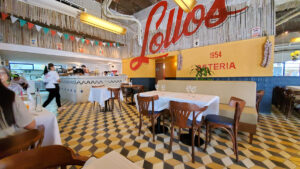
Lollo’s Osteria, Peña 2005 (Ayacucho Palace Hotel), Recoleta – The latest restaurant to occupy the ground floor restaurant space at this hotel, I’ve been waiting eagerly for another really good Italian spot to open around here. We can never have too many really good Italian spots, right? Now, I don’t know who settled on the founded in 1954 mark that’s in various spots around the restaurant. Beyond that this place just opened in October of this year, I can’t find any evidence that it existed in another location in or around Buenos Aires prior. [Closed up in, I think, early 2025, replaced by a coffee shop.]
We also have one of my pet peeves – the guy who was clearly the owner or manager of some sort, was dressed like a schlub, saggy bottom jeans halfway down his thighs, an shirt open at least a button too far and that was easily two sizes too small for his frame. A general air of unkempt, and a constant barrage of loud volume phone calls on his cell as he wandered around the restaurant. If you’re going to have your waitstaff and kitchen staff (open kitchen) dressed nicely, you should too, or at least stay way from the customer dining area if you’re not.
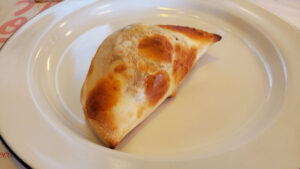
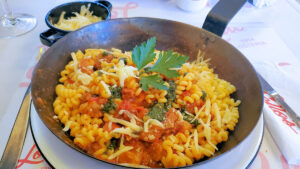
The plate of empanaditas de cordero, or small lamb empanadas, sounded intriguing, but arrived as a single, normal sized lamb empanada. For 1000 pesos, making it the most expensive empanada, lamb or otherwise, I think I’ve ever had in Buenos Aires. And while it was quite good, it wasn’t that price level good. The cable de teléfono pasta, or telephone cord pasta was cooked beautifully, and the ragú sauce was excellent – with a mix of different meats and sausages. I’d happily eat that again, and a generous enough portion that I took half of it home, which at 1900 pesos is a steal. Give me two empanadas for the first dish, or cut the price down to something more reasonable, and I’d order that again too.
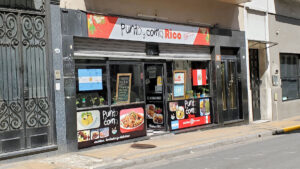
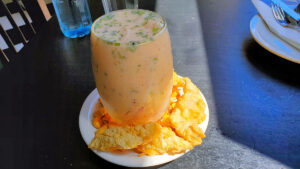
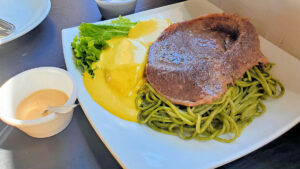
Punto y Coma Rico, Bolivar 690, Monserrat – Knocking off another Peruvian spot on my extensive list of ones to get to. I’m assuming they translate the name as Stop and Eat Well, more or less, as opposed to Delicious Semicolon. Though, perhaps a semicolon is needed here, as the two dishes I had here I have trouble believing came from the same chef. The leche de tigre was excellent. One of the better ones I’ve had – packed with flavor, a decent amount of fish, and meeting the standard of picante as requested. The fried fish on the side were a bit of an afterthought. They were fine, but should have been crispy rather than soggy. But the tallarines verdes con bistek were easily the worst version of this dish I’ve ever had. The noodles were way overcooked and barely warm, actually cold in parts – I would guess they precook them before service, and then dunk them in hot water to warm them up, but didn’t stir them around, so only the ones on the outside of the clump got any heat. The sauce, what I like to call Peruvian pesto, was bland and watery, as was the huancaina sauce on the undercooked, still crunchy potatoes. And the “steak” was nothing more than a thin scallop of meat, normally breaded and fried as a milanesa, here, without the touch of the usual salt, pepper, and cumin, it was simply almost browned in a pan and flopped atop the pasta. I’d go back for the leche de tigre, but not that latter dish, and probably not anything fried. Oh hell, no, I wouldn’t bother to go back, sorry.
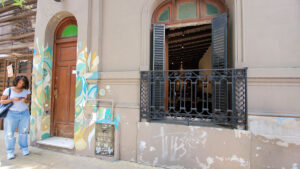
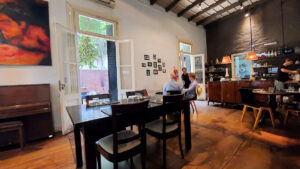
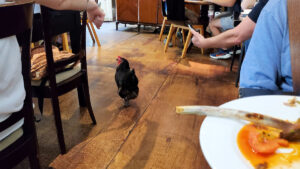
Catalino, Maure 3126, Colegiales – I’ve heard good things about this place over many moons, and finally we trooped out there for a Sunday afternoon lunch. My lunch companion had been before and recommended it. It’s a cute place, with a garden seating area and an indoor dining room. They’re both frequented by the restaurant’s pet rooster, who pecks about the place and poops on the floor with great abandon. At first the waiters attended to cleaming up after him (though I wasn’t thrilled after noting one waiter who just used a paper towel a couple of times to do so and then didn’t go wash his hands. Thankfully not our waiter or I’d have said something. At some point, too, the two waiters simply stopped cleaning up after the bird, and left poop and the occasional skidmark from them walking through it, on the floor. I have to say, that all kind of turned me off to the place, and while I really liked the food, is enough that I probably won’t return.
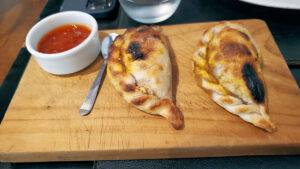
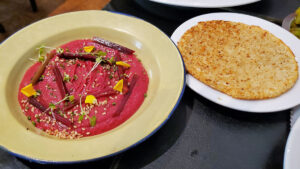
It’s all small to medium plate food for sharing. We ordered a couple of appetizers – some venison empanadas with hot sauce. Quite good empanadas, though the meat could have been anything – it certainly didn’t taste like vension. But it was well seasoned, and almost like a reduced stew. The hot sauce, wasn’t. Not even remotely picante. Still, at 950 pesos for two venison empanadas, a far better deal than the single lamb one for 1000 above at Lollo’s. The beet and white bean hummus was fine (1500 pesos), a bit more of a thin puree than a hummus, but flavorful. It doesn’t, surprisingly, come with anything to dip into it, and Catalino does’t serve bread. So we had to order an mbeju, a Paraguayan flatbread of yuca flour and cheese, which was excellent, but one thin disc for 400 pesos seems a bit sketchy.
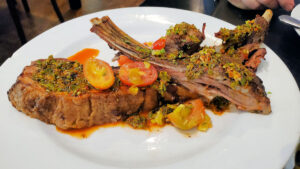
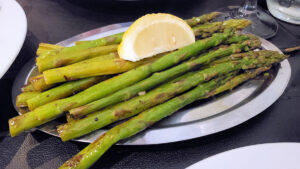
And, we split an order of wild board ribs, beautifully brasied and flavorful. A bit of an imbalance for a sharing plate – one rib is maybe a quarter the size of the other, but we just carved some meat off the bigger one to add to the smaller. 2600 pesos. And a side order of perfectly griddled asparagus with lemon and salt, an excellent accompaniment. 1400 pesos.
A couple of gin and tonics (800 apiece) and water… a bit of a surprise given that it’s tap water run through a filtration system, and they charge 220 pesos to fill up a small flask of water. It’s free tap water for goodness’ sake. Yeah, I know the filter cost you something, we have one in our house too, but that was probably amortized out long ago for less than a centavo per diner. Charging as much as you’d charge for bottled mineral water is a bit cheeky.
Overall though, if it weren’t for the hygeine thing, I’d go back.
And this seems a good place to wind up our penultimate to a century post.
Copyright © 2026 SaltShaker. This feed contains copyrighted photos and text from SaltShaker. If you are not reading this material in a feed aggregator or by e-mail subscription, the site you are viewing may be guilty of copyright infringement. Please contact [email protected] so that I can take appropriate action.
Plugin by Taragana
]]>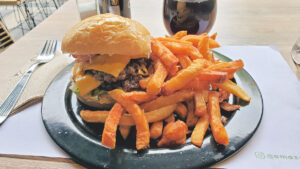
Amazonica Bar, Vicente López 2180, Recoleta – New spot, recently opened. Taking up the slack on the strip, I suppose, for the short-lived and not good Heisenburger Recoleta. The place is done up like some sort of tiki-bar out of the 1960s. Staff, fairly inattentive – when I arrived, there was no one at the counter, though the burger cook was about ten feet away, standing around. He looked at me, nodded, and went back to contemplating his navel. I perused the menu, waiting, and it was a good five minutes or so before a woman wandered out from somewhere and asked what I wanted.
I was tempted to go for their eponymous Amazónica burger with chilies and “fire sauce”, but decided on the Clásico, with lettuce, tomato, cheddar, bacon, and pickles. Not noted is that instead of a plump burger patty, they stack up a couple of thin patties. Not quite the “smashed” style, that gets those lovely crispy edges, just two thin patties. Nicely seasoned, if, not surprisingly, a bit over cooked. The bacon could have been crispier, but was okay, the pickles could have been more plentiful, but that’s me. The fries, despite the glowing reddish color, I assume from some sort of paprika dusting, are unsalted, and a request for salt, and some ketchup and mayo for them, was met with a roll of the eyes, but an acquiesence. Overall, a yawn. A shame, I keep hoping for a good burger place just a block or two from home. Then again, maybe the five block walk to La Birra Recoleta stops me from eating too many burgers?
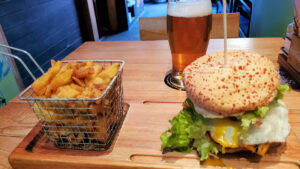
Fausto, Honduras 5715, Palermo – This one’s been on my list for awhile. Though I didn’t make a note of it, I think, based on looking at their menu, that it popped on there as one recommended because they had a particular, slightly bizarre burger, one topped with mac ‘n cheese. It’s the sort of burger that would make me curious. On the other hand, when seated at a table and looking at the choices, the whopping three patty burger ladled over with gooey pasta, just didn’t call out to me. Neither did most of the burgers on the list – with their “sextuple cheddar” or “triple bacon”. Much of it seems designed for Instagraming rather than eating like a burger – probably requiring knife and fork. I was also supremely disappointed that not one burger on the menu offers pickles. That’s practically a strikeout in my book.
So, I ordered a simple, “classic burger”. Two smashed patties each topped with cheddar, lettuce, tomato, and a fried egg. It arrived in short order. The patties are not smashed patties, they’re just thin preshaped patties, none of the crispy edged goodness you get when smashing one – in fact, barely caramelized surfaces at all – but at least well seasoned. The rest of it, fine, nothing special, nothing bad. The fries are just all broken bits I doubt there was a single whole fry in that basket. I don’t know if it’s always that way or if I just got the dregs of a batch that had been fried up. They are tasty, but do require a fork… or a spoon… to eat. The selection of beers at this self-styled ceveceria, or beer bar, is a limited dozen, and while all are identified by style, none are identified by brewery, and there didn’t seem to be any awareness of which breweries were involved anyway.
Maybe I should have ordered the mac ‘n cheese burger, just for something interesting. Meh.
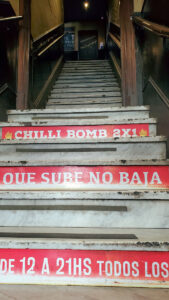
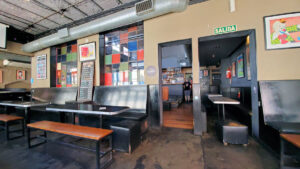
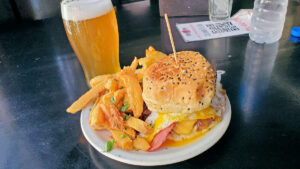
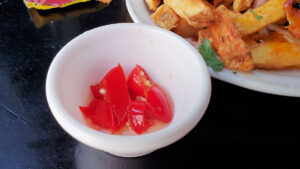
La Puerta Roja, Chacabuco 733, San Telmo – Long on my list of places to check out their “bar burger”. The first thing is to get to the bar. There’s no sign, just a “red door”, as the name would imply, next to a parking garage. Inside the door, a steep two-story stairway that leads to a bar that, well, kind of looks like it belongs above a parking garage. Everything at that point is kind of automated. You scan a QR code to get to the menu, select your menu items, add any notes, and send it. The waiters will deliver things as you ordered, but basically, decline to interact with you in any other way. When my chili-bacon-cheeseburger arrived without chilies, I wildly tried flagging a waiter down and was soundly ignored for about 15-20 seconds when one of them finally came over – his opening comment was “there’s a button on the menu page to ask for a waiter”. Excuse my French, but “F*k you”. Same, by the way, when you want a check – however, when I selected the “request check” button, it elicited no response. After waiting a bit, I finally just took the cash up to the bar, where all three waiters were just hanging out, looking at their phones, and handed it to them, and said, “I clicked the button to request a check, but you didn’t bring it, so here’s the money for it”, and walked out. Left half of what I’d normally leave for a tip – between that the waiters basically do nothing, and their attitude, maybe I should have left nothing.
The burger itself? Not bad. Decent patty, nicely seasoned. Good quality bacon, could have been crisper. Nice fried egg. Okay cheese. And, once I got the promised chilies (left off for no apparent reason – I mean, if I didn’t want them, I’d have just ordered the bacon cheeseburger, not the chili one), it had a nice spice to it. Fries kind of suck. Overall, an okay bar burger, but the lack of hospitality and service, I wouldn’t bother to go back.
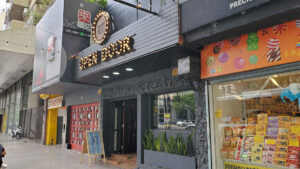
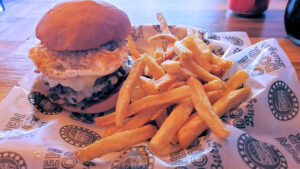
Open Door, Av. Rivadavia 6095, Caballito – This one came to my attention last year when a local paper wrote them up for their “bacon and raclette burger”. And it came back to mind when a recent post somewhere touted their provoleta and three types of fresh chilies topped burger. Unfortunately, despite the high recommendations of the first, they apparently long ago removed it from the menu, and the second turned out to be a special one-day festival burger. But, the young man manning the counter steered me towards their “Madre Mía” Burger, topped with bacon, cheese, fried egg, roasted peppers, guacamole, and a spicy sauce.
Overall, it’s just an okay burger. Smashed patty style, though smashed to the point it’s kind of breaking apart, and pieces of the burger kept falling off and out of the bun, plus it’s unseasoned meat. The bun doesn’t hold up, it turned into mush within minutes. The fried egg is hard-cooked. The bacon, nice and crispy, is chopped up and scattered atop – so while it looks well covered, there’s probably only one rasher on the whole burger. The hot sauce isn’t hot, though it is flavorful. The guacamole was a mere smear on the lower bun. The fries are decent. Overall a bit of a yawn.
Copyright © 2026 SaltShaker. This feed contains copyrighted photos and text from SaltShaker. If you are not reading this material in a feed aggregator or by e-mail subscription, the site you are viewing may be guilty of copyright infringement. Please contact [email protected] so that I can take appropriate action.
Plugin by Taragana
]]>
Again, this is the list, that will likely change, that I thought I’d work through. Now, the steps are pretty much the same in each of them, and I’m not going to go through every detail again every time. I’ll cover the important steps, probably in fewer words, but refer you back to the previous post on pasta alla gricia for a more in-depth look.
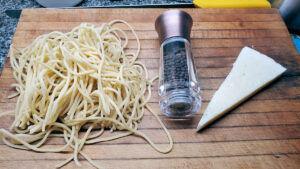
So, pasta cacio e pepe, or “cheese and pepper pasta” is pretty much the simplest pasta out there that isn’t just noodles tossed with butter or olive oil. We’ll get to that, in a round-about way, when we get to alfredo. As I talked about in the previous post, pepper wasn’t really a thing, except for the rich, when gricia was created, and it wasn’t until three hundred years later that it became a common condiment in Italian kitchens. The supposed origin of this dish is from shepherds in the area outside of Rome, who might spend weeks out in the hills. They could carry dried pasta, aged cheese, and peppercorns with them, but the guanciale would have gone rancid while they were out there.
Just three ingredients needed. The pasta, traditionally tonnarelli or spaghetti alla chitarra, are slightly thicker noodles than a classic spaghetti, and are, in cross-section, square, rather than round. Back then, without machines to squirt out round cross-sectioned pasta, all of those types of long pastas were likely squared. You roll out the dough really thin and then cut it in strips. The “chitarra”, or guitar, is a box with thin wires stretched across it like guitar strings, that you press the sheets of pasta through to quickly cut them. The other two ingredients, black pepper and pecorino romano, the same sheep’s milk cheese we used in the last pasta.
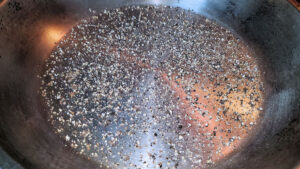
Because there’s no fat to render, you just crack a lot of black pepper into your pan. You want to toast it slightly, to release the aromas, but because there’s no fat to render or infuse, I don’t even turn the heat on under the pan until the pasta is about halfway cooked. I use a good amount of pepper here. For two portions, this is close to two teaspoons. Adjust that up or down depending on how much you like peppery things!
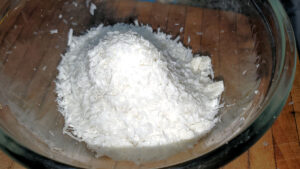
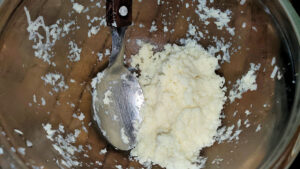
Again, we create our “cheese cream”, with grating the pecorino and adding a couple of spoonfuls of the boiling, salted, starchy pasta water into it (again, 1 tablespoon of coarse salt to 1 liter of water). Just enough to get it to form a creamy paste.
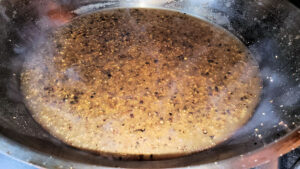
When the pasta is almost done, and the pepper is lightly toasting, the pan hot, you add a couple of ladles of the pasta water to the pan, and give it a good stir to infuse the water with the pepper.
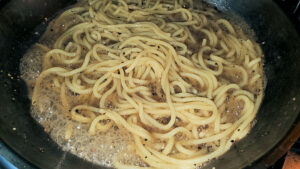
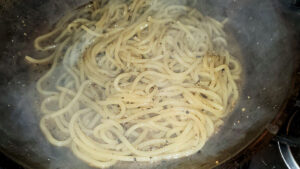
Add the pasta into the pan and finish cooking it. Add more of the water if needed. The starchiness from the water and pasta will start to thicken up. When there is only about a quarter cup of the liquid left…
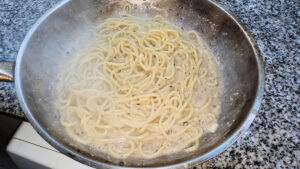
Remove the pan from the heat, again, emphasizing, off the heat completely, and add the cheese cream into it. Immediately toss and stir vigorously so that it dissolves and coats everything. It should thicken right up and create a rich, cheesy sauce for the pasta that clings to every strand.
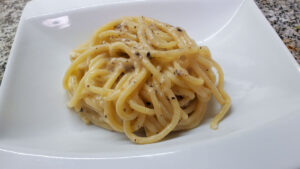
And, serve. Just like that. Nothing else added. It doesn’t get much simpler than this.
I was going to do a “two-fer” and cover alfredo in this post as well, but I think I’ll make it a separate one so it doesn’t get lost in the shuffle – next post, tomorrow!
Copyright © 2026 SaltShaker. This feed contains copyrighted photos and text from SaltShaker. If you are not reading this material in a feed aggregator or by e-mail subscription, the site you are viewing may be guilty of copyright infringement. Please contact [email protected] so that I can take appropriate action.
Plugin by Taragana
]]>