
The Eswatini flag, adopted in 1968, consists of five horizontal stripes: two blue at the top and bottom, a central red stripe, and thin yellow stripes bordering the red. The central focus is a black and white Nguni shield with two spears, symbolizing protection from enemies, and peaceful, sort of yin-yang coexistence between the white and black populations. The red represents past battles, blue signifies peace, and yellow represents the country’s resources.
Eswatini’s cuisine reflects its primary crops of sorghum and maize, often served with goat meat – the most common domesticated food animal. The farming industry relies on sugar cane, tobacco, rice, corn, and peanuts. Traditional dishes include various types of porridges and drying meat for later use is common practice.
For our project, I went with a modern version of a traditional cornbread. The very traditional version, sinkwhat sembila, is more like a tamal than a bread – a mix of ground corn, salt, and sugar, steamed in a corn husk. But modern bakeries and home bakers often make it much more like a loaf of bread – called Mealie Bread. On the soup side, going with something goat based seemed like the right move, and I went with a rich, almost stew-like soup called Imbuti. It did require me buying an entire small goat, frozen, from one of my neighborhood butchers. Luckily he was wiling to cut it into sections and wrap each piece separately, so I could stick all but the one I was using (the shoulders and head) into the freezer for future use.
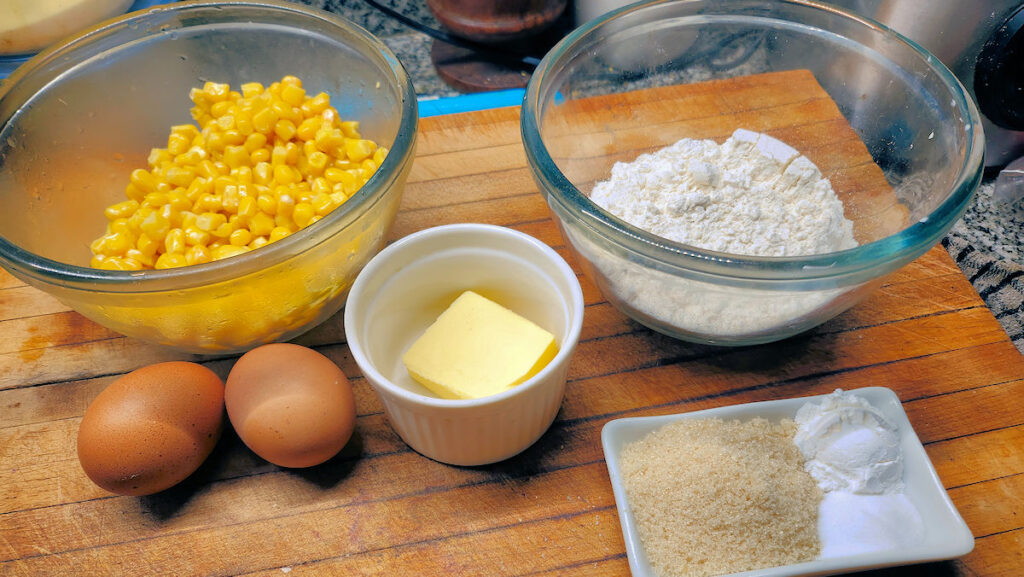
We have about a cup and a half of corn kernels – either freshly cut off the cob, or, basically, one thawed frozen package of corn; about 3/4 cup of all purpose flour, two eggs, two tablespoons of butter, two tablespoons of sugar, 1 teaspoon of baking powder, and a half teaspoon of salt.
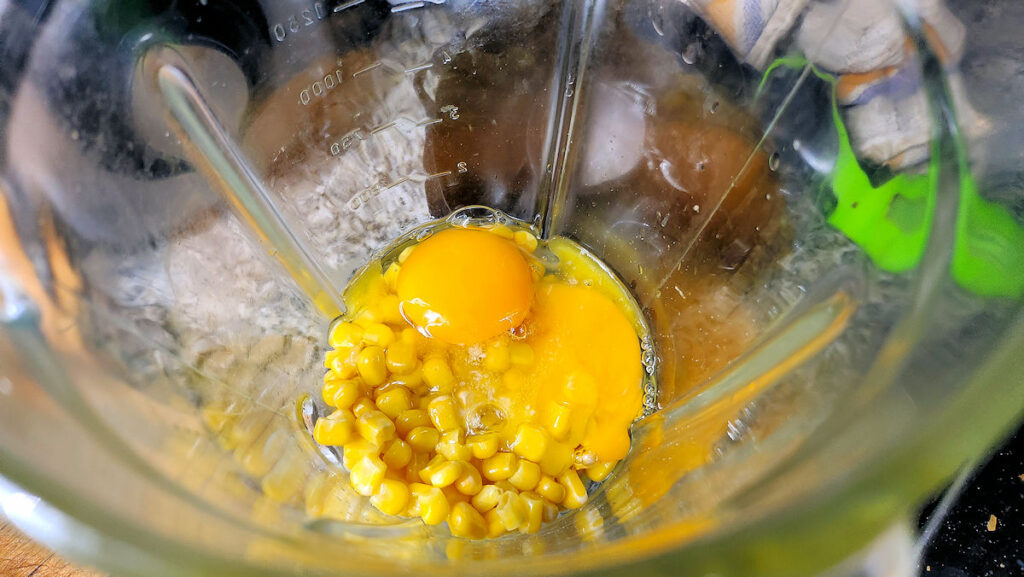
Put 1 cup of the corn, the eggs, and butter (melted) in a blender.
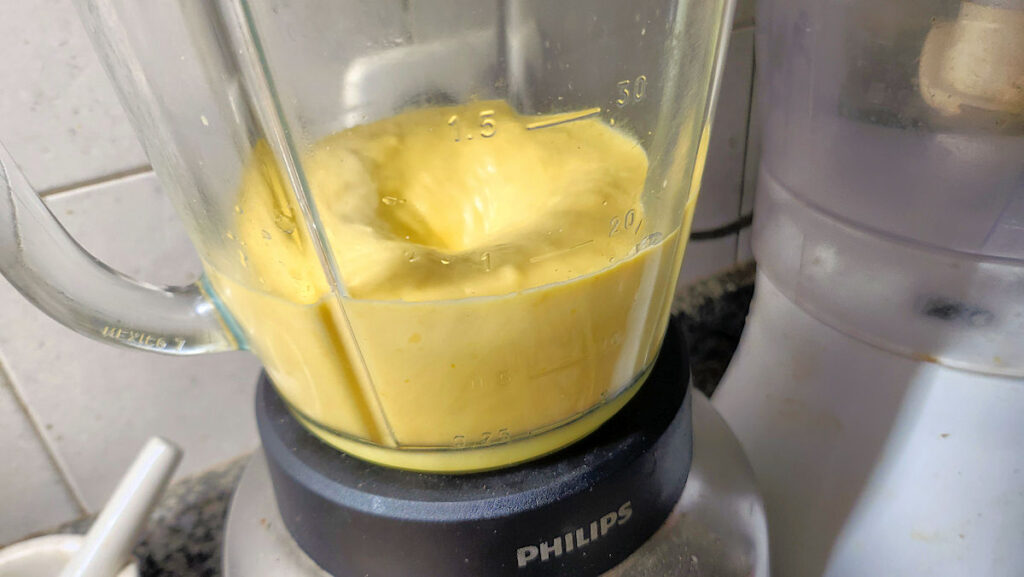
Puree until completely smooth.
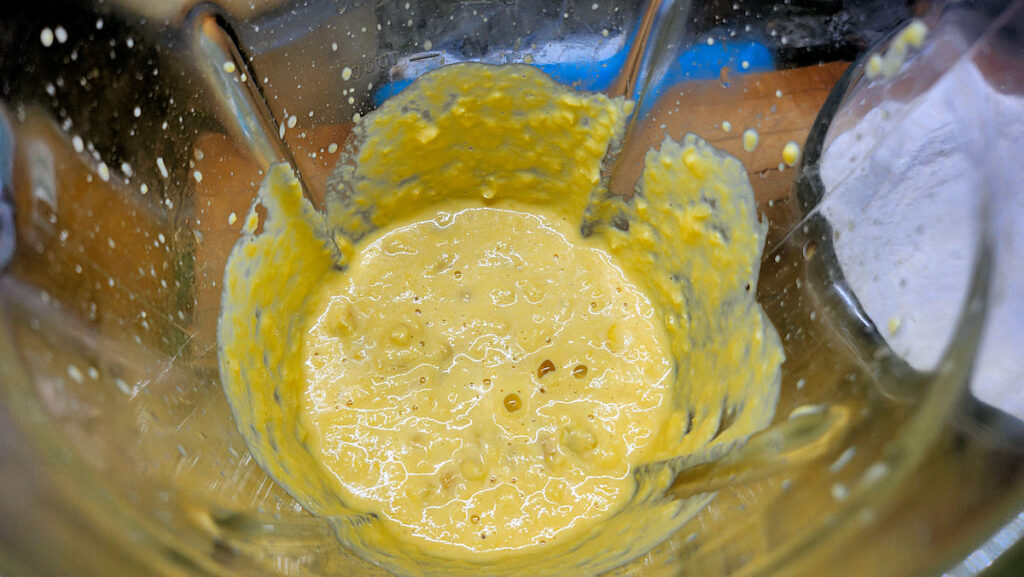
Add the rest of the corn and pulse twice, just to coarsely chop it.
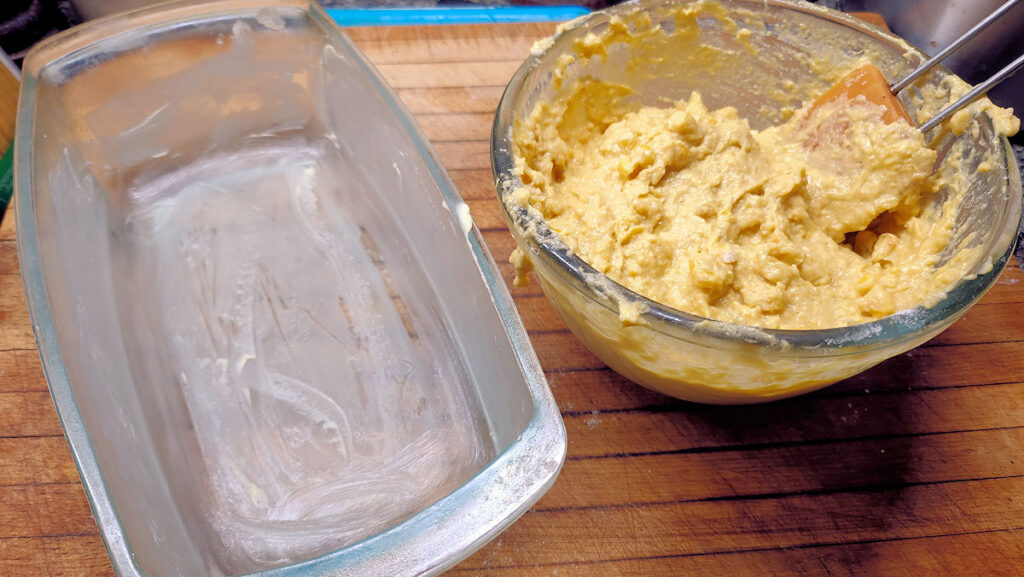
Mix with the dry ingredients. Butter a loaf pan.
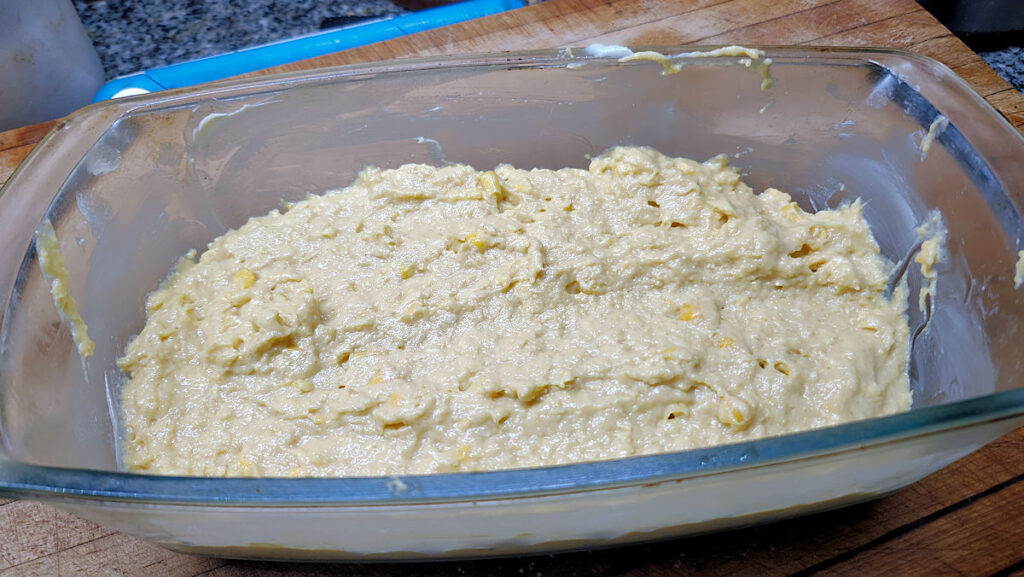
Put in the pan, and bake in a medium hot oven for about 30-35 minutes.
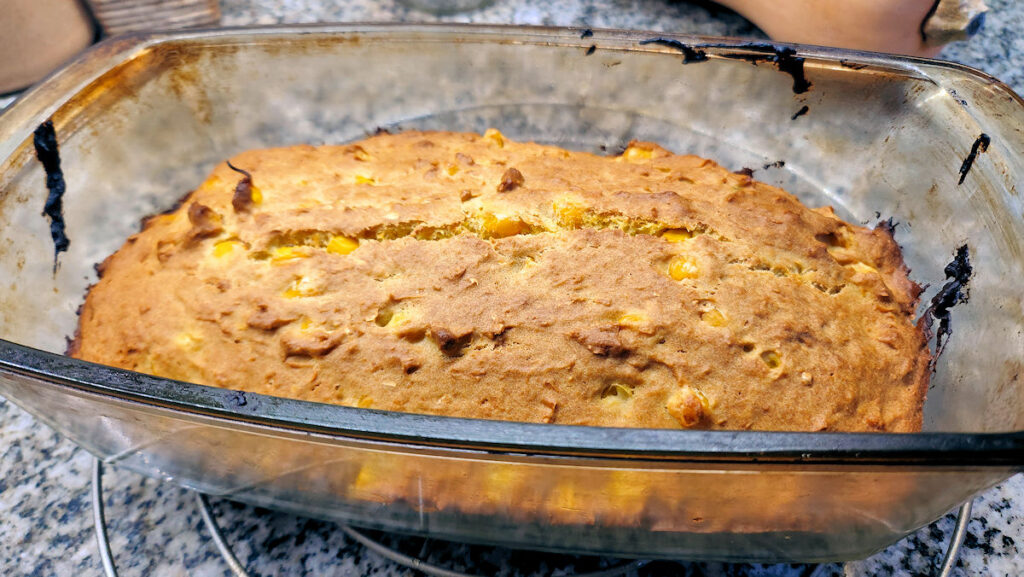
And, voilà! Mealie Bread!
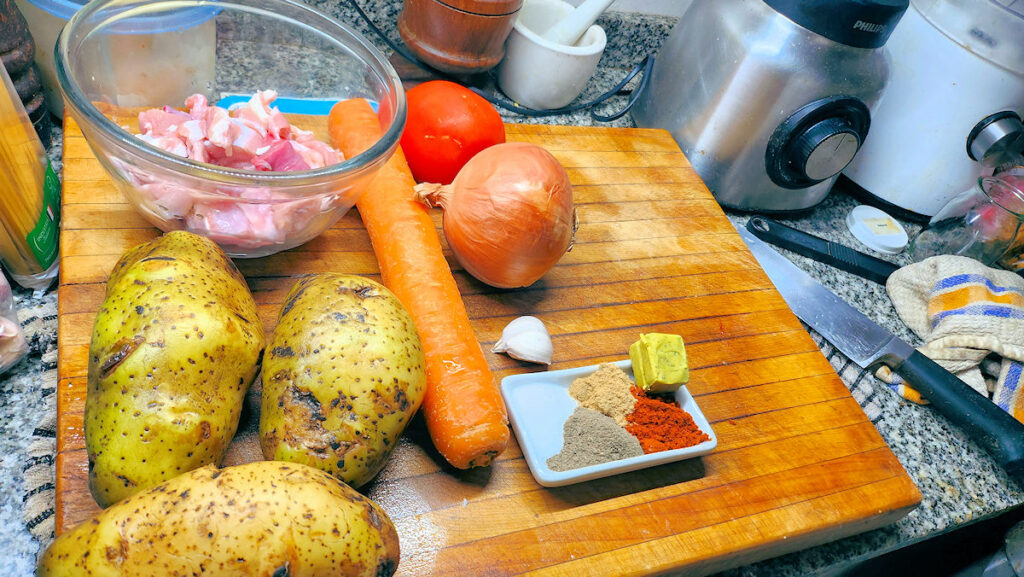
Cut the goat meat into bite sizes pieces (this is most traditionally made as a thicker stew, with pieces of goat left on the bone, but the soup version seems to be an adaptation geared more to modern living) – you want about a pound of meat; a carrot, a tomato, an onion, a couple of garlic cloves, some potatoes; and then salt, pepper, ginger, hot paprika, and vegetable stock cubes (obviously a modern addition, and probably to replace some of the flavor lost in not using the bones – ideally, maybe, make a goat stock with the bones). I started with a teaspoon of each, and then later adjusted with a bit more salt.
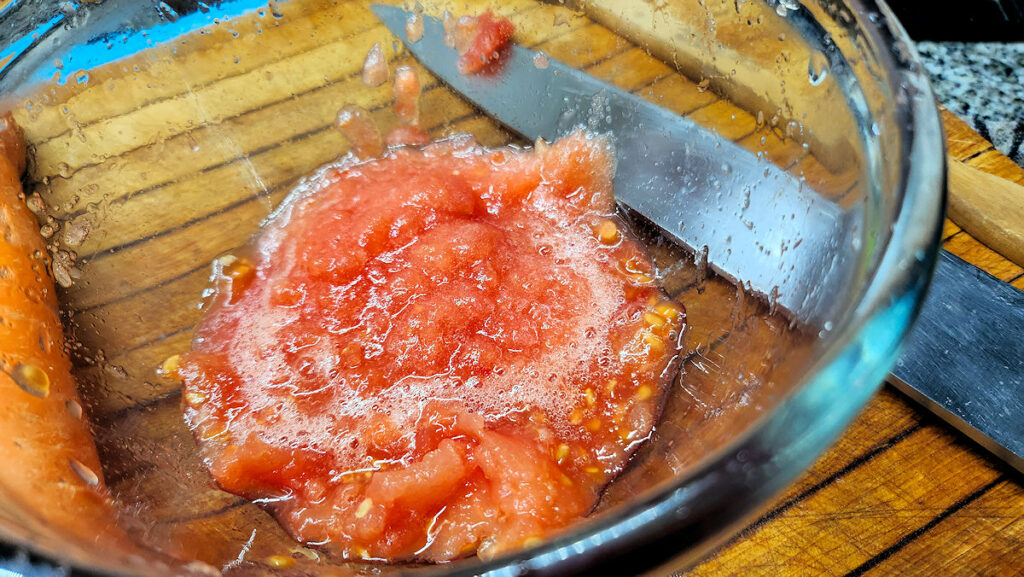
Grate the tomato, which is a quick way to separate it from the skin.
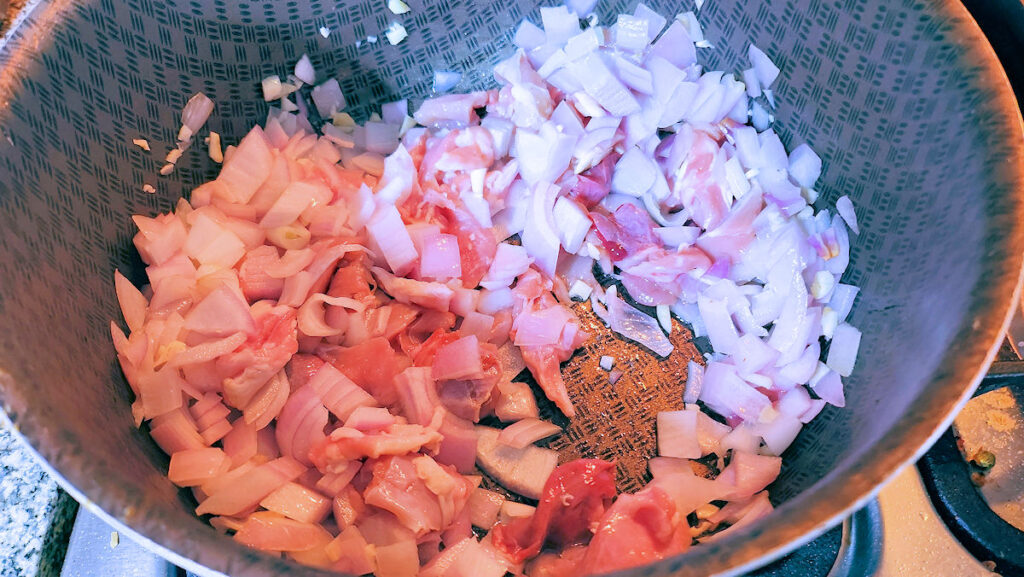
In a little oil, saute the chopped onion and garlic until softened.
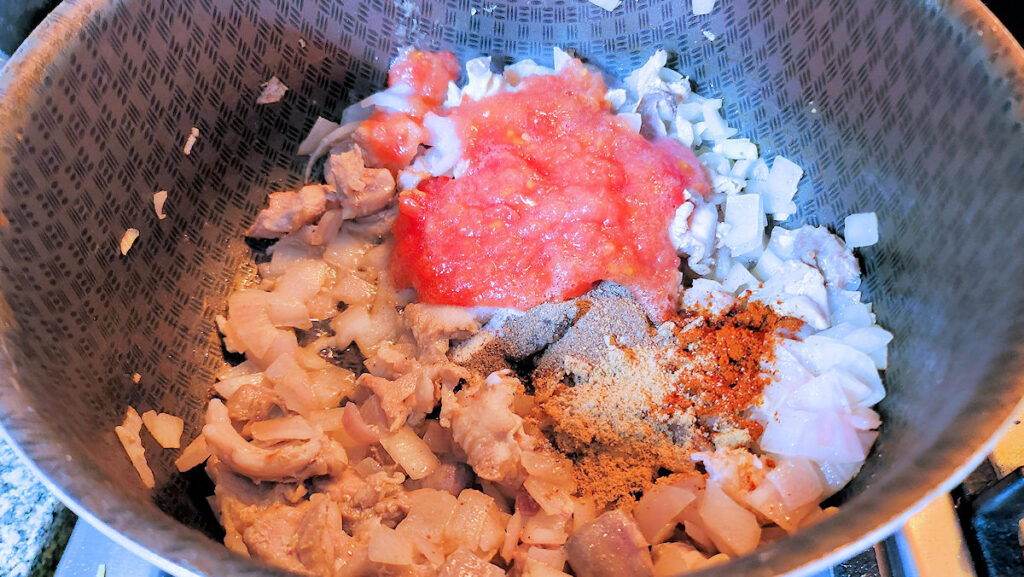
Add the goat meat, tomato, and spices and saute for a few minutes.
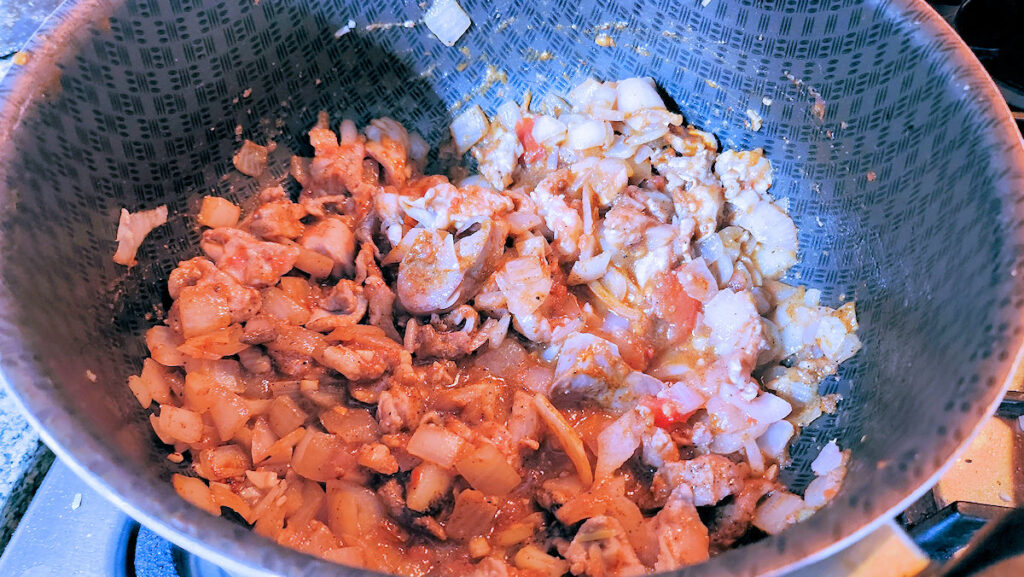
You should get some color on meat in particular – not browned, but at least… tinged.
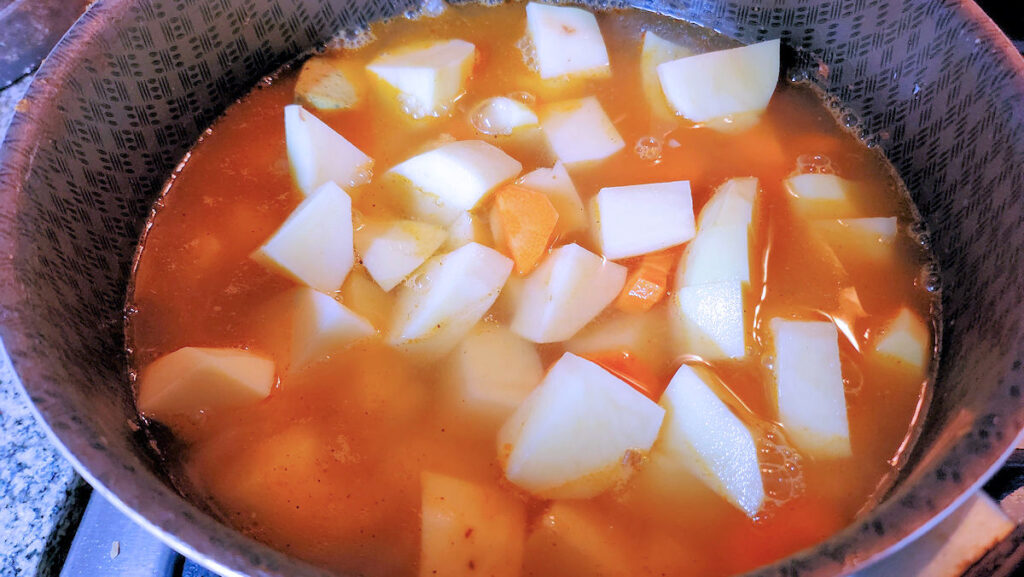
Add the vegetables, cut into bite sized pieces, the stock cubes, and top with water. Bring to a boil, reduce heat to low, and simmer for an hour and a half.
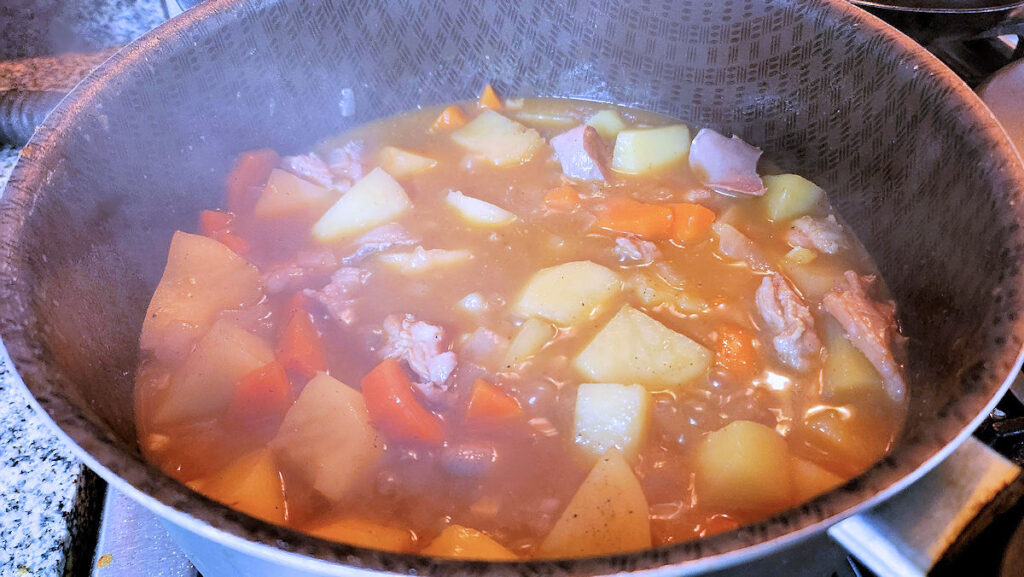
We have soup! Adjust the seasoning – I added probably just shy of another teaspoon of salt.
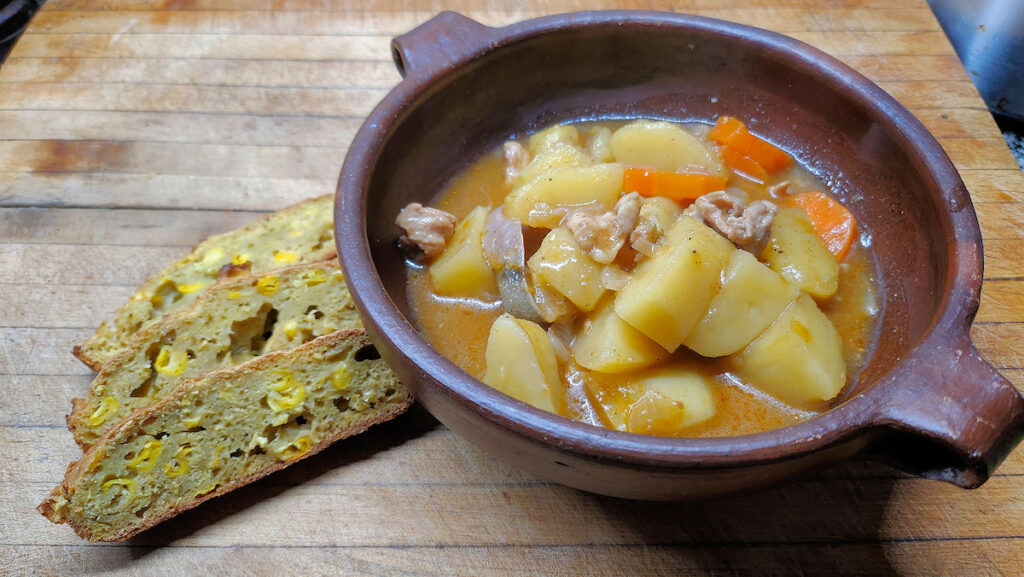
And, serve!
The soup – absolutely delicious! The cornbread too, though I’ve had better, and despite having cooked the designated amount of time and sounding hollow to a thump on the bottom, it collapsed as it cooled, so it wasn’t quite cooked through – maybe another 5-10 minutes. Just dependent on how hot a “medium hot oven” is – I’d probably just up the heat a little from where I had it. What else would I do to improve it? I think I’d brown the meat more fully beforehand – before even cooking the onions and garlic, and then just set the meat aside to add back in at the right step. Other than that, I liked it as is.
Next time up, we’re staying, it seems, in Africa, as we move on to Ethiopia.
Copyright © 2026 SaltShaker. This feed contains copyrighted photos and text from SaltShaker. If you are not reading this material in a feed aggregator or by e-mail subscription, the site you are viewing may be guilty of copyright infringement. Please contact [email protected] so that I can take appropriate action.
Plugin by Taragana




 ]]>
]]>Thought so. Okay, let’s start with the basics – small country, 17,504 square miles (45,335 square kilometers), putting it about midway between the size of West Virginia and Maryland. That includes the mainland, two larger islands, and 2300 small islands in the Baltic. It has a much sparser population, coming in at around 1.4 million inhabitants, about the same as either New Hampshire or Maine. Historically, it was a part of various empires related to Russia, and a national movement to codify its local culture and language didn’t really take off until the 1850s, but remained subject to various forms of Russian and then Soviet occupation until 1988 when it declared itself an independent nation.
The capital is Tallinn, also the country’s largest city, at 453,000 people, though with the metropolitan area approaching 700,000, or half the country’s population. Just over two-thirds of the population are ethnic Estonians, about 22% are Russian, 5% Ukranian, and the rest a mix. While a quarter of the population are Christian, over 60% of the population claim to be atheist or at least non-religious. For my heritage, there are just shy of 2000 Jews in the country.

The Estonian flag, as I understand it, is meant to evoke a scene of a blue sky over a distant tree line, with a foreground of snow-covered ground. Something like this:

Estonian cuisine is very seasonal, affected significantly by long winters. Pork, potatoes, dairy products, and rye bread make up a large percentage of the diet. Influences on the cuisine come from both the Russian side of things along with its neighboring Baltic states, but also from the western side, from Scandinavia. When it came time to pick the bread and soup for this entry, the classic local rye bread, Leib, was an obvious choice. Several options for a soup popped up, but the most interesting, and seemingly most widespread, was Hernesuppe (“pea soup”), a yellow pea soup with smoked pork. Yellow peas proved difficult to find here – our local Indian products supply store was out of them and he wasn’t going to get any in for about two months, so I picked up a package on my recent trip to New York.
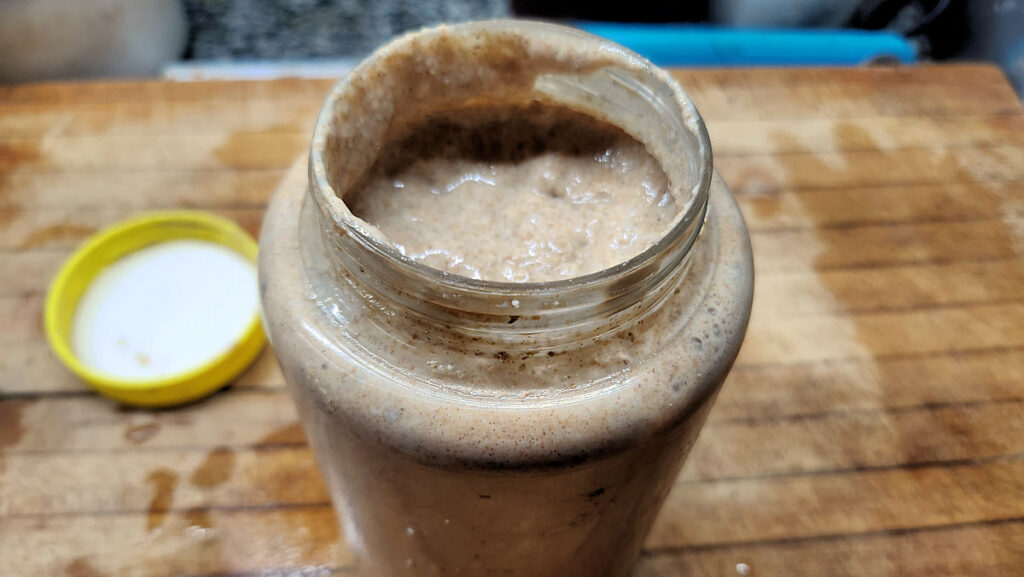
This was the starting point for the Leib. I had to make a rye sourdough starter. Actually really easy to do – just mix equal parts of a quarter cup each of rye flour and filtered water, leave for a day or two to start fermenting, and then each day add another 1-2 tablespoons of each to the mix to “feed” it. After about a week you have a bubbling, ready to work with starter. It’s also more forgiving than a wheat flour one – I put it in the refrigerator while I spent over two weeks on my little vacation, and came back, pulled it out, added a couple of tablespoons to it, and by the next morning when it had warmed up, it was bubbling away again.
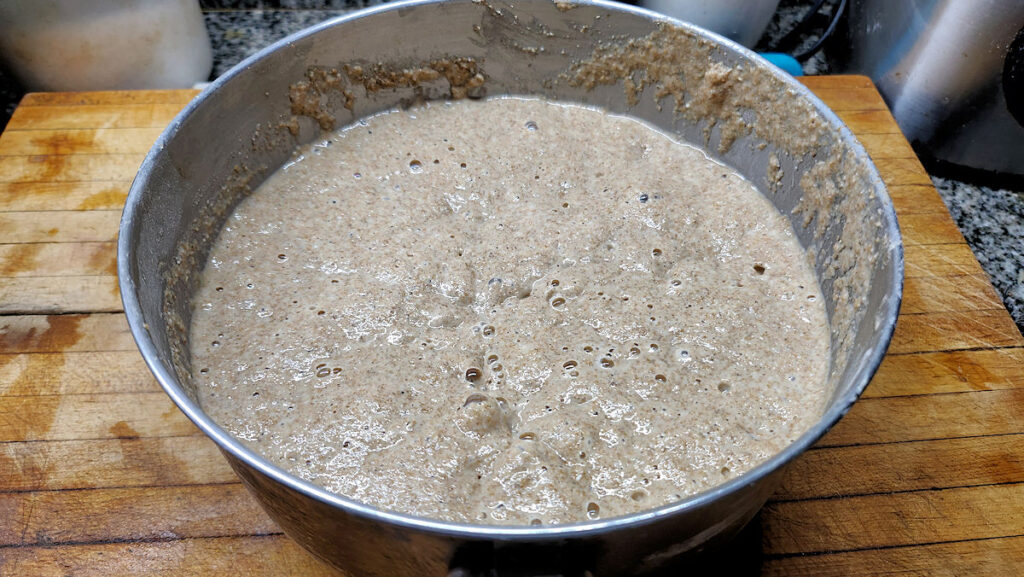
Next step is basically to make an even bigger starter – a “poolish” as the bread-baking folk call it. I took about half of the starter from the jar (maybe a cup?) and then added about a cup and a half each of rye flour and water to it, covered it, and left it for a day.
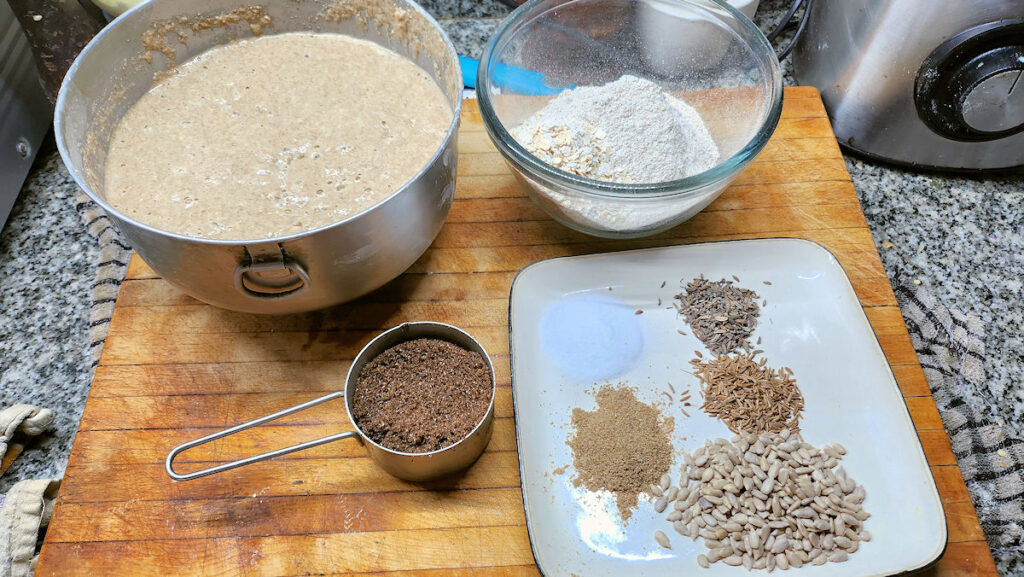
Next day… we have our poolish, another cup and a half of rye flour, 2 tb of oatmeal, 3/8 cup of brown sugar, 2 tsp salt, 2 tb sunflower seeds, 1/2 tsp ground coriander, and 1/8 tsp each of aniseeds and caraway seeds. So many different recipes used so many different spices and mixes, that I just sort of distilled down to ones that sounded like I’d like them together.
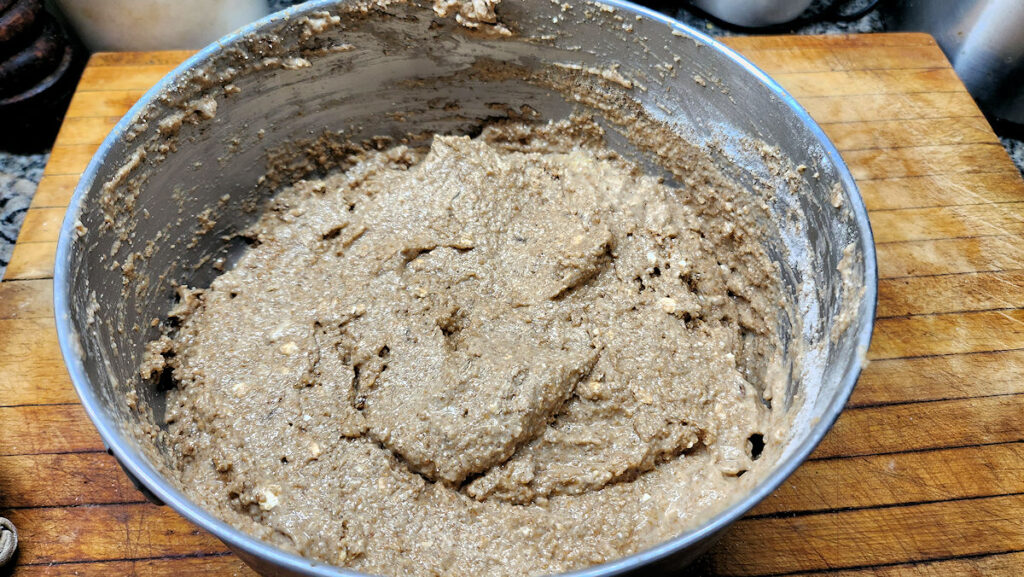
Mix it all together to get a stiff dough. No additional water. A couple of recipes recommended small amounts of additional water to lighten up the bread, but also noted that it was less traditional. I decided to leave it dense and heavy.
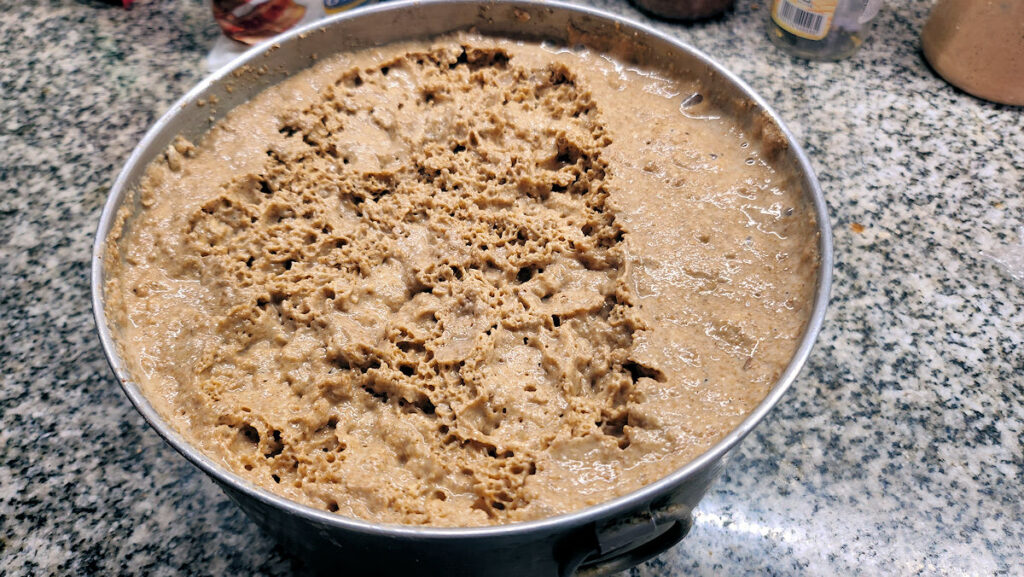
Cover and let it proof for about six hours. All that bubbling away lightens it up a fair amount anyway!
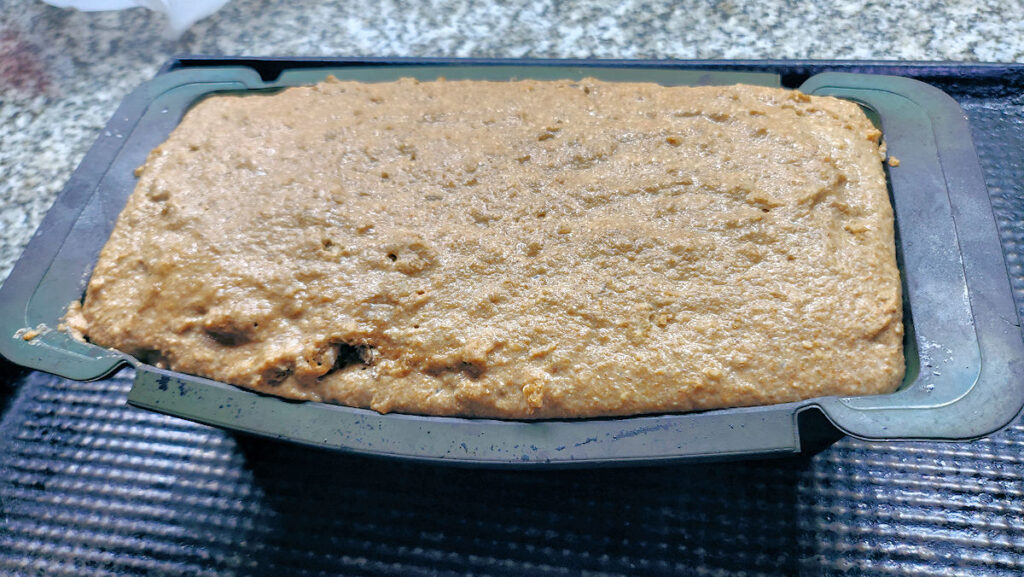
Put into a loaf pan, cover and let proof, yet again – this is a long process. Though, this time it only took about an hour to rise back up.

And, bake. The recommendation is to put a dish of hot water in the oven while it’s heating so that the interior of the oven stays humid, and start on high temperature. After about 10 minutes at high temp, lower it down to medium and bake “until done”. Recipe directions varied from claiming this would take anywhere from about 30 minutes to more than an hour additional time. I let it go for a total of about an hour and a half and it still came out somewhat wet in the middle. Not sure if that’s the temperature or if that’s just the way it’s supposed to be (doesn’t look like it in photos that people have posted). Maybe I lowered the temperature too much, or should have just let it sit for another 15-20 minutes in the oven.
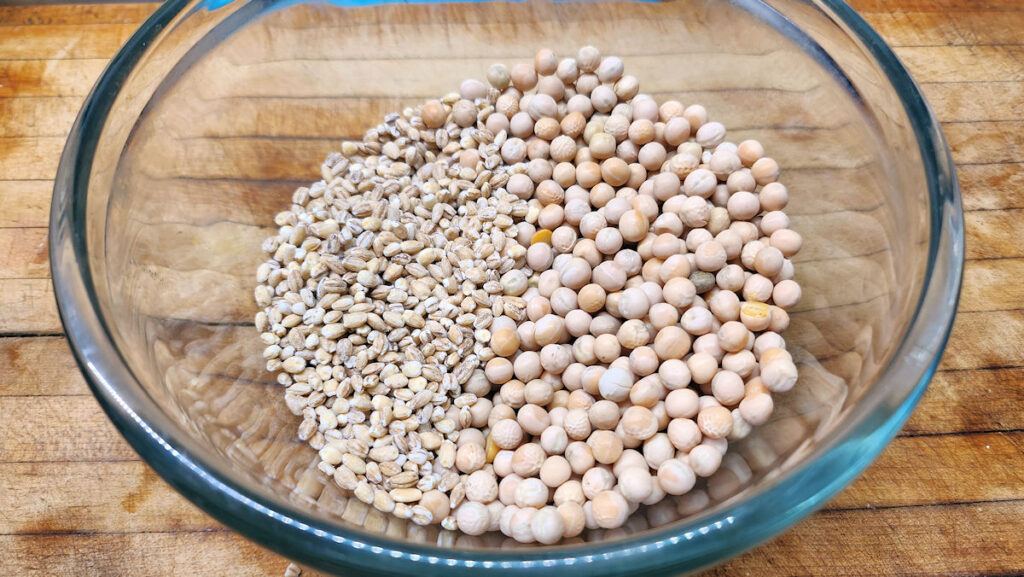
On to our Hernesuppe. I have about 200gm (6-7 oz) of whole dried yellow peas – some people use whole ones, others split ones, since I’ve done several split pea soups, I thought it’d be interesting to go the whole route. Roughly an equal amount of pearled barley.
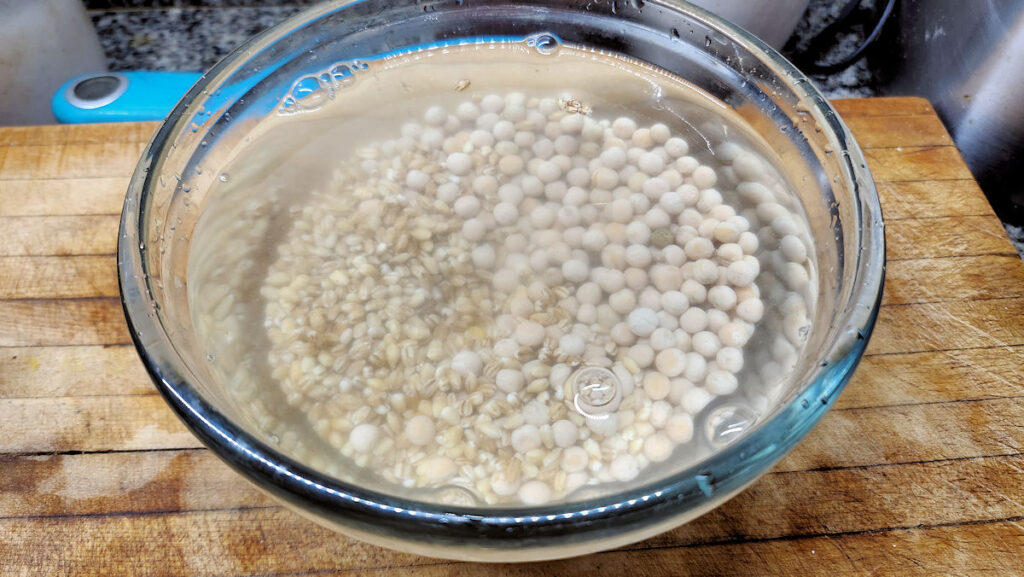
Soak in water overnight.
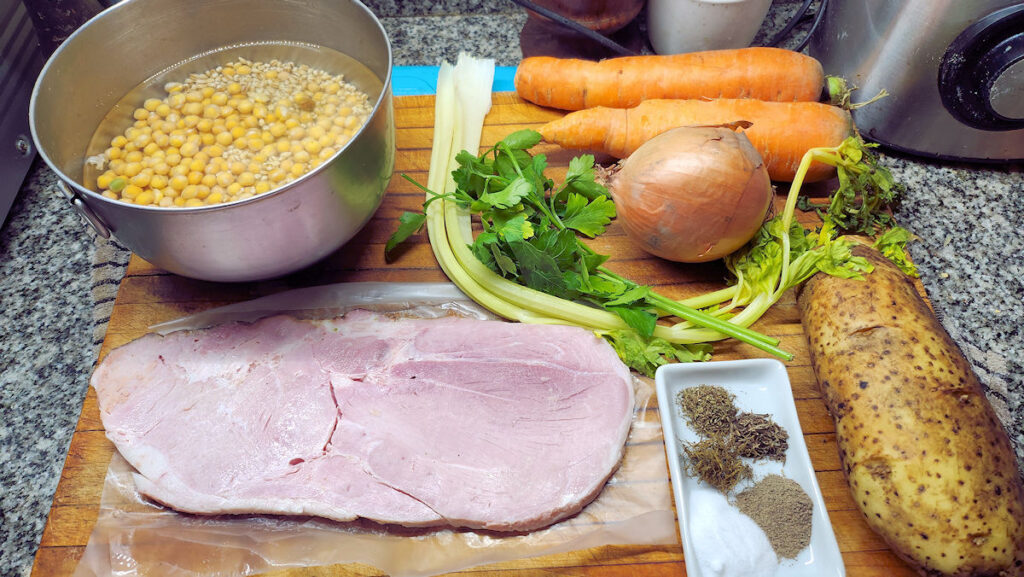
Next day, we have our soaked peas and barley, about 300 gm (10 oz) of smoked pork, a couple of carrots, a couple stalks of celery, an onion, a potato, a couple stalks of parsley, 1 tsp salt, 1/2 tsp pepper, and about a quarter teaspoon each of dried savory, thyme, and dill. Missing from the photo, a heaping tablespoon of whole mustard.
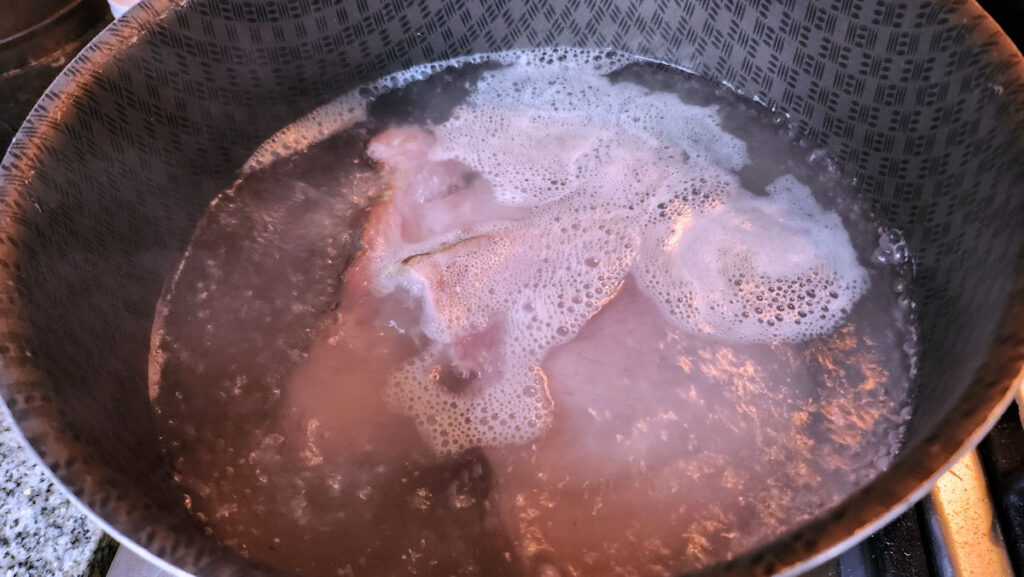
Boil the smoked pork for about ten minutes, then remove it and chop it up. Skim the foam off the water.

Add the peas and barley, bring back to a simmer and cook at very low heat for an hour.

Peel and shred, grate, or finely chop the carrots, celery, and potato, and cook down in a skillet with the spices, herbs, and mustard, until soft and starting to color.
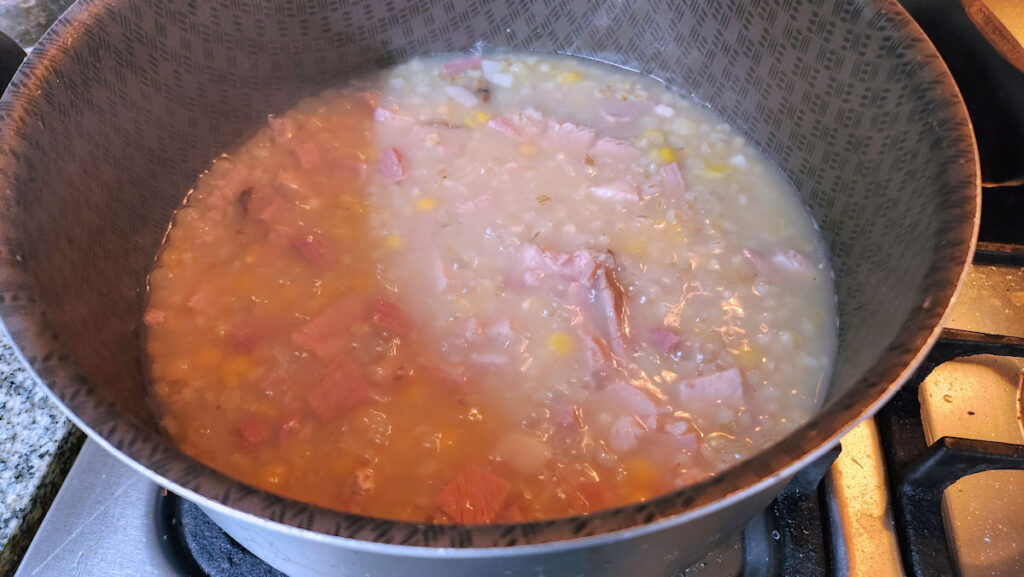
Your soup base should look like this, more or less.
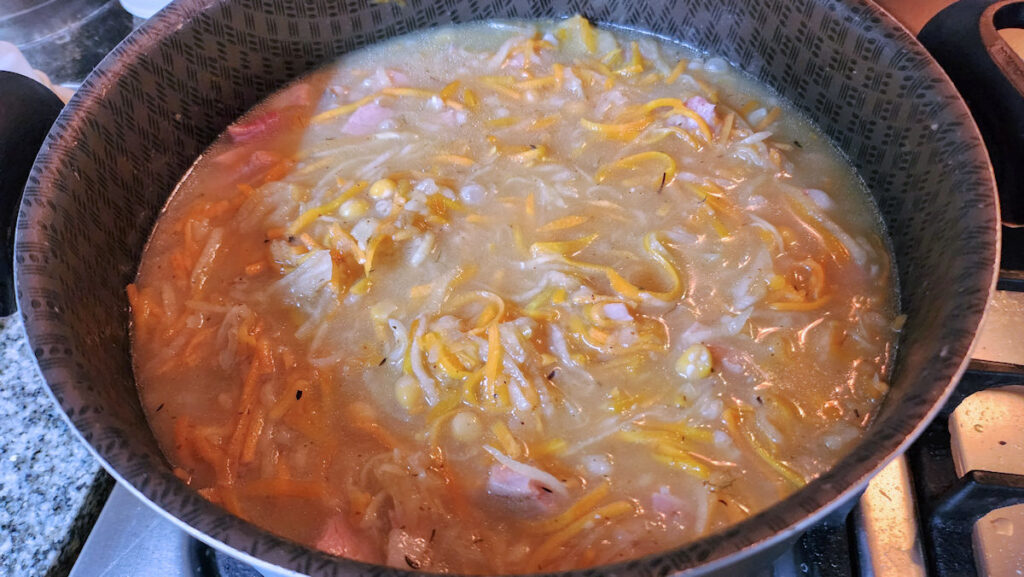
Add the vegetables and top with a little more water if needed. This is intended to be a thick soup, so don’t overdo it.
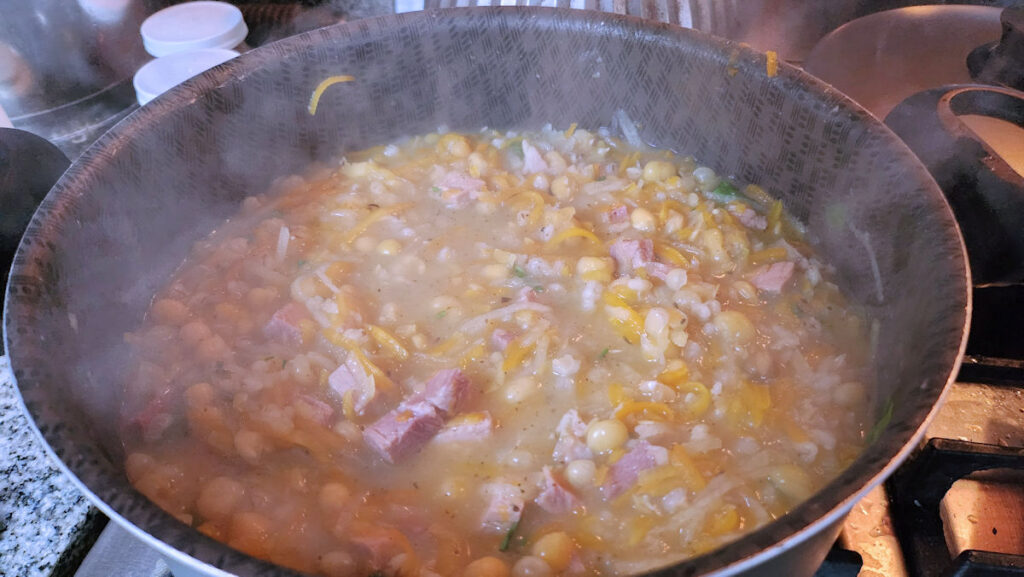
Bring back to a simmer, cook thirty minutes. Taste, adjust the seasoning if needed – I added a bit more salt and pepper at this point. And, you’re ready to serve.
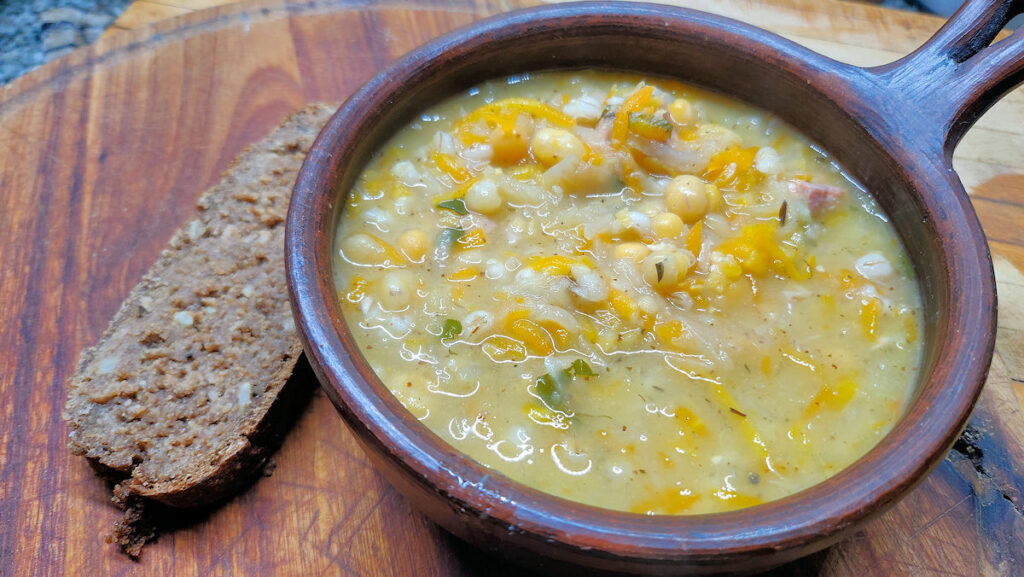
The soup? Delicious. Hearty, rich, great flavors. I think I might grate or dice the vegetables if I make this again, almost more for aesthetics than anything – though just shredding them with a food processor is so easy…. The bread? Great flavor, but you can see it’s still very moist – far more than I think it should be. And really, too much work to make again. I guess when it’s your daily bread and you can make a couple of loaves at a time, you can just get all the various proofings into a timeline that works, but to make it one time… probably never again.
Next stop? It’s back to Africa (how many countries are there in Africa, it seems like half this project has been spent there? the answer is 54, which is more than a quarter of the countries in the world), and on to Eswatini, what I grew up knowing as Swaziland.
Copyright © 2026 SaltShaker. This feed contains copyrighted photos and text from SaltShaker. If you are not reading this material in a feed aggregator or by e-mail subscription, the site you are viewing may be guilty of copyright infringement. Please contact [email protected] so that I can take appropriate action.
Plugin by Taragana
]]>
The flag has three triangles: red, blue, and green. The five points representing unity, liberation, justice, democracy, and progress. In the red triangle, a gold wreath symbol with 30 leaves that symbolize the number of years spent in civil war before achieving independence.
Food-wise, coffee is probably the most important cultural tradition in the country, and people drink it throughout the day. Social and business events are punctuated by ceremonial drinking of coffee. The culinary milieu is contiguous with Ethiopia’s, given their shared heritage under various external rulers, albeit with different tribal or indigenous touches. And, Eritrea, being coastal, has more seafood in its cuisine than Ethiopia does. The grain teff is quite common, and, like Ethiopia, injera bread made from fermented teff flour is a daily staple.
So it was obvious that I was going to make Injera, assuming I could find teff flour, which turned out to be readily available at several local dietéticas. The soup turned out to be a little more difficult. Not because Eritrea doesn’t have soups, but because it seems that all of their soups are cooked down to a thicker, stew-like state, in order to use injera to scoop it up, rather than eat them with a spoon. So I went with the country’s national dish, Zigni, for which I actually found a few folk who make it more soup-like, as I ended up doing.

So, there seems to be some disagreement over the flour used in injera, though I’d chalk that up, after reading numerous posts about it, to traditionalists versus modernists, or maybe to those who are patient versus impatient. Quite a few recipes advocate only using teff, which has to be fermented in order for its nutrients to be digestible for humans, and generally advocated about a week long process for its fermentation. Others went with a shorter fermentation period, and using around 2:1 wheat flour to teff flour, as the wheat ferments faster and drives the process, resulting in only about 2-3 days of fermentation needed. I went that way. So, 2:1 bread flour to teff flour, here, 2/3 and 1/3 cup, plus an equal volume of water, so 1 cup, and a 1/4 teaspoon of salt.
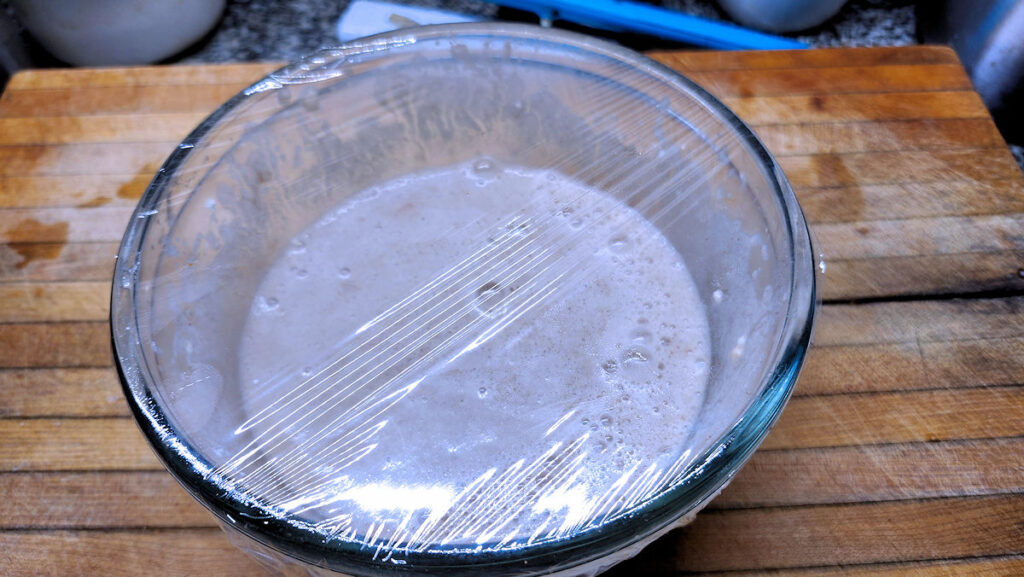
Mix the flours and water together (not the salt, reserve that for later) and put in a covered bowl in a warm place for 2-3 days. Do not stir it up after the initial mixing. It will get bubbly, and start to separate, leaving a rather icky looking liquid atop, with the flours fermenting in a layer below.
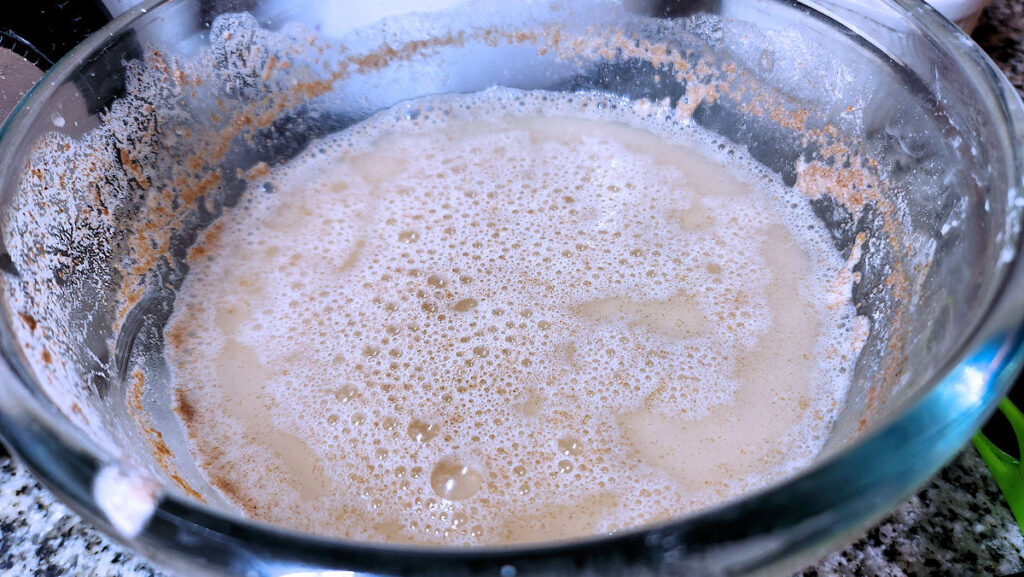
Most of those presenting recipes recommended spooning out that layer of liquid, as much as you can, leaving behind a pancake batter sort of texture. Add the reserved salt.
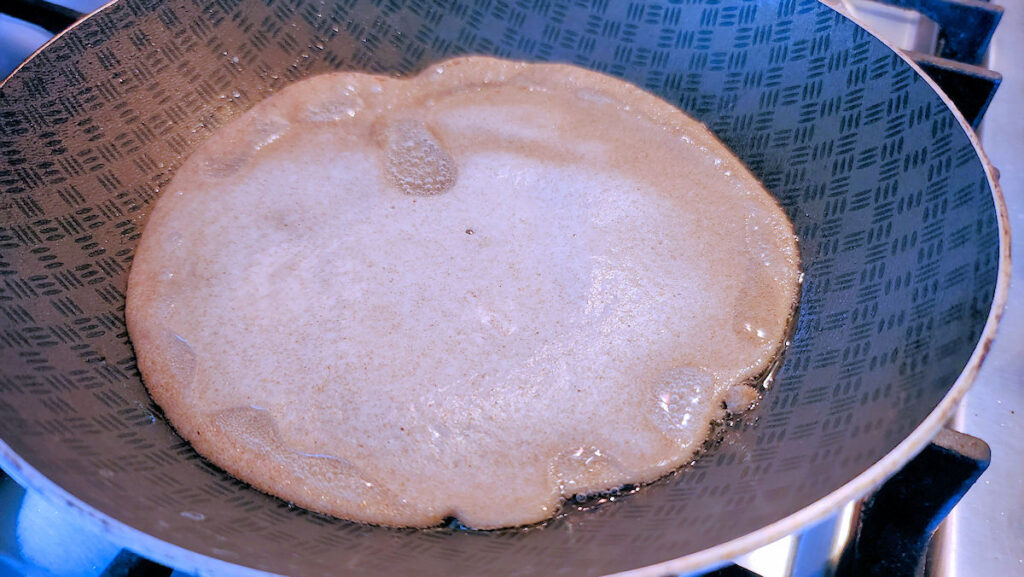
Teff, it turns out, absorbs like a sponge, especially oil. I first put in about a quarter cup into and oiled pan, and it just sucked that up, making a greasy mess.
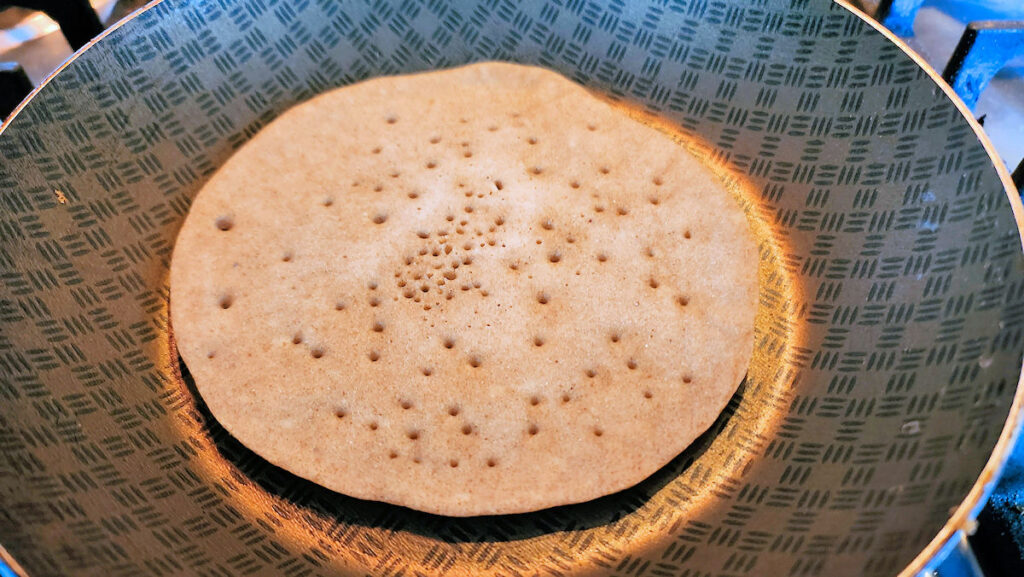
So I redid it without oil. It’s also a bit delicate, and difficult to flip, so it took me a couple of tries to get it right, or at least acceptable.
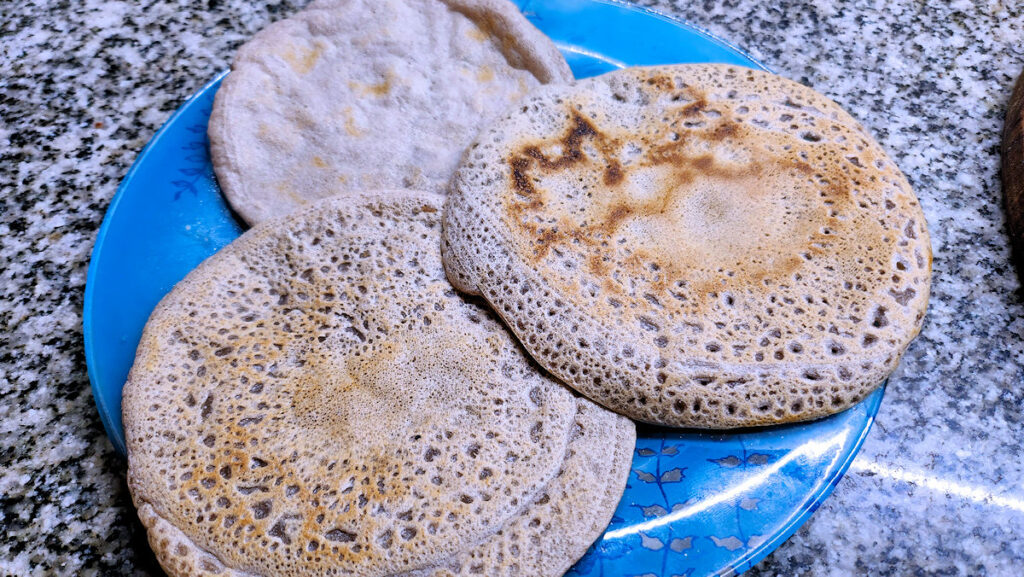
The amount of batter I made should have made six injera, but three of them ended up in the trash. Not too bad for a first stab at this.
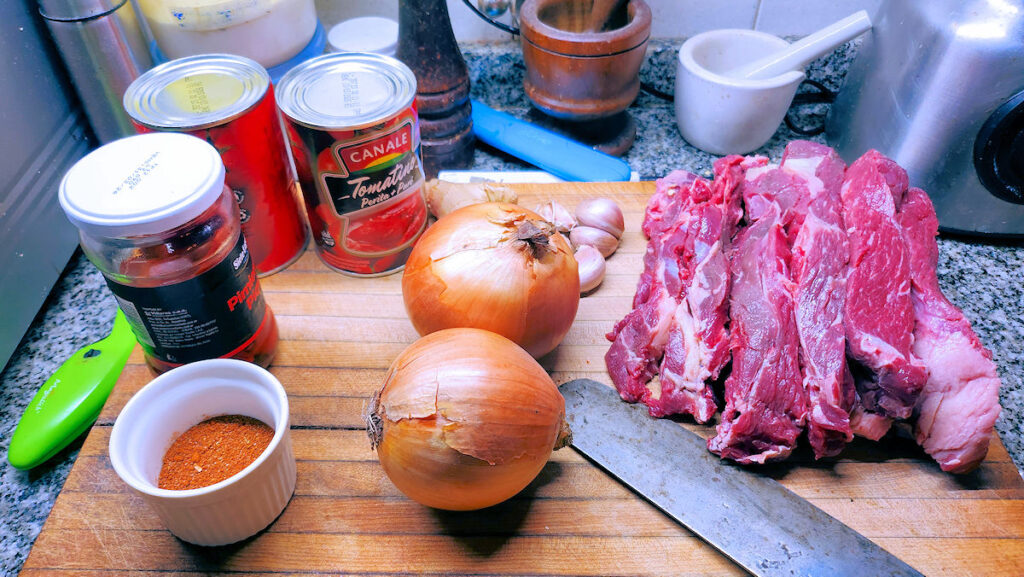
On to our zigni. We’ve got stewing beef – suggested was shin bone beef, but that’s not easy to come by here, other than in osso buco form, and I didn’t feel like cutting all the meat off of pre-cut osso bucos. So this is shoulder meat, around a kilo. Two large onions, a bunch of garlic cloves, a good sized piece of ginger, some roasted peppers, and some peeled and canned tomatoes (I ended up using just one can instead of two, visually it just looked like too much tomato). And the final thing, berbere spice. Not available here as far as I can determine, so I made my own from this recipe. But basically a blend of chili powder, paprika, salt, ginger, turmeric, allspice, cinnamon, nutmeg, coriander, fenugreek, ajowan (an Indian spice similar to cumin), nigela (black onion seeds), pepper, clove, cardamom, basil, and rue (or other dried bitter green herb, like dandelion). Whew! It’s delicious. I’ll be keeping a bit of that on hand.
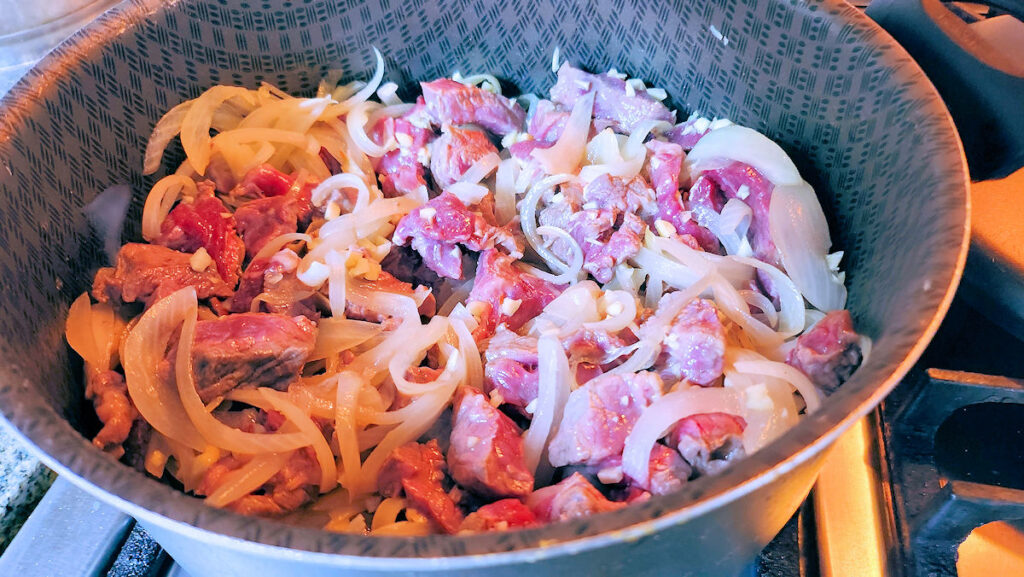
Brown the beef, onions, garlic, and ginger in a little oil.
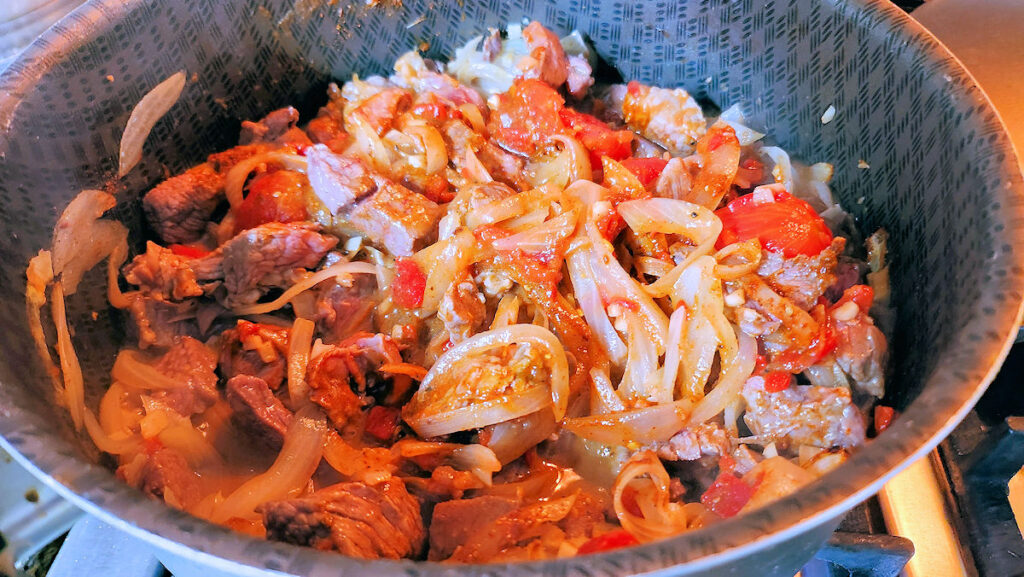
Add the tomatoes, peppers, and berbere. Top with water or beef stock.
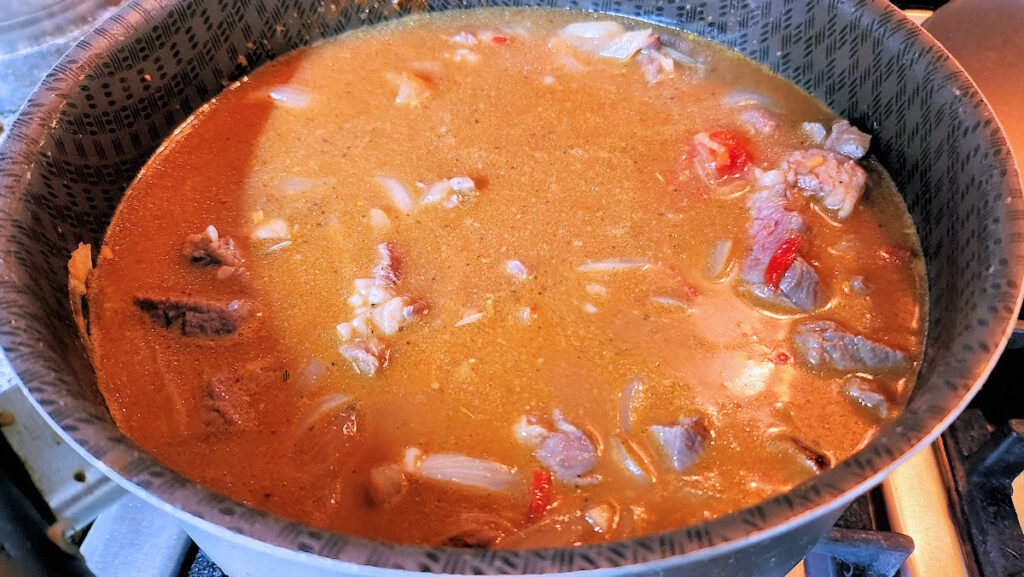
And, simmer away for about 2-3 hours, until the meat is falling apart tender. If I was making this more as a stew, I’d have let it simply cook down until thick and most of the liquid gone – some folk do it over low heat, or in an oven, for as long as 6-7 hours. I had to top it up a little with more stock as needed to keep it soup-like.
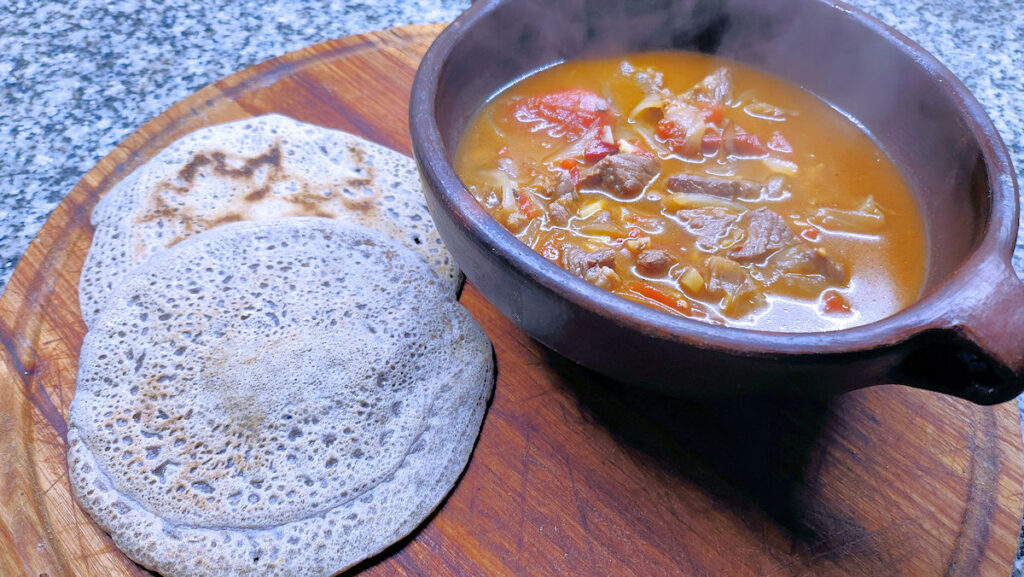
And, dinner. We loved the zigni. One of the best beef soups I think I’ve ever had, and Henry, and our next door neighbor, agreed. And first stab or not, we really liked the injera. I’ve had injera at the occasional Ethiopian restaurant over the years, and never really liked it – it was always served as a much thicker pancake, and near tasteless. These were delicious, and had we made this stew-like, the perfect sort of texture for using it as a scoop. I might add a little more salt to it, but other than that, very happy.
Next time, we’re off to Eastern Europe and Estonia.
Copyright © 2026 SaltShaker. This feed contains copyrighted photos and text from SaltShaker. If you are not reading this material in a feed aggregator or by e-mail subscription, the site you are viewing may be guilty of copyright infringement. Please contact [email protected] so that I can take appropriate action.
Plugin by Taragana
]]>
In our usual “Fun with Flags” tangent, we have the horizontal tri-color, with green representing nature and natural resources, white for peace, red for the bloodshed in achieving independence, and then a blue triangle to the left, symbolizing the sea to the west. The silvery shield depicts a ceiba, or silk-cotton tree, symbolic of the tree under which the independence and peace treaty with Spain was signed. The banner reads Unity, Peace, Justice. And, the six stars represent the mainland and five islands off the coast that comprise the country.
The country is roughly the size of Massachusetts, or Hawaii, with the same population size as the latter. The dominant culture is the Fang tribe, comprising some 85% of the demographic. The vast majority are Christian.
Equatoguinean (yup, that’s the word) cuisine is dominated by starchy vegetables – plantains, sweet potato, breadfruit, cassava, yam, cocoyam, plus peanuts. And, snails are a mainstay in the protein world. Being coastal, fish is plentiful as well. For this round, I selected what seems to be the most common and popular soup nationally, Pepesoup, a spicy fish preparation. On the bread side, initially I was thinking about making the popular sardine filled empanadas, but really, they’re not any different from similar ones we’ve seen in past rounds in this project. I decided to go with Pissoj, a bread that’s particular to the Annobonese culture, one of the oldest cultures in the country, and most of whom, I gather, live on two of the coastal islands.
These are going to be two of the simplest preparations that I’ve made – I think I prepared the entire dinner in about 45 minutes. Sometimes, however, simple is best.
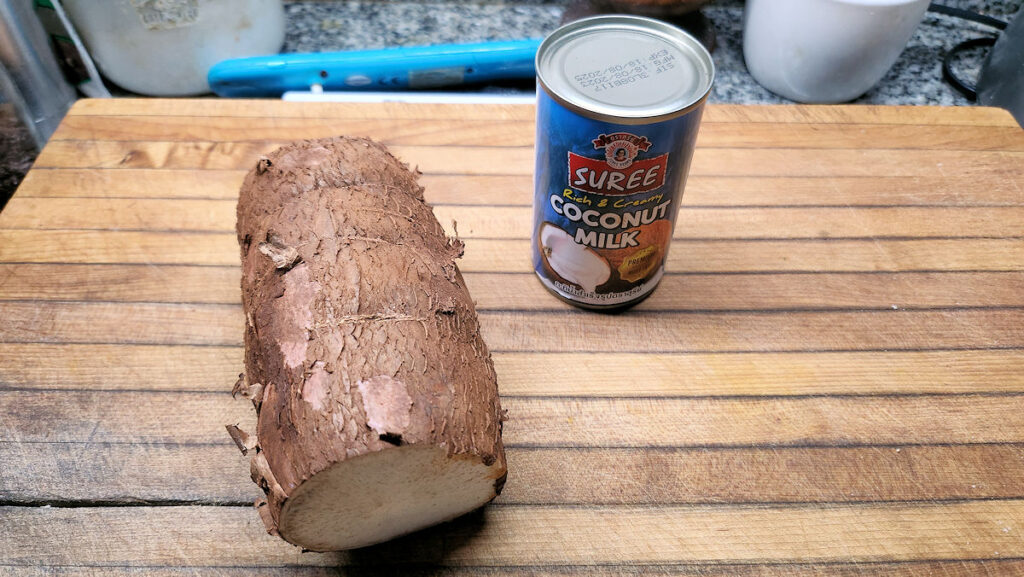
Manioc, mandioca, cassava, yucca – you’ve seen me use this root before, it’s common in Andean cooking, and I have a step-by-step writeup on how to prep it from a good 16 years ago. Now, there are a trio of versions of pissoj, there’s a plain one, a red one, and a coconut one. The plain one is literally nothing more than grated mandioca, with its juices pressed out, and packed together to form a sort of cake, which is then wrapped in big leaves and baked. Then there seem to be the smaller ones, like what I made, the red version have dende oil added, or rubbed on them, and the coconut version, which several writers swear is the best out there, is most traditionally a mix of grated mandioca and coconut. No fresh coconuts in the market right now, and a few recommended just using coconut milk as a binder.
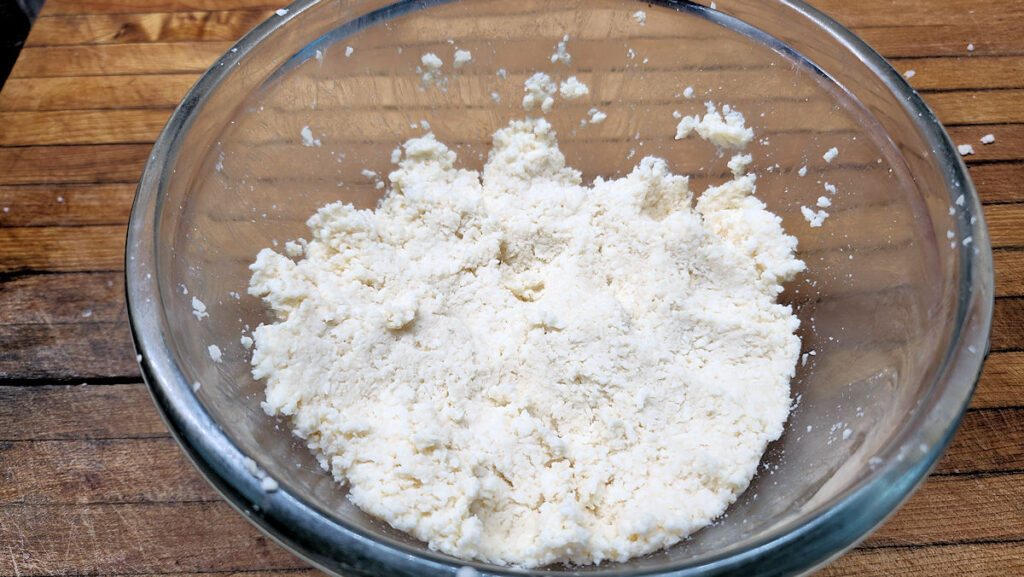
I finely grated the mandioca, and added a little coconut milk to it (not the whole can, just a couple of spoonfuls). In the end it seemed a little wet, so I added a couple of tablespoons of coconut flour to it to help it bind, and, as a side benefit, add more coconut flavor.
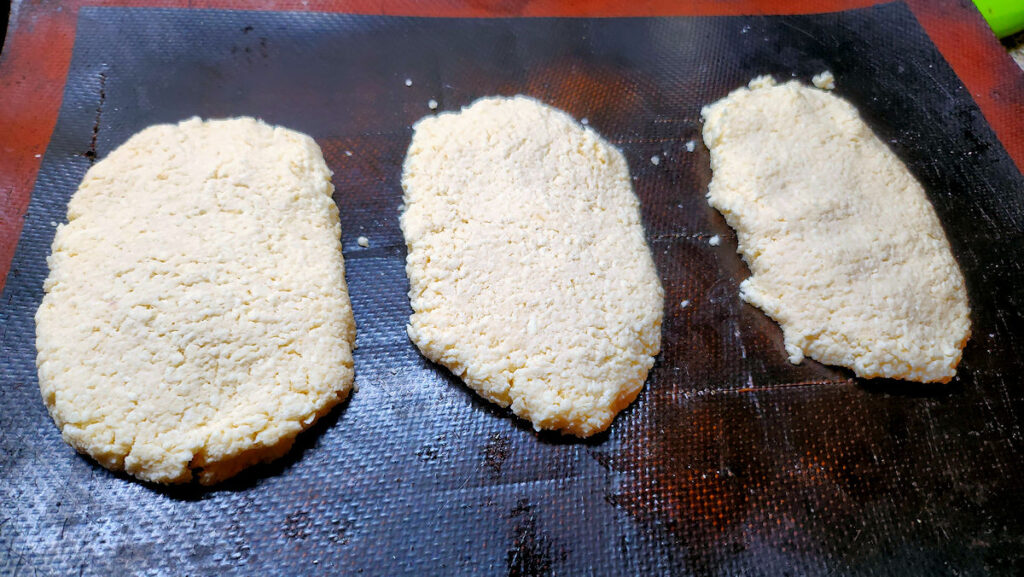
Packed it into oblong cakes and popped them into a moderately hot oven.
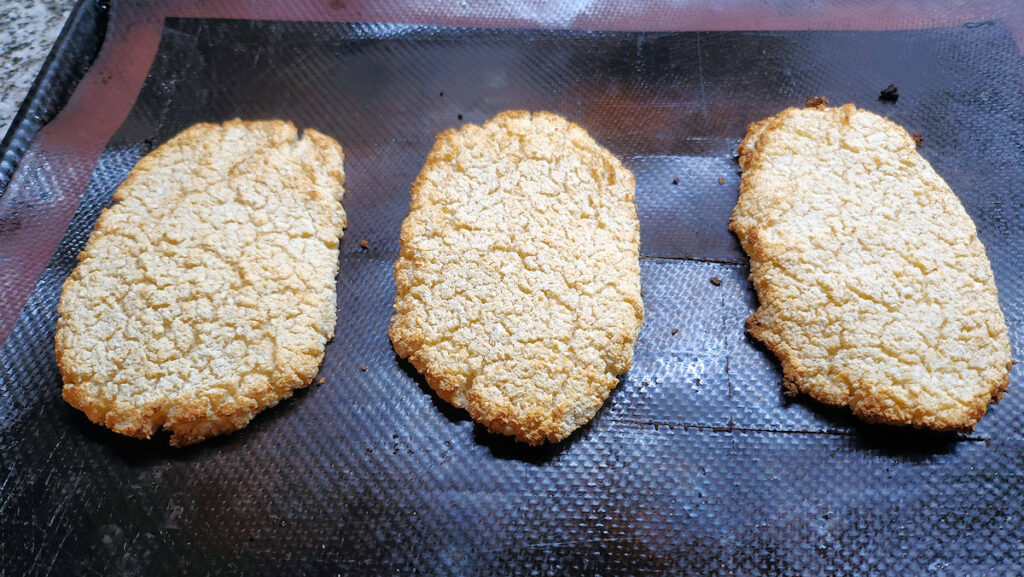
And, about 25 minutes later, pulled these beautiful golden brown pissoj out to cool.
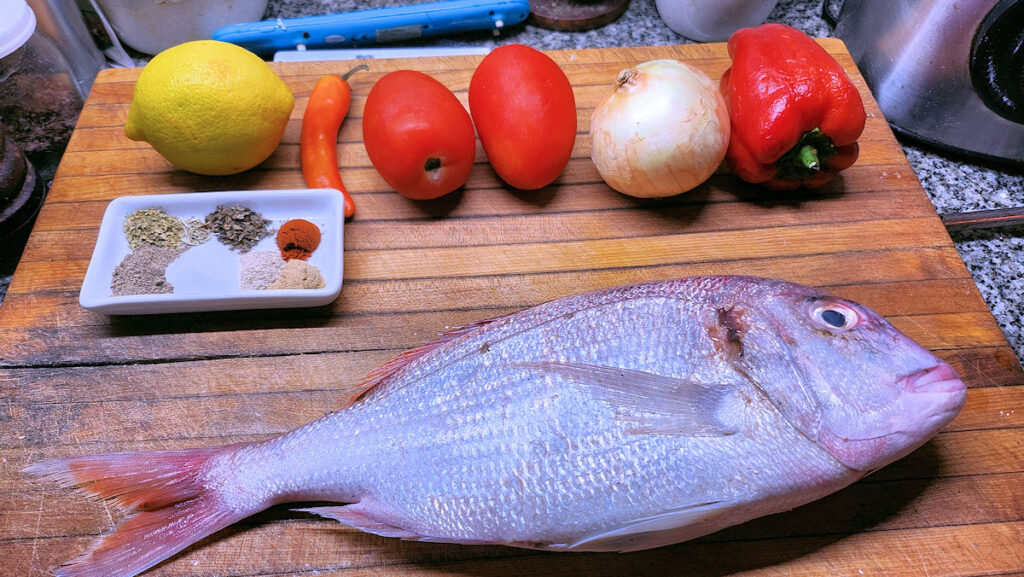
This is one of those “throw everything in the pot and go” sort of soups. We’ve got a lemon, a hot chili (not quite as hot as the traditional ones, which are more or less scotch bonnet or habanero type, but this one has some heat), tomatoes, onion, bell pepper, a sea bream, and a mix of bay leaf, basil, rosemary, hot paprika, black pepper… and…. So, traditionally, grains of paradise are used. I saw them once in Barrio Chino about 15 years ago, bought them, and at some point tossed them, never having used them. Can’t find them anymore. Online recommendations for substitution are equal parts of black pepper, cardamom, and ginger. So, a little extra black pepper, plus cardamom and ginger.
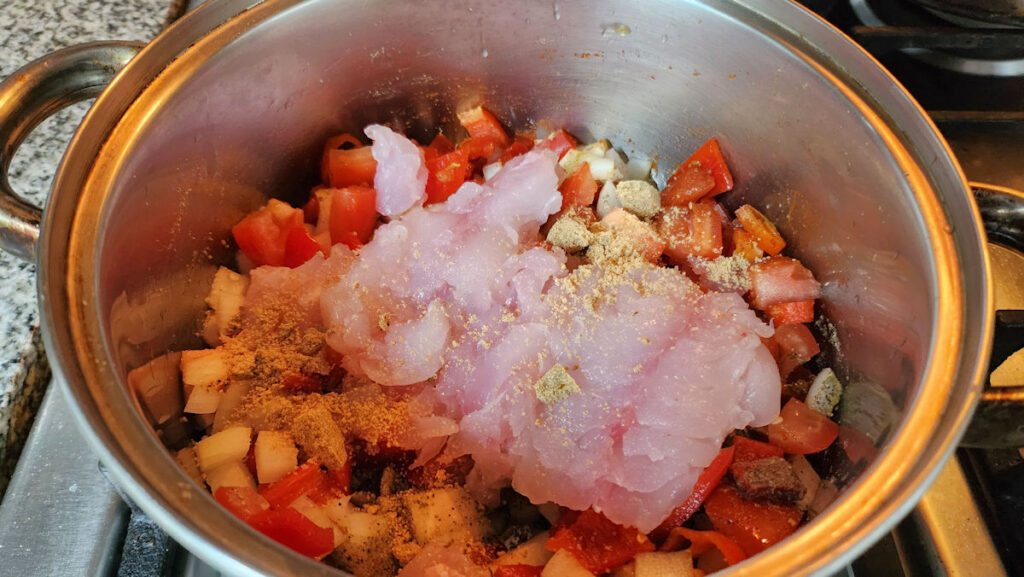
I’m following the recipes I found online, all of which basically shove everything in the pot together (okay, not the whole lemon, just the juice and zest). However, most of those use things like the head of the fish, and cross sections. But, interestingly, even the ones using filleted fish give the same instruction. I knew going in that the fish was going to overcook, but was trying to stay true to the letter of the recipes. I should have gone with the spirit, cooked all the veggies, and added the fish further along. So be it.
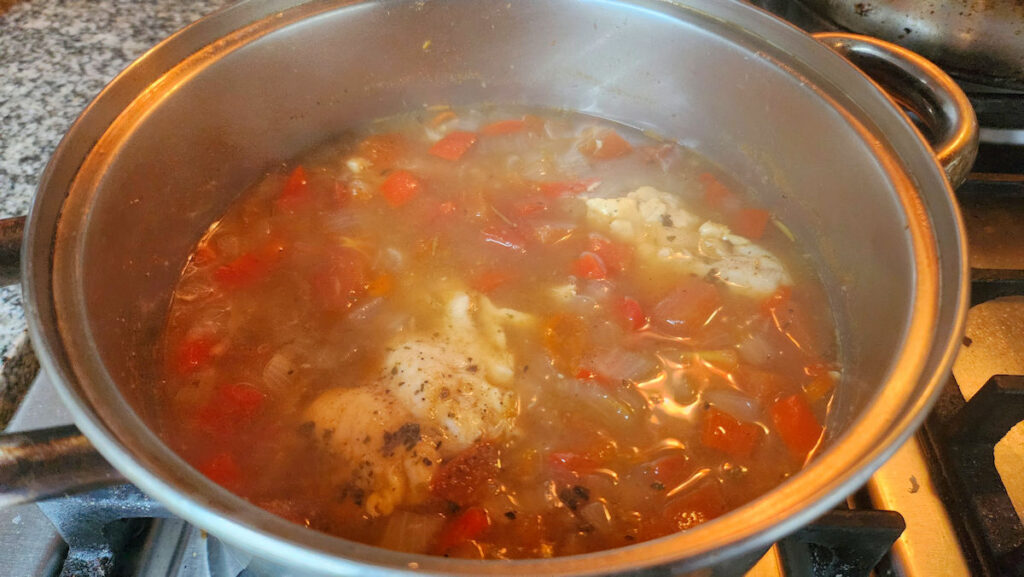
Topped it all off with fish stock, brought it to a simmer, and cooked it about 15-20 minutes until the vegetable were soft. The fish overcooked, and fell apart a bit. Easy correction to make.
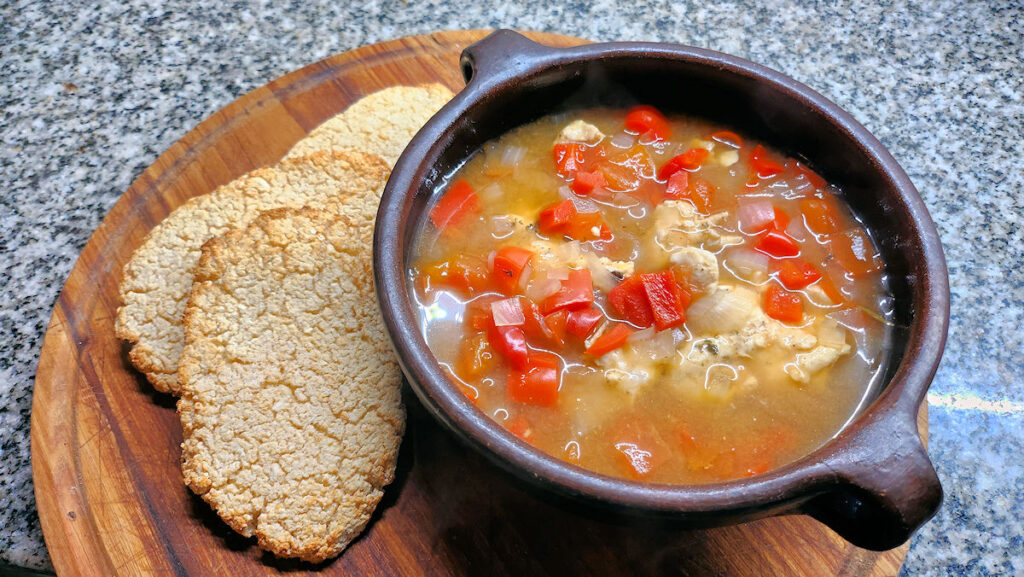
Absolutely delicious. Spicy, fishy, tomato-y – I loved this soup and will make it again. The mix of herbs and spices is fantastic. And the coconut pissoj is surprisingly really good. I think I’d add a little salt to it to really punch up the flavor, but they’re really good on their own, and a great match with the pepesoup.
Assuming I continue alphabetically, next time we’ll stay in Africa, but off to the east coast, to Eritrea.
Copyright © 2026 SaltShaker. This feed contains copyrighted photos and text from SaltShaker. If you are not reading this material in a feed aggregator or by e-mail subscription, the site you are viewing may be guilty of copyright infringement. Please contact [email protected] so that I can take appropriate action.
Plugin by Taragana
]]> Located on the Pacific coast of Central America, the country has a similar past to many of those in the region – independent, though under no particular name, as part of various “empires”, until Spanish colonization. Various shifts in which viceroyship it was administered under, various unions with Mexico, then most of Central America, then a union with Honduras and Guatemala as the Greater Republic of Central America, and finally, independence in 1898. Lots of political upheaval for decades, culminating, finally, in a relatively stable constitutional republic only in 1992!
Geographically, the country is slightly over 8000 square miles in area, making it a little smaller than New Jersey. It’s population is around 6.5 million is about 2/3 that of the Garden State. The vast majority of the population, 86%, are mestizo, a mix of indigenous and European descent. Unlike many Latin American countries, it is not predominately Catholic – only about 44% – with about 37% Protestant, and about 15% who declare “no religion”. In the early 2000s, El Salvador switched its former currency, the colón, to the US dollar.
Salvadoran cuisine relies heavily on corn. Yuca also has a strong presence. Not suprisingly, the cooking has its roots in the various indigenous cultures of the region – Lenca, Pipil, Maya Poqomam, Maya Ch’orti’, Alaguilac, Mixe, and Cacaopera peoples – along with European, particularly Spanish, influences. Curtida, a cabbage based, vinegary slaw, is near ubiquitous on the table. For our “bread”, it was a near automatic choice, the Pupusa, a stuffed cornmeal flatbread. Mine were a bit of a disaster (physically, though they tasted good), one day, I’ll seek out someone to really show me how to make them. The soup was not as easy to decide, as there are numerous ones that are found throughout the country, and in the end, I picked one that just sounded tasty, Sopa de Res, or Beef Soup.
Pupusas are, as noted, stuffed. And, one needs to make the stuffings. The first, refried beans. We have cooked red beans, a little onion, garlic, and a melty cheese like mozzarella.
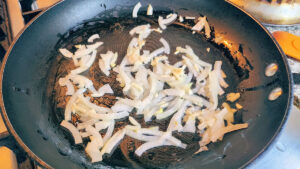
Saute the onions and garlic in a little oil until browned.
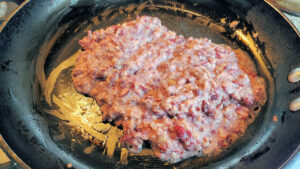
Then blend them with the beans, yes, in your blender, or food processor. Return to the pan with a little more oil.
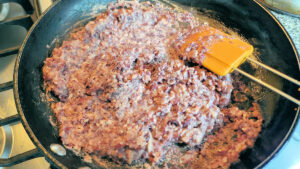
And cook down until they form a thick paste. Mix in the cheese and combine well. Set aside to cool.
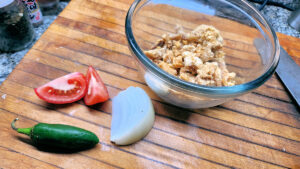
Next, we have our chicharrón mixture, or pork cracklings. We also need onion, tomato, and a jalapeño or similar chili.
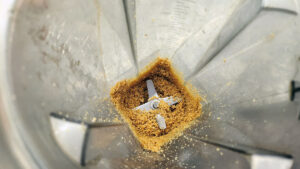
In your blender, grind the pork cracklings to a powder, then add in the other three ingredients and blend to make a paste.
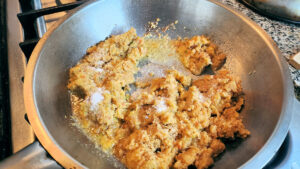
Fry that in a bit of oil for a few minutes – just to make sure the onions and chili are cooked through. Set aside to cool.
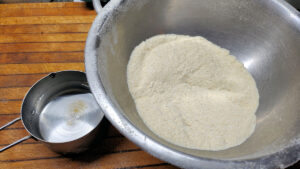
And, we have nixtamalized cornmeal and water. Here’s where I think I screwed up, as several of the recipes I was looking at warned against the mixture being too wet. I think I overcompensated and made it too dry.
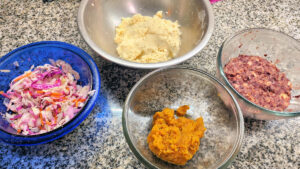
And here we have our masa, or dough, for the pupsas along with the bean and pork crackling mixtures. Also, our curtiba, a mix of shaved cabbage, red onion, carrot, salt, and vinegar.
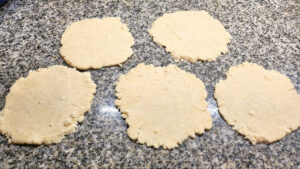
I’m sure anyone who makes pupusas will look at these and say – nope, not right. Too crumbly, and probably too thick.
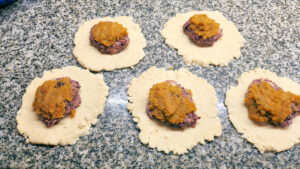
Probably too much filling as well, but so be it. I split the two fillings between the five I was making. Then made some vague attempt to mold the whole thing into a closed packet that just didn’t really work…
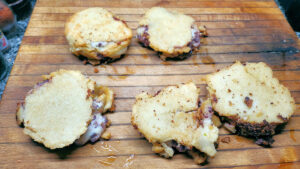
So they came out more like sandwiches of the masa with the two fillings in the middle. Not at all what I was hoping for visually. But hey, first attempt. I also have the feeling that I was supposed to dry griddle these rather than fry them. Things to figure out, though likely, I won’t… moving on.
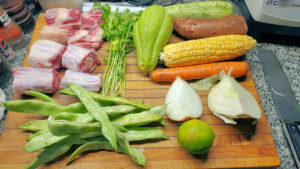
On to our Sopa de Res. We have… beef shortribs and oxtails, zucchini, yuca, corn, carrot, chayote, green beans, onion, lime, and cilantro. Not pictured, beef stock, salt and pepper, vegetable oil.
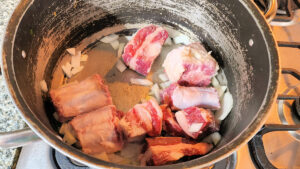
Brown the pieces of meat and the chopped onion in a little oil.
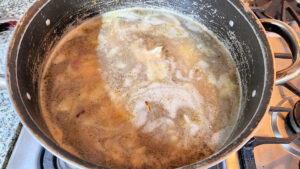
Add the beef stock, bring to a simmer, and cook for about an hour and a half, until the meat is nice and tender.
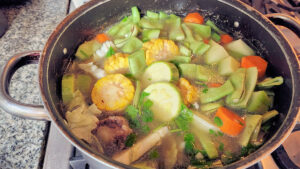
Add everything else except the lime – cut up into pieces. Obviously the yuca needs to be peeled – details on how to do that here. And the chayote needs to have its seed removed. You can peel it or not, the peel is edible after boiling, so it’s not strictly necessary. The cilantro is also chopped, and added at this point too, rather than later. Infuses the flavor more thoroughly. Bring back to a simmer and cook for about half an hour more, until the vegetables are all cooked through.
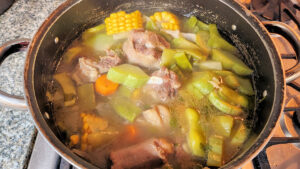
And, you have your soup. Finish with the lime juice. Adjust your seasoning (I didn’t find it necessary, but then, my beef stock was pretty well seasoned).
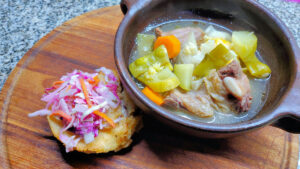
And, serve. The pupusa gets topped with a bit of the curtiba. And, in this view, it doesn’t look quite as lame as in the above photo.
Loved the soup. I think I might reserve a little of the cilantro to add back in at the end, just to give it a little herbal brightness. And, while I loved the flavor of the pupusa, it will clearly take practice to make the masa and shape them, which I probably won’t do unless someone wants to drop by and show me how to make them right.
Next time, we move from Central America to Central Africa, and explore Equatorial Africa.
Copyright © 2026 SaltShaker. This feed contains copyrighted photos and text from SaltShaker. If you are not reading this material in a feed aggregator or by e-mail subscription, the site you are viewing may be guilty of copyright infringement. Please contact [email protected] so that I can take appropriate action.
Plugin by Taragana
]]> While Egypt has obviously existed in one form of country or another since the start of recorded history, in its current incarnation it was granted independence from the UK as a kingdom just in 1922, and didn’t declare itself as a republic, with a president rather than king, until 1953, and its first elected, rather than appointed, president, in 1956.
At 390,000 square miles, in size it falls between the US’ two biggest states, Alaska and Texas, though packs in a population almost equal to our four biggest states, California, Texas, Florida, and New York, combined. Moreover, 95% of the people live in a sort of belt along the Nile River that’s only about 20% of the country’s land mass, making it one of the most densely populated areas in the world, and overall it’s the most populous country in the Middle East.
Ethnically, the population is fairly homogenous, with 99.7% being of Egyptian descent. There are very small populations of Bedouins and people from neighboring countries. Though there are a couple of dialects, Arab is universally spoken. Roughly 85% of the population are Muslim, the balance are mostly Coptic Christian. Noteworthy, officially the country only accepts Islam, Christianity, and Judaism as religions, and practitioners of other faiths are not only not accepted legally, but are considered threats to Egyptian security and can be prosecuted.
Egyptian cuisine is heavy on legumes, vegetables, and fruit from the region – and vegetarian dishes are common. Chicken, squab, lamb, and beef are the most common meats, and grilling is popular. There were so many breads and stuffed breads to pick from that it was hard to narrow things down, and at one point I probably had a dozen ideas I was considering. In the end, I went with a popular street food that sort of crosses the line between a pita-type bread sandwich and an empanada type stuffed pocket – Hawawshi. For the soup, the most ubiquitous seemed to be a red lentil soup, but it also seemed a little boring. I decided to go with a vegetable soup called Hamud which, while fairly simple, seemed to have an interesting flavor profile.
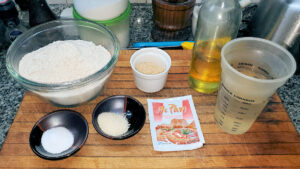
Let’s start with the bread itself, an Egyptian version of pita, called aish baladi. We have 2½ cups of high gluten whole wheat bread flour, 2 teaspoons of sugar, 1½ teaspoons of salt, a packet of instant yeast, 2 teaspoons of vegetable oil, and around 1½ cups of warm water (which, depending on you flour, you may or may not need all of). There’s also some wheatgerm, which we’ll get to further along.

Mix all of the ingredients except the wheatgerm together, knead well, and let rest, covered, for about an hour until it doubles in size.
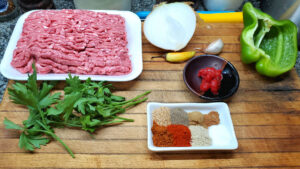
While the dough is proofing, let’s make the filling. We have about a pound of ground beef, half an onion, a hot chili, a garlic clove, half a green bell pepper, a heaping tablespoon of tomato paste, some parsley, and a mix of spices: a teaspoon of salt, a half teaspoon each of coriander, allspice, smoked paprika, and black pepper, a quarter teaspoon each of cumin, cardamom, and cinnamon.
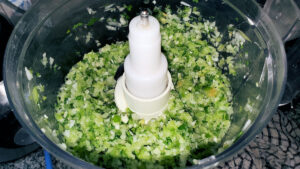
Toss the onion, chili, garlic, bell pepper, and parsley into a food processor and blitz it to be finely chopped.
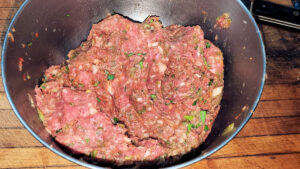
Mix with the ground beef, tomato paste, and all the spices. Easy enough! Now, in what various recipes described as a sort of cheat, or at least, quick version of hawawshi, you’d take already baked, commercial aish baladi/pita bread, cut it in half, stuff the pockets with the meat mixture, and then jump to the baking section of this recipe, though as the bread would be already cooked, you’d cook the whole thing for less time. But we’re making our own, and here, the bread and filling are cooked together.

Use the wheatgerm instead of flour to roll out the dough into circles. I divided this dough amount in eight equal portions.
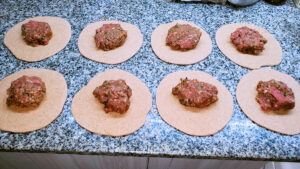
Once rolled out, divide the filling between the dough circles.
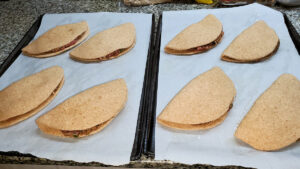
There’s a divide in opinions here. Some people fold the dough over and seal it like an empanada, some form different shapes, some leave them open on the curved side like I did, some cut the doughs in half and seal the curved side but leave the straight side open, thus mimicking a pita pocket. It’s not going to make a difference flavor-wise, so go with what you like. Place the stuffed breads on some oiled parchment paper, and cover to let rise again, about 20 minutes.
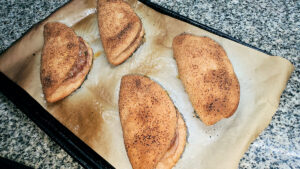
Into a hot oven (I went with the maximum my oven would go to), and cook for 15 minutes. The dough will puff up and start to brown…
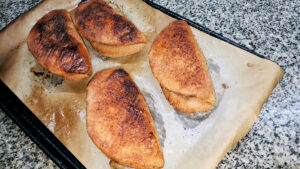
…flip them over – you’ll see that because of the oil, the underside has browned a lot more – basically frying and getting crisp. Put them back in the oven for another 5-10 minutes. Keep an eye on them, you don’t want to burn either side, but you do want them to have a crunchy surface.
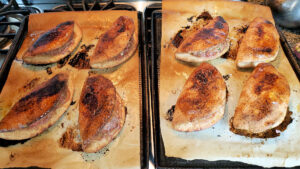
Pull them out of the oven, flip them back over, and they’re ready for serving!
Let’s make our soup, which I basically got going after mixing the filling for the pockets and while the dough was rising.
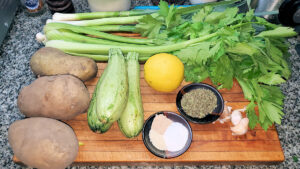
For our hamud we have some leeks, some celery, potatoes, zucchini, a lemon, garlic, dried mint, salt, pepper, and sugar. Not pictured, a couple of quarts of chicken (or vegetable) stock.
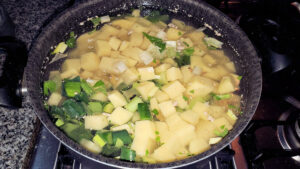
Into a pot with the diced leeks, celery, and potatoes, finely chopped garlic, the juice of the lemon, and the salt, pepper, and sugar. Cover with chicken stock, bring to a simmer, and cook for half an hour.
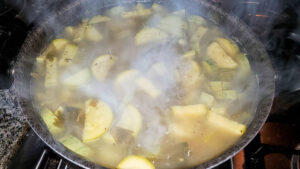
Add the zucchini, diced or in half round slices, and the dried mint. Bring back to a simmer and cook just to cook the zucchini through, about 10-15 minutes. Adjust seasoning if needed, and, we’re ready to serve this one too. It all timed out so that the soup was basically ready within a couple of minutes of when the breads came out of the oven.
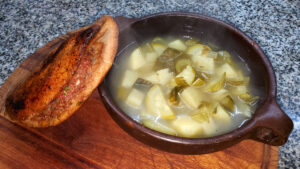
And, serve up a bowl of the hamud soup with a pocket hawawshi on the side!
So, the soup was a little basic, obviously. But it’s tasty. Henry thought it was a little too lemony, which is surprising with only one lemon in it (some recipes used two or three). It was good, but not a wow. The kind of soup that you want on a day when you want something light and nutritious. The hawawshi are fantastic. We had eight of them, and Henry’s niece was on her fourth one, practically inhaling them, and we were like hey, there are four of us here at the table, slow it down a little, we all want more. The spice blend is just delightful, and the texture of the risen but crunchy baladi is so different from either the way we’d usually eat a pita, or the shell of an empanada. I’d happily make them again, and/or use the filling in a more straightforward empanada. Yum.
Next time we head to Central America and El Salvador.
Copyright © 2026 SaltShaker. This feed contains copyrighted photos and text from SaltShaker. If you are not reading this material in a feed aggregator or by e-mail subscription, the site you are viewing may be guilty of copyright infringement. Please contact [email protected] so that I can take appropriate action.
Plugin by Taragana
]]>