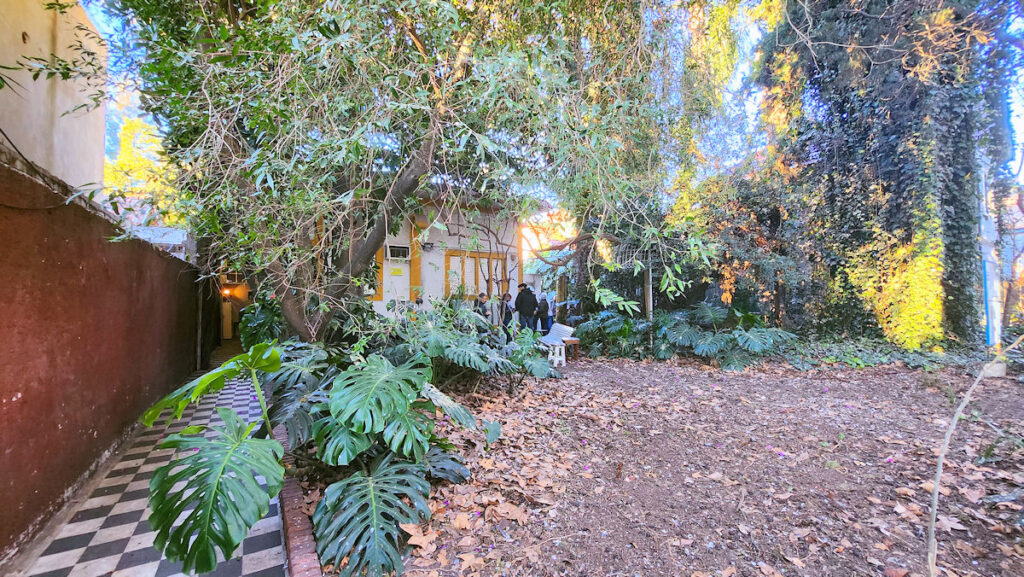
I know… or knew… very little… well, really nothing.. about Argentine author Ernesto Sábato. For whatever reason, an invite to a tour of his house up in the northwestern suburb of Santos Lugares popped up on my Instagram feed. I was looking for something “cultural” to do, so, why not? The tour runs, currently, 7500 pesos, so about $5, and while it lasts only about two hours, it requires about an hour, or a little more, each way, to get there from home. So there was an afternoon’s adventures.
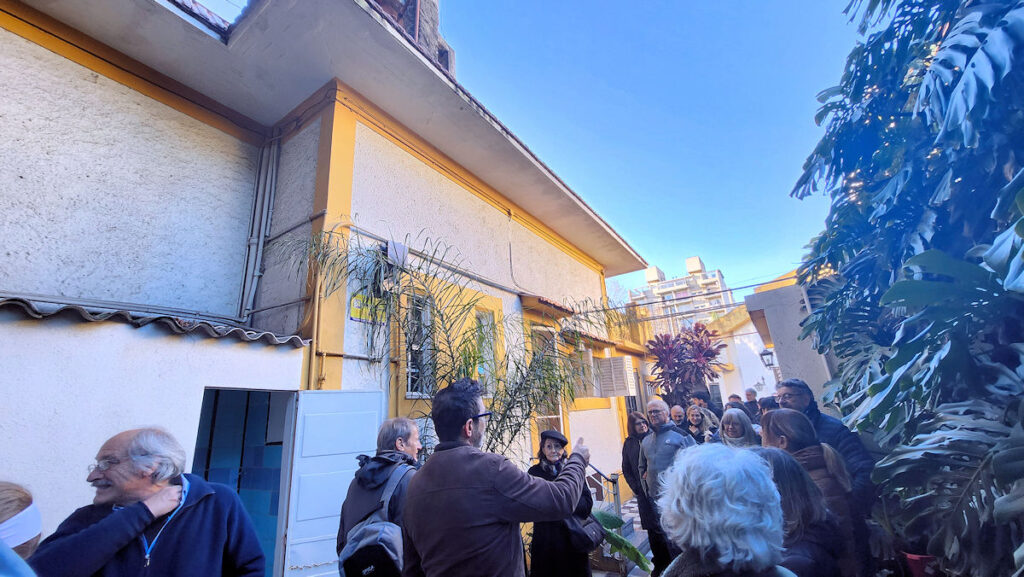
The tour is led by his grandson, the guy in the middle with his back turned, brown coat, glasses. It’s… detailed. We started with about 35-40 minutes in the front garden area while he talked about his grandfather and his works. In order to have at least a vague idea, I’d read his best known novel, The Tunnel, before the tour. And then he went around and asked people to tell about themselves and why they were there – it was voluntary, no requirement to do so. It was also chilly, sitting there on benches and chairs in the garden. It was also less intimate than expected – the invite and museum info state that the tours are limited to a maximum of 15 people, there were about 35. Made things very crowded.
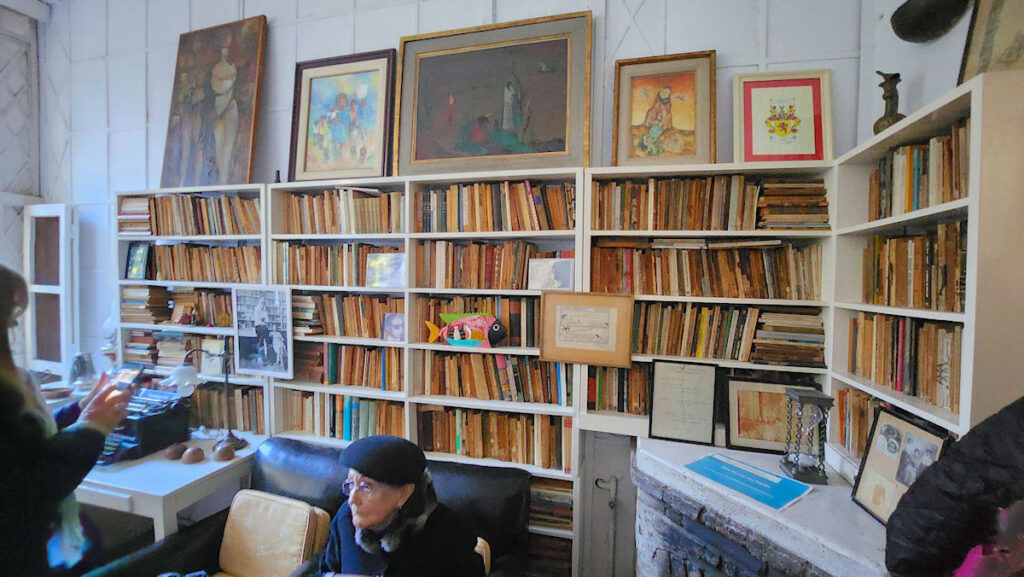
The house is just filled with books and paintings.
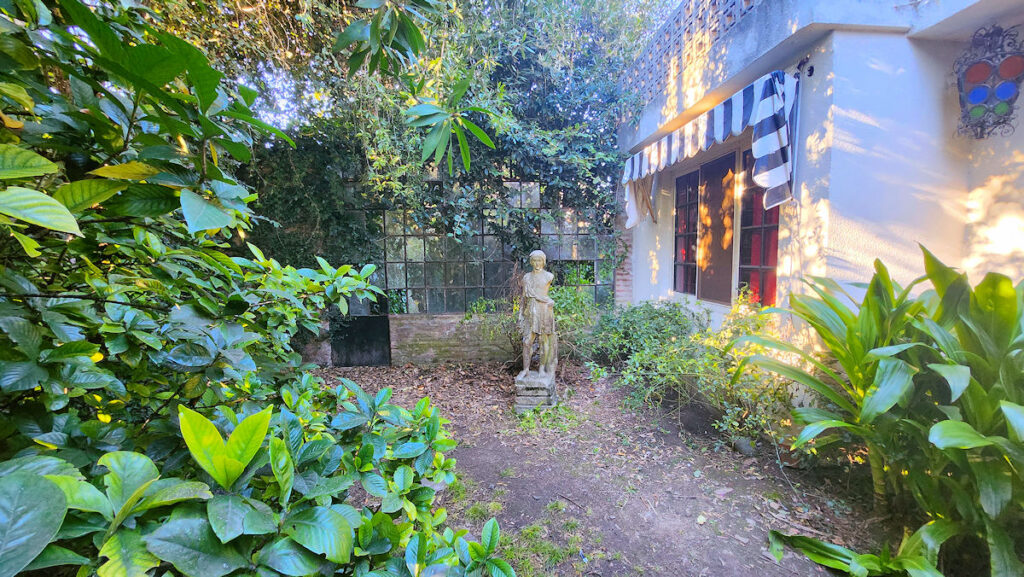
A very pretty rear garden with a statue that “used to be in Parque Lezama in the city, but it’s not there anymore, it’s here”. Okay… legitimately? I mean, it’s small enough to load on a small truck or in a trunk of a bigger car. And you just finished telling us about how your grandfather didn’t have a lot of respect for the government or law. Just musing here. Overall, interesting enough. You do have to speak fluent Spanish to follow anything, and probably more familiarity than I had with Sábato’s works and the politics of the era – there were a lot of references that others clearly understood, but I didn’t follow.
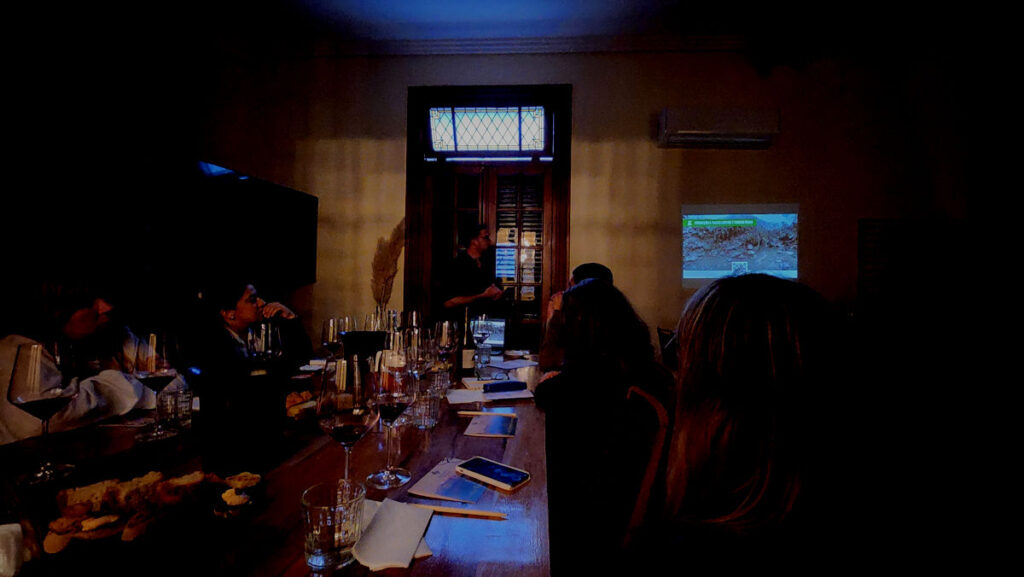
I attended another tasting with the local sommelier society. This time, the wines of Bandini, a winery I was not familiar with. Very weirdly run. The winemaker did pretty much all the talking, and 90% of it was about things like soil composition, irrigation, and sun/wind exposure, and how that affected the grapes. The kind of stuff that winemakers find fascinating but are of approximately zero import to most sommeliers other than to pass exams. And apparently fearing that his various projected photos of vineyards and soil wouldn’t be as clear, the room was kept in the dark – for the entire tasting. Everyone was using their cellphone lights to see the wines and accompanying information. Just turn the damn lights on. And, I’m not going to review the four wines we tasted because… let’s just say, none of them were wines I would order or serve.
On to food for the week. This time focused just on restaurant dishes, as the two big things I cooked were a huge pot of locro de mandioca, covered in yesterday’s post; and a new entry in The Bread & Soup Project, coming up in a post tomorrow.

A relatively new Korean entry in Microcentro, Café Seúl, Maipú 979. Korean restaurants are all the rage these days. This one is really more café than it is restaurant, and the focus is on coffee and pastries.
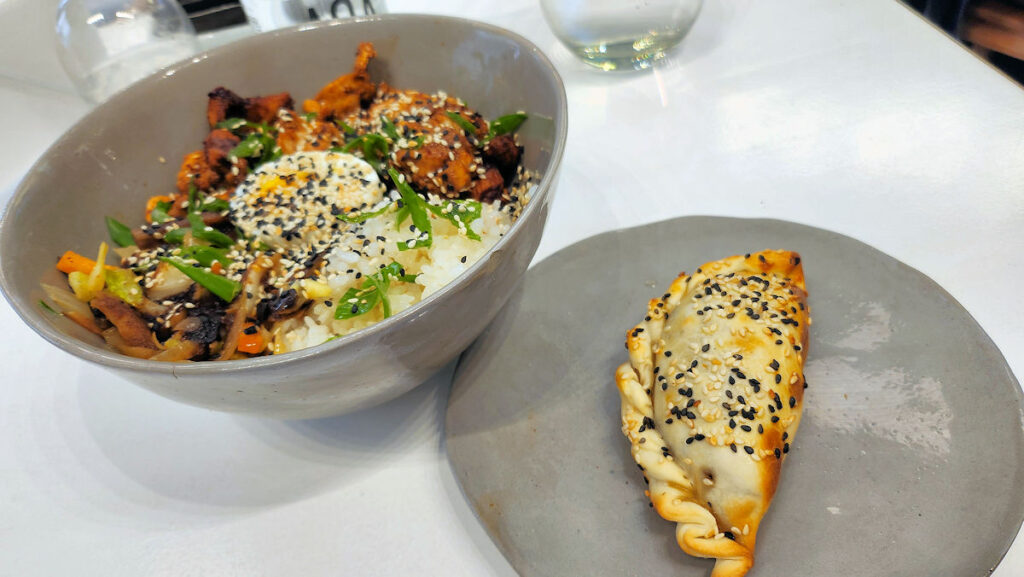
Still, they have a short list of cooked food available at lunch – basically bulgogi, spicy chicken, tofu, or kimchi & cheese, in your choice of empanada, sandwich, or rice bowl. Cool idea to stuff an empanada with bulgogi – absolutely delicious. On the other hand, my spicy chicken sandwich really appears to be more of a rice bowl. To which I got a shrug, and “it’ll take us a little while to make the sandwich, but okay”. Nah, I don’t have the time to wait right now, I’ll eat the rice bowl. I wish I’d waited. The spicy chicken and vegetables were meh, the chicken bordering on dry… and the rice very dried out, crunchy in bits (and not in a good way), and had a very weird chemical taste to it – like someone left industrial soap in the rice cooker. I picked at the chicken and veg, pushed it aside – they weren’t interested – if anything was worse than the rice bowl it was the service, paid (“we know you ordered the sandwich, but you agreed to eat the rice bowl, so you’ll have to pay for that” – double the price), left no tip, and walked out. I wouldn’t go back.
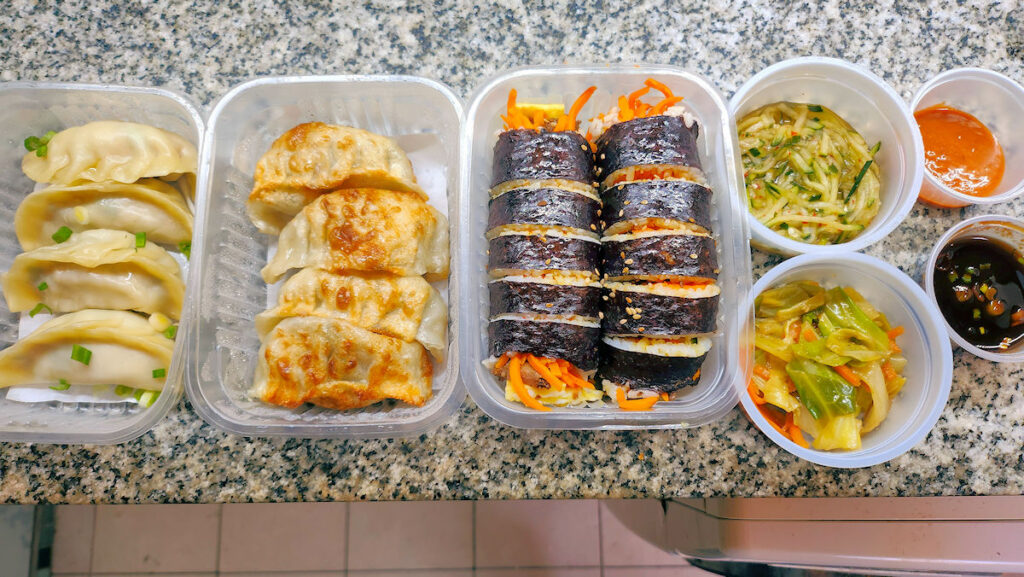
On the other hand, a delivery order from a long time fave, Fa Song Song, also in Microcentro, at Esmeralda 993, of steamed and fried dumplings, and a bulgogi kimbap was a perfect lunch later in the week.
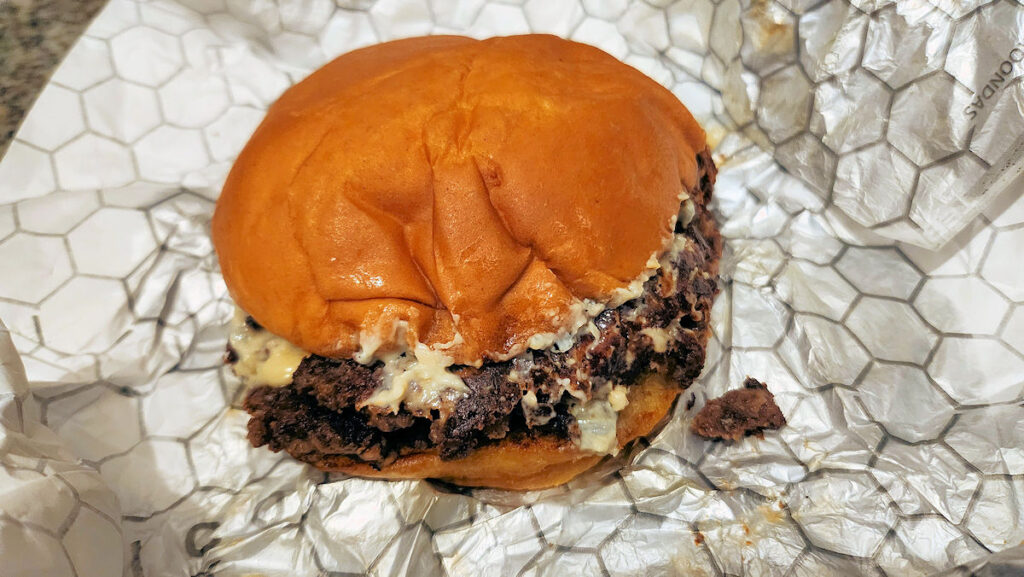
Oooh, delivery twice in a week, I don’t usually do that. But I was “home alone” and didn’t feel like making anything, and a burger place that I’ve been meaning to get to one night popped on the delivery app, and so I ordered the much touted blue cheese smash burger from Aroha, Cabrera 4223, in Palermo. It’s always a little difficult to judge something like a burger via delivery – the bun tends to steam and get a little mushy. But good seasoning, and really, a quite good blue cheese burger, and the smash patties done right, with crispy edges. Worth a direct visit one day soon.
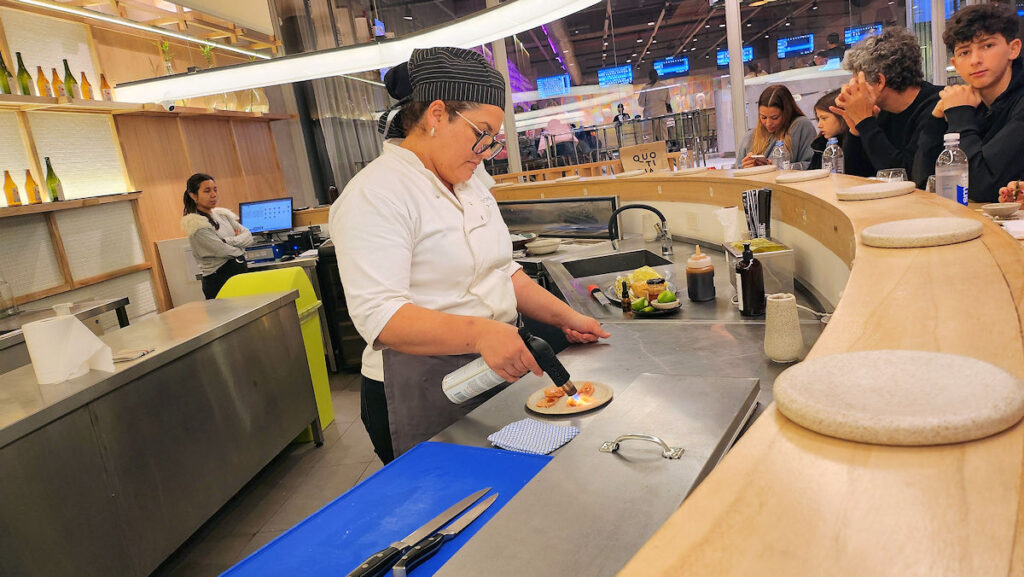
And, finally, when sushi juggernaut Fabric (over 70 locations in the city, a far cry from that original one I visited seven years ago) announced the opening of their new handroll omakase bar in the DOT Baires Shopping center in Saavedra, I put it on the list. The Ronda, as the food court is called, is not the usual sort of mall suspects, but mostly mid to high end spots. It even has two small bowling alleys. I didn’t know Argentines bowled.
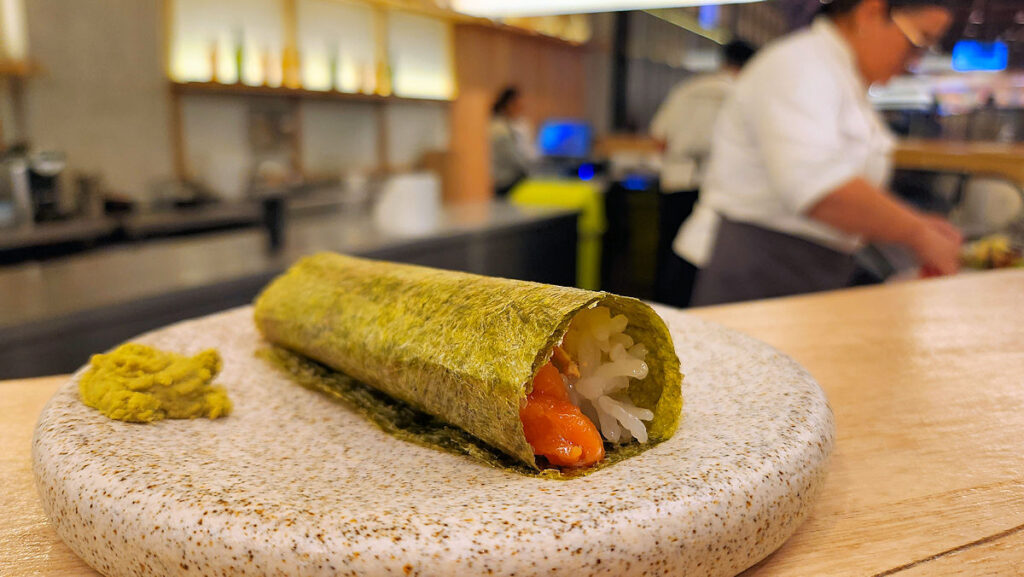
We sat down at the counter at Handororu, and had a very nice little eight-roll omakase “experience”. I’d say, equal in quality to Norimoto, though only 20,000 pesos versus Norimoto’s 32,200 price-tag. Not, however, as good as Asiaka, though also less than their price of 26,280. At the same time, it’s a long way from home, taking over an hour each way. Of the three, I’ll stick with Asiaka, though I’d have no hesitation to go here again if I was in the area for some reason.
How was your week?
Copyright © 2026 SaltShaker. This feed contains copyrighted photos and text from SaltShaker. If you are not reading this material in a feed aggregator or by e-mail subscription, the site you are viewing may be guilty of copyright infringement. Please contact [email protected] so that I can take appropriate action.
Plugin by Taragana




 ]]>
]]>Over the two decades I’ve been in Argentina I’ve seen more and more of these showing up on shelves. While many come to Argentina, and/or grew up here, are enamored of Malbec – easy to pronounce, easy to drink, kind of like the Merlot craze in the US years ago – Argentina produces so many better wines than many of those. Let’s start with half a dozen that I’ve sampled recently.
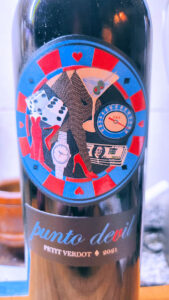 Bodegas San Huberto “punto devil” Petit Verdot 2021, Valle de Aminga, La Rioja Bodegas San Huberto “punto devil” Petit Verdot 2021, Valle de Aminga, La Rioja
Petit Verdot 90% – Syrah 5% – Merlot 5% – full malolactic fermentation over 20 days, 50% of the wine is aged for a year in barrel, 50% is kept in tank, then blended. Deep purple color. Aromas of blueberry and milk chocolate. Medium bodied, moderate acidity, soft, sweet tannins. Fruit forward, easy drinking wine with notes of blueberry, black plum, milk chocolate, and vanilla. Long finish. A great value at 6720 pesos retail, at under $5! |
 Bodega Atamisque “Serbal” Petit Verdot 2023, San José, Tupungato, Mendoza Bodega Atamisque “Serbal” Petit Verdot 2023, San José, Tupungato, Mendoza
100% Petit Verdot – stainless steel, temperature controlled fermentation, bottled without aging. The serbal is a Celtic mystical tree, the “Lady of the Mountains”. I’m not sure why, but Atamisque doesn’t even note on their website or in social media that they produce a Petit verdot. Vivino only lists releases from 2020 on. Encountered this one at a lovely wine bar in Mendoza where it was offered by the glass. Medium purple, surprisingly lighter in color for a Petit verdot. And light to medium bodied, fairly high acidity, green tannins, short to medium finish. It was “fine”, but not one I’d jump to drink again. Pricing seem to run around 8-9000 pesos retail, just over $6. |
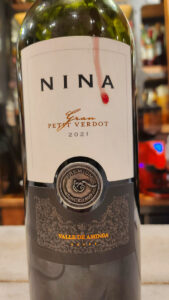 San Huberto “Nina” Gran Petit Verdot 2021, Aminga Valley, La Rioja San Huberto “Nina” Gran Petit Verdot 2021, Aminga Valley, La Rioja
100% Petit Verdot – three week fermentation then aged one year in new French oak barriques. Deep red purple color. Medium bodied, fruit forward, moderate acidity. Fairly intense notes of mixed berry fruit, though blueberries shine through more than the others, definite notes of vanilla and chocolate from the oak. Slightly jammy sweet fruit with soft tannins and a medium to long finish. Decent value at 12,100 pesos, a bit of $8. |
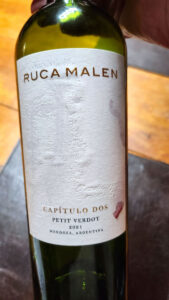 Ruca Malen “Capítulo Dos” Petit Verdot 2021, Agrelo/Luján de Cujo, Mendoza Ruca Malen “Capítulo Dos” Petit Verdot 2021, Agrelo/Luján de Cujo, Mendoza
100% Petit Verdot – cold fermented in concrete tanks, then aged for one year in barriques, 15% of which are new. Deep purple color. Intense, jammy, boysenberry, with notes of cocoa, warm spices, and vanilla. Fruit forward, fairly full bodied, moderate acidity and alcohol, soft tannins, long finish. Drinking beautifully right now. Very good value at 13,950 pesos, at under $10. |
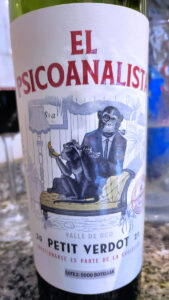 El Psicoanalista Wines Petit Verdot 2021, El Peral, Tupungato, Mendoza El Psicoanalista Wines Petit Verdot 2021, El Peral, Tupungato, Mendoza
100% Petit Verdot – 30 day fermentation with indigenous yeasts, followed by mellowing in older French and American oak barrels (3-5 year old, used barrels). Deep purple color. Aromas of boysenberry and brambles, the latter almost reminiscent of a Cabernet franc. Fruit forward, medium to full bodied, somewhat high acidity and alcohol, dry tannins, long finish. Perhaps needs some time to meld a little bit more. Good value at 14100 pesos, under $10, but I think it will be better a year from now. |
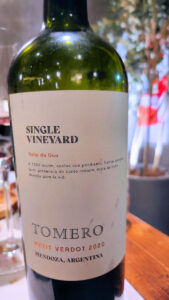 Bodega Vistalba “Tomero” Single Vineyard Petit Verdot 2020, Valle de Uco, Mendoza Bodega Vistalba “Tomero” Single Vineyard Petit Verdot 2020, Valle de Uco, Mendoza
100% Petit Verdot – 3 week cold fermentation, followed by a year’s aging in barrique, 20% of that in new barriques. Deep purple-red. Mixed black fruits and a strong note of eucalyptus. Fruit forward, full bodied, moderate acidity, slightly high alcohol, dry tannins, long finish. Great wine, definitely needs food to pair with it, was pretty much perfect with a char-grilled steak, heavy on garlic. We had it in a restaurant, where, if I recall correctly, it sold for 23000 pesos, $23, though retail it seems to run around 17000, or about $12. I’d happily drink it again. |
Copyright © 2026 SaltShaker. This feed contains copyrighted photos and text from SaltShaker. If you are not reading this material in a feed aggregator or by e-mail subscription, the site you are viewing may be guilty of copyright infringement. Please contact [email protected] so that I can take appropriate action.
Plugin by Taragana
]]>Picture this: Uco Valley, 1963, Alberto Zuccardi lays the foundation for a patchwork quilt of vineyards and the winery that has become synonymous with some of the best quality wines in Mendoza, Argentina. At the time, while of high quality, the wines were the usual suspects. But in 1976, his son José takes over the operations management of the winery and begins to import cuttings of grapes from various Italian and Spanish vineyards, bringing new varieties to the country. I’ve talked about some of my favorites at times in the past, but I recently had the opportunity to taste a half dozen of their excellent white wines. While I doubt that they will ever overtake Zuccardi’s reds in the market, they are well worth seeking out, and some of them rival top flight whites from countries better known for those. [Photo at the top of the page from a lunch I attended at Zuccardi many moons ago.]
The wines were presented in three pairs, each to showcase a different concept of “diversity” in approach to winemaking and grape growing.
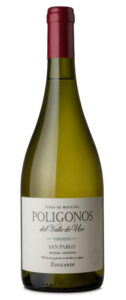 Zuccardi “Polígonos” Verdejo 2023, San Pablo Zuccardi “Polígonos” Verdejo 2023, San Pablo
Verdejo, a white grape variety, has a rich history in Spain. Introduced around the 11th century, it was initially used for Sherry-like wines. In the 1970s, a fresher style emerged, and the Castilla y León region, particularly around Rueda, gained recognition for its Verdejo wines. These aromatic, medium-bodied whites are excellent alternatives to Sauvignon Blanc and Pinot Grigio. I’m fairly certain that Zuccardi was the first to commercially produce Verdejo in Argentina, and though there may be others produced here now, I haven’t encountered one. The intent behind this pairing was to show two wines from the same general area (San Pablo and Tupungato are neighboring areas, though the vineyards are about 4 miles apart), same vintage, same fermentation method, but different grapes. This wine is light to medium bodied, with lovely spiced apple fruit, and hints of paraffin (think scented candle) and “barnyard” – both in a good way. Moderately high acidity, and a long finish. It’s absolutely delightful on its own, but I’m thinking chicken off the grill as a perfect match, and I think it even has the umph to stand up to something like buffalo wings as an alternative to beer! Retail prices here seem to run between 20-25,000 pesos, or $13-16. |
 Zuccardi “Polígonos” Sauvignon Blanc 2023, Tupungato Zuccardi “Polígonos” Sauvignon Blanc 2023, Tupungato
Sauvignon Blanc is obviously a better known white wine grape variety. It’s known for its vibrant flavors and lively acidity. It grows nearly everywhere, from western France to emerging wine regions worldwide. The wines it produces are typically light in color, aromatic, and dry. Green herbal notes, such as freshly cut grass, bell pepper, and asparagus are common, along with tropical passion fruit, grapefruit, or even mango. This is pretty classic Sauvignon blanc, the sort that most trained wine pros would pick out instantly. It’s got a strong green bell pepper and fresh cut grass aroma upfront, followed by kiwi fruit and lemon zest. Light bodied, fairly high acidity, and a medium finish. Personally I found it a bit aggressive, and while I could see pairing it with richer seafood or chicken dishes with herbal butter sauces, using the acidity to cut that richness, I can think of many other Sauvignon Blancs I’d probably pick first. Pricing is the same as above. |
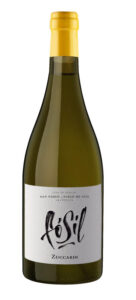 Zuccardi “Fosíl” 2022, San Pablo Zuccardi “Fosíl” 2022, San Pablo
This next pairing was intended to show “terroir” differences. Both wines are 100% Chardonnay, both were harvested at basically the same time and fermented in the same way, but while they are both from the same general region of Mendoza, they are from areas that have different soils and different exposure to winds and weather. Chardonnay probably doesn’t need to be introduced any more than Sauvignon blanc did, but, what the heck. It’s a white grape with its origins in Burgundy, France. It has become the most widely planted white wine grape globally. Chardonnay wines can range from crisp and mineral expressions, such as Chablis from Burgundy, to full-bodied and buttery styles like Meursault. Techniques like oak aging, malolactic fermentation, and lees stirring add layers of flavor and complexity. Whether grown in the Old World or the New World, Chardonnay is a great canvas for expressing both terroir and winemaking techniques. I found this wine to be kind of austere – with strong notes of minerals, and dry leaves, with pear and fennel notes coming in almost like an afterthought. Part of it is that the wine is still young, but it’s also from a colder stretch of Mendoza which tends to mute the fruit in favor of earth related qualities. It’s fairly light bodied, surprisingly so – I guess one might compare it almost to being Chablis-like, matching well with seafood, from raw, to cold, to hot off the grill. It’s a bit more upscale, coming in around the 90-100,000 peso range, $60-65. |
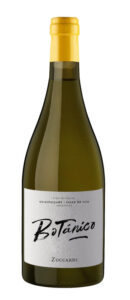 Zuccardi “Botánico” 2022, Gualtallary Zuccardi “Botánico” 2022, Gualtallary
Even after more than thirty years working with wine, the differences that a short distance in terroir can make in a wine continue to fascinate me. Here we have, as noted, a wine made from the same grape, from the same altitude, made at the same time, using the same fermentation and aging process, and the only solid difference being that the grapes are grown about a mile and a half apart. And yet, completely different in character. This wine is far richer, medium bodied, with a long, lingering finish. An impact of ripe quince fruit backed by vanilla and clove hits me immediately. There’s little in the way of earthy or minerally qualities. It’s a wine I’d be happy to just sit and drink on its own, but I can see this with something like a lighter roast meat – poultry or pork – with some kind of fruit sauce. Same pricing as the previous wine. |
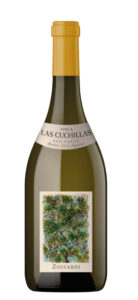 Zuccardi “Finca Las Cuchillas” 2021, San Pablo/Tunuyán Zuccardi “Finca Las Cuchillas” 2021, San Pablo/Tunuyán
The next pairing is, well, not really much of a pairing, in that each was selected as representative of a particular parcel, a small section of the vineyards, and is what the winemakers and family consider to be the “best expression” of that particular plot of land. They’ve experimented with different grapes and settled on one that they think grows best there, and the winemaking techniques are geared to bringing out what they consider its finest qualities. 100% Chardonnay. This wine is just plain too young to drink. The nose is “closed”, so all the aromas are muted, though there’s an intriguing mix of under-ripe pineapple and apple, minerals, and a hint of cinnamon stick. It’s medium bodied, with moderate acidity. At the moment it comes across slightly “hot”, with a bit of an alcohol burn, but I expect in another year or two that will settle out and the fruit flavors will bloom. Save it for, maybe 2026, and serve it up with a roast chicken or ham. This wine is from among Zuccardi’s top of the line offerings of white wines, and retails here around 190-200,000 pesos, or currently about $125-130. |
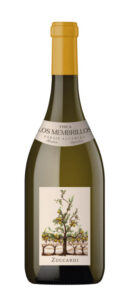 Zuccardi “Finca Los Membrillos” 2019, Paraje Altamira/San Carlos Zuccardi “Finca Los Membrillos” 2019, Paraje Altamira/San Carlos
100% Semillon. A versatile grape variety used to create both dry and sweet white wines. It thrives in regions like France and Australia. When young, Sémillon offers fresh apple and citrus flavors, while with age, it develops richer notes of honey, figs, and toasted nuts. Its fragrant aromas include citrus fruits and subtle minerality. The texture is full-bodied and silky, making it a delightful pairing with fuller dishes and meatier fish. Sweet Sauternes-style versions can age beautifully, sometimes surpassing 50 years in exceptional vintages. One of my personal favorite grapes! I’m kind of in awe. This wine is simply spectacular. It’s got gorgeous notes of peaches and toasted almond, and a complex background of spices, herbs, and minerals. It’s the kind of wine I want to just sit with and think deep thoughts. Part of me says, don’t pair this with food, it will just take away from the enjoyment of the wine, but we must eat, and this is the sort of white wine that will stand up to many a richer dish. For those who prefer white wine with red meat, this is the one. A perfect steak, a prime rib, a roast leg of lamb – they’ll all work beautifully with this one. While this wine is ready to drink, I think it’s going to age beautifully. If it’s in your budget, grab a few bottles and open one up every couple of years…. Just a touch more expensive than the previous wine, running more in the 200-210,000 peso range, or $130-135. |
Copyright © 2026 SaltShaker. This feed contains copyrighted photos and text from SaltShaker. If you are not reading this material in a feed aggregator or by e-mail subscription, the site you are viewing may be guilty of copyright infringement. Please contact [email protected] so that I can take appropriate action.
Plugin by Taragana
]]>[Cover photo from Domiciano’s Instagram account]
Bodega Domiciano is a small, family owned winery, of about 300ha, out of which half are currently planted. The current family member who’s running the place, Federico Fernandez, came to present seven of his wines to a group of around thirty of us. The winery is named after his grandfather, Domiciano.
As is typical in Argentina, even in professional settings, half of us were there on time and half showed up anywhere from 10-40 minutes late. I just wish the folk putting these things on would simply start on time, for those of us who respect their time, and want to have ours respected in turn. Oh well, nearly twenty years in to living here and while I now expect it, I still don’t like it.
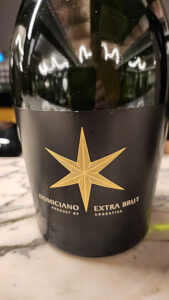 Domiciano Extra Brut – 90% Chardonnay, 10% Pinot noir, fermented in the Charmat method. Tangent there – What’s the difference between what’s usually called the methode champenoise, and the methode charmat? In the first, the grape juice is fermented into wine in a tank or barrel, and then it’s bottled, with the addition of a mixture called liqueur de tirage, which is just sugar and yeast, and the bottle is sealed. The yeast ferments this extra sugar, which because the bottle is sealed, traps the bubbles into the wine, creating champagne. In the charmat method, the wine is moved to a sealed tank, along with the added sugar and yeast, and the same occurs, but because of the larger volume, the physics of it all tends to result in larger bubbles and fewer of them, and then it’s bottled, already sparkling. Domiciano Extra Brut – 90% Chardonnay, 10% Pinot noir, fermented in the Charmat method. Tangent there – What’s the difference between what’s usually called the methode champenoise, and the methode charmat? In the first, the grape juice is fermented into wine in a tank or barrel, and then it’s bottled, with the addition of a mixture called liqueur de tirage, which is just sugar and yeast, and the bottle is sealed. The yeast ferments this extra sugar, which because the bottle is sealed, traps the bubbles into the wine, creating champagne. In the charmat method, the wine is moved to a sealed tank, along with the added sugar and yeast, and the same occurs, but because of the larger volume, the physics of it all tends to result in larger bubbles and fewer of them, and then it’s bottled, already sparkling.
This is a bright, lively wine, with plenty of citrusy acidity – for me tangerine was the dominating aroma and flavor. It’s dry, there’s a certain mineral character to it. It’s light and refreshing, the sort of wine that would go with a lovely chilled seafood platter. Sells here for around 20,000 pesos, around $14. |
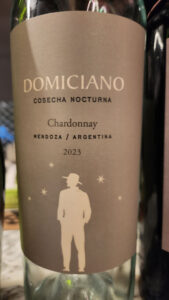 Domiciano “Cosecha Nocturna” Chardonnay 2023 – “cosecha nocturna” means “night harvest”. Why would a winery harvest grapes at night? It’s dark, obviously harder to see, especially at a winery like this where the harvesting is manual rather than by harvesting machines. This is a topic that comes up in winemaking circles – the general consensus is that if you’re going straight to the grape press (which Domiciano does, Federico asserted that all their grapes are into the press within about 15-20 minutes of being harvested), it’s better if they’re cold – you get more intense, cleaner flavors. Domiciano “Cosecha Nocturna” Chardonnay 2023 – “cosecha nocturna” means “night harvest”. Why would a winery harvest grapes at night? It’s dark, obviously harder to see, especially at a winery like this where the harvesting is manual rather than by harvesting machines. This is a topic that comes up in winemaking circles – the general consensus is that if you’re going straight to the grape press (which Domiciano does, Federico asserted that all their grapes are into the press within about 15-20 minutes of being harvested), it’s better if they’re cold – you get more intense, cleaner flavors.
This has the classic flavors of Chardonnay, with a touch of others that I tend to associate more with Sauvignon blanc. The former – green apple, dominating, is counterpointed by the latter, green bell pepper. If you’re into the details, that tends to happen with wines grown at higher altitudes or in colder climates, you get a certain green vegetal component in addition to fruit. There’s a hint of vanilla, some white pepper. High acidity – higher than what most of us probably think of when ordering a Chardonnay. I’d probably pair this wine with something like a fish dish with a butter or cream sauce – something like a trout in beurre blanc would be perfect. Sells here for around 8,000 pesos, around $6. |
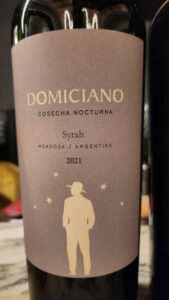 Domiciano “Cosecha Nocturna” Syrah 2021 – Syrah, or Shiraz, are they the same thing? Yes, and no. Genetically, the same grape. At some point, Syrah in Australia came to be called Shiraz – there are various proposals as to why, but chalk it up to that Australians just talk funny. Over time, it’s come to be that in general, Syrah is associated with an “old world” style, the French style epitomized by the Rhône Valley, while Shiraz is associated with the “new world”, Barossa Valley in Australia, and California. Domiciano “Cosecha Nocturna” Syrah 2021 – Syrah, or Shiraz, are they the same thing? Yes, and no. Genetically, the same grape. At some point, Syrah in Australia came to be called Shiraz – there are various proposals as to why, but chalk it up to that Australians just talk funny. Over time, it’s come to be that in general, Syrah is associated with an “old world” style, the French style epitomized by the Rhône Valley, while Shiraz is associated with the “new world”, Barossa Valley in Australia, and California.
This one would fit more into the model of what I think of as Shiraz – rich, blackberry jam, sweet oak, bittersweet chocolate. I found it to be a little “hot”, i.e., the alcohol seemed higher than it ought to be, leaving a slightly burning sensation in the aftertaste, and the tannins, the bitterness you get from grape skins (think of the sensation of having left a teabag in the cup too long) were a little too astringent for my tastes. Likely those will both resolve with another year or two of aging in the bottle, and I think this will be a quite lovely wine then, and something I’d pair with a lighter roasted meat, like chicken, duck, or pork. Sells here for around 8,000 pesos, around $6.50. |
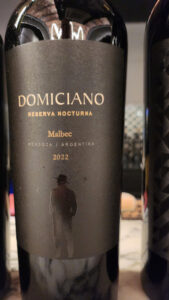 Domiciano “Reserva Nocturna” Malbec 2022 – I have to admit, I found it a little odd that the “night reserve” being offered, even from a different grape, was a year younger than the regular harvest version. If the Syrah was too young by a year or two, this is too young by probably another year beyond that. Malbec does tend to age more rapidly than Syrah, but still, this bordered on infanticide. Yes, there was the classic dark plum flavor, but muted, and currently dominated by oak, alcohol, and dry tannins. I’d stick this on the wine rack for at least two years before I’d even contemplate opening it. Domiciano “Reserva Nocturna” Malbec 2022 – I have to admit, I found it a little odd that the “night reserve” being offered, even from a different grape, was a year younger than the regular harvest version. If the Syrah was too young by a year or two, this is too young by probably another year beyond that. Malbec does tend to age more rapidly than Syrah, but still, this bordered on infanticide. Yes, there was the classic dark plum flavor, but muted, and currently dominated by oak, alcohol, and dry tannins. I’d stick this on the wine rack for at least two years before I’d even contemplate opening it.
While Argentines tend to jump to Malbec with every sort of meat, especially steaks off the grill, I’ve never found it to be a great match with that. And interestingly, until the ’80s, neither did they. Like Merlot in the US which took off because a few wine writers asserted it was easy to drink and easy to pronounce, the same thing happened here with Malbec. I generally prefer it with, again, lighter meats like birds and pork. Sells here for around 12,000 pesos, around $8.50. |
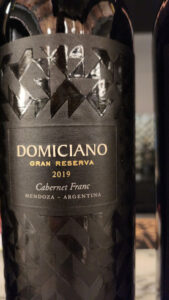 Domiciano “Gran Reserva” Cabernet Franc 2019 – Not everyone likes Cabernet Franc. It tends to come across to many people as a sort of rough version of Cabernet Sauvignon. And that’s not surprising – Cabernet Sauvignon is an intentionally bred grape that’s a cross between Cabernet Franc and Sauvignon Blanc, with the intent to tame some of those rough, brambly sort of flavors. Domiciano “Gran Reserva” Cabernet Franc 2019 – Not everyone likes Cabernet Franc. It tends to come across to many people as a sort of rough version of Cabernet Sauvignon. And that’s not surprising – Cabernet Sauvignon is an intentionally bred grape that’s a cross between Cabernet Franc and Sauvignon Blanc, with the intent to tame some of those rough, brambly sort of flavors.
Despite being five years old, this wine is still showing hallmarks of being young. That said, it’s fully drinkable now, though I think it will be better in another year or so. A mix of red fruits, tinged with graphite – pencil lead, a hint of sweet graham cracker, and a touch of that brambly character, classic for the grape. For me, a wine like this is perfect with game meats, or a rich, slightly gamey stew – here in Argentina, I’d pair it with one of the two big classic national stews – locro or carbonada. Sells here for around 30,000 pesos, around $21. |
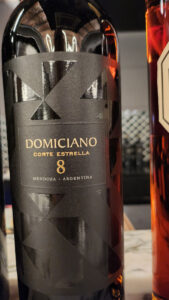 Domiciano “Corte Estrella 8” – Upfront, I love the concept. Each year, the winemakers and owners of Domiciano get together and sample through various blends of both currently fermenting wines, and those already in barrel from past years, and come up with a blend, different each time, that they bottle as this “Star Blend”. Because it’s a blend of different years, it’s a non-vintage dated wine, and this, obviously, is the eighth year they’ve done this. Domiciano “Corte Estrella 8” – Upfront, I love the concept. Each year, the winemakers and owners of Domiciano get together and sample through various blends of both currently fermenting wines, and those already in barrel from past years, and come up with a blend, different each time, that they bottle as this “Star Blend”. Because it’s a blend of different years, it’s a non-vintage dated wine, and this, obviously, is the eighth year they’ve done this.
Corte 8 is 80% Malbec and 20% Cabernet Franc. It was my favorite out of the tasting, and that’s shouldn’t be surprising given the attention to producing a blend that’s the “star” for that year. A delightful mix of red and black fruits, particularly cherries, and a hint of mint on the finish, this wine would be a great one to drink on its own, but for me, this would be the one I’d pull out with a great steak, or maybe something like a roast suckling pig! Sells here for around 38,000 pesos, around $27. |
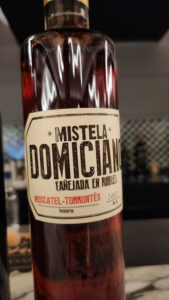 Domiciano Mistela – This is the sort of wine that people who like this sort of wine will like. For me, mistelas are just too sweet. A mistela is not fermented, so it’s not actually wine. It’s fresh grape juice to which more or less pure alcohol is added to a level (usually about 13% or more) to prevent it from fermenting. Add to that the it’s fresh grape juice from overripe grapes, that are ready to be made into a dessert wine, and this is a sticky, syrup blend of Moscatel and Torrontés that while some people might want to sip on, even Federico recommended it as part of a spritz sort of cocktail. It might have been nice to try it made into that cocktail, but as it is, it’s just not a something that I even have a recommendation for what to pair it with. Maybe almost like a vin santo, I’d dip biscotti in it. Sells here for around 12,000 pesos, around $8.50. Domiciano Mistela – This is the sort of wine that people who like this sort of wine will like. For me, mistelas are just too sweet. A mistela is not fermented, so it’s not actually wine. It’s fresh grape juice to which more or less pure alcohol is added to a level (usually about 13% or more) to prevent it from fermenting. Add to that the it’s fresh grape juice from overripe grapes, that are ready to be made into a dessert wine, and this is a sticky, syrup blend of Moscatel and Torrontés that while some people might want to sip on, even Federico recommended it as part of a spritz sort of cocktail. It might have been nice to try it made into that cocktail, but as it is, it’s just not a something that I even have a recommendation for what to pair it with. Maybe almost like a vin santo, I’d dip biscotti in it. Sells here for around 12,000 pesos, around $8.50. |
Copyright © 2026 SaltShaker. This feed contains copyrighted photos and text from SaltShaker. If you are not reading this material in a feed aggregator or by e-mail subscription, the site you are viewing may be guilty of copyright infringement. Please contact [email protected] so that I can take appropriate action.
Plugin by Taragana
]]>Sennight: Week. First recorded before 1000; Middle English sevenyht, seoveniht(e), sennyght, etc., Old English seofon nihta; seven, night
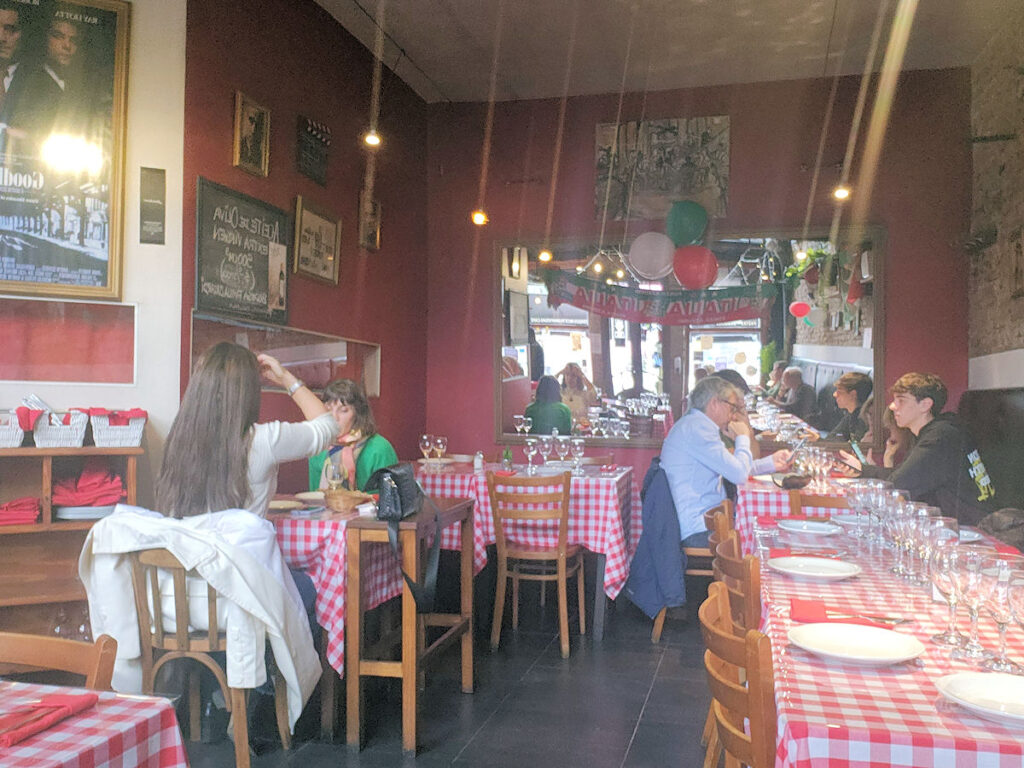
Let’s start with a little Italian outing at Arte de Mafia, El Salvador 4975, Palermo for my regular Sunday lunch out with a local friend. The red and white check table toppers give that Little Italy vibe, which is not necessarily a good thing. But it’s quickly apparent that there’s a theme here, that fits with the name. The entire restaurant is dedicated to classic mafia movies, with posters, artwork, and memorabilia that fit the theme. As does the look of the tables.
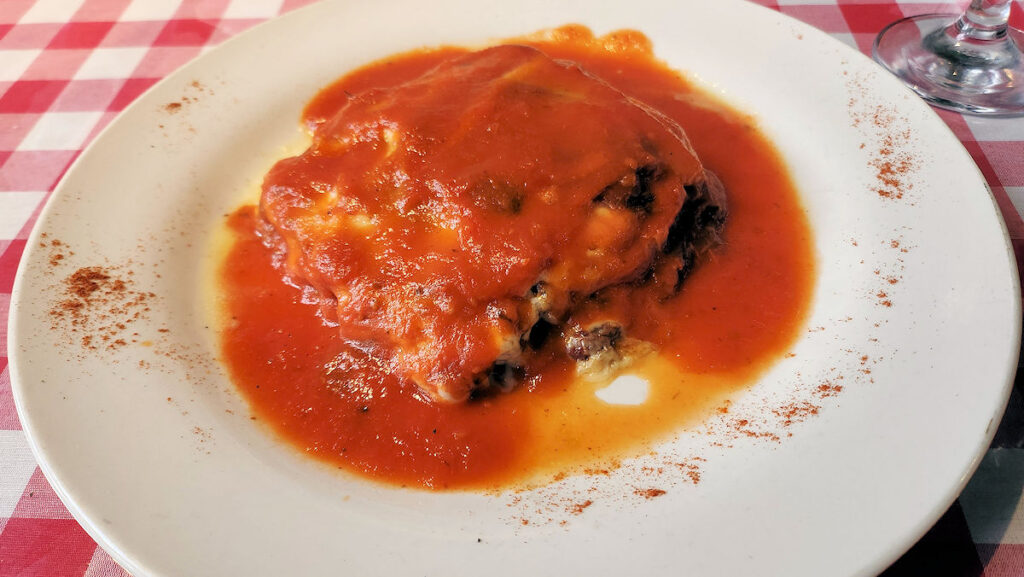
I almost wish that the waiters fit the theme too – some sort of Marlon Brando-ish voice approach, or a little tough guy act, but they’re charming and friendly, and happy to make recommendations. We decided on their Lasagna con cordero della famiglia Corleone, a lamb lasagna “Corleone family” style. We were both trying to think whether either of us had ever had a lamb lasagna before. It’s got great flavor – it’s basically just a lamb bolognesa instead of beef. It’s a little borderline on the concept of lasagna though with only a bottom and top sheet of pasta and the filling in between – almost more of just a big open raviolo.
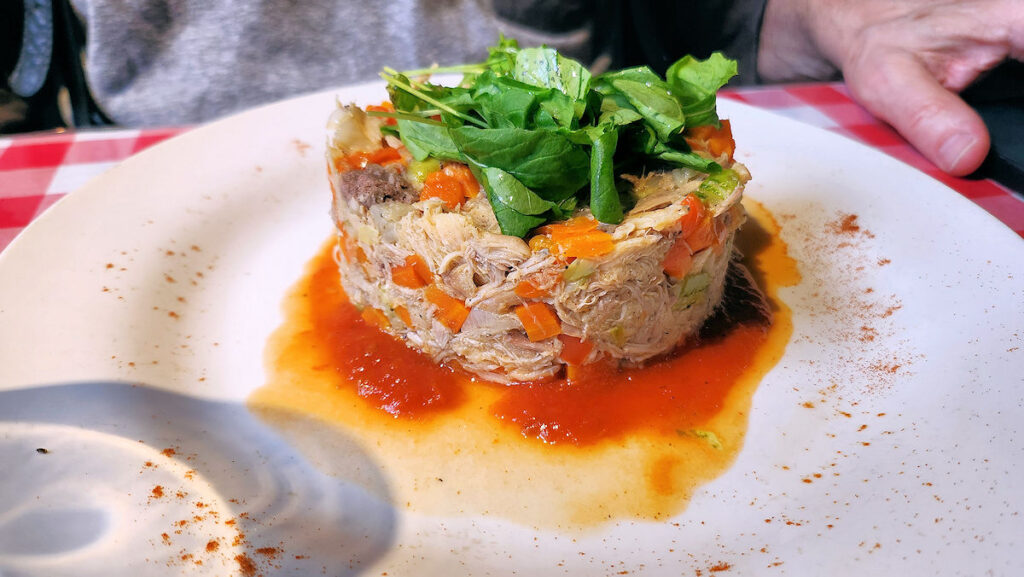
For our other plate, the Conejo Don Tony Pagliotto, a braised rabbit and “ratatouille” timbale in the style of, apparently, a mafia don of that name. Interestingly, of all the plates – each of which references a pop culture movie mafia family or person, most of whom I recognized, I can’t find anything about a Tony or Antonio Pagliotto in the genre. Did they just pick a random Italian name? When reading the menu description, this was not what we pictured – particularly that the rabbit was “pulled”, but we’d both happily eat this dish again. Neither dish was a wow, but they were both good, basic Italian cooking – though you can see on both plates that the tomato sauce is a little watery, it still had good flavor.
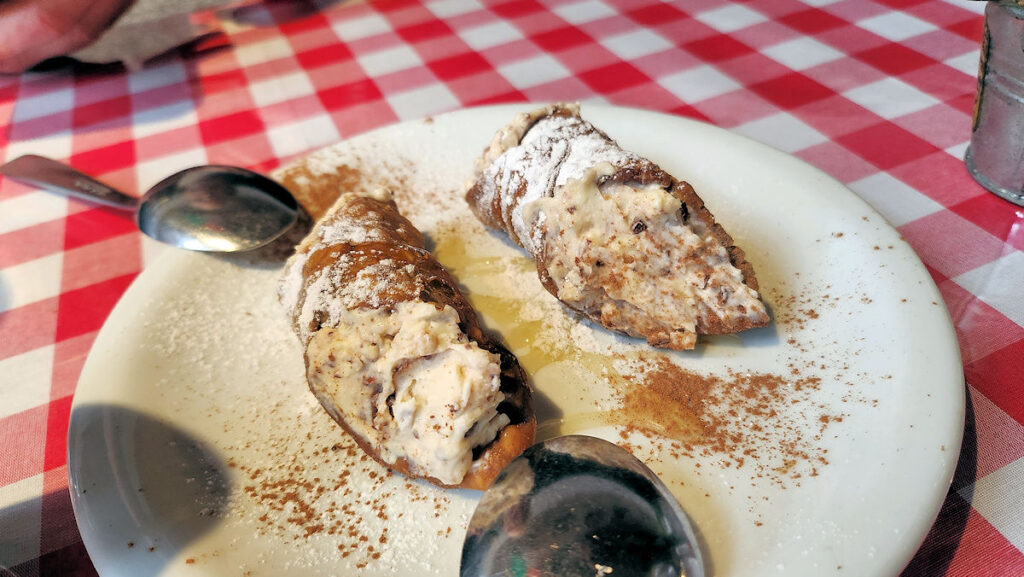
And finished off with a couple of decent cannoli. The shells are darker than usual because they’re tinged with cocoa powder, as is the ricotta filling. Again, solid, but no wows here. A little sweeter than I prefer, especially being drizzled all over with honey.
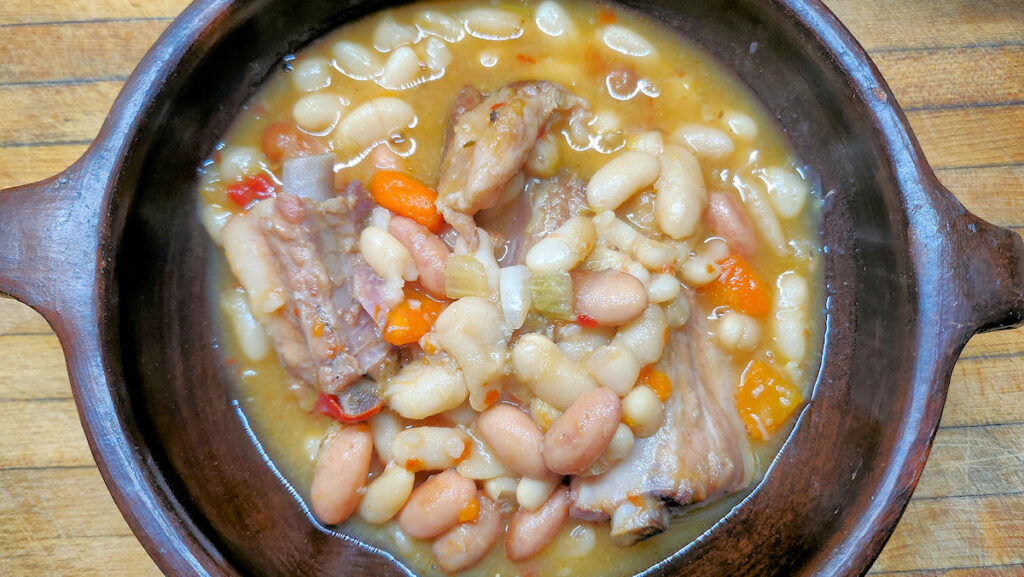
I am going to go a bit random through the week, as it happened. Our next door neighbor knocked on the door and handed me a tira de asado, a strip of a dozen beef shortribs. I was in a stew kind of mood, and slow cooked these in beef stock after browning them with onions, garlic, carrots, celery, dried apple, chilies, cannelini and canary beans. Pretty straightforward, and delicious on a chilly “winter” night.
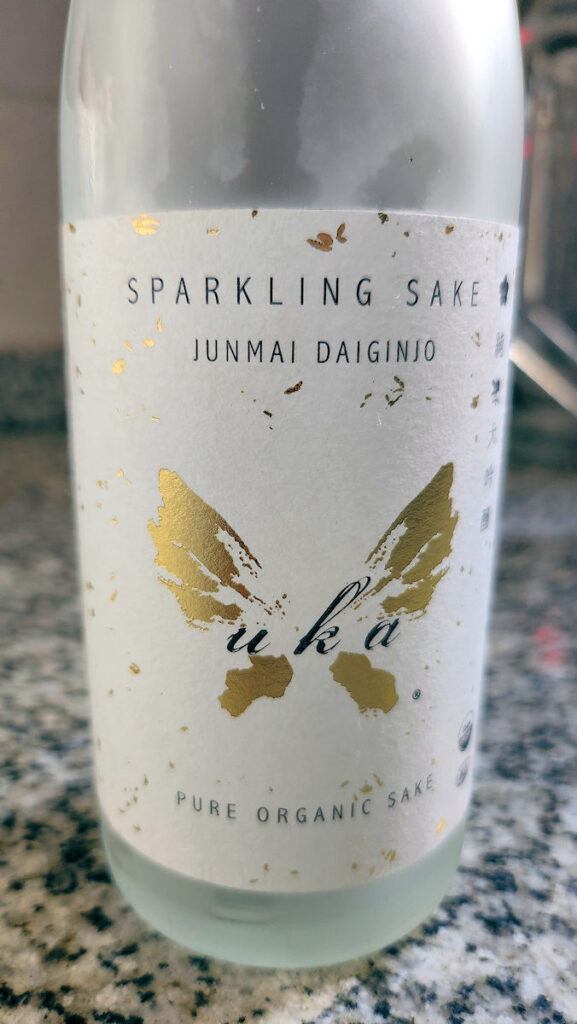
I’m a big sake fan, and when I was having lunch with my friend Michael at Nippon in New York two weeks ago, he gave me a trio of small bottles from a producer that he represents. Uka is an interesting bi-national venture, using organic rice grown in the San Joaquin Valley in California from Koda Farms, and mountain spring water from Mt. Adatara in Fukushima, Japan. This is the first of the three bottles I tasted, their sparkling junmai daiginjo sake, which is off-dry and very… apple-y, and paired beautifully with the stew!

Continuing my exploration of cafés in my neighborhood – a venture that I started about ten weeks ago, I dropped in to one of our more commercial local chains. In my immediate neighborhood we have two branches of Havanna, this one at Av. Pueyrredón 1801, corner of French. I know every tourist goes and buys boxes of their alfajores to take back home, but really, they’re pretty mediocre. I do like that it’s one of the few places I can get an almost Vietnamese style coffee, with an extra strong espresso and sweetened condensed milk.
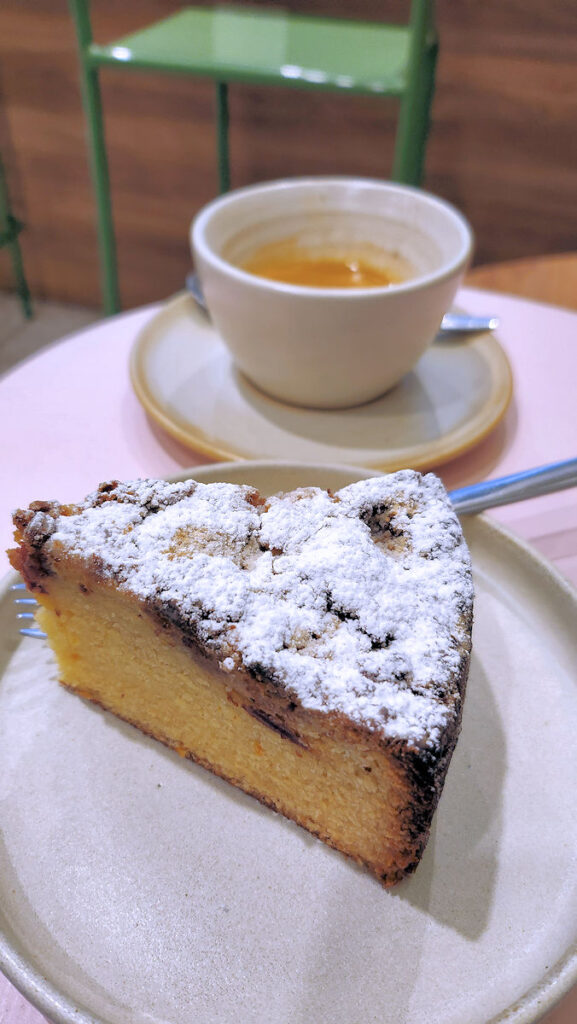
And, another café, newly opened (I think this month, or maybe last), Crecia Bolleria, Juncal 2179. A bolleria is a place that specializes in breads and rolls – the Spanish equivalent of a French boulangerie. As such, I probably should have sampled the savory wares – their medialunas look pretty amazing. But strangely, I was in the mood for something sweet, and they had just put out this ricotta tart (I guess the ricotta is mixed in to the filling, rather than being more cheesecake like). Good, but nothing exciting. Really good espresso. For those interested in keeping up with this project, the map continues to fill in!
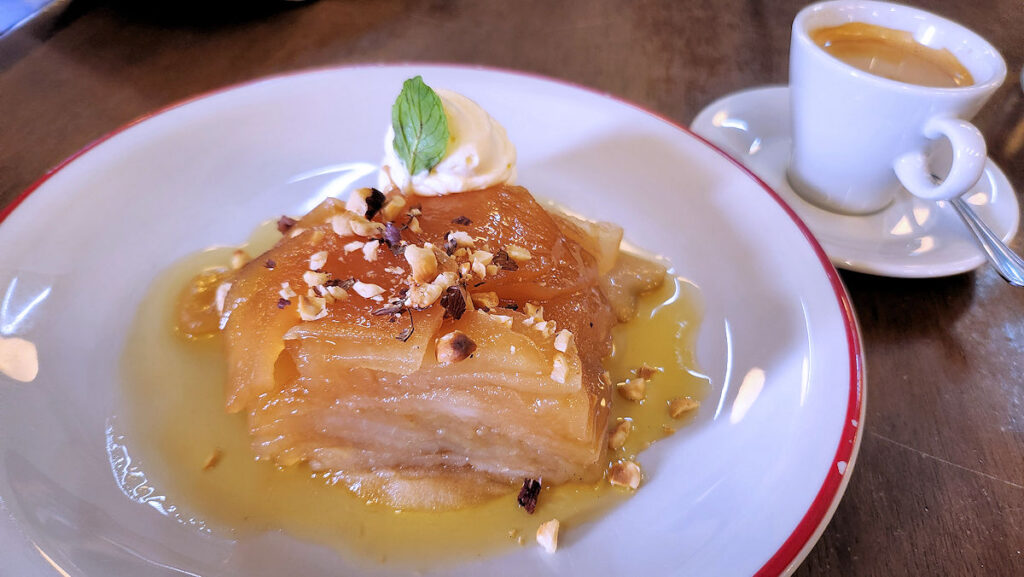
Staying in sweet mode (very unusual for me), one of my favorite local desserts, a milhojas de manzana – a multilayered baked apple dessert with a decent hit of… nutmeg? At the classic bodegón Los Galgos, Av. Callao 501, corner of Lavalle, in San Nicolás. Their version is probably the best I’ve had in town.
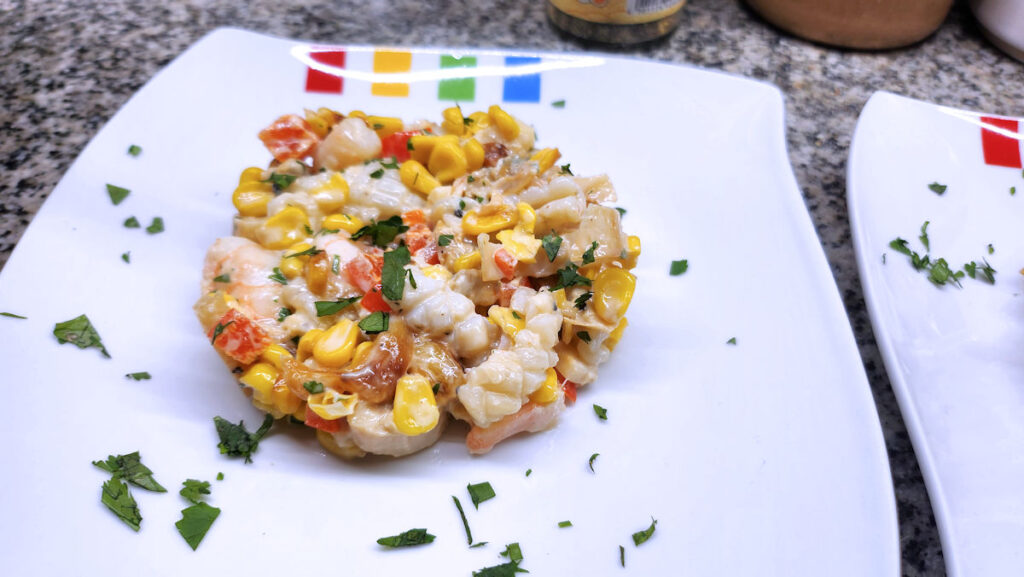
And, a look at two of the plates I was particularly happy with at this week’s Casa SaltShaker dinner. It started off with the base of the Mexican street food esquites, the off the cob version of the elotes, roasted corn with cheese, chilies, lime, and mayo that is one of my faves. Here, I roasted corn, pineapple, rocoto chili, and hearts of palm, then added briefly poached shrimp, calamari, and cockles, all in a homemade mayo of egg yolk, walnut and corn oils, lime juice, habanero and ancho chili flakes, garlic, salt and pepper. Cilantro added in and scattered about.
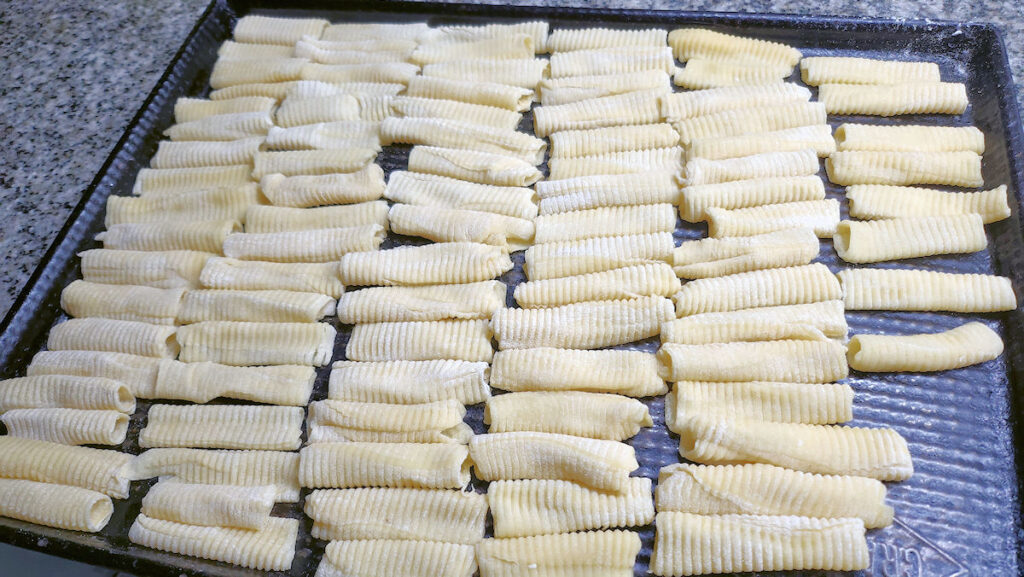
And, hand-rolled semolina rigatoni.
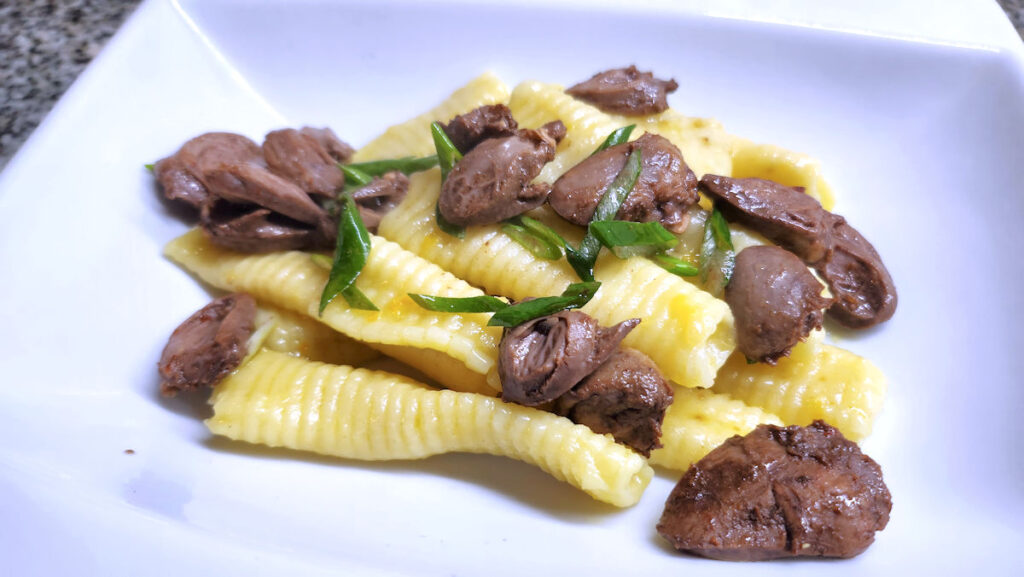
The rigatoni are tossed with a lemongrass and turmeric infused brown butter, and then topped with anticuchos of chicken hearts (marinated in aji panka, black vinegar, mirin, and soy sauce), and slivered green onions.
And, how was your week?
Copyright © 2026 SaltShaker. This feed contains copyrighted photos and text from SaltShaker. If you are not reading this material in a feed aggregator or by e-mail subscription, the site you are viewing may be guilty of copyright infringement. Please contact [email protected] so that I can take appropriate action.
Plugin by Taragana
]]>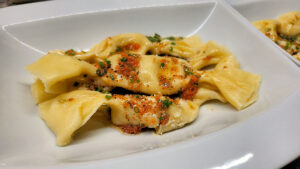
I think this was my favorite dish for the whole month, and the one I had the most fun coming up with. These are caramelle pasta filled with a mix of fresh ricotta, smoked blue cheese, and caramelized shallots and chilies. Bathed in a brown butter spiked with merquén chili flakes, and garnished with herring roe and chives. Served with Monteviejo’s “Festivo” Rosé 2020, a 100% Malbec pink.
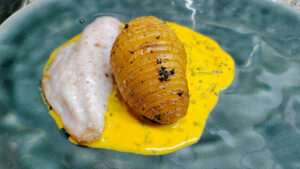
This one brings in some classic French technique. We’ve got a simple fillet of besugo, or sea bream, sautéed in a little butter and lightly dusted with salt and white pepper. A hasselback potato, beautifully golden outside and creamy inside. And, a classic beurre blanc sauce that’s tinged with a little ají amarillo puree, dill fronds and seeds, and red and black roe. Served this one up with an unfiltered Pinot noir from Fernando Ravera’s “Turbio” line, the 2022.
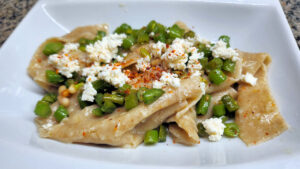
Another pasta, because, well, pasta. Here, langanelli, a sort of long trapezoidal shaped pasta made from a mix of whole wheat, semolina, and pasta flours. It’s dunked, and bathed, and slathered with a bagna cauda thickened with a little roux, so it has an intense garlic and anchovy flavor, and then topped with diced green beans that were sauteed in the bagna cauda, some fresh ricotta, and a dusting of tajín spice. This one I went for a 100% Syrah rosé from Alpasión.
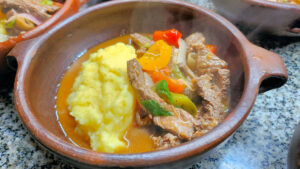
And, for our final dinner of the month, our take on a classic Peruvian lomo saltado, using rib-eye, sautéed with mixed bell peppers, onions, chilies, and garlic. It’s served with mashed potatoes flavored with ají amarillo and a touch of lemon. For this, a bold 2022 Cabernet franc from Catena’s Nicasia Vineyards selection.
And that’s a wrap on January! Henry’s off to Peru for February, so there will likely be fewer dinners and I’ll combine them with March for the next round-up post. But, there will be more restaurant reviews coming, particular from restaurants that aren’t his cup of tea!
Copyright © 2026 SaltShaker. This feed contains copyrighted photos and text from SaltShaker. If you are not reading this material in a feed aggregator or by e-mail subscription, the site you are viewing may be guilty of copyright infringement. Please contact [email protected] so that I can take appropriate action.
Plugin by Taragana
]]>