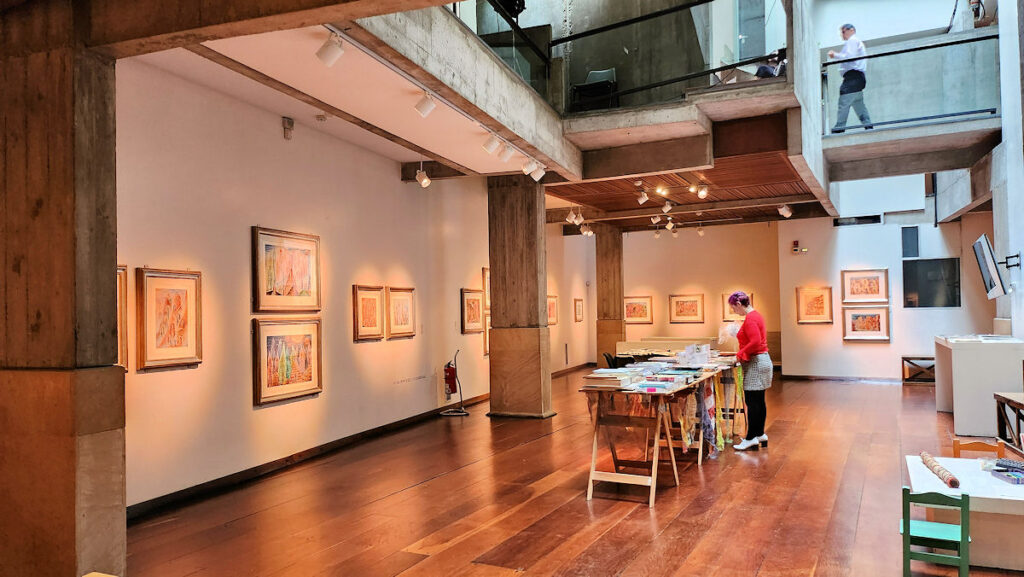
Probably my favorite art museum in Buenos Aires is the private museum in the former studio of the influential, and quirky, Argentine painter and sculptor Xul Solar. The museum, at Laprida 1212, in Recoleta, is open Tuesday to Saturday from noon to 8 p.m., entrance fee is currently 4000 pesos, about $3, with, I believe, half off for those over 60.
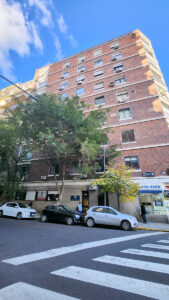
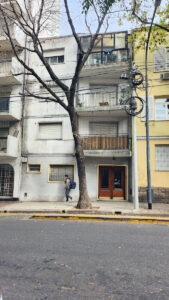
Xul Solar was born Oscar Agustín Alejandro Schulz Solari in 1887 in Buenos Aires. His early years were shaped by an unusual childhood, his father was the warden of the major political prison in Buenos Aires, and young Oscar had the run of the place after school, with some of the more erudite political prisoners often helping him with his homework. Although born in the town of Tigre, about 30km north of Buenos Aires (his early childhood home is apparently visible, on occasional Saturdays, by arrangement, which I haven’t done, and it’s rather hard to get to, being out on an isle in the delta), he spent most of his childhood and teen years in two apartments (above, Juncal 1480, and below, Mansilla 2936) here in my neighborhood of Recoleta.
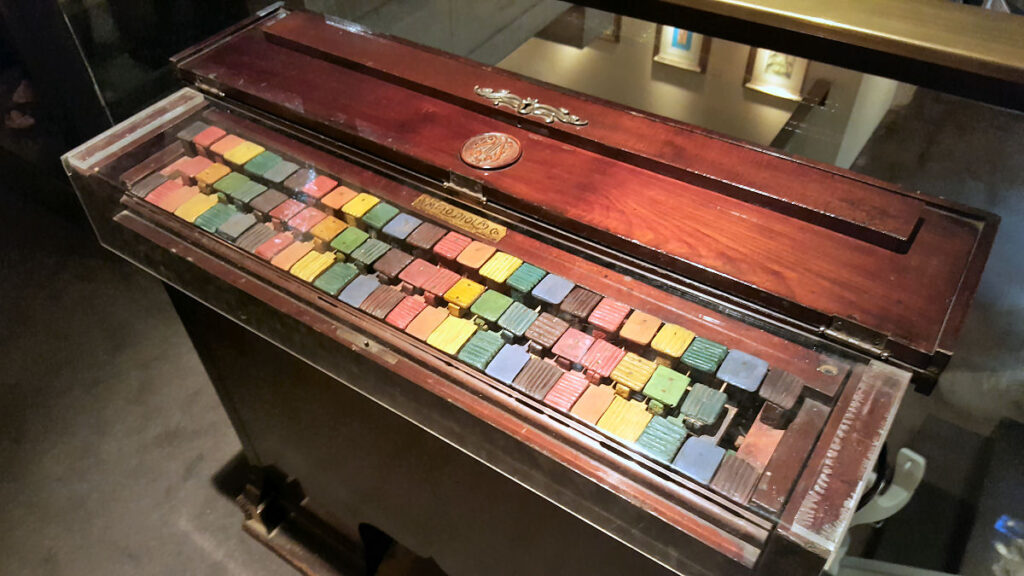
He studied architecture at the university, but bored with it, he headed off to spend a few years in France, Italy, and England, where he became friends with other artists who pushed him to develop his own art. He was also befriended by the English occultist Alistair Crowley, who had a hand in developing his interest in mysticism and the occult. In this period he adopted the name Xul Solar, a combination of a re-imagining of his maternal and paternal surnames, and the reversal of the Latin word lux, accompanied by his respelled last name, he claimed indicate the light of the sun. This fit in well with his personal view that he wasn’t quite human, inventing his own language, system of music and musical notation, and religion.
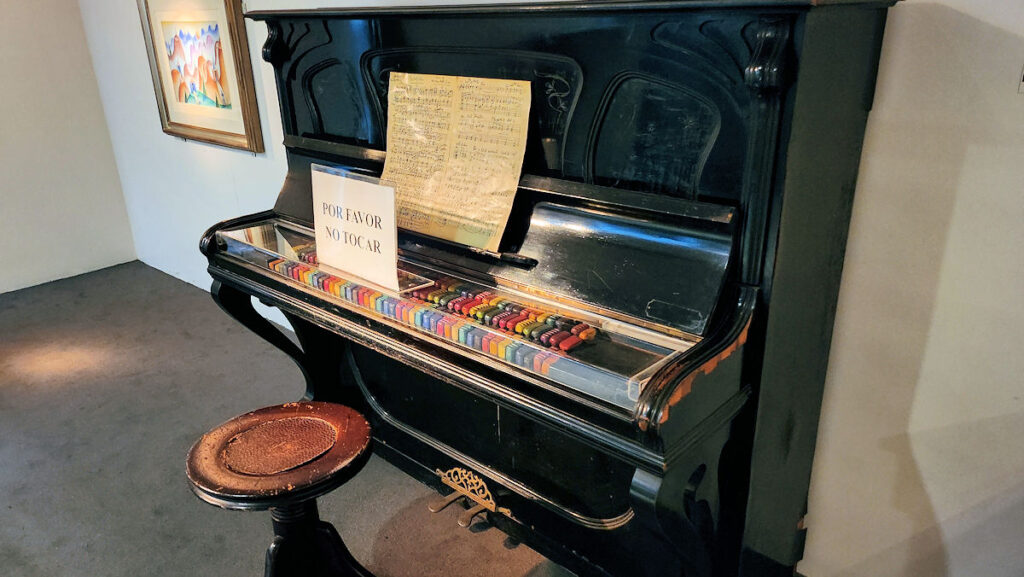
Xul Solar’s painting style is a colorful mix of geometric shapes and mystical themes. His work is full of symbols and references to things like astrology, Kabbalah, and Eastern philosophies, blending them all together in ways that make you stop and think. His art often features surreal landscapes with strange, otherworldly figures and floating cities. It’s hard to pin down exactly what style he falls into because his work borrows from surrealism, abstraction, and symbolism all at once. His paintings invite you into a world where reality and imagination merge, offering a glimpse into his deep interest in the spiritual and the unknown.
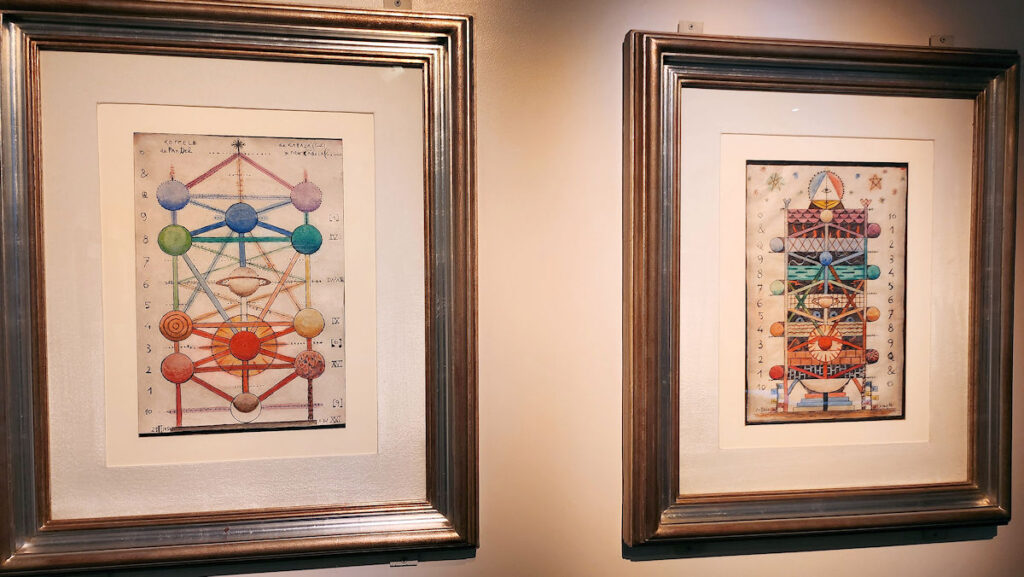
Some of Xul Solar’s standout works include a series entitled “Pan Tree” (Árbol Pan), in which he creates a fantastical tree with branches that more or less follow “chakra points”, symbolizing the idea that all languages and cultures are connected.
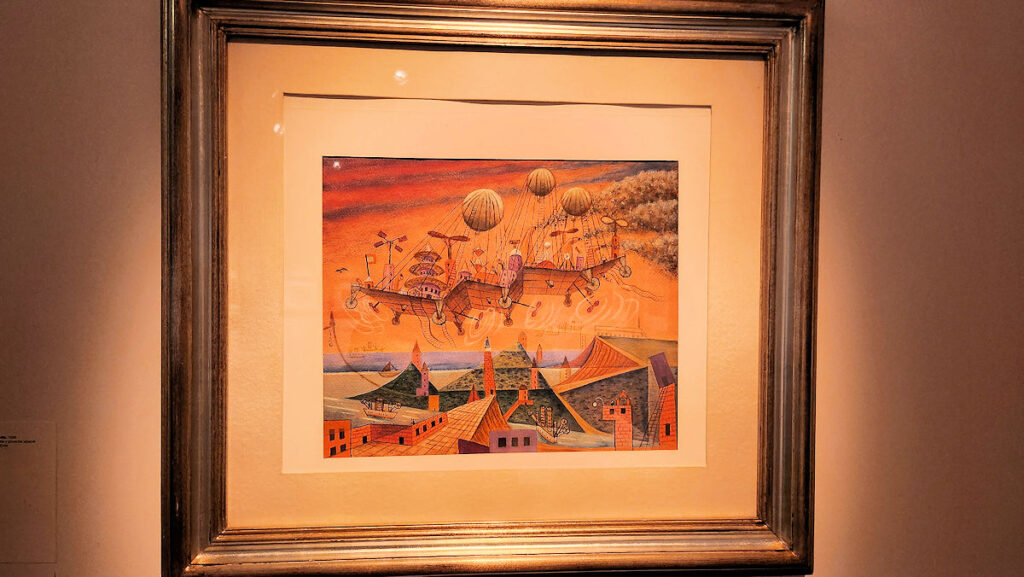
…and “Flight Town” (Vuel Villa) one of his most well-known pieces, is a painting of a utopian city floating in the sky, blending architecture, fantasy, and mysticism. These works highlight Xul Solar’s creativity and his ability to merge spirituality, language, and visionary imagery into his art.
I’ve also picked out a few others that I just personally like, for your… viewing pleasure.
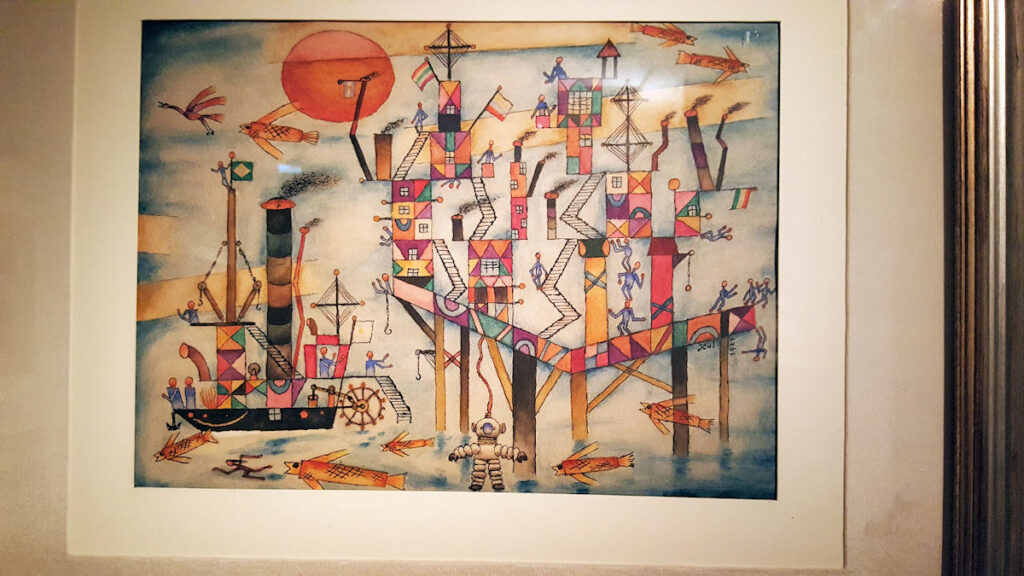
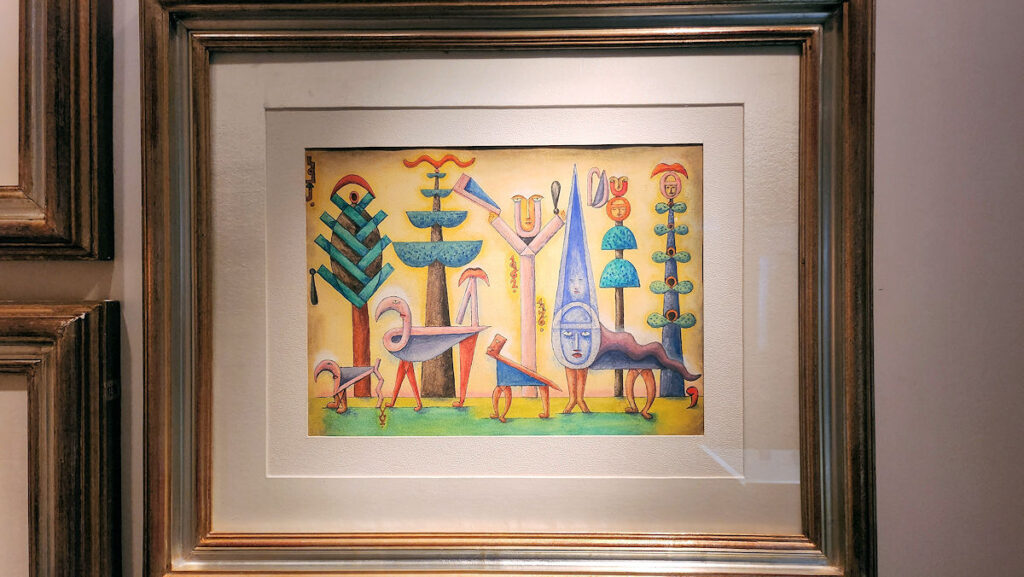
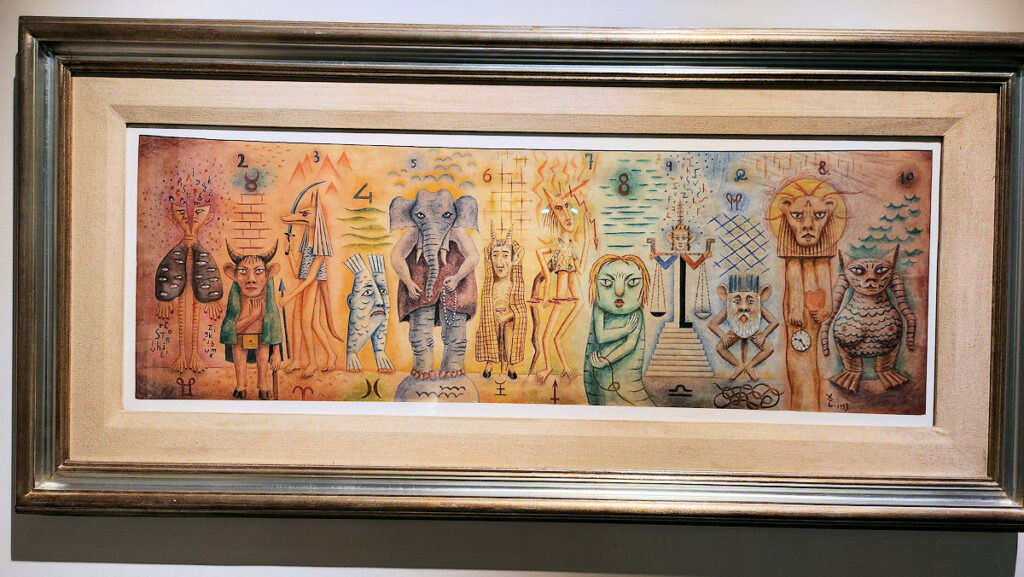
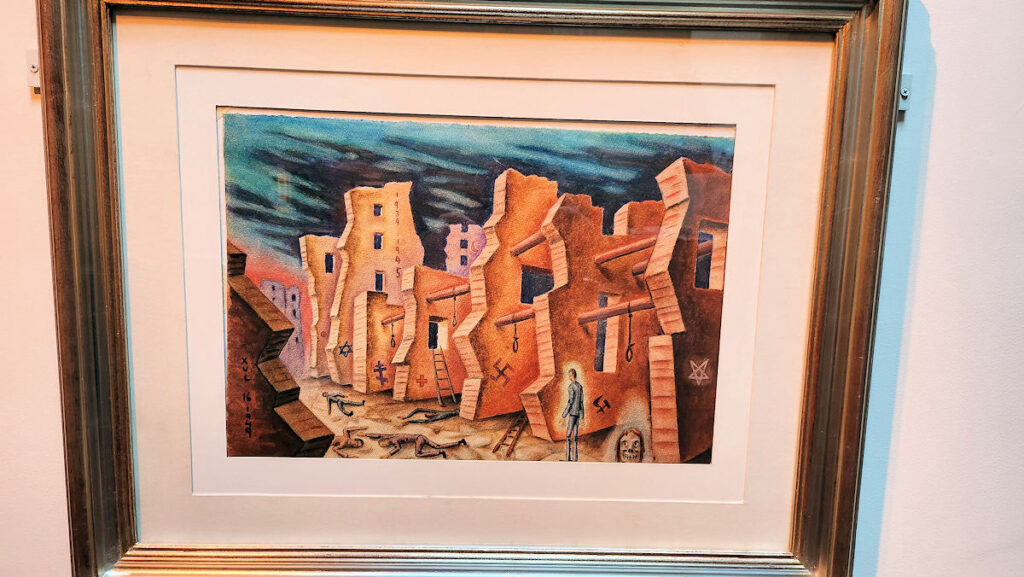

Visit the museum if you’re in Buenos Aires!
Copyright © 2026 SaltShaker. This feed contains copyrighted photos and text from SaltShaker. If you are not reading this material in a feed aggregator or by e-mail subscription, the site you are viewing may be guilty of copyright infringement. Please contact [email protected] so that I can take appropriate action.
Plugin by Taragana




 ]]>
]]>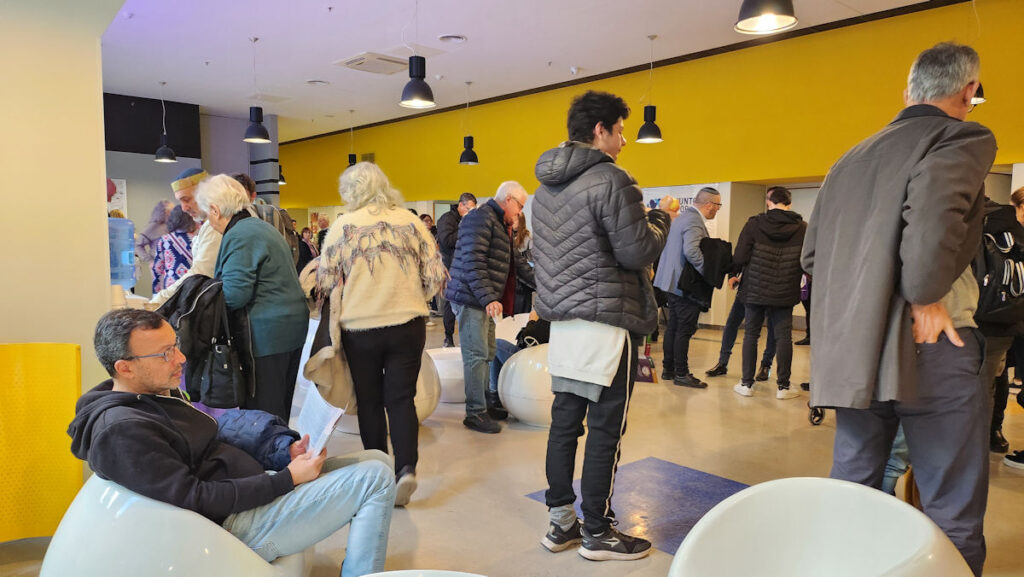
Those of you who’ve been around since the beginning, or on and off through the years, might remember my annual attendance at Limud, a day of presentations and lectures on various topics related to Judaism. I’ve been going since 2008, and have only missed a couple of years here and there. This year, AI, Artificial Intelligence, and related topics were big on the roster, though there was plenty of the usual philosophy, politics, and literature to be consumed. I focused on the former – it’s certainly a topic that’s on my mind often enough. A couple of fascinating presentations – I would have been interested in something that explored more of the implications for “Jewish life” and practices, something Mosaic magazine has taken up recently that’s been quite interesting.
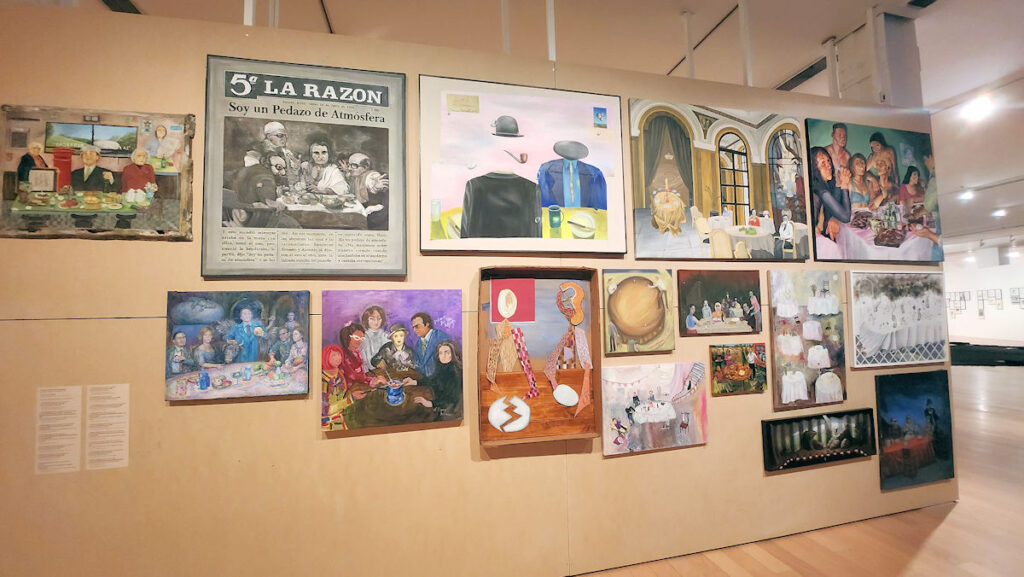
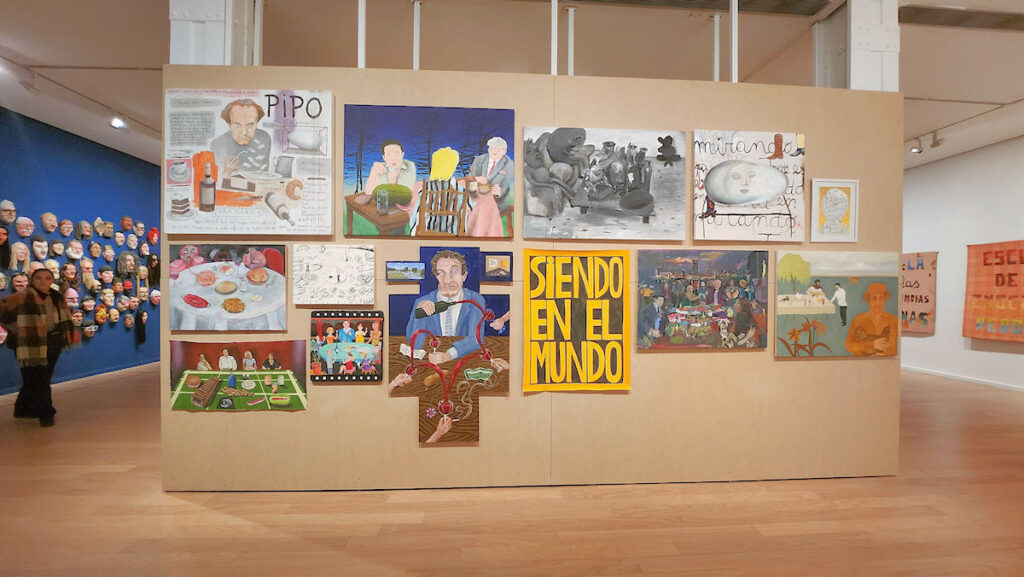
I was over on the far edge of San Telmo, had a couple of hours free, and decided to drop in on both the Museum of Modern Art and the Museum of Contemporary Art, two side by side curated galleries of art at, respectively, 350 and 328 Av. San Juan. At the former, I don’t often find a lot that’s interesting. There’s something about the whole modern art movement (which is no longer modern, but now a sort of style in the art world) that has rarely grabbed me. I will admit, that I found this selection of paintings, all made by local artists this year to be intriguing. Each was their personal interpretation of a series of dinners called The Peralta Ramos Dinners. I was unfamiliar with Federico Peralta Ramos – it turns out he was an Argentine artist, particularly famous in the 1960s and 1970s, who was more than a bit eccentric. The dinners, I gather, refer to what started out as a single incident. In 1968 he won a Guggenheim Fellowship award, with a cash prize that was intended to fund a grand work of art. He took the money, invited a bunch of friends out to dinner at a local, grand hotel, and spent it all on a lavish banquet. When the Guggenheim demanded he return the prize, he responded in a now infamous letter that the dinner was his recreation of The Last Supper, and was therefore his work of art. I sense that there were more dinners beyond that, though perhaps not. Either way, I guess these are contemporary artists’ recreation of his recreation.
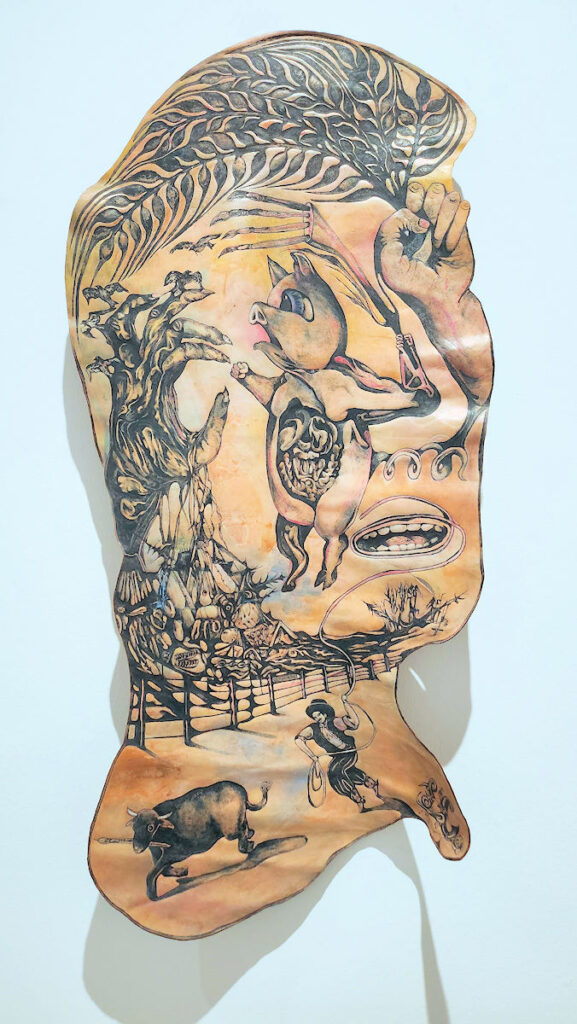
And then I run into things like this, where all I can think of is that the artist needs some serious therapy, and prescribed drugs rather than whatever ones he’s on currently.
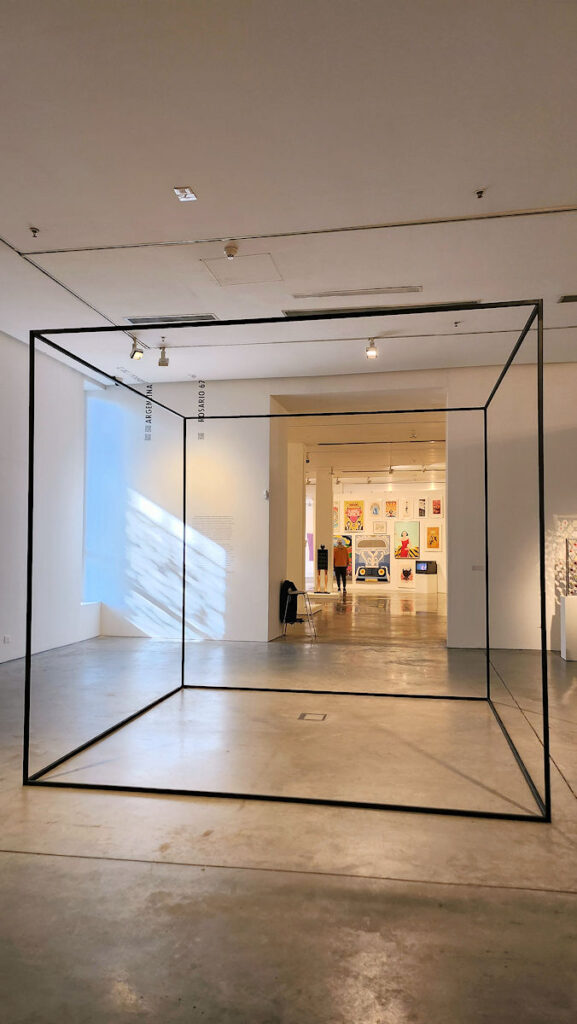
Or this, a large cube of metal bars. That’s it. There’s no sides to it, no content, it’s just a welded together metal cube, painted black, and somehow merits an entire salon in the museum more or less to itself.
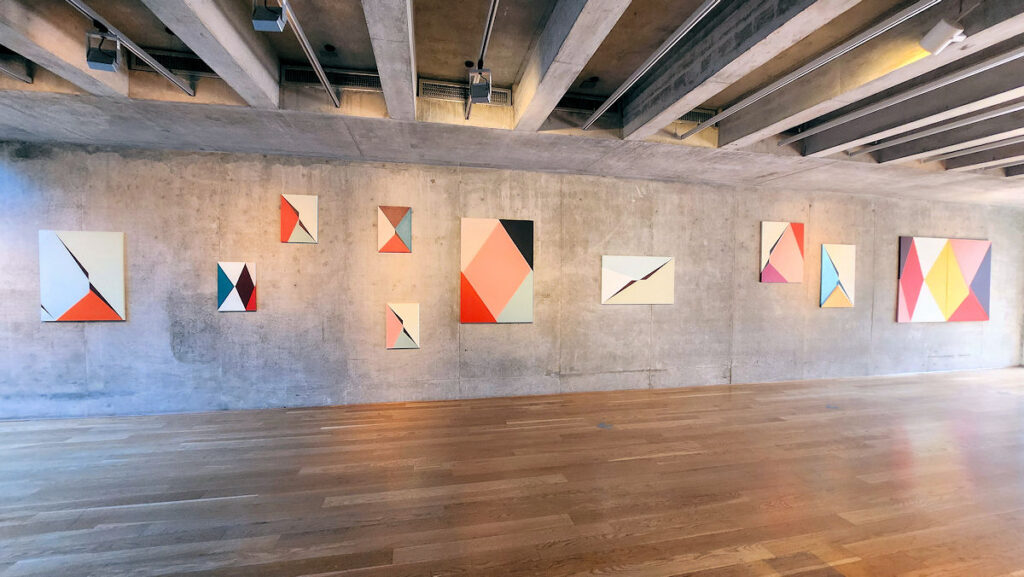
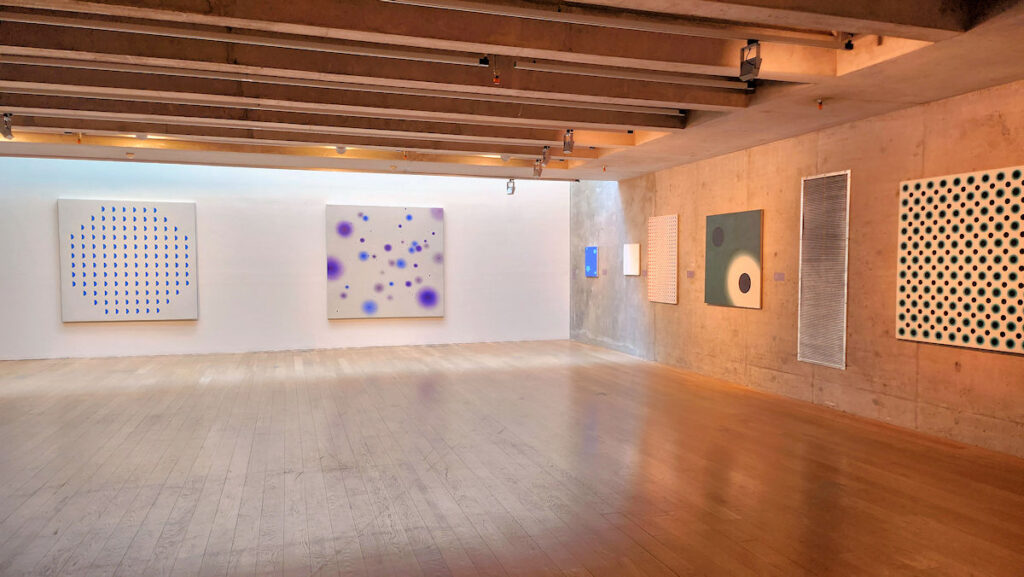
Sometimes I find interesting exhibits more at the Contemporary. This time, not so much. I mean, it’s not that I can’t appreciate this style of art for its geometric forms and colors, it just isn’t stuff I want hanging on my walls. The four floors of the museum are currently taken up by two exhibits, each taking up two of those floors. The first are works of Natalia Cacchiarelli, the second Gilda Picabea. The former is a local art professor, and artist, at the National Arts University here in town, the latter, a former student of the school, who now has her own workshop.
On to food for the week.
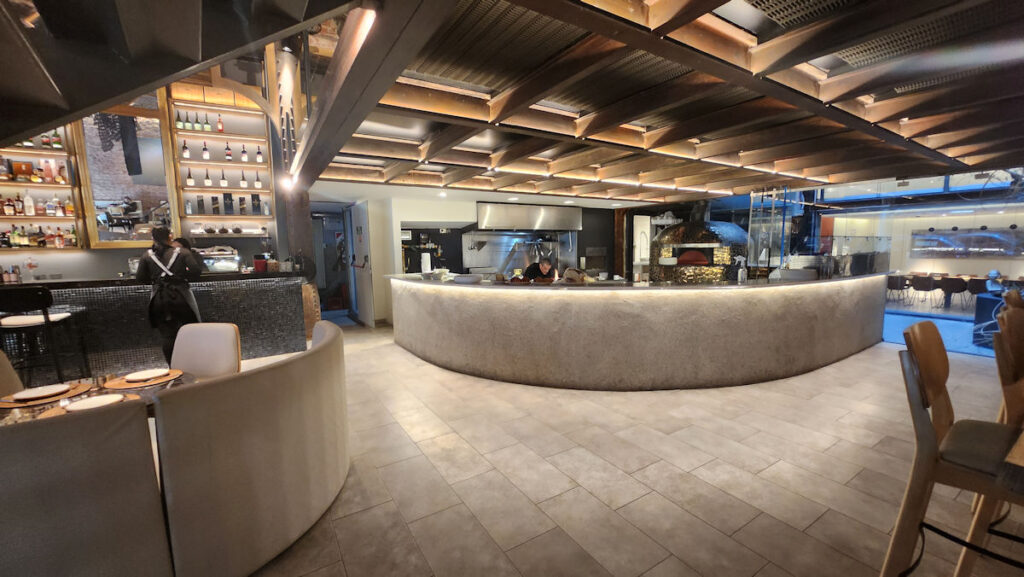
A lunch out at ABRA Cultural, a combo art gallery and restaurant, at Av. Hipólito Yrigoyen 840, in Monserrat, near to the Plaza de Mayo. It’s a huge space and the walls are covered with artwork. I highly recommend taking a table in the center of the room rather than along the walls, as at the latter, you have to contend with people looking at art who seem to feel it their right to lean over your table or interrupt your conversation in order to get a better view of one or another pieces.
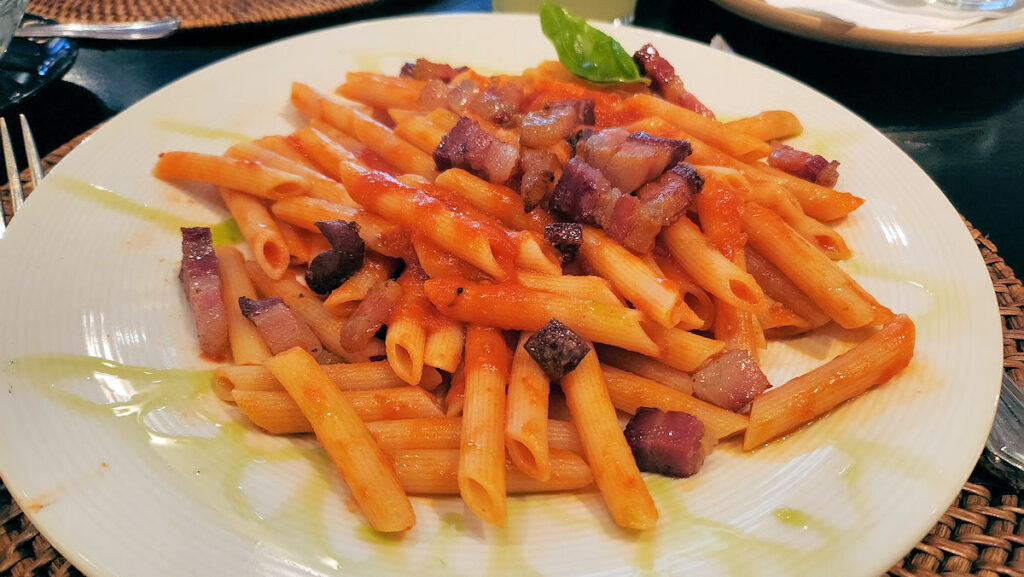
Chef Luigi Iavarone is from Naples, or thereabouts, so it was a bit surprising to find not much of anything napolitana on the menu. You know I love the four classic pastas of nearby Rome, so I couldn’t resist trying his penne all’amatriciana. Decent dish, good guanciale, but the tomato sauce didn’t really strike me as an amatriciana, more just a basic marinera. It was missing that richness and concentration. And it was desperately missing the pepper. Amatriciana is a variation on cacio e pepe/gricia, with tomato added, and as such should be packed with pepper, or some say, chili flakes. This had basically none, and I added a whole lot of it to the dish. I’m guessing it’s a nod to local tastes to not have used much, if any, pepper, but then, it’s not really amatriciana.
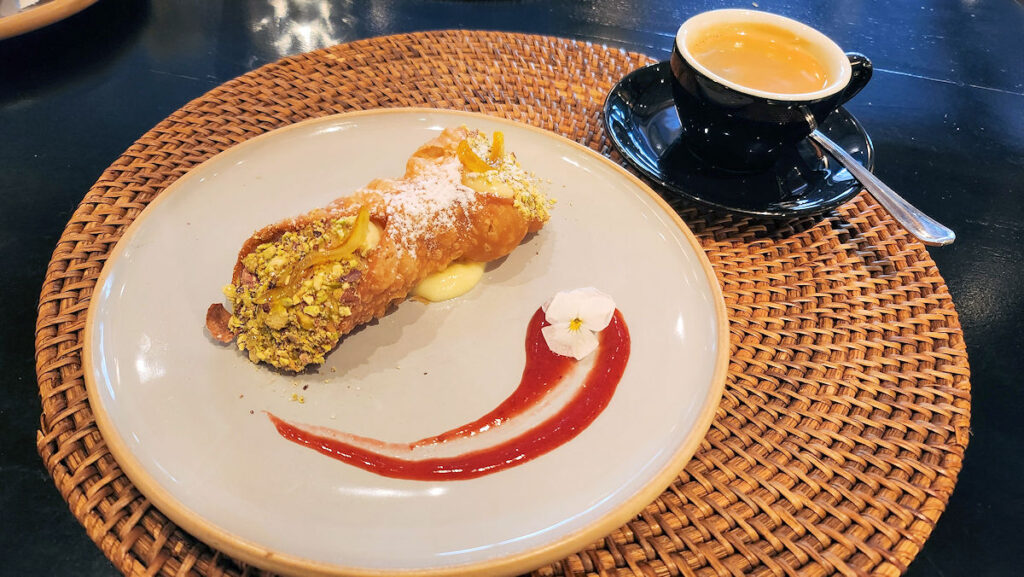
Had I read the description carefully for their cannolo siciliano, I’d have seen that one had the option of ordering it with the classic ricotta filling, pastry cream, or ice cream. I didn’t. And they brought me pastry cream, which I don’t like, and this was sickly sweet. I tried one bite, flagged the waitress down, and asked about the ricotta – she responded with, “well, you didn’t specify, so I brought you this”. Well, you should have asked. Regardless, I wasn’t going to eat it, but asked if it could be replaced. She opined that no, since I’d taken a bite, it couldn’t, because, you know, they couldn’t use it again. Even if I hadn’t taken a bite you couldn’t, not once it’s been served to a table. I was going to just leave it at that, but she sighed and went and talked with a manager, who said they could replace it. Only they couldn’t, because they don’t have ricotta filling available. You’d think that would be something the manager and waitstaff would know. They took it away and took it off the check. The latter was presented by the manager, who also simply plopped down in the chair across from me while he processed the payment, “I’m tired of walking around, hope you don’t mind if I just sit here while I do this…”.
Overall, I like the space. Service, a tad odd. Food… good, but maybe too altered for local tastes instead of traditionally Italian, for my personal tastes.
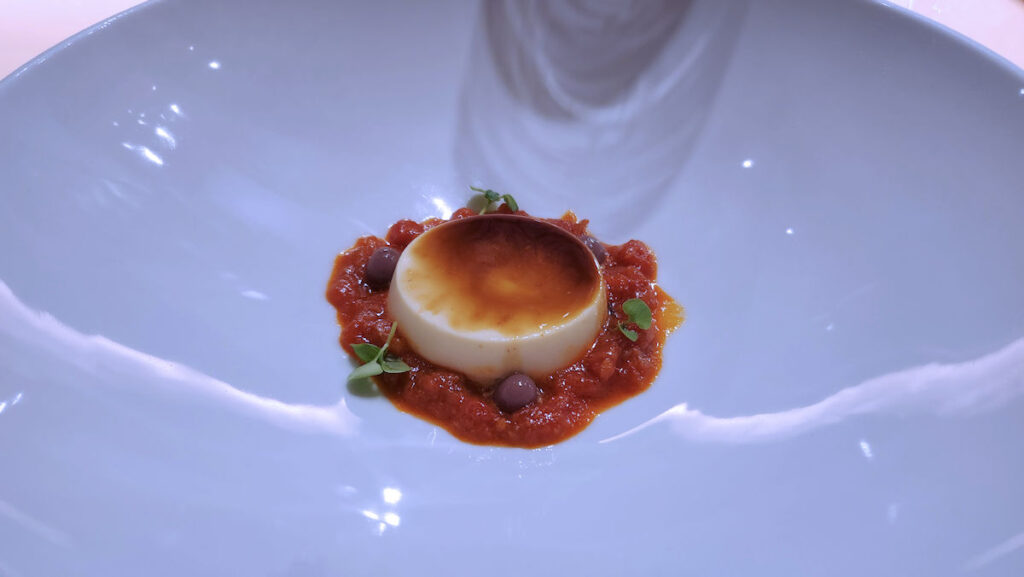
A revisit to Mercado de Liniers, Gorriti 6012, in Palermo. On my first visit a couple of years ago, I’d done the whole tasting menu. Recently, an Instagram post popped up with the new lunch menu. At some point over the last year or so, in addition to the whole tasting menu, at lunchtime they’ve begun to offer a short, three course prix-fixe option, currently priced at a mere 25,000 pesos, or $16 and change. These days, it costs us almost that much to order a large pizza. Our of three options, we both selected the onion pannacotta topped with a caramel, and accompanied by a spicy tomato and cow brain ragú. Yum.
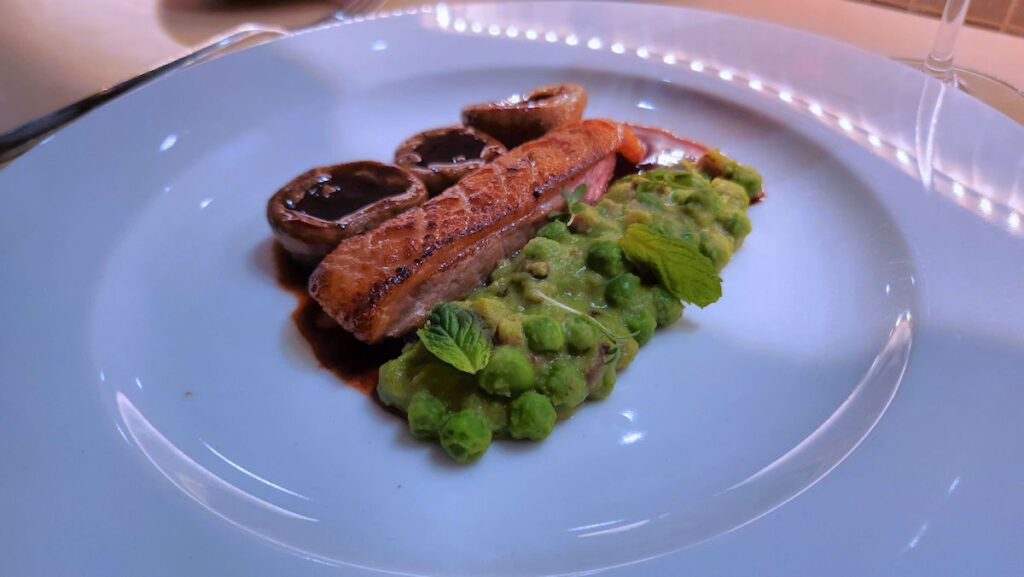
My lunch companion went for the duck breast cured in anchovy salt, with a perigord sauce, stewed peas and capers, and mushroom caps. Excellent.
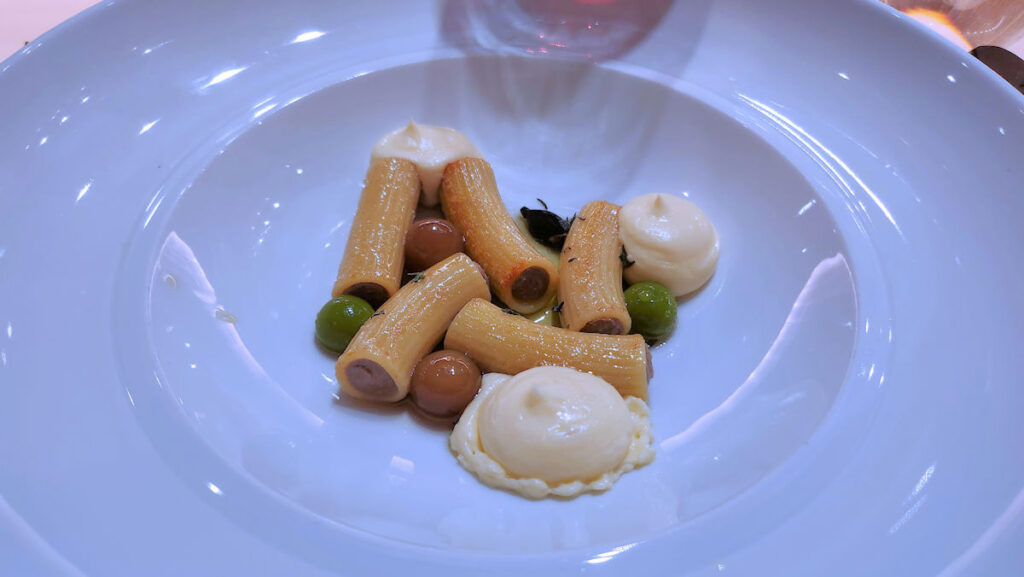
I went pasta, with rigatoni stuffed with a chicken liver, chocolate, and truffle pate, thyme oil, pesto spheres, soy cured egg yolk spheres, and a provolone foam. Fantastic, though five rigatoni felt a bit meager. I wouldn’t have minded, say, seven or eight.
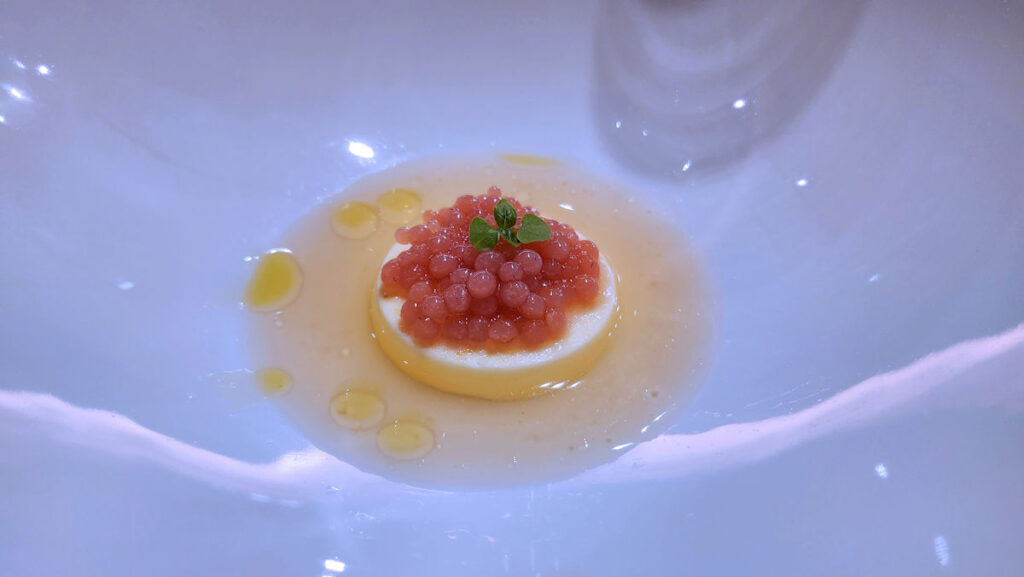
Dessert is preset, no options, is an odd flavor combination of some sort of tomato, strawberry, and lemon (so the menu says, though I could have sworn our waitress said grapefruit) parfait. It had some weird bitter component to it that didn’t quite work for either of us, though, we both finished it.
We did have the fun, sitting at the kitchen counter, of watching Dante and crew prepare a menu of various pastas and side dishes for a group of eight young guys at a nearby table. It turns out, he’s opening a pasta restaurant in Madrid, and these guys were the team from there, sampling through some potential menu items. I’ve gotta admit, some of those pastas looked really good. And they had more than five rigatoni on the plate.
Overall, a great option here if you’re not up for the whole tasting menu, albeit I do recommend that. And it’s an easy on the wallet price for food of this quality.
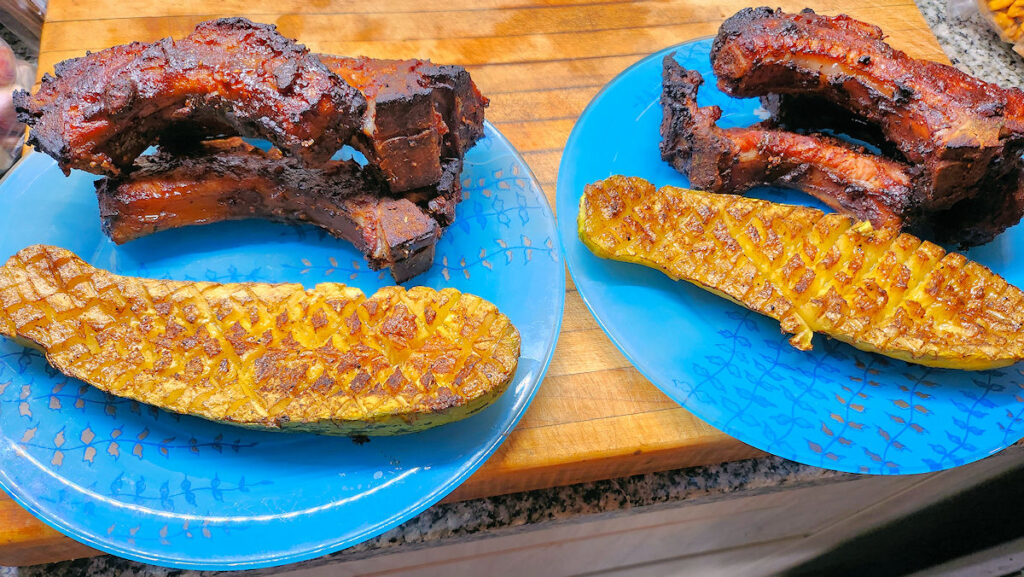
At home, the only standout of the week were a batch of baked Sichuan style ribs – marinated for hours in a mix of chili-bean paste, miso, soy sauce, rice wine, sugar, salt, five-spice, and garlic, and then into the oven at a medium temperature, 20 minutes, then flipped and another 20. Plus spice rubbed (salt, pepper, cumin, hot paprika) zucchini baked alongside the ribs, the same way, with a flip.
Another week awaits us!
Copyright © 2026 SaltShaker. This feed contains copyrighted photos and text from SaltShaker. If you are not reading this material in a feed aggregator or by e-mail subscription, the site you are viewing may be guilty of copyright infringement. Please contact [email protected] so that I can take appropriate action.
Plugin by Taragana
]]>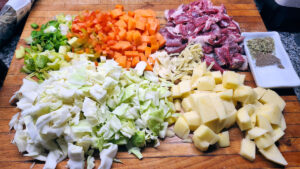
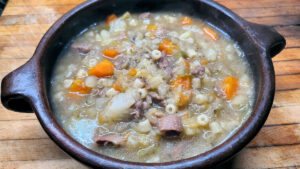
Basically – everything into a pot – diced up lamb, carrot, rocoto chili, green onion, cabbage, ginger, garlic, potato, salt, pepper, and dried mint. Simmered it all together, added some ditalini pasta and finished cooking it until the pasta was just right. But enough about that, we’re in Sardegna, or Sardinia, with our man Stanley Tucci.
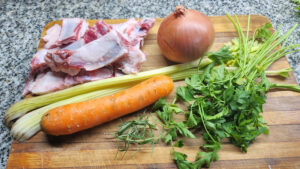
And, we had the stuff to make our lamb stock. First off, I roasted the lamb bones that I’d taken the earlier lamb off of, along with the carrot and onion. Then into a pot with celery, parsley, mint, and rosemary, salt, and some peppercorns. Simmered it for around an hour and a half, then strained it off, and then let it sit overnight in the refrigerator to solidfy the fat on top and remove that. Ready to go on!
The dish in question that Mr. Tucci chose to present was a modern Italian restaurant’s reinterpretation of a classic Zuppa gallurese sometimes also called Zuppa cuata. Gallura was/is the name of the island in local dialect. And zuppa is, ostensibly, soup, but this isn’t a soup, it’s a baked dish, and fits into the same category as things that are sort of bread pudding-ish, from sweet trifles (zuppa inglese, or sopa inglesa in Spanish), or sopa paraguaya, which is a sort of cornbread. Here, I gather, the term comes not from soup, but from the verb azupparse, to soak or to drench. I assume that the Spanish version was adopted from the Italian, since the Spanish verbs are different. And what these dishes tend to have in common is that they involve some sort of soaked bread type ingredient. Cuata, which seems a less used name, means cured, and I’m not clear how that relates to this zuppa. Then again, like much food history, this could all be made up. Who knows?
Now, there were two real differences that I saw from the classic recipe in the version presented at the restaurant that Tucci was at. First, instead of using a classic rustic semolina bread, they used carta di musica, or pane carasau, a very thin, crisp, cracker like flatbread. There is a classic version of the zuppa gallurese using a rosemary and olive oil focaccia type bread called spianata, so there’s some precedent for using a flatbread, but usually not this flat, nor this texture. Then again, pane carasau is oft-times served almost like a pasta, soaked in tomato sauce until soft and pliable. Like chilaquiles and tortillas! The second difference wasn’t pointed out, but usually zuppa gallurese is made with either a local cheese called casizolu, which is basically what we tend to call caciocavallo – Sardinian versus Italian names, or that cheese combined with Sardinian pecorino. The version he presented seemed to only have pecorino, which I’m sure isn’t unheard of, just didn’t sound as traditional.
Either way, I decided to make both versions side by side – the way I know it from the past, and the way he presented it.

Finding pane carasau here is highly unlikely, and, it’s relatively easy to make, so that’s where we’ll go next. A mix of all-purpose flour and fine semolina, roughly 2:1, a good pinch of salt, and about a third of the total volume in water, just enough to make a soft, but not sticky dough. (My measurements were 1/2c flour, 1/4c semolina, 1/4t salt, 3/8c water.)
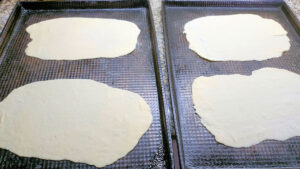
Let the dough rest a bit, then portion it off (traditionally, this is made in a big sheet, about the size of a carta di musica, or music page, though here I made them about half that size because of the baking dishes I was going to use. In the end it was irrelevant, because I ended up breaking the flatbread into shards.
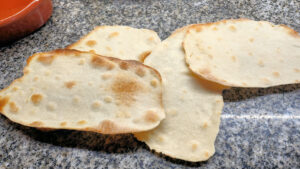
Bake in a medium hot oven until lightly browned on top, flip them over and the same for the underside.
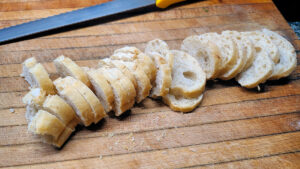
For the traditional version, bought some rustic, part semolina bread, let it sit for a couple of days to get slightly stale, and sliced it into rounds.
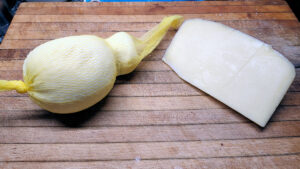
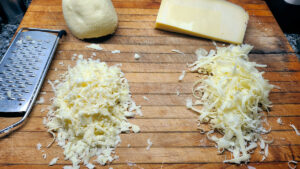
Here are our two cheeses – caciocavallo and pecorino sardo. Coarsely grated. I actually grated about three times as much of the pecorino and twice the amount of caciocavallo as pictured.

As I said, I broke up the pane carasau into shards – mostly because they were still too big to fit. Then soaked them in lamb stock and placed them in the lightly oiled baking dish.
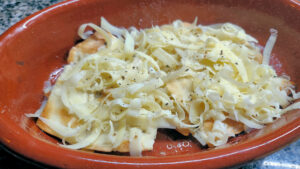
Topped, as instructed, with grated pecorino. The traditional recipe uses a good amount of ground pepper in each layer, and I went with that, assuming that basic seasoning just didn’t make the editing cut.
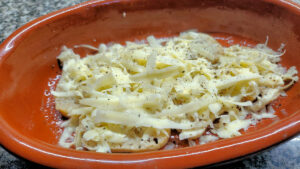
I did the same with the rounds of the regular bread, but this time using a mix of equal parts of the two cheeses.
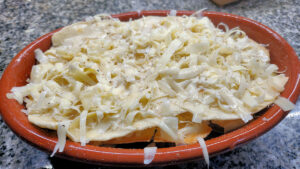
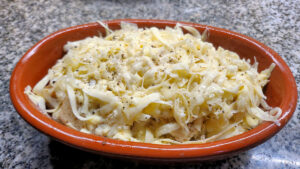
The classic version repeats the bread and cheese layers for a total of four, so I did the same with the Tucci version.
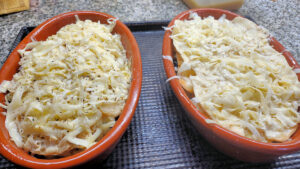
Ready for the oven!
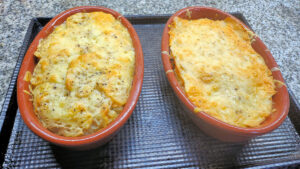
Ready for us!
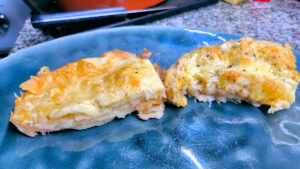
The pane carasau version is on the left. You can see the layers defined fairly clearly, almost like a lasagna. The bread version melds more into a bread pudding-like look.
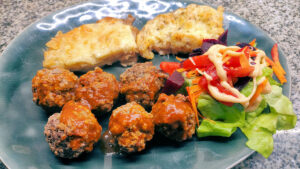
Now, these are side dishes, and though a real classic would be to accompany it with a slow-cooked beef, red wine, and rosemary stew, we had some meatballs and tomato sauce to heat up and accompany, along with a simple salad.
So, we both agreed that we like the texture of the pane carasau version better. It had a more toothsome quality to it, versus that soft, sort of one texture bread pudding. On the other hand, the use of the two cheeses was the clear flavor winner. So, a mashup is clearly the way to go, and maybe add a couple of more layers to make it even prettier (because the fuller, sort of domed version of the regular bread really is more attractive, at least to me. Or, maybe try that version with the rosemary spianata!
Copyright © 2026 SaltShaker. This feed contains copyrighted photos and text from SaltShaker. If you are not reading this material in a feed aggregator or by e-mail subscription, the site you are viewing may be guilty of copyright infringement. Please contact [email protected] so that I can take appropriate action.
Plugin by Taragana
]]>On to the Calabria episode of Tucci’s Searching for Italy series. Although he did try a little ‘nduja sausage at some point in the show, he seemed to be eschewing the classic spicy dishes of the region. Perhaps just a personal preference – I haven’t seen him leaning towards spice on any of the episodes so far. His loss. Such is life.
This time, he zoomed in on the preparation of two different spaghetti dishes, and since both sounded interesting, and neither was a dish I was familiar with, I’m giving you both. Now, I did a bit of research, given that I wasn’t familiar with either, and neither version he focused on would fit comfortably into the classic way of preparing them. But they’re not way off, they’re just fancied up versions from the restaurants he frequented, rather than homestyle preparations.
Because both of these dishes are photo intensive, I’m going to split this into two posts. Today, we’ll start with Spaghetti alle cipolle rosse, spaghetti with red onions.
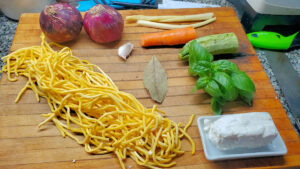
Let’s start with the onions themselves – I don’t have access to the traditional red onions of Tropea, in Calabria, which are a very sweet red onion. But the Peruvian ones we have here are fairly sweet, certainly by comparison to the red onions I used to get back in the States (which might explain why so many people back there don’t like raw red onions, but here they’re common on dishes). This is for two portions: two red onions, a stalk of celery, a small carrot, a garlic clove, half a zucchini, bay leaf, some basil, egg and flour based spaghetti rather than semolina, and ricotta salata, the salted and pressed version of ricotta.
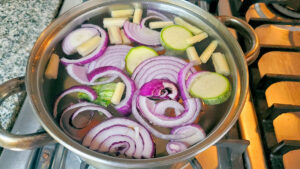
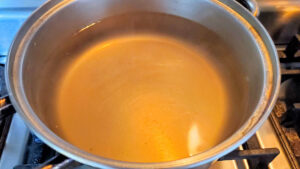
In the show, the chef makes a quick vegetable broth. While I’ve certainly put the odd end of a zucchini into making a stock, just saved among vegetable scraps, I don’t know that I’ve ever had it be kind of the focus flavor. I sliced up the zucchini, carrot, celery, and half of one of the onions, plus the bay leaf, put them in a small pot with water, brought it to a simmer for thirty minutes, then strained it and kept it hot. Note, I didn’t put any salt or pepper into this – from what I could tell, the chef didn’t – not uncommon when you’re going to be concentrating the stock later, as you’ll see – you don’t want it to make the dish too salty.
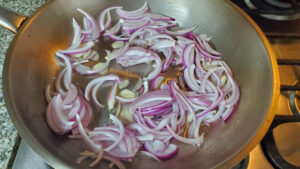
In a bit of olive oil, start sweating the remaining sliced onions and the garlic over low heat. Stir them regularly. Because these onions aren’t as sweet as the Calabrian ones, I added a large pinch of sugar – probably about half of a demitasse spoonful, along with a pinch of salt. Just to give the dish that hint more of sweetness which it apparently traditionally has.
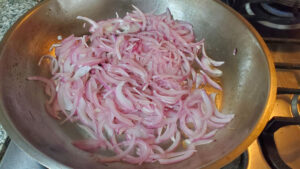
After about twenty minutes the onions will be limp and just barely starting to take on a golden tinge. We don’t want to actually brown them.
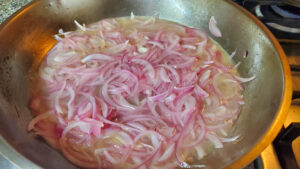
Add a ladle of the hot vegetable stock. Basically, we’re going to cook the onions risotto style, adding a ladle at a time and letting it cook down, infusing the onions with the concentrated stock flavor. This is why, as I noted, the stock is unsalted, because basically we’re evaporating all the water out of it, just leaving behind the flavors. I had about a liter and a half of stock, and I used about a liter of it in this process – taking about another twenty minutes.
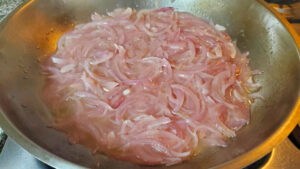
At this point the onions are just barely holding on to their structure. Sometime during the last ladleful, when I knew I was just a few minutes from having the onions fall apart completely, I dropped the spaghetti into my salted boiling water (to which, though the chef didn’t on the show, I added in the last half liter of the stock, just to absorb more of that flavor directly into the spaghetti).
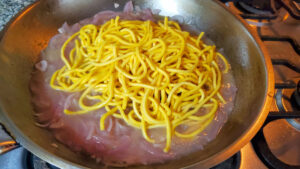
Since this was fresh spaghetti, I let it come back to a boil, boiled it for two minutes, and then scooped it out and into the onions. I added a ladle of the salted water and finished cooking the spaghetti for another two to three minutes in that, adding a little more pasta water as needed.
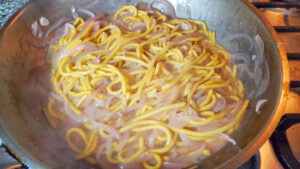
When the spaghetti was properly al dente I let the sauce finish cooking down until it became creamy and clingy.
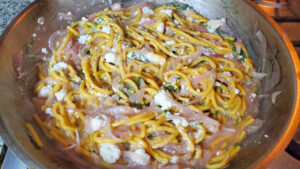
Off the heat, added in the crumbled ricotta salata and the basil, finely julienned. A few grinds of pepper, and I felt it needed a pinch more of salt, and it was ready.
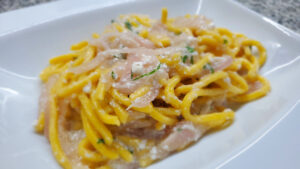
Really, really good. I wasn’t totally sure what to expect, but the onions end up creating such a beautiful flavor when cooked this way, balanced against the cheese and basil, I loved it.
Next up, part “b” of the Calabria episode.
Copyright © 2026 SaltShaker. This feed contains copyrighted photos and text from SaltShaker. If you are not reading this material in a feed aggregator or by e-mail subscription, the site you are viewing may be guilty of copyright infringement. Please contact [email protected] so that I can take appropriate action.
Plugin by Taragana
]]>This is going to be, perhaps, an odd post in the way I approach it. There were two dishes that he actually had someone demonstrate. The first one is so basic that I felt like I had to do the second one. Both, interestingly, are inspired by traditional local dishes, but neither is done in a traditional manner. So I did a little filling in….
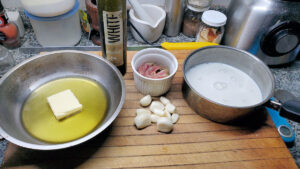
Bagna Cauda, the hot bath, is traditionally a mix of olive oil and butter infused with garlic, anchovy, and truffle (when available and/or affordable). It’s used sort of like a fondue – you dip raw vegetables and bread into it and snack. Tucci visited a small family run restaurant, Piola di Celso, in Torino, where they definitely approach this dish in a different way. I’m making both, side by side, because the traditional is a long time favorite, and just to show both versions. So I’ve got garlic and anchovies, and some white truffle oil. On the left, the classic olive oil and butter, on the right, milk.
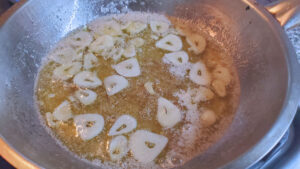
In the classic, you bring the olive oil, truffle oil, and butter, to a simmer (okay, really traditional, some grated truffle rather than truffle oil, but, we’re not going there for a snack), with the garlic sliced into it. Before the garlic browns, but when it’s gotten soft, you add in the anchovies and sort of mash them around until they fall apart. Take the whole thing off the heat, keep warm and serve.
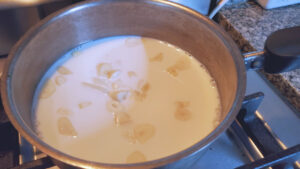
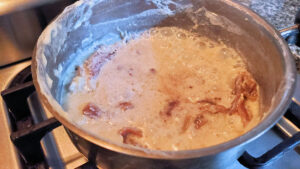
In the Celso version, she poached chunks of garlic in the milk until soft, then added a lot of anchovies. Actually, far more than I did, but I used an entire jar, and wasn’t about to open another. Just wanted to get a sense of the dish. She then passes it through a food mill. I know I have one in a closet somewhere here at home, but didn’t go digging for it, instead just giving it a few pulses with the stick blender (or a food processor). It creates a sort of sludgy paste – which is exactly what it looked like in the show (hers was darker brown, from the larger quantity of anchovies). There wasn’t a whole lot appetizing about the look of it, either in the show or at home.
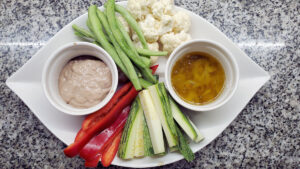
And serve with raw vegetables and bread if you want. These aren’t necessarily the traditional choices of veggies, but what I had on hand.
So what did I think? I love, as always, the classic. It just bathes the vegetables in garlicky, slightly salty from the anchovy, with a hint of earthiness from the truffle, flavors. What’s not to love about that? The show’s version… I hate. I really just didn’t like anything about it, from the texture, to the overwhelming intensity of both garlic and anchovy, particularly the latter. For me, bagna cauda is about flavoring the vegetables and enjoying them, whereas with this “dip”, you could be serving anything dipped into it, the flavor of the vegetable or bread is just lost.
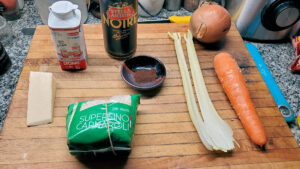
Let’s move on to the second dish. Tucci visits with the Costardi brothers, Christian and Manuel, who have a small, one Michelin-starred restaurant attached to the Hotel Cinzia, in Vercelli, a city of about 45,000 people. The brothers are famous for their dedication to risottos, both traditional and creative, and along with other dishes, they offer around two dozen different ones. The risotto featured in the show was flavored with beer, coffee, and grana padano cheese.
This risotto isn’t remotely traditional, but it sounded fascinating, as does the restaurant. So we have carnaroli rice, grana padano cheese (cow’s milk, from Emilia-Romagna, aged similar to parmesan, but with a unique flavor), cream, beer (I used dark beer, because it seemed to make sense, but visually, later, thinking about the show, I’m pretty sure they used something much lighter), espresso, celery, onion, carrot. Not shown, a large pat of butter.
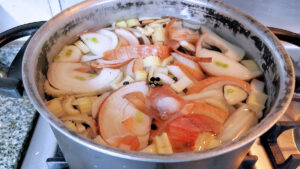
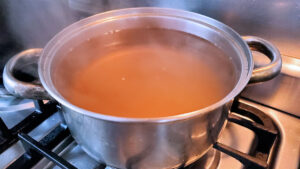
Quick vegetable stock. Coarsely slice up the onion, carrot, and celery, into a pot with water, some salt, and a few peppercorns. Bring to simmer and cook for about thirty to forty minutes. Strain, adjust seasoning, and keep hot.
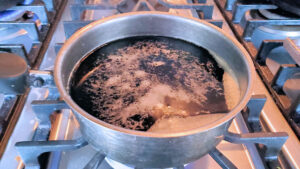
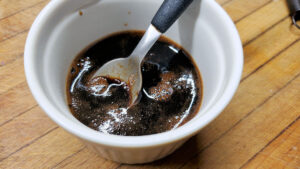
The brothers stated in the show that they simply reduced the beer until it was syrupy. Theirs, as I said, was much lighter in color in the final syrup. I also found that while certainly thicker than it started out – one can of beer reduced to about three tablespoons, it wasn’t quite what I’d call syrupy. Something tells me they add something to it to give it the more molasses-like character it had in the show’s presentation.
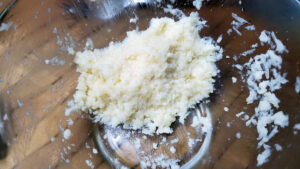
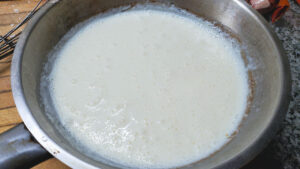
If you’ve been following my recent “Roman pastas” posts, you’ve been introduced to the way to prevent grated cheese from clumping and getting stringy. I grated the grana padano, then added a couple of tablespoons of the hot vegetable stock, and whisked it into a paste. I heated the cream to just starting to bubble, then removed it from the heat (again, important step!), and whisked in the cheese paste.
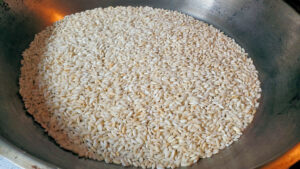
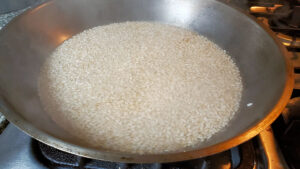
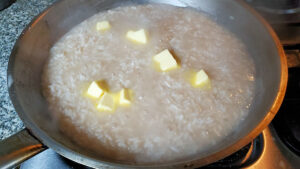
I’ve never seen or made a risotto like this, but it’s intriguing, and I kind of like how it turns out. They put the rice into a dry skillet, and toast it over low heat, for a good ten minutes, stirring it up now and again, until it gets lightly golden. The aroma reminded me almost of making popcorn. You then start adding in the stock, stirring regularly – I covered the step-by-step and reasons for each step in my last Tucci post. When the rice is cooked a perfect al dente, whisked in a little cold butter to give it some richness. I’m actually not sure they did that in the show, they mentioned the “mantecada”, but then immediately talked about the grana padano cream sauce, almost like they were keeping the ideas separate. Not sure.
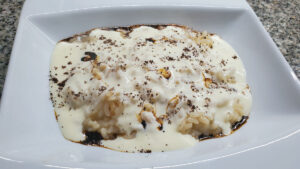
In the restaurant, they serve this risotto layered in a sort of knock-off Campbell’s soup can. You can’t even see what you’re being served, other than the top surface. I didn’t need to go out looking for soup cans. So, a good drizzle of the beer syrup, topped with a ladle of the risotto, coated with the grana padano cream, then a little more drizzle of the beer syrup, and a scattering of the espresso (they make a point that they use Lavazza, but I imagine that was more promotional than anything else).
I like the dish. I don’t love it. Obviously I’m guessing at some of what they do, and it’s probable that their version is far more delicious than mine. They do have a Michelin star after all, and they claimed this is one of their most popular risottos. Would I make it again? Probably not, but some of the ideas, particularly the heavy toasting of the rice, and the grana padano cream sauce, will likely work their way into my repertoire.
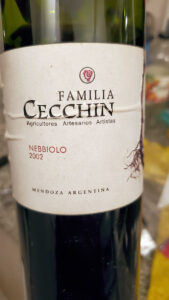
And, all dishes paired off with a local Nebbiolo based wine, the primary grape of Piemonte, the foundation of Barbaresco and Barolo. This one from Familia Cecchin, in the Maipú region of Mendoza. I knew I had it on my wine rack, I didn’t realize that it was a 2002. Still vibrant fruit, soft, not really feeling like it’s a twenty year old wine. Impressive drinking, and I happily did so with my bagna cauda and risotto.
Next time, Tucci’s off to Umbria, in central Italy.
Copyright © 2026 SaltShaker. This feed contains copyrighted photos and text from SaltShaker. If you are not reading this material in a feed aggregator or by e-mail subscription, the site you are viewing may be guilty of copyright infringement. Please contact [email protected] so that I can take appropriate action.
Plugin by Taragana
]]>And so, I took each of those six recipes and recreated them as best I could given the demonstration clips. It was obvious that they didn’t show every single step, and so I had to fill in a bit with my own cooking background, or from a bit of research, but on the whole, they were really well done. And, I had some delicious surprises along the way. Last year I featured two at a time in my write-ups, with Campania (Naples, Spaghetti alla Nerano) and Lazio (Rome, Frittata di rigaglie di pollo), then Emilia-Romagna (Bologna, Tagliatelle al ragú) and Lombardia (Lake Como, Riso con persico), and finishing up with Tuscany (Livorno, Cacciucco) and Sicily (wine country, Pasta alla Norma). It made for some great eating and drinking!
This year, for the second season, which aired in May, but I’m just getting around to, there were only four episodes. Let’s jump in to the first, as he travels to the Veneto, spending most of his time in the city of Venice, and goes for a classic local risotto using an ingredient that many of us have heard about, but few of us have probably cooked… let alone eaten.
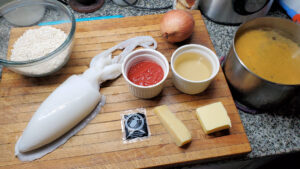
The dish, Risotto alla nero di seppia, translating loosely as black cuttlefish risotto. And, that’s the unusual ingredient…
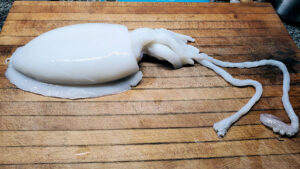
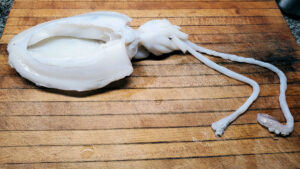
…cuttlefish. It’s different from squid, or calamare. If you’ve ever cooked with squid you can see it’s a different shape, the fins are different, running along the sides of the body rather than being two small triangular ones at the base. The head is broader than a squid’s. You can’t see, but, maybe the evidence because of the way it’s been cleaned, by slitting open the underside, is that while a squid has a long thin “pen” of cartilage as a sort off backbone, a cuttlefish actually has a shell, inside of it, that contains its innards. Here, I can only buy them frozen, pre-cleaned, in Chinatown; I’ve never seen them elsewhere.
In the first photo we have carnaroli rice, one of the three classic risotto rices (along with arborio and vialone nano), the cuttlefish, an onion, some tomato passata (uncooked, but strained of seeds and skin, pureed tomato, while tomato puree is cooked down until thicker), some white wine, butter, pecorino romano (a sheep’s milk grating cheese from the area around Rome), and cuttlefish ink. I was actually surprised to find the latter, figuring I’d only find squid ink, but, the Chinese market had both! Off to the side, a pot of fish stock (fish head/bones, celery, onion, simmered in water for about half an hour, then strained) – keep it hot over a very low flame when you’re ready to start cooking the risotto. It can be refrigerated and reheated if you want to make it in advance.
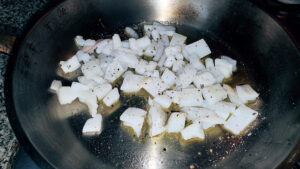
I ended up only using about half the cuttlefish, as it became clear it was going to be too much for what I needed. Cut into small pieces, tentacles and body, and into a pan with some olive oil, salt, and pepper, over low heat.
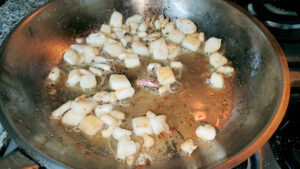
There’s a traditional kitchen rule when it comes to squid, cuttlefish, and octopus cooking – “30 seconds or 30 minutes”. The former to just quickly cook something, usually poaching in boiling water, to just set it, without getting rubbery, the latter to slow cook it until the point when the muscle fibers relax again as they start to break down. So I kept this over very low heat for about 10 minutes, until it was just turning golden.
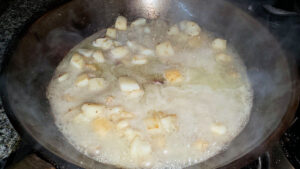
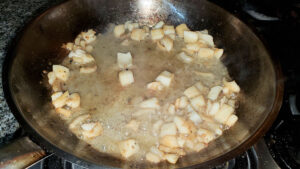
Deglaze with white wine. Continue over low heat until the wine had reduced by about 2/3. About 5 minutes.
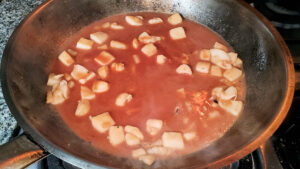
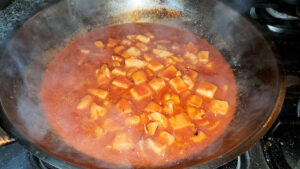
Add the tomato passata and an equal amount of the fish stock, and cook another 5 minutes to reduce. Set this aside.
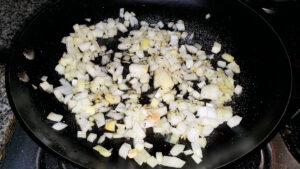
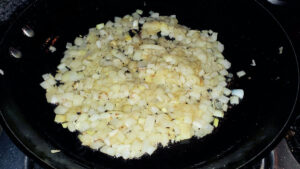
In another skillet, begin sautéing the finely chopped onion in a little olive oil, with just a pinch of salt. Very low heat! About five minutes until soft and transluscent.
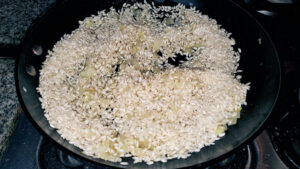
Add the rice and stir to coat with the oil, and let it toast, about two minutes.
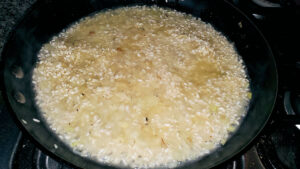
Add two ladlefuls of the stock, and stir vigorously for about twenty seconds to start releasing the starch from the rice. As the liquid is absorbed, you add one ladleful at a time, each time giving it a good stir for about twenty seconds, and then let it sit to absorb. You don’t have to constantly stir, as some suggest, but you do have to do it at the addition of each ladle of stock. This gets the starch and water to create that creamy texture that a proper risotto has.
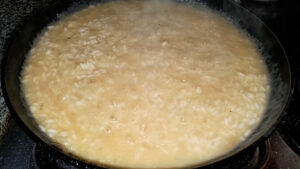
Rough estimate, depending on your rice, your stock, and your flame, it will take 15-18 minutes until the rice, when you check it, is soft, but still maintains a chewiness. It’s not quite ready to eat, but you sense that it’s almost there.
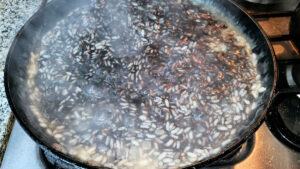
Add the packet of ink, and stir to combine.
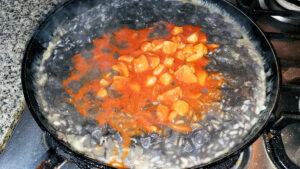
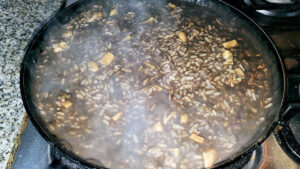
Add the reserved cuttlefish mixture, and stir well. Continue cooking for about five minutes. You probably won’t need any more of the stock, because there’s enough liquid in the cuttlefish and tomato mixture to finish cooking the rice. If you feel like it’s still too chewy for your tastes, add another ladle of the stock and continue cooking. Repeat as needed – but my guess is you won’t need to do that.
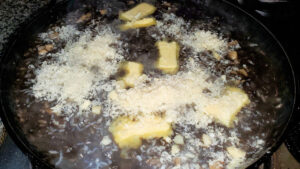
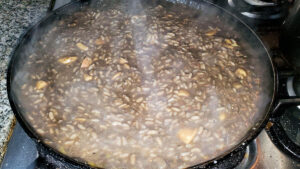
And finally, what’s called the mantecada, the buttering of the risotto – add the butter and grated cheese and stir vigorously to emulsify it into the risotto liquid that remains. This gives the risotto its final richness. Taste for salt and pepper, add as needed. I found the salt level was fine (don’t add it before you add the cheese, because the pecorino is fairly salty), but I wanted a bit of a pepperiness to it, and gave it a dozen grinds or so.
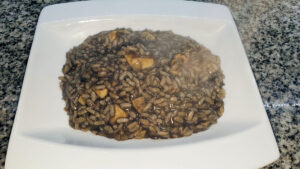
And, serve! Some people decorate it with a little chopped parsley or other herbs, just for color, but for me, it’s not necessary.
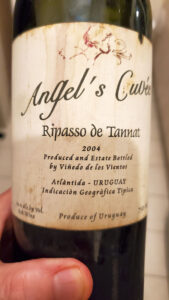
As I did in last year’s posts, I wanted to seek out local wines that were reminiscent of the regions that the dishes are from. Now, for the Veneto, and a seafood dish, the obvious choice might be a Prosecco, and we do have them available here, but I thought that it would be too light for this dish, and, it was chilly and rainy out and I wanted a red. And it just happened that I knew I had a bottle of this Uruguayan Tannat ripasso. While not unique to the Veneto, the ripasso method is a common one in the region, a sort of partial pathway towards an Amarone. And while Tannat wouldn’t be the grape used, I thought that the softness of this approach to winemaking would be perfect for the dish. And, it was. This bottle was a gift from my friends at Viñedo de los Vientos, named after, if I recall correctly, one of their grandfathers, Angel’s Cuvee 2004. Rich, soft, dark fruit flavors, really just perfect drinking after time in the bottle.
Copyright © 2026 SaltShaker. This feed contains copyrighted photos and text from SaltShaker. If you are not reading this material in a feed aggregator or by e-mail subscription, the site you are viewing may be guilty of copyright infringement. Please contact [email protected] so that I can take appropriate action.
Plugin by Taragana
]]>